What Is Content Optimization and Why Does It Matter?
Posted by
 Stefan Winter
How to Master Content Optimization: A Complete Guide to Boosting Your Content Performance
Content optimization has become the cornerstone of successful digital marketing in 2026, yet many website owners still struggle to understand what it truly entails. Whether you're a seasoned marketer or just starting your online journey, mastering content optimization can dramatically improve your search rankings, user engagement, and conversion rates. In this comprehensive guide, you'll discover exactly what content optimization is, why it matters more than ever, and how to implement proven strategies that deliver measurable results for your website.
What Is Content Optimization and Why Does It Matter?
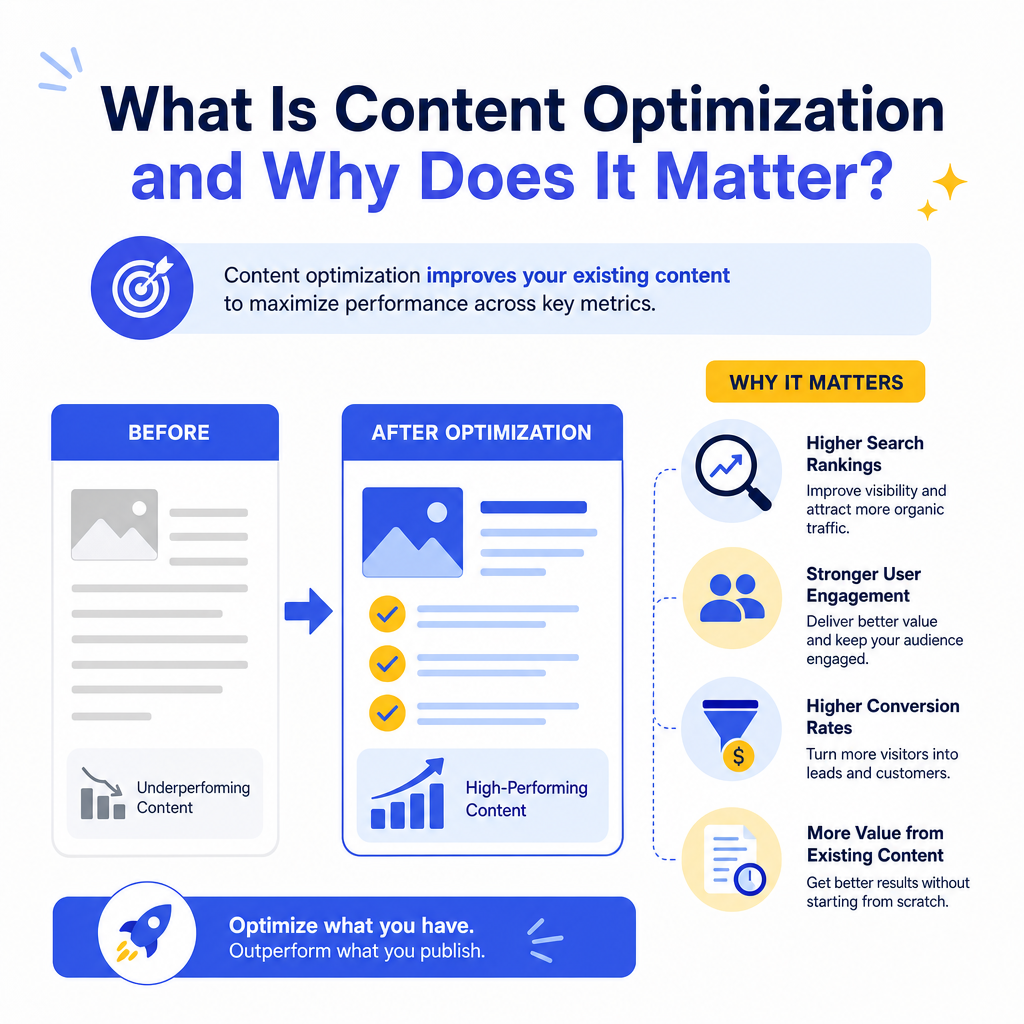
Content optimization is the strategic process of improving your existing content to maximize its performance across multiple metrics, including search engine rankings, user engagement, and conversion rates. Unlike creating new content from scratch, optimization focuses on enhancing what you already have to achieve better results with less effort.
At its core, content optimization involves analyzing your current content's performance, identifying areas for improvement, and implementing targeted changes that align with both search engine algorithms and user preferences. This process encompasses everything from keyword refinement and technical SEO improvements to enhancing readability and user experience elements.
The importance of content optimization has grown exponentially as competition for online visibility intensifies. With billions of web pages competing for attention, simply publishing content is no longer enough. Google's algorithm updates continue to prioritize high-quality, optimized content that provides genuine value to users, making optimization essential for maintaining and improving search rankings.
How Does Content Optimization Differ from Content Creation?
Many website owners confuse content optimization with content creation, but these are fundamentally different processes that serve distinct purposes in your digital marketing strategy. Understanding this difference is crucial for allocating your resources effectively and maximizing your content's potential.
Content creation involves developing new material from scratch, requiring extensive research, writing, and production time. While creating fresh content is important for maintaining an active online presence, it demands significant resources and doesn't always guarantee immediate results. New content must build authority and trust with search engines over time.
Content optimization, on the other hand, works with your existing content assets to improve their performance. This approach typically delivers faster results because you're enhancing content that already has some level of search engine recognition and user engagement. The optimization process can transform underperforming content into high-ranking, conversion-driving assets with strategic improvements.
The Strategic Advantage of Optimization
The strategic advantage of content optimization lies in its efficiency and measurable impact. Rather than starting from zero with new content, optimization allows you to identify your best-performing pieces and make them even better. This approach often yields higher returns on investment because you're building upon existing foundation rather than creating entirely new content structures.
What Are the Core Elements of Effective Content Optimization?
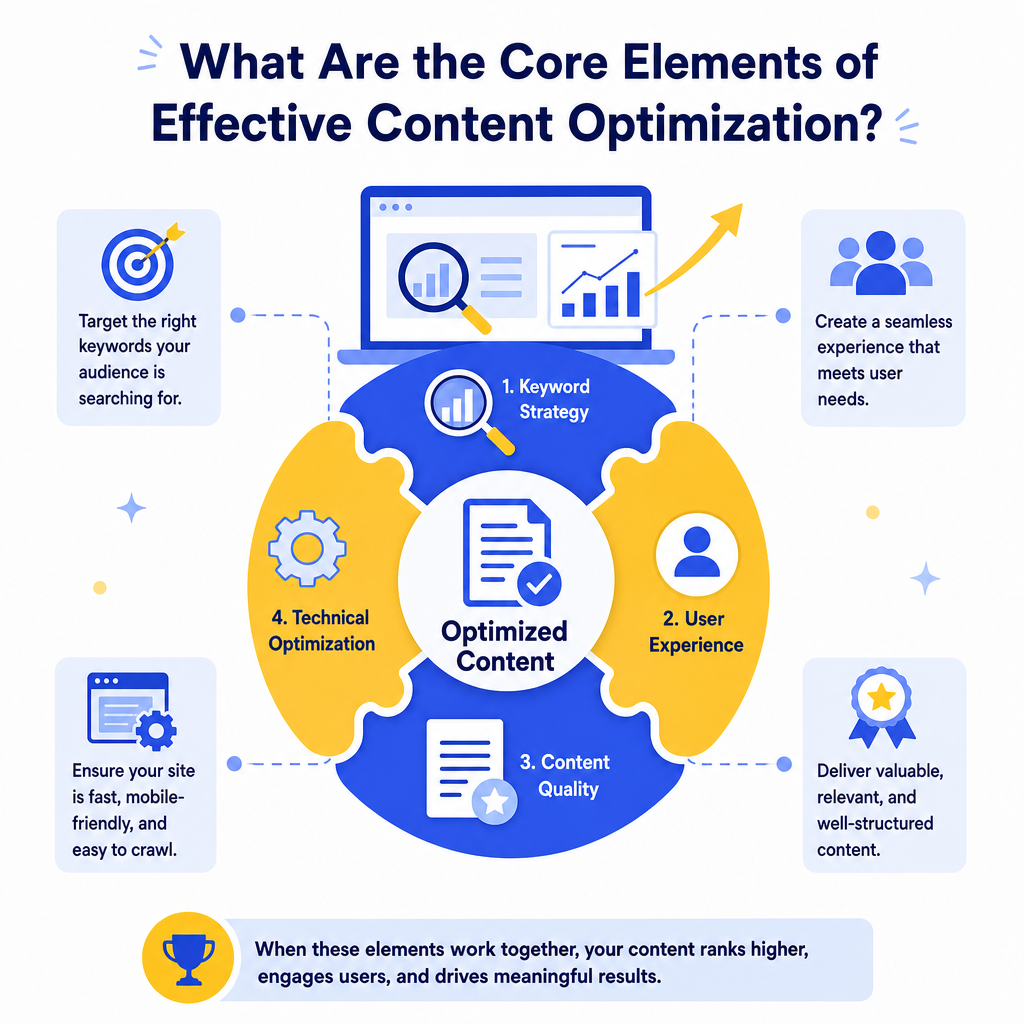
Effective content optimization encompasses several interconnected elements that work together to improve your content's overall performance. Understanding these core components helps you develop a systematic approach to optimization that addresses all aspects of content quality and user experience.
| Element | Purpose | Impact Level |
|---|---|---|
| Keyword Integration | Improve search visibility | High |
| Technical SEO | Enhance crawlability | High |
| User Experience | Increase engagement | Medium |
| Content Structure | Improve readability | Medium |
| Performance Metrics | Track improvements | High |
Technical SEO elements form another crucial component of content optimization. This includes optimizing meta titles and descriptions, improving internal linking structures, enhancing page loading speeds, and ensuring mobile responsiveness. These technical factors significantly impact how search engines crawl, index, and rank your content.
User Experience and Engagement Factors
User experience optimization focuses on making your content more engaging and valuable for human readers. This involves improving readability through better formatting, adding visual elements like images and videos, and structuring content with clear headings and subheadings. Creating SEO blog posts that engage users requires balancing search engine requirements with human preferences.
Content structure optimization ensures your information is presented in a logical, easy-to-follow format. This includes using bullet points for key information, incorporating relevant tables and charts, and organizing content with descriptive headings that guide readers through your material. Well-structured content keeps users engaged longer and reduces bounce rates.
How to Identify Content That Needs Optimization
Identifying which content requires optimization is crucial for maximizing your efforts and achieving the best results. Rather than randomly selecting content to improve, successful optimization strategies begin with data-driven analysis that reveals your biggest opportunities for improvement.
Start by analyzing your current content performance using tools like Google Analytics, Google Search Console, and other SEO platforms. Look for content that receives decent traffic but has high bounce rates, low average time on page, or poor conversion rates. These pieces often represent your best optimization opportunities because they already attract visitors but fail to fully engage them.
Search ranking analysis reveals another important optimization opportunity. Content that ranks on the second or third page of search results for target keywords often needs only minor improvements to reach the first page. Using content audit tools can streamline this identification process and provide actionable insights for improvement.
Performance Metrics That Signal Optimization Needs
Several key performance indicators signal when content needs optimization attention. Pages with declining organic traffic over time may need keyword updates or technical improvements. Content with low click-through rates from search results often benefits from meta title and description optimization.
Engagement metrics like bounce rate, time on page, and pages per session provide insights into user satisfaction with your content. High bounce rates combined with short time on page suggest that your content doesn't match user expectations or lacks engaging elements that encourage further exploration.
What Tools and Techniques Drive Successful Content Optimization?
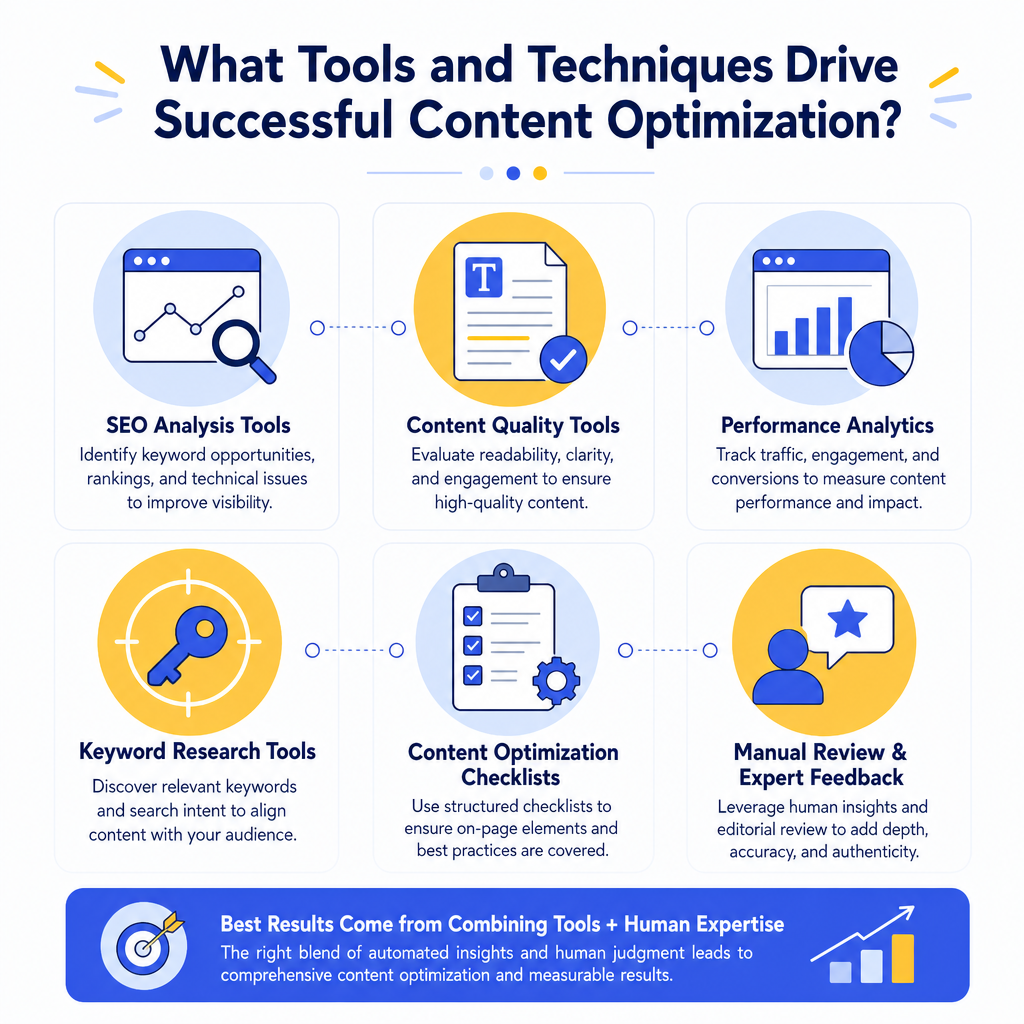
Successful content optimization relies on the right combination of tools and techniques that provide actionable insights and measurable improvements. The most effective optimization strategies combine automated analysis tools with manual review processes to ensure comprehensive content enhancement.
Professional SEO tools like SEMrush, Ahrefs, and Moz provide comprehensive content analysis capabilities that identify optimization opportunities. These platforms analyze keyword performance, competitor content strategies, and technical SEO factors that impact your content's search visibility. Modern SEO tools offer sophisticated features that automate much of the analysis process while providing detailed recommendations for improvement.
Google's own tools, including Search Console and PageSpeed Insights, provide valuable data directly from the search engine's perspective. Search Console reveals which keywords your content currently ranks for, identifies indexing issues, and shows click-through rates for different pages. This information helps prioritize optimization efforts based on actual search performance data.
Content Analysis and Improvement Techniques
Manual content analysis techniques complement automated tools by providing qualitative insights that algorithms might miss. This includes reviewing content for readability, logical flow, and alignment with user search intent. Reading your content aloud or having others review it can reveal areas where improvements would enhance user experience.
Competitor content analysis provides valuable insights into what works in your industry or niche. By examining top-ranking content for your target keywords, you can identify content gaps, formatting preferences, and optimization strategies that drive success. This competitive intelligence helps inform your own optimization decisions and ensures your content meets or exceeds industry standards.
How to Implement Content Optimization Best Practices
Implementing effective content optimization requires a systematic approach that addresses all aspects of content performance while maintaining quality and user value. The most successful optimization strategies follow proven methodologies that deliver consistent, measurable improvements across multiple performance metrics.
Begin your optimization process by establishing clear goals and success metrics for each piece of content you plan to improve. Whether you're targeting higher search rankings, increased user engagement, or better conversion rates, having specific objectives helps guide your optimization decisions and measure progress effectively.
The optimization implementation process should start with technical elements before moving to content improvements. Address any technical issues like slow loading speeds, mobile responsiveness problems, or broken internal links first. These technical factors can significantly impact your content's performance regardless of how well-written or optimized the actual text might be.
Step-by-Step Optimization Implementation
Start with keyword optimization by reviewing your target keywords and ensuring they're naturally integrated throughout your content. Update meta titles and descriptions to include primary keywords while maintaining compelling, click-worthy language that encourages users to visit your page from search results.
Next, focus on content structure and readability improvements. Add descriptive headings that include relevant keywords, break up large text blocks with bullet points or numbered lists, and incorporate visual elements that support your content's main points. Effective SEO writing techniques can significantly improve both search rankings and user engagement when properly implemented.
How to Measure and Track Content Optimization Success
Measuring the success of your content optimization efforts is essential for understanding what works, identifying areas for further improvement, and demonstrating the value of your optimization investments. Effective measurement strategies combine multiple metrics to provide a comprehensive view of content performance improvements.
Establish baseline measurements before implementing any optimization changes. Document current search rankings, organic traffic levels, engagement metrics, and conversion rates for the content you plan to optimize. This baseline data allows you to accurately measure the impact of your optimization efforts and identify which changes produce the best results.
According to HubSpot's content marketing research, companies that regularly measure and optimize their content see significantly higher engagement rates and conversion improvements compared to those that don't track performance metrics.Key Performance Indicators for Content Optimization
Monitor search ranking improvements for your target keywords using tools like Google Search Console or professional SEO platforms. Track both primary and secondary keyword rankings to understand the full impact of your optimization efforts. Ranking improvements often lead to increased organic traffic and better overall content visibility.
Engagement metrics provide insights into how users interact with your optimized content. Monitor changes in average time on page, bounce rate, pages per session, and social sharing activity. Improvements in these metrics indicate that your optimization efforts are successfully enhancing user experience and content value.
Conclusion
Content optimization represents one of the most effective strategies for improving your website's performance, search visibility, and user engagement in 2026. By understanding what content optimization truly entails and implementing the systematic approaches outlined in this guide, you can transform your existing content into powerful assets that drive meaningful results for your business.
The key to successful content optimization lies in taking a data-driven approach that combines technical improvements with user-focused enhancements. Remember that optimization is an ongoing process, not a one-time task. Regularly review your content performance, stay updated with search engine algorithm changes, and continue refining your optimization strategies based on measurable results.
Ready to start optimizing your content for better performance? Begin by auditing your current content using the techniques discussed in this guide, identify your biggest optimization opportunities, and implement improvements systematically. Your optimized content will reward your efforts with improved search rankings, increased user engagement, and better conversion rates.

Stefan Winter
Founder & SEO Expert
Founder of Fast SEO Fix and SEO automation expert. Stefan built Fast SEO Fix to solve the tedious problem of manual SEO work. He specializes in SEO optimized content generation, keyword research, and automated SEO strategies.
