What Exactly Is SEO Writing and Why Does It Matter?
Posted by
 Stefan Winter
How to Master SEO Writing: The Complete Guide for Higher Rankings in 2026
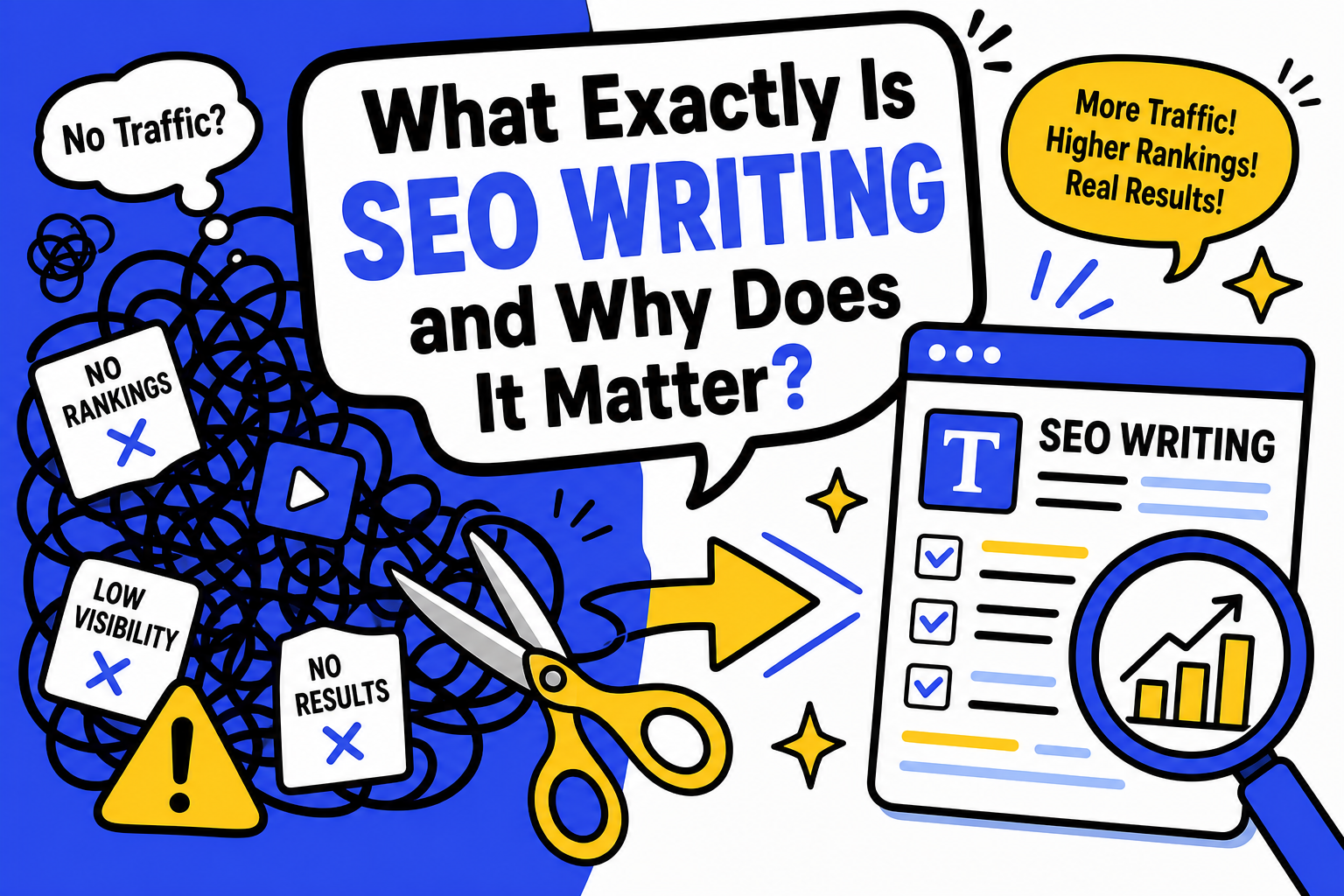
Search engines have evolved dramatically, and so must your writing approach. SEO writing is no longer about stuffing keywords into bland content. Today's successful SEO writing combines strategic optimization with compelling storytelling that genuinely serves your audience. In this comprehensive guide, you'll discover proven techniques to create content that ranks well and converts readers into customers.
What Exactly Is SEO Writing and Why Does It Matter?
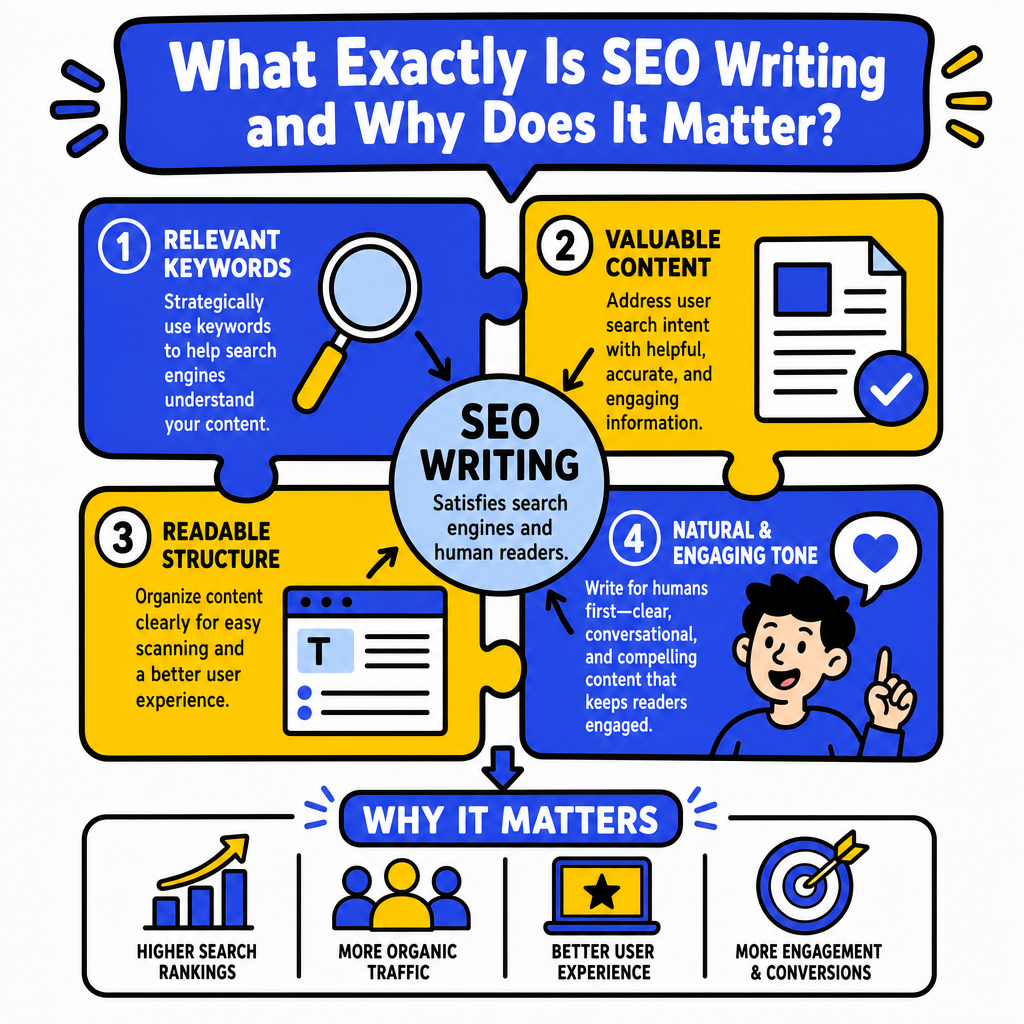
SEO writing is the art of creating content that satisfies both search engines and human readers. It involves strategically incorporating relevant keywords, structuring content for optimal readability, and addressing user search intent while maintaining natural, engaging prose.
The importance of mastering SEO writing cannot be overstated. According to BrightEdge research, organic search drives 53% of all website traffic. When you write with SEO principles in mind, you're essentially creating a bridge between what people are searching for and the valuable solutions your business provides.
Modern SEO writing goes beyond traditional keyword optimization. It focuses on semantic search, user experience signals, and content depth. Search engines now evaluate how well your content answers questions, keeps readers engaged, and provides comprehensive coverage of topics.
How Do You Research Keywords for Effective SEO Writing?
Successful SEO writing starts with thorough keyword research. This process involves identifying the terms and phrases your target audience uses when searching for information related to your business or industry.
Begin by brainstorming seed keywords related to your topic. Use tools like Google Keyword Planner, SEMrush, or Ahrefs to expand your list and discover search volumes, competition levels, and related terms. Focus on finding a mix of high-volume primary keywords and long-tail variations that represent specific user intents.
Pay special attention to question-based keywords and conversational phrases. With the rise of voice search and AI-powered search assistants, people increasingly search using natural language patterns. For example, instead of just targeting "content marketing," you might also optimize for "how to create effective content marketing strategies" or "what makes content marketing successful."
| Keyword Type | Example | Search Intent | Writing Focus |
|---|---|---|---|
| Primary | SEO writing | Informational | Comprehensive overview |
| Long-tail | How to write SEO content | Tutorial | Step-by-step guidance |
| Commercial | Best SEO writing tools | Purchase | Product comparisons |
| Local | SEO writing services near me | Local business | Location-specific content |
What Makes Content Structure Essential for SEO Writing?
Proper content structure serves as the foundation of effective SEO writing. Search engines use your content's structure to understand its hierarchy, main topics, and how different sections relate to each other.
Start every piece with a compelling headline that includes your primary keyword naturally. Your H1 tag should clearly communicate what readers will learn or accomplish by reading your content. Follow this with H2 and H3 subheadings that break your content into digestible sections, each addressing specific aspects of your main topic.
Use bullet points and numbered lists to highlight key information. These formatting elements make your content easier to scan and increase the likelihood of earning featured snippets in search results. When discussing complex processes or providing step-by-step instructions, numbered lists help readers follow along and signal to search engines that your content provides actionable guidance.
How Should You Optimize Your Introduction and Conclusion?
Your introduction should hook readers within the first few sentences while clearly stating what they'll gain from reading further. Include your primary keyword naturally in the opening paragraph, but prioritize clarity and engagement over keyword density.
The conclusion serves multiple SEO purposes. It reinforces your main points, provides a natural place to include related keywords, and offers opportunities for internal linking to other relevant content on your site. Always end with a clear call-to-action that guides readers toward their next step.
How Do You Write Headlines That Rank and Convert?
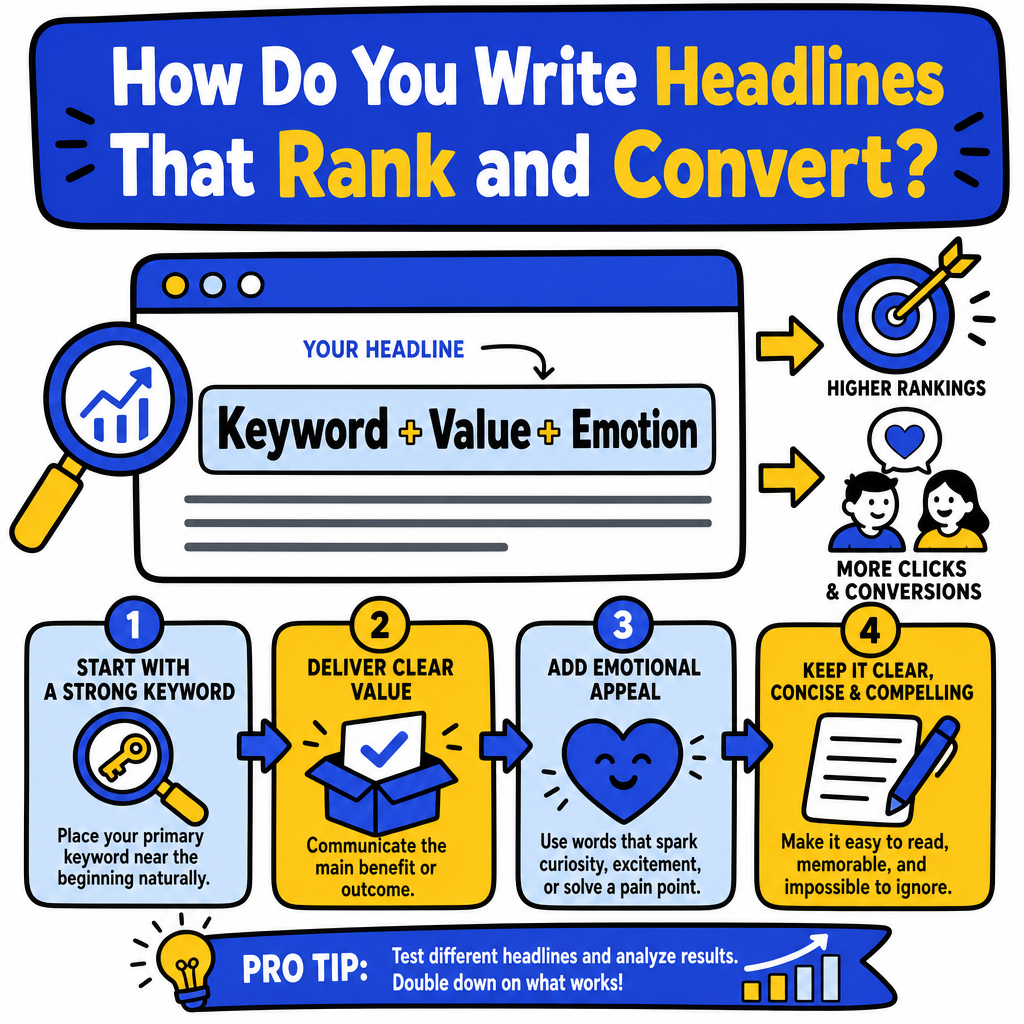
Headlines play a crucial role in both search rankings and click-through rates. Effective SEO headlines balance keyword optimization with emotional appeal and clear value propositions.
Include your primary keyword in the headline, preferably toward the beginning. However, avoid awkward phrasing just to fit keywords. Headlines like "SEO Writing: How to Create Content That Ranks and Converts" work better than "SEO Writing SEO Content Writing Guide."
Consider the emotional triggers that motivate your audience. Words like "complete," "ultimate," "proven," and "step-by-step" suggest comprehensive, authoritative content. Numbers in headlines often perform well because they set clear expectations about what readers will learn.
Test different headline variations to see what resonates with your audience. Tools like CoSchedule's Headline Analyzer can help you evaluate emotional impact, keyword optimization, and overall effectiveness before publishing.
What Role Does User Intent Play in SEO Writing?
Understanding user intent is critical for creating content that satisfies both readers and search engines. Every search query falls into one of four main categories: informational, navigational, commercial, or transactional.
Informational intent involves users seeking knowledge or answers to questions. These searchers might use queries like "what is SEO writing" or "how to improve content rankings." Your content should provide comprehensive, educational information without being overly promotional.
Commercial intent indicates users researching products or services before making decisions. They might search for "best SEO writing tools" or "SEO writing services comparison." Address this intent by providing detailed comparisons, reviews, and feature explanations.
Transactional intent shows users ready to take action, whether making a purchase, signing up for a service, or downloading resources. Optimize for these searches by including clear calls-to-action and removing barriers to conversion.
Understanding and matching user intent helps you create more targeted, effective content. When your content aligns with what searchers actually want, you'll see improvements in rankings, engagement metrics, and conversion rates. This approach works particularly well when combined with content optimization tools that help analyze and improve your content's performance.
How Do You Optimize Content Length and Depth?
Content length significantly impacts SEO performance, but the ideal length varies based on topic complexity, competition, and user intent. According to Backlinko's analysis of ranking factors, longer content tends to rank higher in search results.
However, length alone doesn't guarantee success. Focus on comprehensive coverage rather than arbitrary word counts. Your content should thoroughly address the topic, answer related questions, and provide actionable insights readers can implement.
For competitive keywords, analyze top-ranking pages to understand the depth of coverage required. If competitors are publishing 3,000-word comprehensive guides, a 500-word surface-level article likely won't compete effectively.
Consider breaking extremely long content into series or pillar pages with supporting cluster content. This approach allows you to cover topics thoroughly while maintaining readability and providing multiple entry points for organic traffic.
What Technical Elements Support Strong SEO Writing?
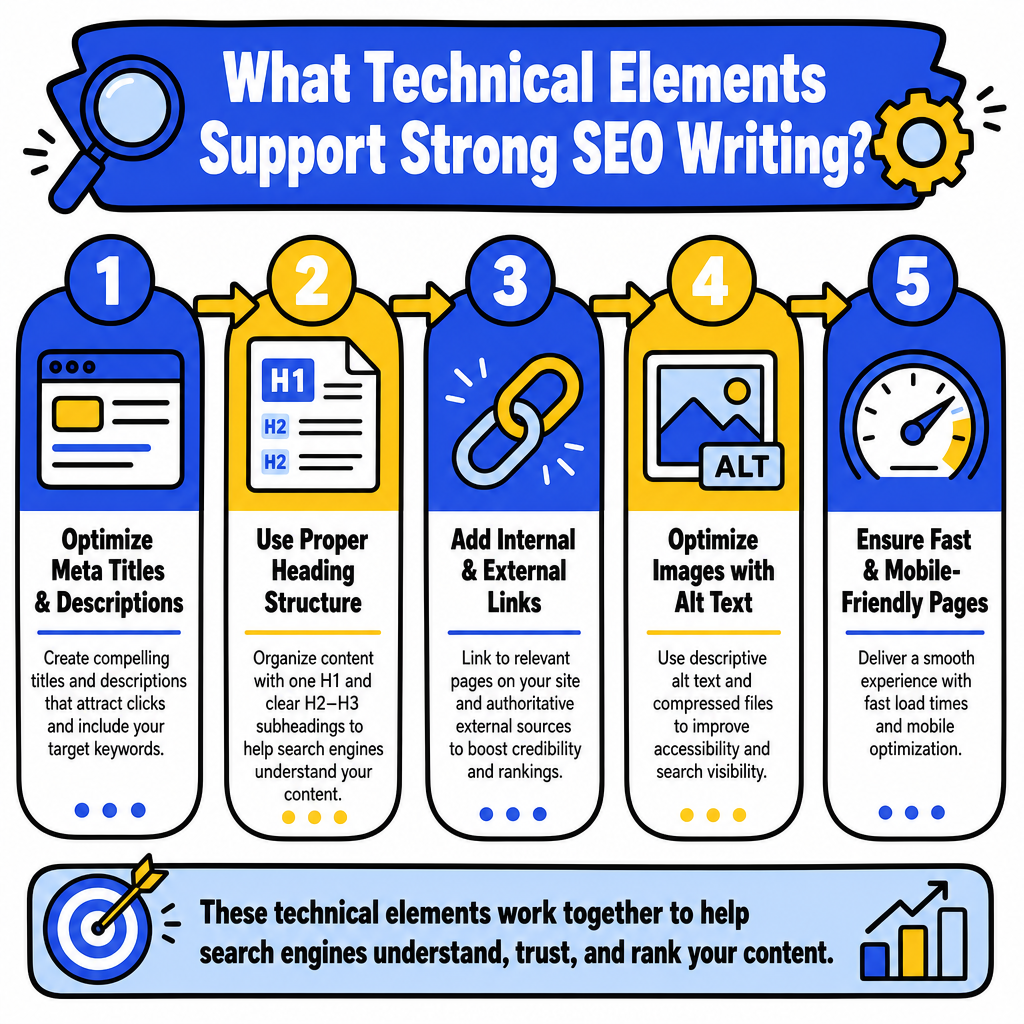
Technical optimization amplifies the impact of great SEO writing. Several behind-the-scenes elements work together to help search engines understand and rank your content effectively.
Meta titles and descriptions serve as your content's first impression in search results. Craft compelling meta titles that include your primary keyword and stay within 50-60 characters. Meta descriptions should summarize your content's value proposition in 150-160 characters while encouraging clicks.
Internal linking connects your content to other relevant pages on your site, helping search engines understand your site's structure and topic relationships. Link to related content using descriptive anchor text that tells readers what they'll find on the linked page. For example, when discussing automation in content creation, you might reference content automation tools that streamline the writing process.
Image optimization contributes to overall page performance and accessibility. Use descriptive file names and alt text that include relevant keywords when appropriate. Compress images to ensure fast loading times, which directly impact user experience and search rankings.
How Important Are Page Speed and Mobile Optimization?
Page speed and mobile responsiveness have become critical ranking factors. Google's Core Web Vitals measure user experience elements including loading speed, interactivity, and visual stability.
Optimize your content for mobile-first indexing by using responsive design, readable font sizes, and easily tappable buttons. Test your content on various devices to ensure consistent user experience across all screen sizes.
Consider how your writing style affects page performance. Extremely long paragraphs can feel overwhelming on mobile devices, while short, scannable sections improve readability and engagement.
How Do You Measure and Improve SEO Writing Performance?
Tracking performance metrics helps you understand what works and identify areas for improvement. Key metrics for SEO writing include organic traffic, search rankings, click-through rates, and engagement signals like time on page and bounce rate.
Use Google Analytics and Google Search Console to monitor your content's performance. Pay attention to which pages attract the most organic traffic and which keywords drive the highest-quality visitors. This data informs future content creation and optimization decisions.
Regular content audits help maintain and improve your SEO writing over time. Review older content for opportunities to update information, add new sections, or improve keyword targeting. Sometimes small optimizations to existing content can yield significant traffic improvements.
Consider implementing AI blog writing tools to scale your content creation while maintaining quality standards. These tools can help with research, outline creation, and first drafts, allowing you to focus on strategic optimization and refinement.
Conclusion
Mastering SEO writing requires balancing technical optimization with genuine value creation for your audience. By focusing on user intent, comprehensive keyword research, proper content structure, and continuous performance monitoring, you'll create content that ranks well and drives meaningful business results.
Remember that SEO writing is an ongoing practice, not a one-time task. Search algorithms evolve, user behaviors change, and competition increases. Stay committed to creating helpful, well-optimized content that serves your audience's needs, and your organic search performance will continue to improve.
Ready to transform your content strategy? Start implementing these SEO writing techniques today and watch your search rankings climb throughout 2026 and beyond.

Stefan Winter
Founder & SEO Expert
Founder of Fast SEO Fix and SEO automation expert. Stefan built Fast SEO Fix to solve the tedious problem of manual SEO work. He specializes in SEO optimized content generation, keyword research, and automated SEO strategies.
