What Are Content Optimization Tools and Why Do You Need Them?
Posted by
 Stefan Winter
TL;DR
Content optimization tools combine AI and SEO data to automate keyword research, competitive analysis, and content scoring, transforming content creation from guesswork into a data-driven strategy. By assessing your specific needs, team size, and content volume, you can select tools with essential features like real-time optimization suggestions and robust analytics to maximize SEO impact and streamline your workflow.
How to Choose the Right Content Optimization Tools for Maximum SEO Impact in 2026
Struggling to create content that ranks and converts? You're not alone. With search algorithms becoming increasingly sophisticated and competition fiercer than ever, content creators need more than just good writing skills to succeed. The right content optimization tools can transform your content strategy from guesswork into a data-driven powerhouse that delivers measurable results.
In this comprehensive guide, you'll discover how to evaluate, select, and implement content optimization tools that align with your specific goals. Whether you're a solo blogger or managing content for a large organization, these actionable steps will help you build a toolkit that maximizes your SEO impact while streamlining your workflow.
What Are Content Optimization Tools and Why Do You Need Them?
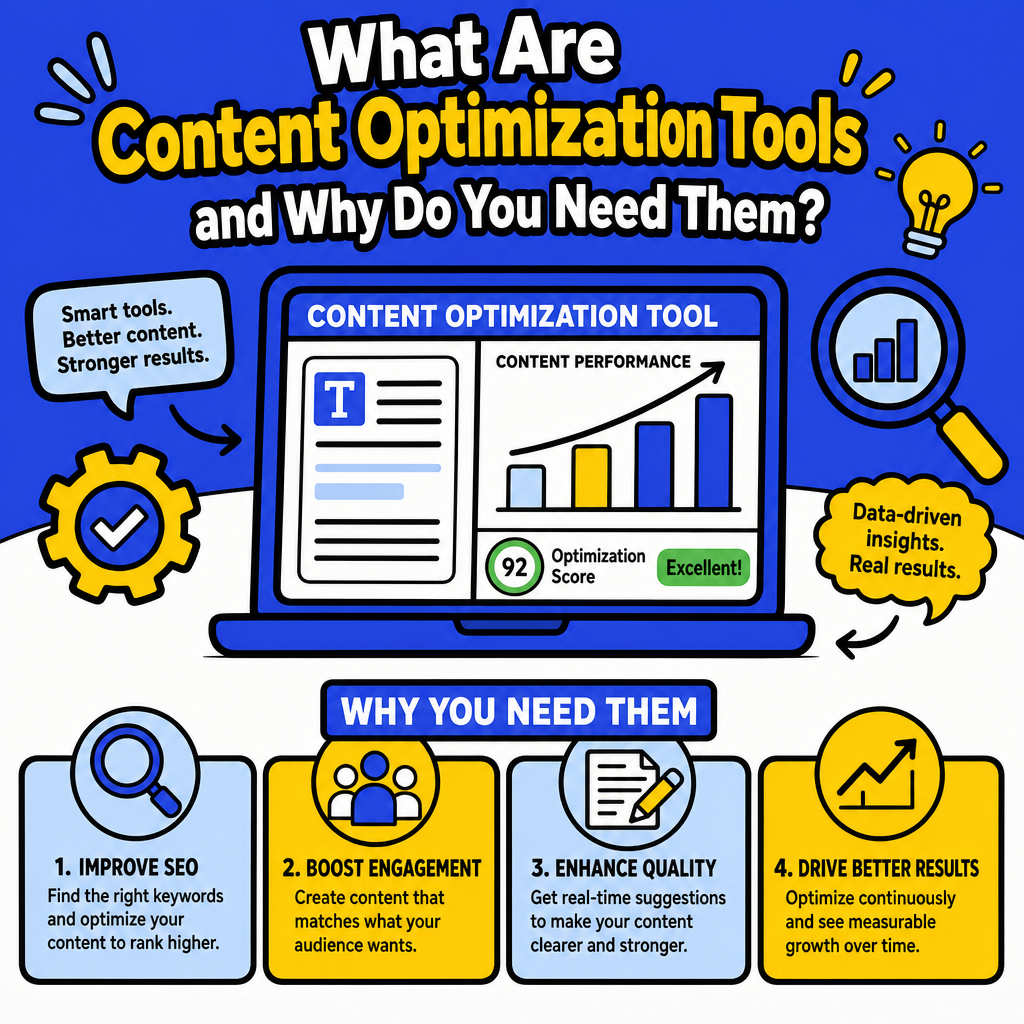
Content optimization tools are software solutions designed to analyze, enhance, and improve your content's performance across search engines and user engagement metrics. Unlike basic writing tools, these specialized platforms combine artificial intelligence, natural language processing, and real-time SEO data to provide actionable insights about your content.
The modern content landscape demands precision. Manual keyword research and gut-feeling content decisions no longer cut it when competing against brands using sophisticated optimization strategies. These tools bridge the gap between creative content creation and technical SEO requirements, ensuring your content satisfies both search algorithms and human readers.
Consider this: strategic content creation requires understanding search intent, keyword density, readability scores, and competitive analysis simultaneously. Content optimization tools automate these complex processes, allowing you to focus on crafting compelling narratives while the software handles the technical optimization.
How to Assess Your Current Content Optimization Needs
Before diving into tool selection, conduct a thorough audit of your existing content performance and identify specific pain points. Start by analyzing your current content metrics using Google Analytics and Search Console to understand which pieces perform well and which fall short.
Document your content creation workflow from ideation to publication. Note where bottlenecks occur, whether in keyword research, content planning, writing, or optimization phases. This assessment reveals which tools will provide the most immediate impact on your productivity and results.
Create a priority matrix listing your most pressing challenges. Common issues include poor keyword targeting, low search rankings, weak content structure, or insufficient competitive intelligence. Rank these challenges by their impact on your business goals and the effort required to address them manually.
What's Your Content Volume and Team Size?
Your content production scale directly influences which tools will serve you best. Solo creators need different solutions than enterprise teams managing hundreds of pieces monthly. Calculate your average content output and consider projected growth over the next 12 months.
Team-based operations require tools with collaboration features, approval workflows, and role-based access controls. Individual creators might prioritize affordability and ease of use over advanced team management capabilities. Understanding your operational context prevents investing in overpowered solutions or selecting tools that won't scale with your growth.
How to Evaluate Essential Features in Content Optimization Tools
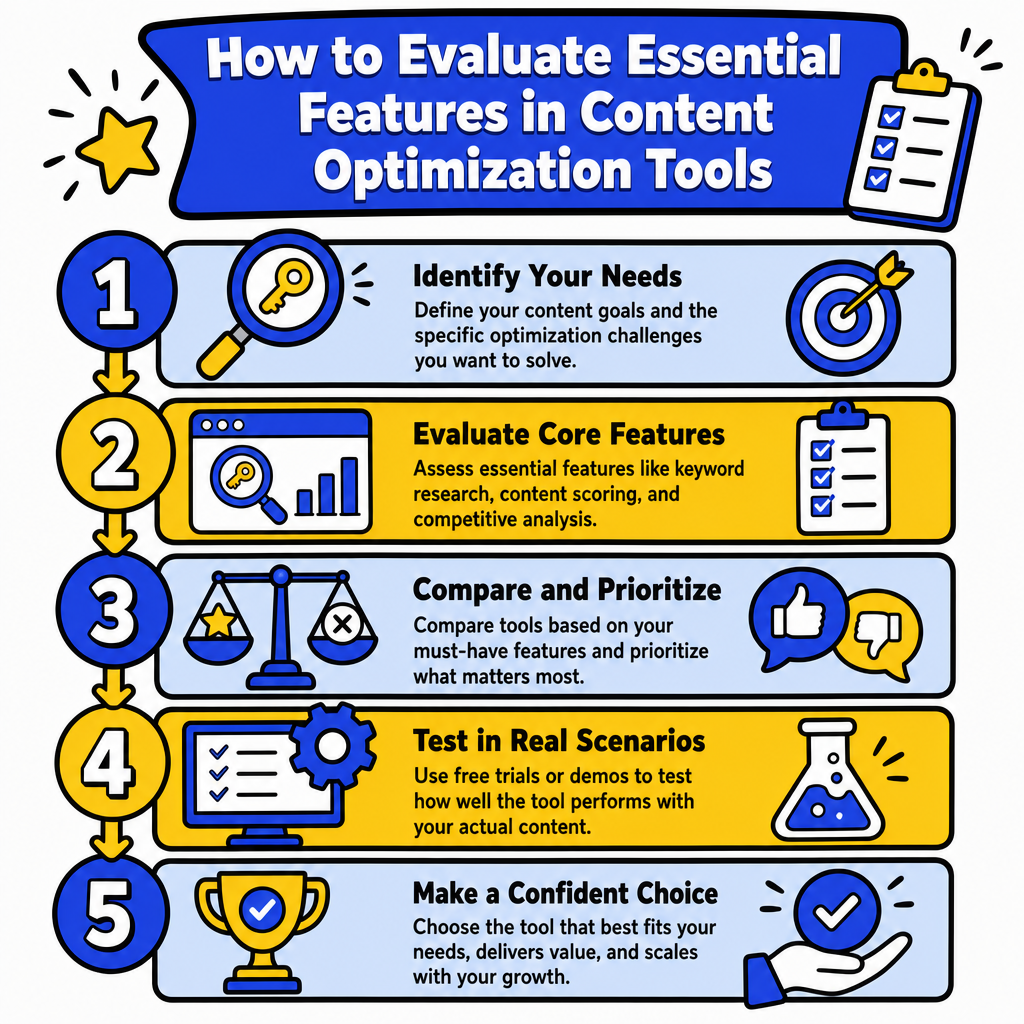
When comparing content optimization tools, focus on features that directly address your identified needs rather than getting distracted by flashy extras. Core functionality should include comprehensive keyword research capabilities, content scoring algorithms, and competitive analysis features.
Look for tools that provide real-time optimization suggestions as you write, rather than requiring separate analysis steps. The best platforms integrate seamlessly into your existing workflow, offering browser extensions, WordPress plugins, or API connections to your content management system.
Prioritize tools with robust analytics and reporting capabilities. You need clear visibility into how your optimized content performs over time, including ranking improvements, traffic increases, and engagement metrics. Without proper measurement, you cannot validate your tool investment or refine your optimization strategy.
| Feature Category | Essential Elements | Nice-to-Have Additions |
|---|---|---|
| Keyword Research | Search volume, difficulty scores, related terms | Seasonal trends, voice search queries |
| Content Analysis | Readability scores, SEO recommendations | Sentiment analysis, brand voice matching |
| Competitive Intelligence | Competitor content gaps, ranking analysis | Social media performance, backlink data |
| Integration Options | CMS plugins, browser extensions | API access, team collaboration tools |
| Reporting | Traffic impact, ranking changes | Custom dashboards, automated reports |
How Do You Determine Tool Accuracy and Reliability?
Not all content optimization tools provide equally accurate data. Research the tool's data sources and methodology for calculating metrics like keyword difficulty and search volume. Reputable tools typically source data from multiple APIs and clearly explain their scoring algorithms.
Test potential tools with content you've already optimized manually to compare their recommendations against your known results. Reliable tools should identify optimization opportunities you recognize and provide suggestions that align with established SEO best practices. Be wary of tools making unrealistic promises or providing recommendations that contradict proven SEO principles.
How to Compare Pricing Models and Calculate ROI
Content optimization tools employ various pricing structures, from per-user monthly subscriptions to usage-based models charging per analysis or keyword lookup. Calculate the total cost of ownership including any setup fees, training requirements, and potential overage charges.
Consider your content creation frequency when evaluating pricing tiers. Tools charging per analysis might seem expensive for high-volume creators, while unlimited plans could be wasteful for occasional users. Many platforms offer usage analytics to help you understand your consumption patterns before committing to annual contracts.
Factor in the time savings and performance improvements when calculating return on investment. If a tool reduces your content creation time by two hours per piece while improving average rankings by three positions, quantify these benefits against the monthly cost. Include potential revenue increases from improved search visibility in your ROI calculations.
What About Free vs. Paid Tool Options?
Free content optimization tools often provide basic functionality suitable for testing concepts or handling small-scale projects. However, they typically limit the number of analyses, keywords tracked, or advanced features available. Evaluate whether free tier limitations align with your actual usage needs.
Paid tools generally offer more comprehensive data, faster processing, priority support, and advanced features like team collaboration or API access. The investment becomes worthwhile when the additional capabilities directly translate to better content performance or significant time savings in your workflow.
How to Test Tools Before Making Long-Term Commitments

Most reputable content optimization tools offer free trials or freemium versions allowing hands-on evaluation. Use these opportunities to test the tool with your actual content rather than generic examples provided in demos.
Create a standardized testing process using the same piece of content across multiple tools. Compare the optimization suggestions, user interface experience, and result accuracy. Document which tools identify issues you've observed manually and which provide actionable recommendations you hadn't considered.
During trial periods, test customer support responsiveness and quality. Tools with complex features require reliable support when issues arise. Evaluate documentation quality, video tutorials, and community resources that will help your team maximize the tool's potential.
How Should You Structure Your Tool Trial Process?
Develop a systematic approach to tool testing that mirrors your actual workflow. Start with keyword research for a topic you plan to cover, then use the tool's content optimization features during the writing process. Finally, analyze the tool's reporting capabilities after publishing.
Involve team members who will regularly use the tool in the evaluation process. Their feedback on usability, feature relevance, and learning curve difficulty provides valuable insights that influence long-term adoption success. Create evaluation scorecards rating each tool across your predetermined criteria.
How to Integrate Content Optimization Tools into Your Workflow
Successful tool implementation requires thoughtful integration into existing processes rather than forcing workflow changes around new software. Map your current content creation steps and identify optimal integration points where tools can enhance rather than disrupt your established rhythm.
Start with pilot projects using new tools on less critical content pieces. This approach allows you to refine your process, identify potential issues, and build team confidence before applying tools to high-stakes content. Document best practices and create standard operating procedures as you discover effective usage patterns.
Training team members on new tools requires structured onboarding that goes beyond basic feature explanations. Focus on how the tools support your specific content goals and provide real examples of optimization improvements. Content automation platforms can complement optimization tools by streamlining repetitive tasks, allowing your team to focus on strategic optimization decisions.
How Do You Maintain Tool Effectiveness Over Time?
Content optimization tools require ongoing attention to maintain their effectiveness. Regularly review and update your keyword targets, competitive benchmarks, and optimization goals within the tools. Search trends evolve, and your tool configurations should reflect these changes.
Schedule monthly reviews of your tool usage analytics and performance metrics. Identify underutilized features that might provide additional value and assess whether your current plan still matches your usage patterns. Many users discover powerful features months after initial implementation, significantly improving their results.
How to Measure Success and Optimize Your Tool Usage
Establishing clear success metrics before implementing content optimization tools enables objective evaluation of their impact. Track baseline metrics including average time to create content, typical ranking positions, and organic traffic levels for comparison against post-implementation performance.
Focus on leading indicators like content quality scores, keyword targeting accuracy, and optimization completion rates alongside lagging indicators such as ranking improvements and traffic increases. This balanced approach provides early signals of tool effectiveness while monitoring long-term business impact.
Create regular reporting schedules that analyze both individual content performance and aggregate trends across your optimized content portfolio. Look for patterns in which types of content benefit most from optimization tools and adjust your strategy accordingly. The most successful content creators continuously refine their tool usage based on performance data.
Conclusion
Selecting the right content optimization tools transforms your content strategy from reactive to proactive, enabling data-driven decisions that consistently improve your search performance. By systematically assessing your needs, evaluating features, testing thoroughly, and integrating thoughtfully, you'll build a toolkit that amplifies your content's impact while streamlining your workflow.
Remember that tools are enablers, not magic solutions. The most sophisticated content optimization platform cannot replace strategic thinking, quality writing, or understanding your audience's needs. However, when properly selected and implemented, these tools provide the insights and efficiency gains that separate successful content creators from those struggling to gain traction.
Ready to revolutionize your content optimization approach? Start by auditing your current challenges and testing the tools that address your most pressing needs. Your future self will thank you for making the investment in smarter, more effective content creation.
Frequently Asked Questions
Content optimization tools use AI and natural language processing to analyze and enhance your content's performance across search engines and user engagement. They automate keyword research, competitive analysis, readability scoring, and SEO recommendations to help your content rank better and convert more effectively.
Yes, even solo creators benefit significantly from these tools as they automate time-consuming tasks like keyword research and competitive analysis, allowing you to focus on writing quality content. They provide data-driven insights that would be nearly impossible to gather manually, improving your SEO results without requiring a large team.
Start by identifying your specific pain points through a content audit, then prioritize tools that address those challenges directly. Compare essential features like keyword research, content scoring, and competitive analysis, ensure they integrate with your existing workflow, and test them with previously optimized content to verify accuracy.
Focus on core features including comprehensive keyword research, real-time optimization suggestions while writing, competitive intelligence, and robust analytics/reporting capabilities. Integration options like CMS plugins and browser extensions are also important for seamless workflow integration.
Research the tool's data sources and methodology for calculating metrics, test it with content you've already optimized to compare recommendations against known results, and check if it aligns with established SEO best practices. Reputable tools typically source data from multiple APIs and clearly explain their scoring algorithms.

Stefan Winter
Founder & SEO Expert
Founder of Fast SEO Fix and SEO automation expert. Stefan built Fast SEO Fix to solve the tedious problem of manual SEO work. He specializes in SEO optimized content generation, keyword research, and automated SEO strategies.
