What Are Content Automation Tools and Why Do They Matter?
Posted by
 Stefan Winter
How to Choose the Right Content Automation Tools for Your Business in 2026
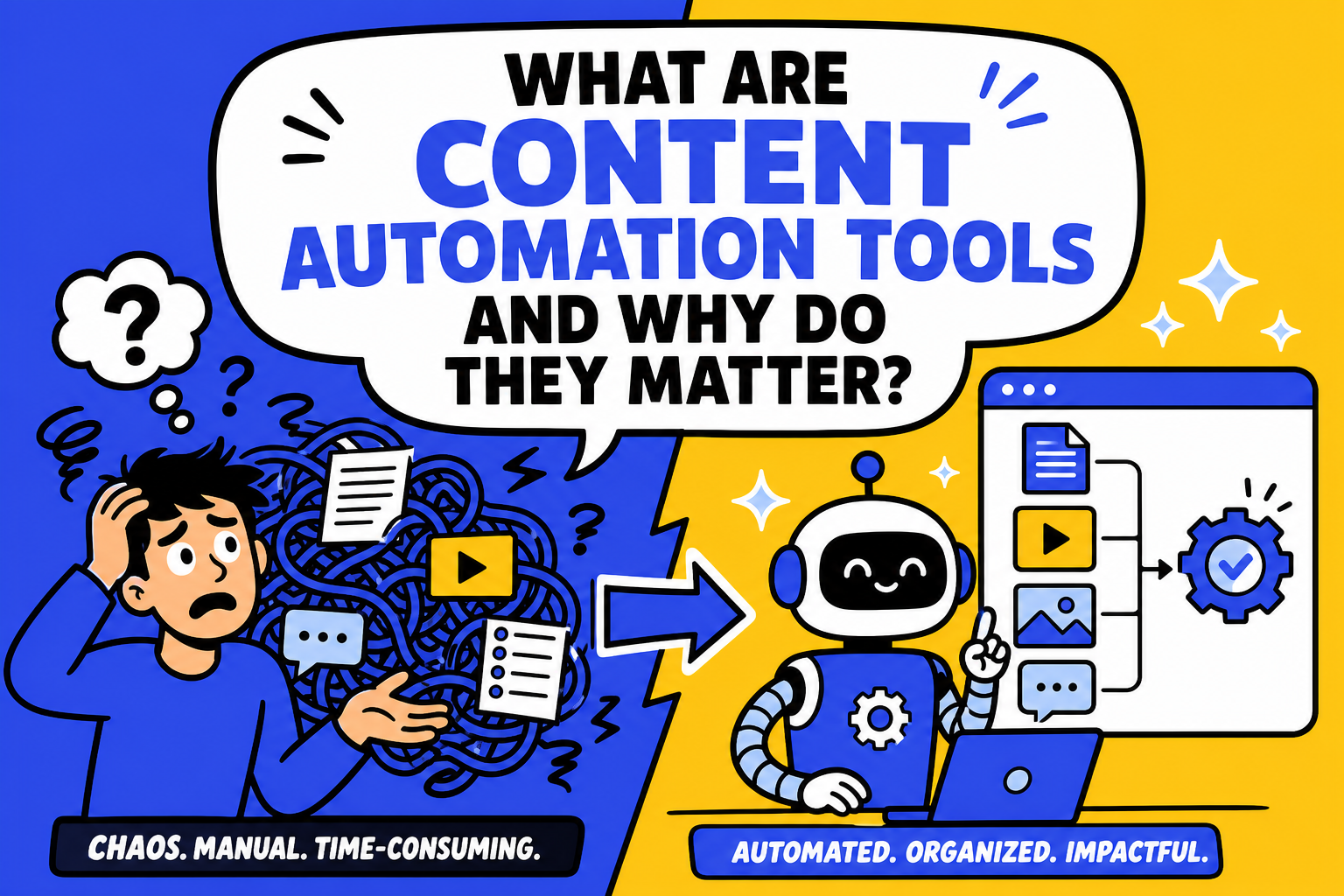
The content creation landscape has transformed dramatically, and businesses that once struggled to maintain consistent output are now publishing at scale with remarkable efficiency. Content automation tools have become the secret weapon for companies looking to streamline their content workflows while maintaining quality and relevance. Whether you're a small business owner juggling multiple responsibilities or a content manager overseeing large-scale operations, selecting the right automation tools can revolutionize your content strategy.
In this comprehensive guide, you'll discover how to evaluate, select, and implement content automation tools that align with your specific business needs. We'll walk through the essential features to prioritize, common pitfalls to avoid, and actionable steps to ensure your investment delivers measurable results.
What Are Content Automation Tools and Why Do They Matter?
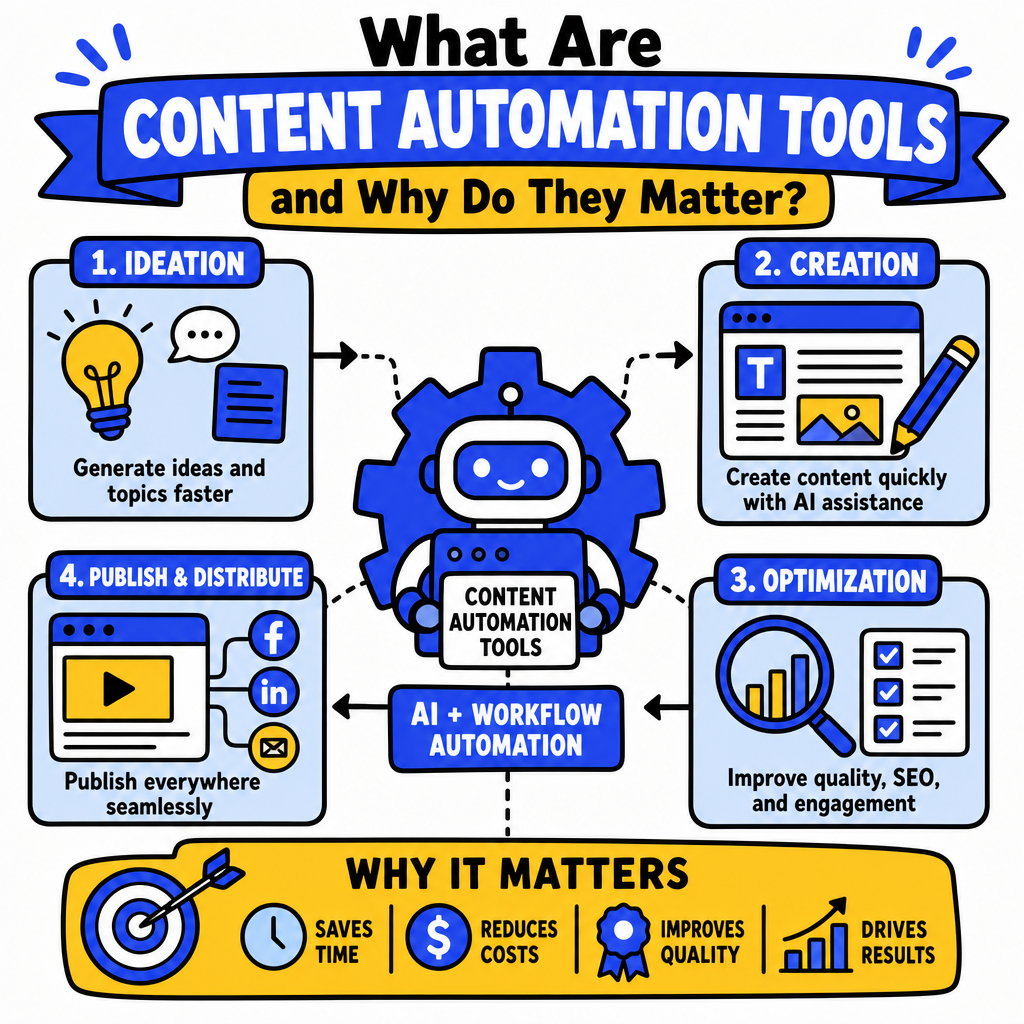
Content automation tools are software solutions designed to streamline various aspects of content creation, from initial ideation to final publication. These platforms leverage artificial intelligence, machine learning, and workflow automation to reduce manual tasks while maintaining content quality and consistency.
The significance of these tools extends beyond simple time savings. Modern content automation tools can analyze audience behavior, optimize content for search engines, and even personalize messaging based on user segments. They bridge the gap between creative vision and operational efficiency, allowing teams to focus on strategy while the technology handles repetitive processes.
For businesses in 2026, the question isn't whether to use automation tools, but rather which ones will deliver the best return on investment. The market has matured considerably, offering specialized solutions for different content types, industries, and business sizes.
How to Assess Your Content Automation Needs?
Before diving into specific tools, you need a clear understanding of your current content challenges and future goals. Start by conducting a thorough audit of your existing content processes. Document how much time your team spends on each stage of content creation, from research and writing to editing and distribution.
Identify the bottlenecks in your workflow. Are you struggling with consistent content output? Do you find it difficult to maintain brand voice across different writers? Is SEO optimization consuming too much of your team's bandwidth? These pain points will guide your tool selection process and help you prioritize features that address your most pressing needs.
Consider your content volume requirements and growth projections. A tool that works perfectly for 10 blog posts per month might not scale effectively when you need to produce 100 pieces. Similarly, evaluate your team's technical expertise and training capacity, as some automation tools require steeper learning curves than others.
What Features Should You Prioritize in Content Automation Tools?
The feature set you prioritize depends heavily on your specific use case, but certain capabilities have proven essential across most successful implementations. Content planning and calendar management functionality helps maintain consistency and prevents last-minute scrambling for topics. Look for tools that offer collaborative planning features, allowing multiple team members to contribute ideas and track progress.
SEO optimization capabilities have become increasingly sophisticated in modern content automation tools. The best platforms now offer real-time keyword suggestions, content scoring, and competitive analysis features. These tools should integrate seamlessly with your existing SEO automation software to create a comprehensive optimization workflow.
Quality control and brand consistency features are crucial for maintaining professional standards. Advanced tools offer customizable style guides, tone analysis, and automated fact-checking capabilities. Some platforms even provide plagiarism detection and citation management, ensuring your content meets both legal and ethical standards.
| Feature Category | Must-Have | Nice-to-Have | Advanced |
|---|---|---|---|
| Content Planning | Editorial calendar, workflow management | Team collaboration, approval chains | AI topic suggestions, trend analysis |
| SEO Optimization | Keyword research, meta optimization | Content scoring, competitor analysis | Real-time SERP tracking, schema markup |
| Quality Control | Grammar checking, brand voice | Plagiarism detection, fact-checking | Multi-language support, accessibility compliance |
| Distribution | Social media scheduling, email integration | Multi-platform publishing | Performance tracking, A/B testing |
How to Evaluate Content Automation Tool Providers?
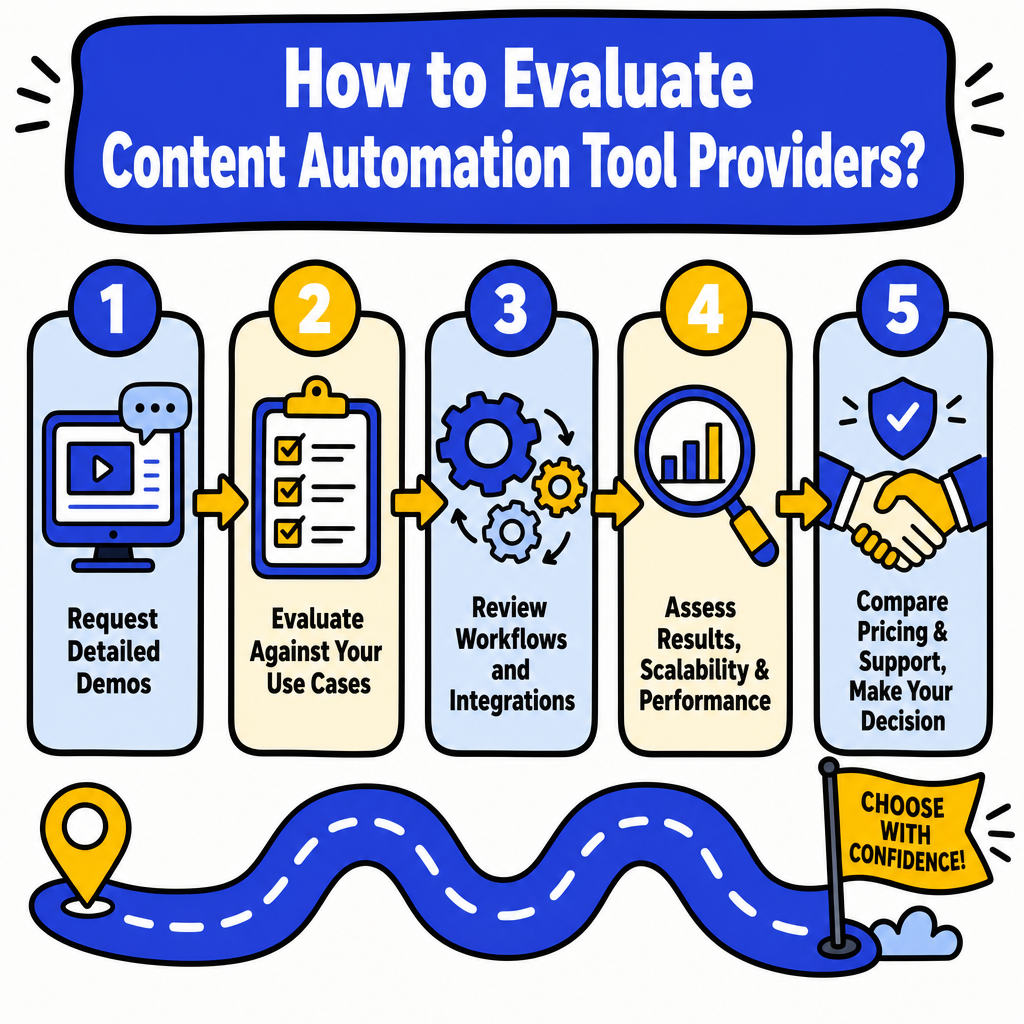
When evaluating potential providers, start by requesting detailed demonstrations that showcase real-world scenarios similar to your use cases. Generic demos often highlight flashy features that may not align with your actual needs. Instead, ask providers to walk through specific workflows using your content types and requirements.
Examine the integration capabilities thoroughly. Your content automation tools should work harmoniously with your existing tech stack, including your CMS, CRM, analytics platforms, and social media management tools. Poor integration can create data silos and workflow inefficiencies that negate the benefits of automation.
Pay close attention to the provider's track record and customer support quality. According to HubSpot's State of Marketing Report, businesses using integrated automation tools see 451% more qualified leads, but only when the tools are properly implemented and supported. Look for providers that offer comprehensive onboarding, ongoing training, and responsive technical support.
What Implementation Strategy Ensures Success?
Successful implementation of content automation tools requires a phased approach rather than attempting to automate everything simultaneously. Begin with a pilot program focusing on one specific content type or workflow. This allows your team to learn the system thoroughly and identify optimization opportunities before scaling up.
Establish clear success metrics before implementation begins. These might include content production volume, time savings per piece, SEO performance improvements, or engagement rate increases. Having baseline measurements enables you to demonstrate ROI and make data-driven adjustments to your automation strategy.
Training and change management are often overlooked but critical components of successful implementation. Even the most intuitive tools require proper training to maximize their potential. Consider designating automation champions within your team who can provide ongoing support and identify new optimization opportunities.
How to Measure the ROI of Your Content Automation Investment?
Measuring the return on investment for content automation tools requires both quantitative and qualitative metrics. On the quantitative side, track direct time savings by comparing pre and post-implementation production times. Calculate the cost per piece of content, factoring in both tool costs and labor expenses.
Quality metrics are equally important but often more challenging to measure. Monitor engagement rates, search engine rankings, and conversion rates for automated versus manually created content. Some businesses find that while automation increases volume, maintaining quality requires ongoing refinement of processes and tools.
Consider the indirect benefits that may not appear in immediate ROI calculations. Improved content consistency can strengthen brand recognition over time. Faster content production enables more timely responses to market opportunities and trending topics. These strategic advantages often justify automation investments even when direct cost savings are modest.
The integration between content automation tools and content optimization tools creates synergies that amplify results across your entire content marketing ecosystem.
What Common Pitfalls Should You Avoid?
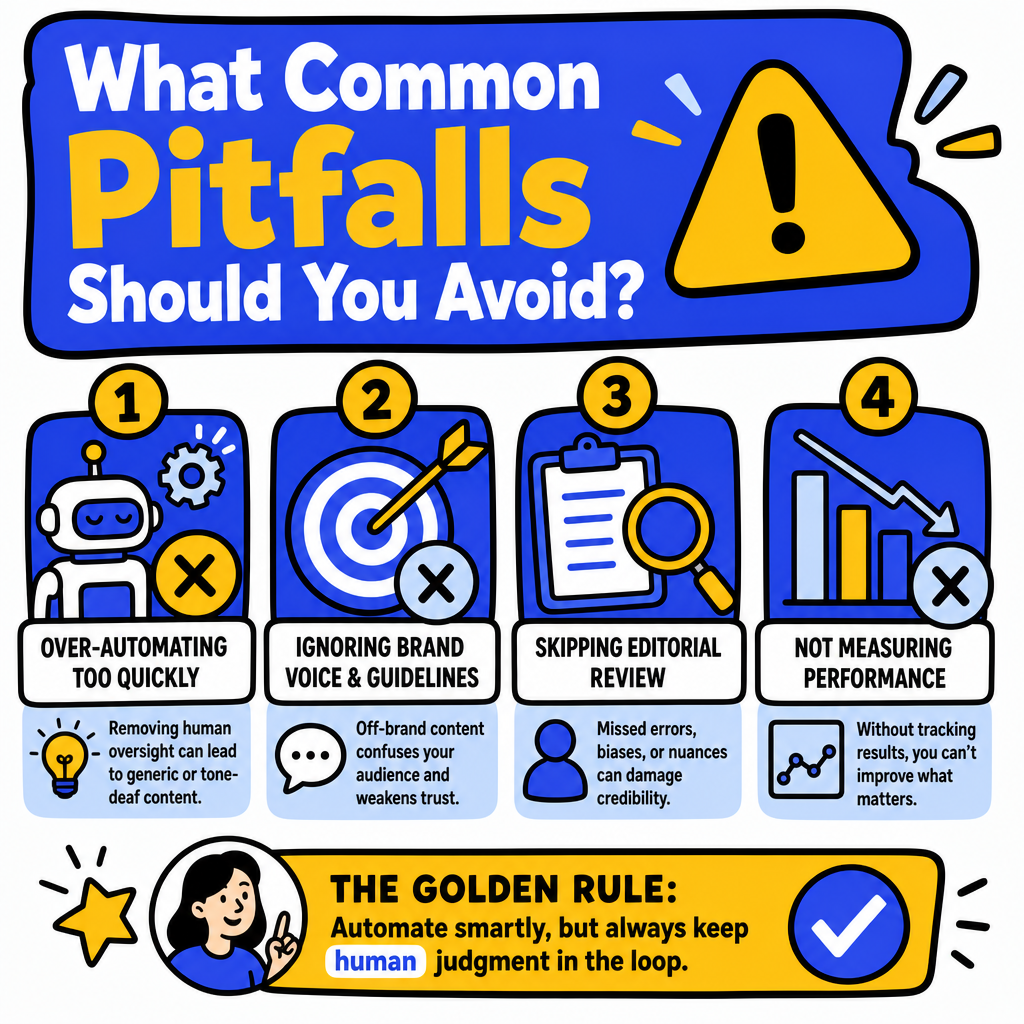
One of the most frequent mistakes businesses make is over-automating too quickly. While automation can dramatically improve efficiency, completely removing human oversight often results in content that feels generic or misses important nuances. Maintain editorial review processes, especially during the initial implementation phase.
Another common pitfall is neglecting to customize automation tools to match your brand voice and style preferences. Default settings rarely align perfectly with established brand guidelines. Invest time in configuring tone settings, style preferences, and approval workflows to ensure automated content maintains your brand's unique personality.
Failing to plan for scalability can create expensive problems down the road. Choose tools that can grow with your business rather than solutions that meet only your current needs. This might mean paying slightly more upfront for enterprise-grade features you'll eventually need, rather than switching platforms later.
How to Stay Current with Evolving Automation Technology?
The content automation landscape evolves rapidly, with new features and capabilities emerging regularly. Establish a routine for evaluating your current tools and exploring new options. Many successful businesses conduct quarterly reviews of their automation stack, assessing performance and identifying areas for improvement.
Stay connected with industry communities and forums where other content professionals share experiences and recommendations. Content Marketing Institute's research consistently provides valuable insights into emerging trends and best practices in content automation.
Consider the relationship between content automation and broader strategic content creation initiatives. The most successful implementations align automation tools with overarching content strategy rather than treating them as isolated solutions.
Conclusion
Selecting the right content automation tools requires careful consideration of your specific needs, thorough evaluation of available options, and strategic implementation planning. The tools that work best for your business will align with your content goals, integrate seamlessly with your existing workflows, and provide measurable improvements in both efficiency and quality.
Remember that content automation is not about replacing human creativity but rather amplifying it. The most successful businesses use these tools to handle routine tasks while freeing their teams to focus on strategy, innovation, and high-value creative work.
Ready to transform your content creation process? Start by auditing your current workflows and identifying the biggest opportunities for automation. The investment in the right tools today will pay dividends in increased productivity, improved content quality, and enhanced competitive positioning throughout 2026 and beyond.

Stefan Winter
Founder & SEO Expert
Founder of Fast SEO Fix and SEO automation expert. Stefan built Fast SEO Fix to solve the tedious problem of manual SEO work. He specializes in SEO optimized content generation, keyword research, and automated SEO strategies.
