What Exactly Is an AI Blog Writer and Why Does It Matter?
Posted by
 Stefan Winter
How to Choose the Perfect AI Blog Writer for Your Content Strategy in 2026
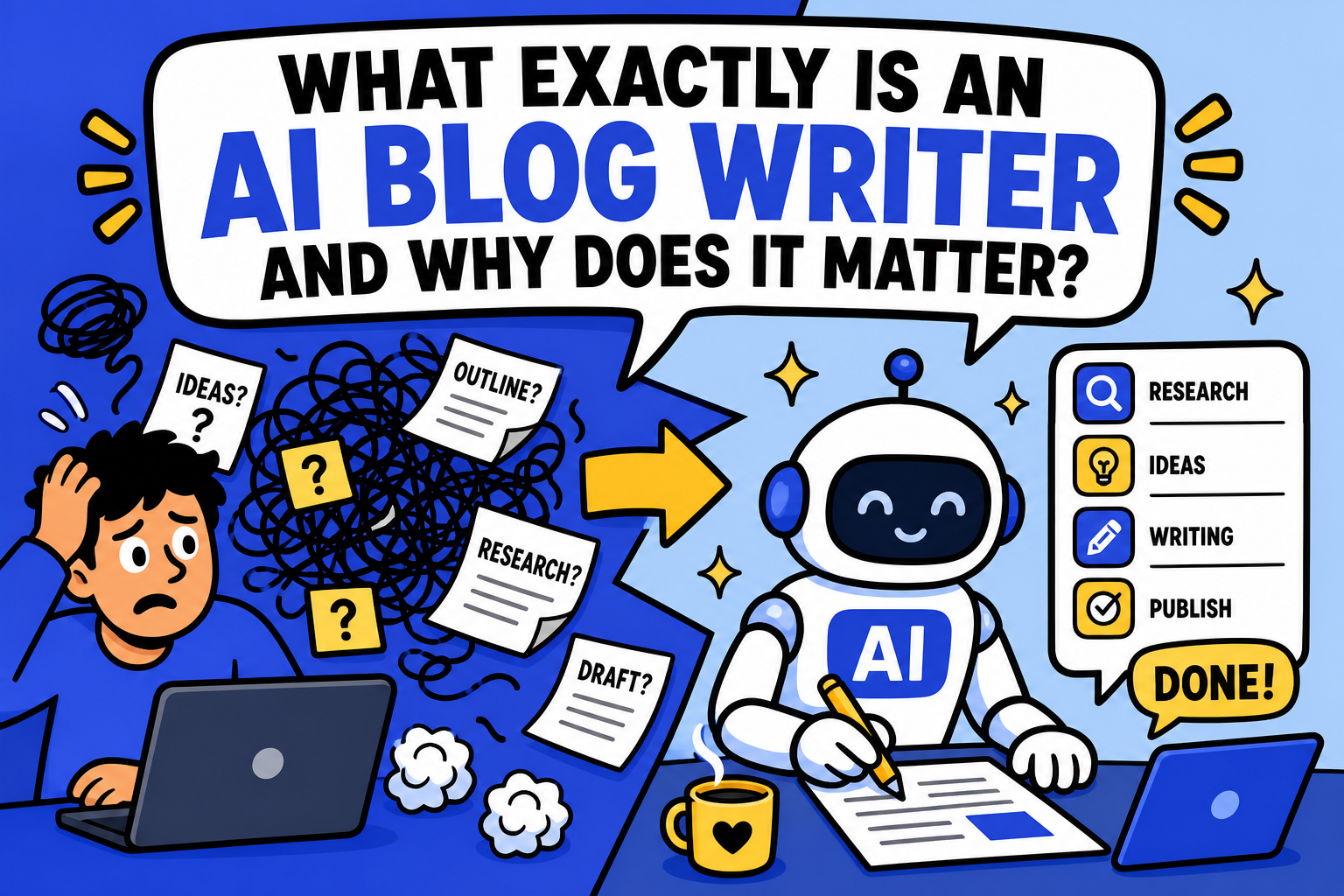
The content marketing landscape has transformed dramatically, and artificial intelligence now powers some of the most successful blog content strategies. With over 4.4 billion blog posts published every day, businesses need every advantage they can get to stand out. An AI blog writer can be that game-changing advantage, but only if you choose the right one for your specific needs.
This comprehensive guide will walk you through everything you need to know about selecting an AI blog writer that aligns with your content goals, maintains your brand voice, and delivers the ROI you're looking for. Whether you're a small business owner, marketing manager, or content creator, you'll discover the exact steps to evaluate, implement, and maximize your AI writing investment.
What Exactly Is an AI Blog Writer and Why Does It Matter?
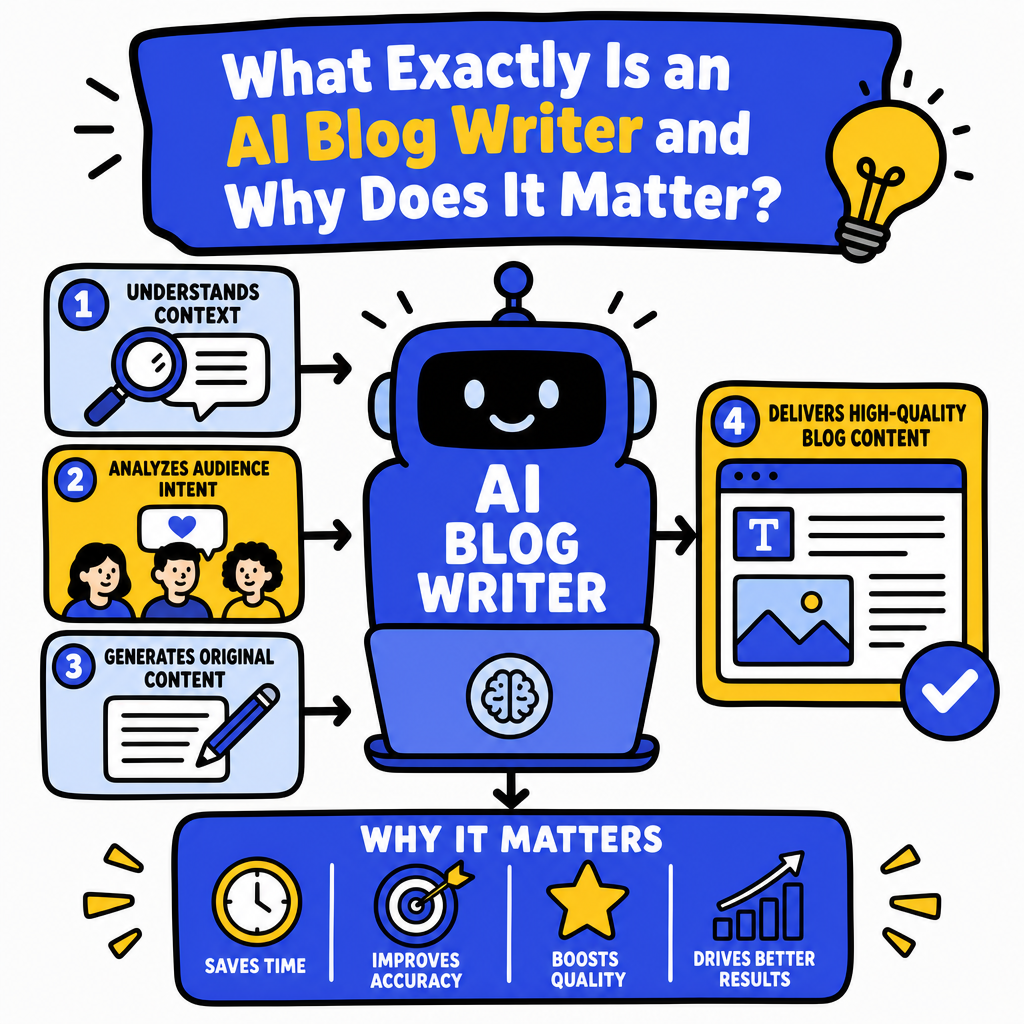
An AI blog writer is a sophisticated software tool that uses artificial intelligence and natural language processing to create blog content automatically. Unlike simple content spinners or template-based generators, modern AI blog writers analyze context, understand audience intent, and produce original, engaging content that reads naturally.
The technology behind these tools has evolved significantly since 2024. Today's AI blog writers can research topics, incorporate SEO best practices, maintain consistent brand voice, and even adapt writing styles for different audiences. They're not replacing human creativity but rather amplifying it by handling time-consuming research and first-draft creation.
What makes AI blog writers particularly valuable is their ability to scale content production without sacrificing quality. A single AI tool can produce multiple blog posts daily while maintaining consistency in tone, style, and messaging. This capability becomes essential when you consider that companies publishing 16 or more blog posts per month generate 3.5 times more traffic than those publishing fewer posts.
How Do You Identify Your Specific AI Blog Writer Requirements?
Before diving into tool comparisons, you need to clearly define what you expect from your AI blog writer. Start by auditing your current content creation process and identifying specific pain points. Are you struggling with consistent publishing schedules, topic research, or maintaining brand voice across multiple writers?
Consider your content volume requirements realistically. If you need 20 blog posts monthly, your AI tool needs robust automation features and reliable output quality. For businesses requiring 5-10 posts monthly, you might prioritize customization options and editing capabilities over pure volume production.
Think about your technical comfort level and team capabilities. Some AI blog writers require extensive setup and training, while others offer plug-and-play simplicity. Your choice should match your team's ability to implement and maintain the system effectively. Additionally, consider integration requirements with your existing content management system, SEO tools, and workflow processes.
What Key Features Should You Prioritize in an AI Blog Writer?
Content Quality and Originality Standards
The most critical feature of any AI blog writer is its ability to produce original, high-quality content consistently. Look for tools that offer plagiarism checking, fact-verification capabilities, and multiple writing style options. The best AI writers provide content that requires minimal editing and maintains readability scores appropriate for your target audience.
Evaluate the tool's research capabilities by testing how well it incorporates current information and statistics into blog posts. Quality AI blog writers access updated databases and can reference recent developments in your industry, ensuring your content remains relevant and authoritative.
SEO Integration and Optimization Features
Your AI blog writer should seamlessly integrate SEO best practices into every piece of content. This includes keyword optimization, meta tag generation, header structure optimization, and internal linking suggestions. Advanced tools also provide content gap analysis and competitor research features.
Look for AI writers that understand search intent and can create content optimized for different stages of the buyer's journey. The tool should help you target informational, navigational, and transactional keywords appropriately while maintaining natural language flow.
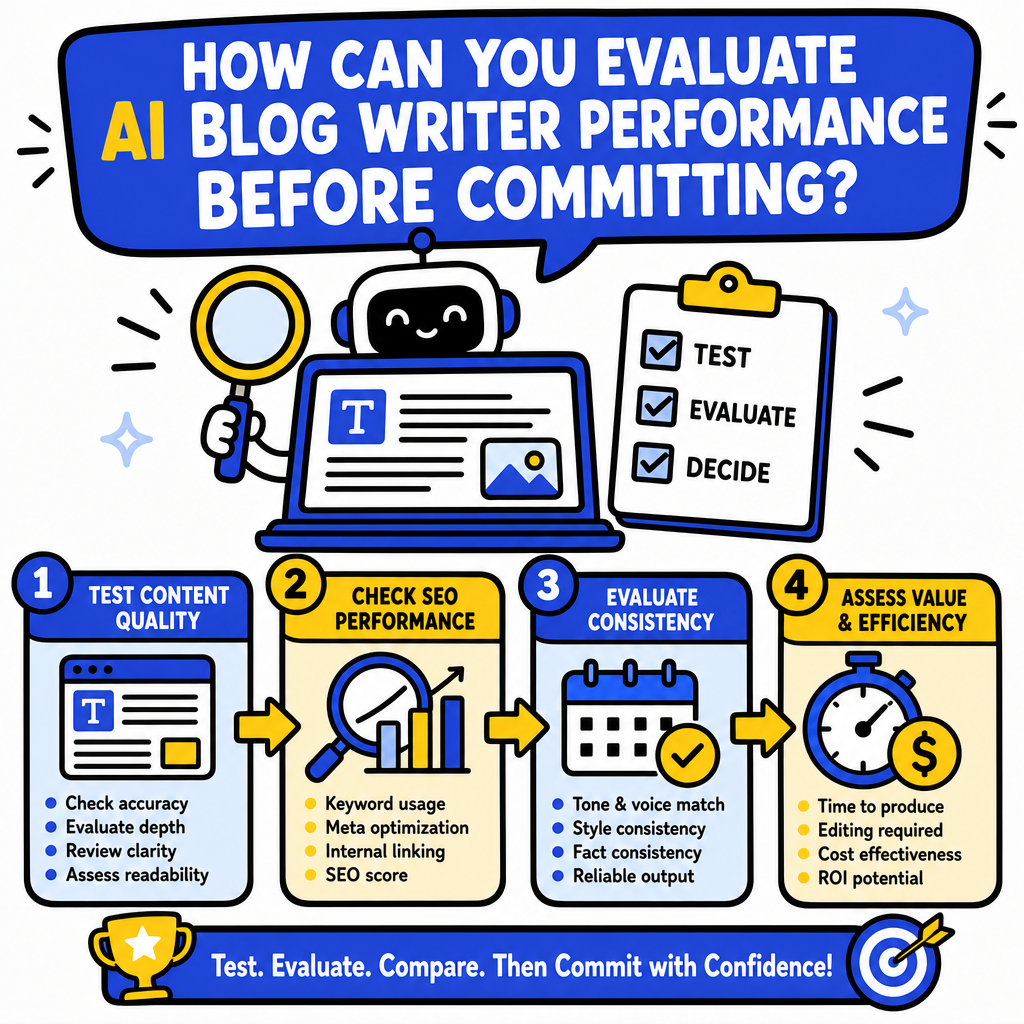
How Can You Evaluate AI Blog Writer Performance Before Committing?
Testing Content Quality and Brand Voice Alignment
Most reputable AI blog writer platforms offer free trials or demo versions. Use these opportunities to test the tool with your actual content requirements. Create sample blog posts using your typical topics, keywords, and brand guidelines to assess how well the AI captures your voice.
Pay attention to consistency across multiple test posts. A quality AI blog writer should maintain the same tone, style, and quality level regardless of the topic or keyword focus. Test edge cases by requesting content on complex or niche topics within your industry to evaluate the tool's research and comprehension capabilities.
Create a scoring rubric that includes factors like readability, accuracy, SEO optimization, and brand voice alignment. This systematic approach helps you compare different AI blog writers objectively and makes the selection process more data-driven.
Analyzing Integration and Workflow Compatibility
Test how well potential AI blog writers integrate with your existing content workflow. Can the tool export content in your preferred format? Does it integrate with your content management system, editorial calendar, or project management tools? These practical considerations often determine long-term success more than feature lists.
Evaluate the learning curve by having different team members test the platform. If your content team struggles with the interface or finds the process cumbersome, even the most powerful AI blog writer won't deliver the productivity gains you're seeking.
What Are the Most Important Comparison Factors Between AI Blog Writers?
| Feature Category | Key Evaluation Criteria | Why It Matters |
|---|---|---|
| Content Quality | Readability scores, originality, accuracy | Determines final output quality and editing time required |
| SEO Capabilities | Keyword optimization, meta generation, structure | Impacts search rankings and organic traffic potential |
| Customization | Brand voice training, style options, templates | Ensures content aligns with your unique brand identity |
| Integration | CMS compatibility, API access, workflow tools | Affects implementation ease and long-term usability |
| Pricing Structure | Per-word, monthly, or usage-based models | Determines total cost of ownership and scalability |
| Support & Training | Documentation, tutorials, customer service | Influences successful adoption and problem resolution |
How Do You Successfully Implement Your Chosen AI Blog Writer?
Setting Up Brand Guidelines and Content Parameters
Once you've selected your AI blog writer, invest time in proper setup and configuration. Most advanced AI tools allow you to input brand guidelines, preferred writing styles, and content parameters that influence all future outputs. This initial investment pays dividends in content consistency and reduced editing time.
Create detailed content briefs that include your target audience personas, preferred tone of voice, industry-specific terminology, and topics to avoid. The more context you provide during setup, the better your AI blog writer will perform from day one.
Work with your content optimization tools to establish SEO parameters and keyword targeting strategies that complement your AI blog writer's capabilities.
Establishing Quality Control and Editorial Processes
Even the best AI blog writer requires human oversight and quality control. Develop a standardized editorial process that includes fact-checking, brand voice verification, and SEO optimization review. This process should be efficient enough to maintain your content production goals while ensuring quality standards.
Consider implementing a tiered review system where different types of content require different levels of human intervention. Evergreen blog posts might need more thorough review than news updates or product announcements. This approach optimizes your team's time while maintaining content quality.
Your SEO automation software can work alongside your AI blog writer to streamline the optimization and publishing process, creating a more efficient content production pipeline.
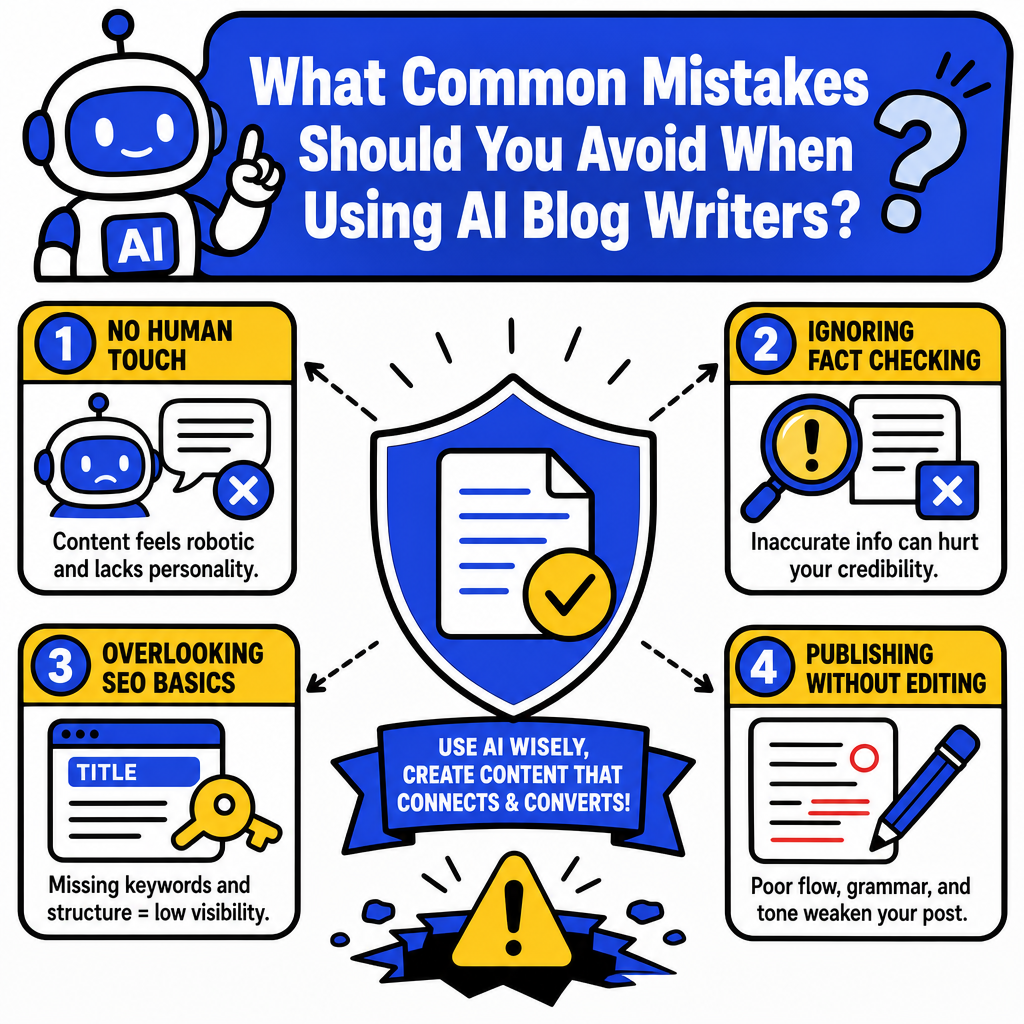
What Common Mistakes Should You Avoid When Using AI Blog Writers?
Over-Reliance Without Human Oversight
The biggest mistake businesses make with AI blog writers is treating them as completely autonomous solutions. While AI can handle much of the heavy lifting in content creation, human oversight remains crucial for maintaining quality, accuracy, and brand alignment. Establish clear guidelines for when human intervention is required and stick to them consistently.
Avoid publishing AI-generated content without proper fact-checking and source verification. Even the most advanced AI blog writers can occasionally include outdated information or make logical errors that human editors would catch immediately.
Neglecting Continuous Optimization and Training
AI blog writers improve with use and feedback, but only if you actively participate in the optimization process. Many users set up their AI tool once and never revisit the configuration, missing opportunities to improve performance and content quality over time.
Regularly review your AI blog writer's performance metrics and adjust parameters based on content performance data. If certain types of posts consistently require extensive editing, analyze why and modify your AI's instructions accordingly. This iterative approach maximizes your return on investment and improves content quality continuously.
How Can You Measure ROI and Success with Your AI Blog Writer?
Track specific metrics that demonstrate your AI blog writer's impact on your content marketing goals. Monitor content production volume, time-to-publish improvements, and cost-per-piece reductions. These operational metrics provide immediate feedback on efficiency gains.
More importantly, measure content performance metrics like organic traffic growth, search ranking improvements, and engagement rates. Your AI blog writer should contribute to better SEO performance and audience engagement, not just faster content production. Compare these metrics to your pre-AI baseline to quantify the tool's impact on your content marketing ROI.
Consider the broader impact on your content strategy, including your team's ability to focus on higher-level strategic work while the AI handles routine content creation. This qualitative benefit often proves more valuable than pure cost savings.
Conclusion
Choosing the right AI blog writer can transform your content marketing strategy, but success depends on selecting a tool that aligns with your specific needs, properly implementing it within your workflow, and maintaining appropriate human oversight. The key lies in understanding your requirements, thoroughly evaluating options, and committing to ongoing optimization.
Remember that an AI blog writer is a powerful tool in your content creation arsenal, not a magic solution. When combined with strategic planning, quality control processes, and continuous optimization, it becomes an invaluable asset for scaling your content production while maintaining quality and brand consistency.
Ready to revolutionize your content strategy? Start by defining your specific requirements using the framework outlined in this guide, then begin testing AI blog writers that match your criteria. The perfect AI writing solution for your business is out there, and with the right approach, you'll find it.

Stefan Winter
Founder & SEO Expert
Founder of Fast SEO Fix and SEO automation expert. Stefan built Fast SEO Fix to solve the tedious problem of manual SEO work. He specializes in SEO optimized content generation, keyword research, and automated SEO strategies.
