What Is a Content Audit Tool and Why Do You Need One?
Posted by
 Stefan Winter
TL;DR
A content audit tool is specialized software that systematically analyzes your website's content to evaluate performance, SEO effectiveness, and engagement patterns, transforming what would take weeks of manual review into actionable insights in days. Modern businesses need these tools because managing hundreds or thousands of pages manually is impractical, and the right tool helps identify high-performing content to replicate, underperforming pages to optimize, and content gaps to address.
How to Perform a Complete Content Audit Using the Right Tools in 2026

Discovering underperforming content on your website can feel like finding a needle in a haystack, especially when you're managing hundreds or thousands of pages. A comprehensive content audit tool transforms this overwhelming task into a systematic process that reveals exactly which pieces drive results and which ones drain your SEO potential. In this guide, you'll learn how to leverage powerful audit tools to analyze your content performance, identify optimization opportunities, and create a data-driven strategy that boosts your search rankings.
What Is a Content Audit Tool and Why Do You Need One?
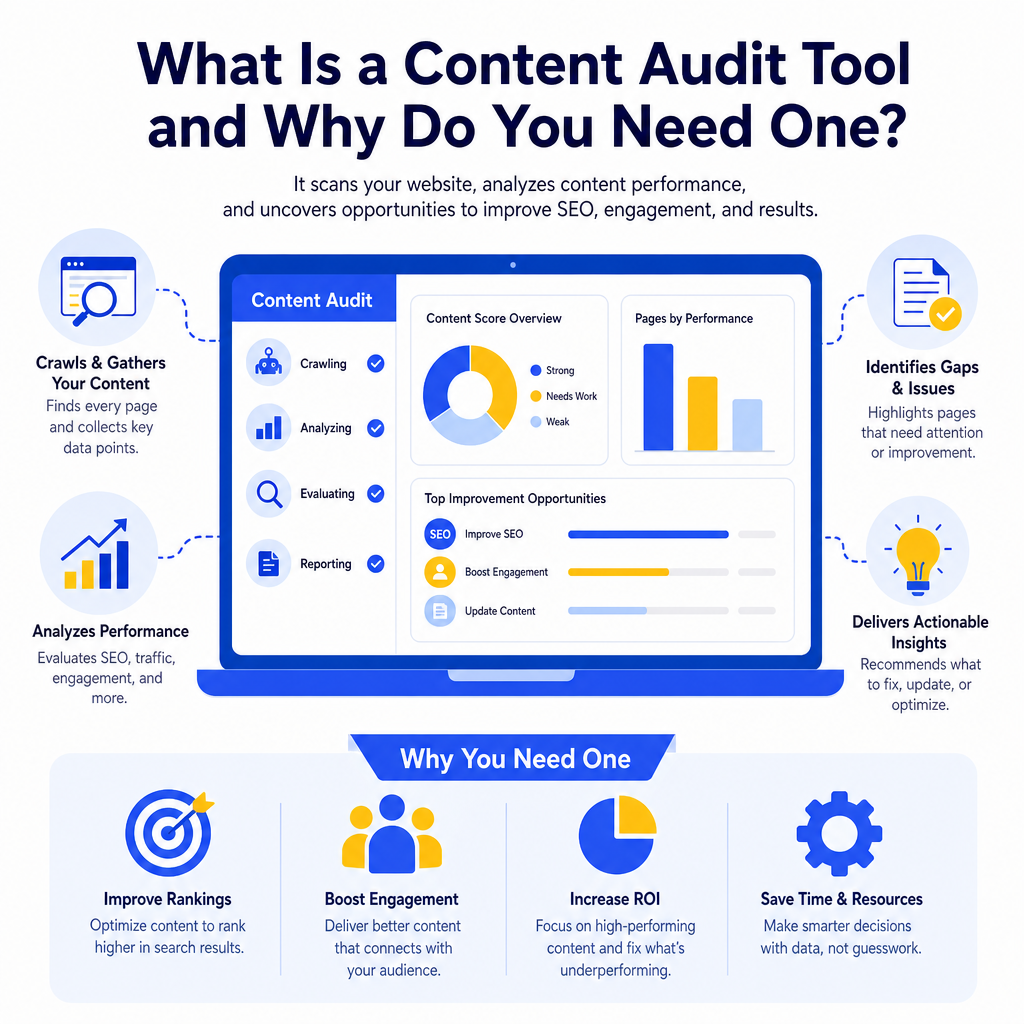
A content audit tool is specialized software that systematically analyzes your website's content to evaluate performance metrics, SEO effectiveness, and user engagement patterns. These tools crawl through your site's pages, collecting data on everything from keyword rankings and organic traffic to content gaps and technical issues.
Unlike manual content reviews that can take weeks to complete, a robust content audit tool delivers comprehensive insights in hours or days. The tool examines factors such as page load speeds, content freshness, internal linking structures, and conversion rates to provide a complete picture of your content ecosystem.
Modern businesses need these tools because content portfolios have grown exponentially complex. With the average company website containing hundreds of blog posts, product pages, and landing pages, manual analysis becomes practically impossible. A content audit tool ensures nothing falls through the cracks while providing the granular data needed to make informed optimization decisions.
How to Choose the Right Content Audit Tool for Your Needs
Selecting an effective content audit tool requires evaluating several critical capabilities that align with your specific goals and technical requirements. Start by identifying whether you need basic performance metrics or advanced features like competitor analysis and content gap identification.
Look for tools that integrate seamlessly with your existing analytics platforms, particularly Google Analytics and Google Search Console. This integration ensures you're working with consistent data sets and can correlate content performance with broader website metrics. The best tools also offer customizable reporting features that let you focus on the metrics most relevant to your business objectives.
Consider the scalability of your chosen tool as well. If you're managing multiple websites or planning significant content expansion, ensure the platform can handle increased volume without performance degradation. Additionally, evaluate the tool's learning curve and available support resources, as complex platforms may require substantial training time for your team.
Key Features to Prioritize in Your Content Audit Tool
Essential features include comprehensive crawling capabilities that can handle JavaScript-heavy sites and dynamic content. Your tool should provide detailed SEO analysis, including meta tag evaluation, heading structure assessment, and keyword density analysis. Traffic and engagement metrics integration helps you understand how content performs beyond search rankings.
Advanced features worth considering include content gap analysis that identifies topics your competitors cover but you don't, duplicate content detection that prevents SEO penalties, and automated reporting that saves time on regular audits. Some tools also offer content scoring algorithms that prioritize which pages need immediate attention based on potential impact.
Step-by-Step Process for Conducting Your Content Audit

Begin your content audit by establishing clear objectives and defining the scope of your analysis. Determine whether you're auditing your entire website or focusing on specific sections like blog content or product pages. Set measurable goals such as improving organic traffic by 25% or reducing bounce rates on key landing pages.
Configure your chosen content audit tool by connecting it to your analytics accounts and setting up proper tracking parameters. Most tools require 24-48 hours to complete their initial crawl and data collection, so plan accordingly. During this setup phase, create custom filters and segments that align with your audit objectives.
Once data collection is complete, export comprehensive reports that include performance metrics, technical issues, and optimization recommendations. Organize this information into categories such as high-performing content to replicate, underperforming content to improve, and outdated content to update or remove.
Analyzing Your Content Audit Results
Start your analysis by identifying your top-performing content pieces and documenting the characteristics that make them successful. Look for patterns in topics, content length, keyword usage, and formatting that you can apply to other pages. These high performers often provide the blueprint for effective SEO writing strategies that drive consistent results.
Next, focus on content that shows potential but currently underperforms. These pages often need minor optimizations like improved meta descriptions, better internal linking, or updated information rather than complete rewrites. Prioritize these opportunities based on current traffic volume and ranking positions.
| Content Category | Action Required | Expected Timeline | Priority Level |
|---|---|---|---|
| High Performers | Replicate Strategy | Ongoing | Medium |
| Quick Wins | Minor Optimization | 1-2 weeks | High |
| Major Updates | Content Rewrite | 4-6 weeks | Medium |
| Remove/Redirect | Deletion/301 Redirect | 1 week | High |
How to Identify Content Gaps and Opportunities
Your content audit tool reveals not just what you have, but what you're missing. Use competitor analysis features to discover topics and keywords where competitors rank well but your site has no presence. This gap analysis often uncovers the most valuable content opportunities with the least competition.
Examine search query data to identify questions and topics your audience seeks but your current content doesn't address adequately. Many audit tools integrate with search console data to show you exactly which queries bring visitors to your site and which ones result in high bounce rates due to content misalignment.
Consider seasonal trends and emerging topics in your industry when planning new content based on audit findings. The goal is creating a content calendar that addresses immediate gaps while positioning your site for future search opportunities. This strategic approach works particularly well when combined with comprehensive SEO strategy services that align content creation with broader marketing objectives.
What Technical Issues Should Your Content Audit Tool Detect?
A comprehensive content audit tool identifies critical technical problems that impact both user experience and search engine crawling. Common issues include broken internal links, missing or duplicate meta tags, oversized images that slow page loading, and improper heading tag hierarchy that confuses search engines.
Page speed analysis is particularly crucial, as Google's Core Web Vitals have become significant ranking factors. Your tool should identify specific elements causing slow loading times and provide actionable recommendations for improvement.
Mobile responsiveness issues also require immediate attention, given that mobile-first indexing is now the standard. Look for tools that test how your content displays across different device types and screen sizes, ensuring optimal user experience regardless of how visitors access your site.
How to Prioritize Technical Fixes from Your Audit
Start with issues that directly impact search engine crawling and indexing, such as broken internal links and missing meta descriptions. These problems prevent search engines from properly understanding and ranking your content, making them high-priority fixes that can yield immediate improvements.
Next, address page speed and user experience issues that affect engagement metrics. Slow-loading pages and mobile responsiveness problems directly impact bounce rates and time on site, which are important ranking signals. Focus on pages with high traffic potential first to maximize the impact of your optimization efforts.
How Often Should You Run Content Audits?
Establish a regular audit schedule based on your content publishing frequency and website size. Most businesses benefit from quarterly comprehensive audits supplemented by monthly spot checks on key performance indicators. High-volume publishers or e-commerce sites may need monthly full audits to stay on top of rapidly changing content landscapes.
Set up automated monitoring for critical metrics between formal audits. Many content audit tools offer alert systems that notify you when pages experience significant traffic drops or technical issues arise. This proactive approach prevents small problems from becoming major setbacks.
Consider conducting additional audits before major website updates, seasonal campaigns, or algorithm changes. These strategic audits help ensure your content remains optimized during periods of increased scrutiny or opportunity. Combining regular audits with advanced content optimization tools creates a comprehensive approach to maintaining peak content performance.
Measuring the Success of Your Content Audit Efforts
Track specific metrics that directly correlate with your audit objectives, such as organic traffic growth, improved search rankings for target keywords, and increased engagement rates on optimized pages. Establish baseline measurements before implementing changes so you can accurately measure improvement over time.
Monitor both immediate and long-term results, as some optimizations show quick wins while others require months to reach full potential. Quick improvements often include technical fixes and meta tag optimizations, while content updates and new page creation typically show results over 3-6 months.
According to research from BrightEdge, companies that conduct regular content audits see an average 35% increase in organic traffic within six months of implementation. Document your results to build a case for continued investment in content audit tools and optimization efforts.
Conclusion
Implementing a systematic content audit process using the right tools transforms your website from a collection of random pages into a strategic asset that consistently drives business results. By following this step-by-step approach, you'll identify optimization opportunities, eliminate underperforming content, and create a data-driven foundation for future content decisions. Remember that successful content auditing is an ongoing process, not a one-time event. Start your next content audit today and begin unlocking the hidden potential within your existing content portfolio.
Frequently Asked Questions
A content audit tool crawls through your website's pages and collects data on performance metrics, SEO effectiveness, keyword rankings, organic traffic, content freshness, internal linking structures, and conversion rates to provide a complete analysis of your content ecosystem.
A comprehensive content audit tool can deliver results in hours or days, compared to weeks for manual reviews. Most tools require 24-48 hours for their initial crawl and data collection before you can analyze the results.
Essential features include comprehensive crawling capabilities, detailed SEO analysis (meta tags, heading structure, keyword density), traffic and engagement metrics integration, content gap analysis, duplicate content detection, and automated reporting capabilities.
Start by identifying high-performing content to replicate, then focus on quick wins—underperforming pages that need minor optimizations. Prioritize based on current traffic volume, ranking positions, and potential impact on your business objectives.
You should establish clear objectives first and define your audit scope based on your goals. You can audit your entire website or focus on specific sections like blog content or product pages, depending on where you want to drive the most impact.

Stefan Winter
Founder & SEO Expert
Founder of Fast SEO Fix and SEO automation expert. Stefan built Fast SEO Fix to solve the tedious problem of manual SEO work. He specializes in SEO optimized content generation, keyword research, and automated SEO strategies.
