The Complete Guide to Writing SEO-Optimized Blog Posts in 2026
Posted by
 Stefan Winter
TL;DR
Writing SEO-optimized blog posts in 2026 requires balancing search engine algorithms with genuine reader value through strategic keyword research, proper content structure, and user engagement optimization. Success depends on understanding search intent, creating comprehensive content with logical hierarchy, and incorporating keywords naturally while maintaining readability.
The Complete Guide to Writing SEO-Optimized Blog Posts in 2026

Writing blog posts that rank well in search engines isn't just about creating great content anymore. In 2026, search algorithms have become increasingly sophisticated, demanding a strategic approach that balances human engagement with technical optimization. Whether you're a business owner looking to drive organic traffic or a content creator aiming to expand your reach, understanding how to write blog posts for SEO can transform your online visibility and drive meaningful results for your website.
What Makes an SEO Blog Post Different from Regular Content?
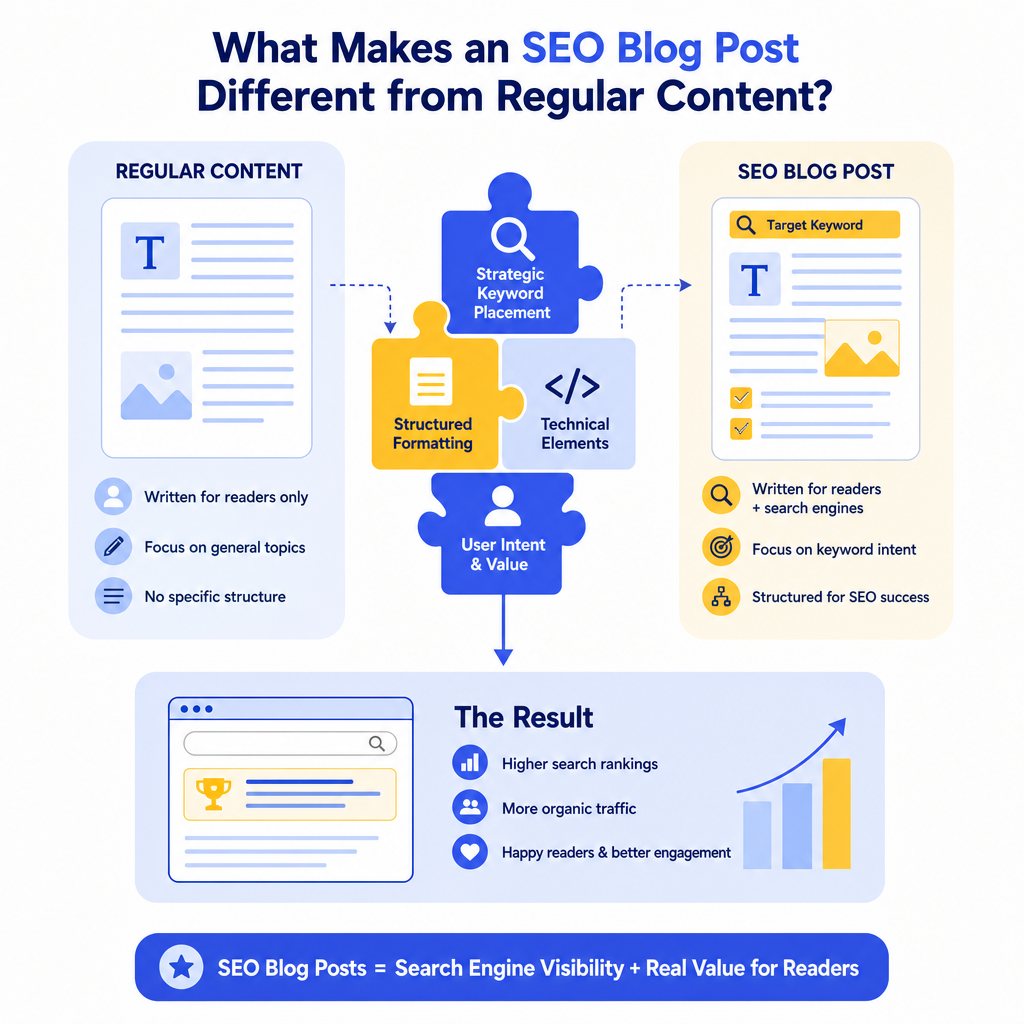
SEO-optimized blog posts serve a dual purpose: they must satisfy search engine algorithms while providing genuine value to human readers. Unlike traditional content writing, SEO blog posts require strategic keyword placement, structured formatting, and technical elements that help search engines understand and rank your content effectively.
The key difference lies in the intentional optimization process. While regular blog posts might focus solely on storytelling or sharing information, SEO blog posts are crafted with search intent in mind. This means considering what your target audience is searching for, how they phrase their queries, and what type of content will best answer their questions.
Modern SEO writing also emphasizes user experience metrics like time on page, bounce rate, and engagement signals. Search engines in 2026 pay close attention to how users interact with your content, making it essential to create posts that not only rank well but also keep readers engaged throughout their visit.
How Do You Research Keywords for Your Blog Posts?
Effective keyword research forms the foundation of any successful SEO blog post. Start by identifying your primary keyword (the main topic your post will target) and supporting secondary keywords that relate to your topic. Tools like Google Keyword Planner, SEMrush, or Ahrefs can help you discover search volumes, competition levels, and related keyword opportunities.
Focus on search intent when selecting keywords. Are users looking for information (informational intent), trying to navigate to a specific site (navigational intent), or ready to make a purchase (transactional intent)? Understanding this intent helps you create content that matches what searchers actually want to find.
Long-tail keywords often provide the best opportunities for newer websites or competitive niches. These longer, more specific phrases typically have lower competition and higher conversion rates because they target users with clearer intent. For example, instead of targeting "blog writing," you might focus on "how to write blog posts for small businesses" or "blog writing tips for beginners."
Creating a Keyword Map for Your Content
Once you've identified your target keywords, create a keyword map that shows how you'll incorporate them naturally throughout your post. Your primary keyword should appear in your title, first paragraph, at least one subheading, and conclusion. Secondary keywords can be woven into body paragraphs and subheadings where they fit naturally.
| Content Section | Primary Keyword Usage | Secondary Keywords | Best Practices |
|---|---|---|---|
| Title | Include exact match | Use related terms | Keep under 60 characters |
| Introduction | First 100 words | 1-2 variations | Natural, conversational tone |
| H2 Headings | 1-2 headings | Include question-based keywords | Focus on user intent |
| Body Content | 2-3 times per 1000 words | Sprinkle throughout | Maintain readability |
| Conclusion | Once, naturally | Call-to-action keywords | Encourage engagement |
What's the Optimal Structure for SEO Blog Posts?
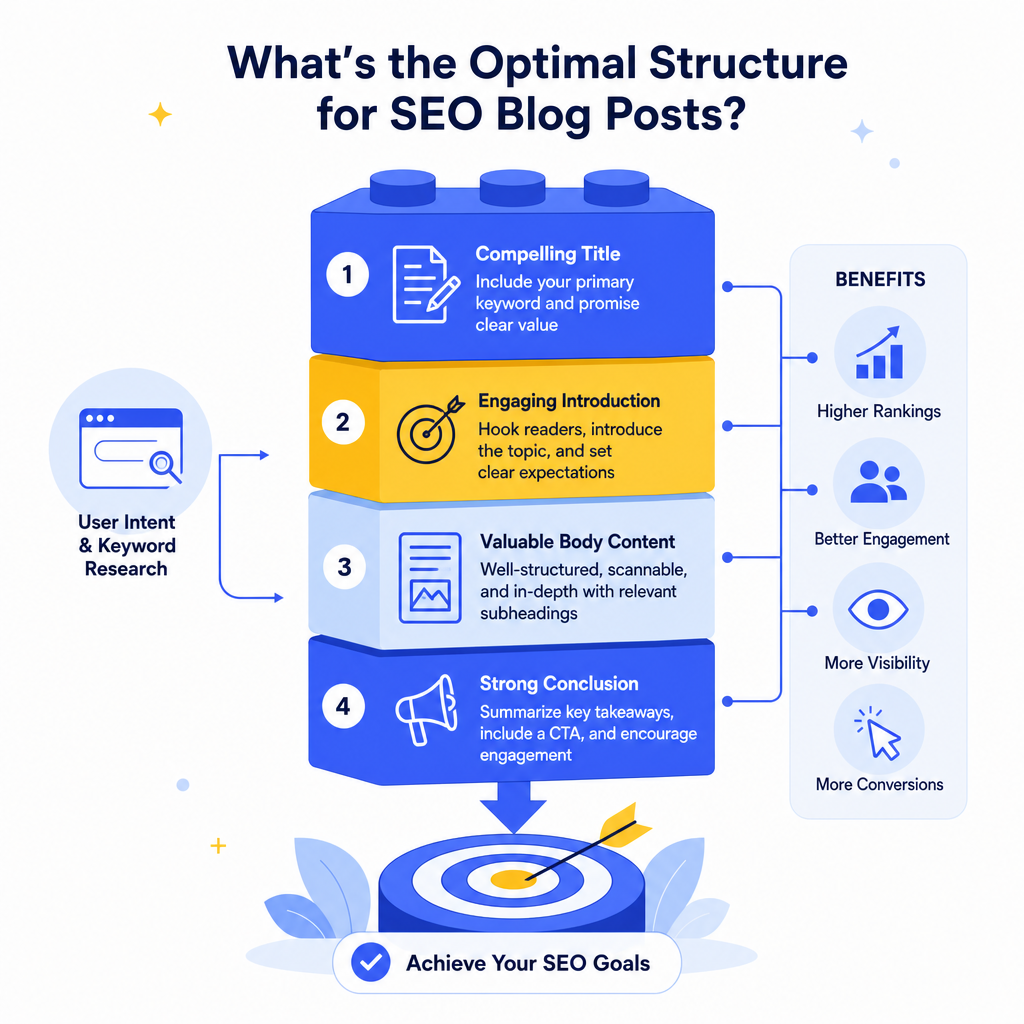
The structure of your blog post significantly impacts both user experience and search engine rankings. Start with a compelling title that includes your primary keyword and clearly communicates the value readers will receive. Your introduction should hook readers immediately while establishing the topic and promising specific outcomes.
Use a logical heading hierarchy with H2 tags for main sections and H3 tags for subsections. This structure helps search engines understand your content organization and makes it easier for readers to scan and find relevant information. Each section should focus on a specific aspect of your topic, building upon previous sections to create a comprehensive resource.
Include elements that enhance user engagement and provide additional value. Bullet points, numbered lists, tables, and visual breaks make your content more scannable and digestible. These formatting elements also create natural opportunities to include related keywords and phrases without compromising readability.
Optimizing Your Content Length and Depth
While there's no magic word count for SEO success, comprehensive coverage of your topic typically requires substantial content. Most top-ranking blog posts in 2026 contain between 1,500 and 3,000 words, but quality and relevance matter more than raw length.
Focus on thoroughly answering the questions your target audience has about your topic. If you can provide complete, valuable information in 1,200 words, that's better than stretching thin content to reach 2,000 words. Search engines prioritize content that satisfies user intent, regardless of length.
How Do You Write Compelling Headlines That Rank?
Your headline serves as both a ranking factor and the first impression potential readers have of your content. Effective SEO headlines include your primary keyword while creating curiosity or promising specific benefits. Power words like "complete," "ultimate," "proven," or "expert" can increase click-through rates when used appropriately.
Consider the emotional impact of your headlines. People search for solutions to problems, answers to questions, or ways to achieve goals. Your headline should clearly communicate how your content addresses these needs. Numbers and specific promises often perform well because they set clear expectations for readers.
Test different headline variations when possible. Many content management systems allow you to A/B test headlines to see which versions generate higher click-through rates. Small changes in wording can significantly impact your content's performance in search results.
What Technical Elements Should You Include?
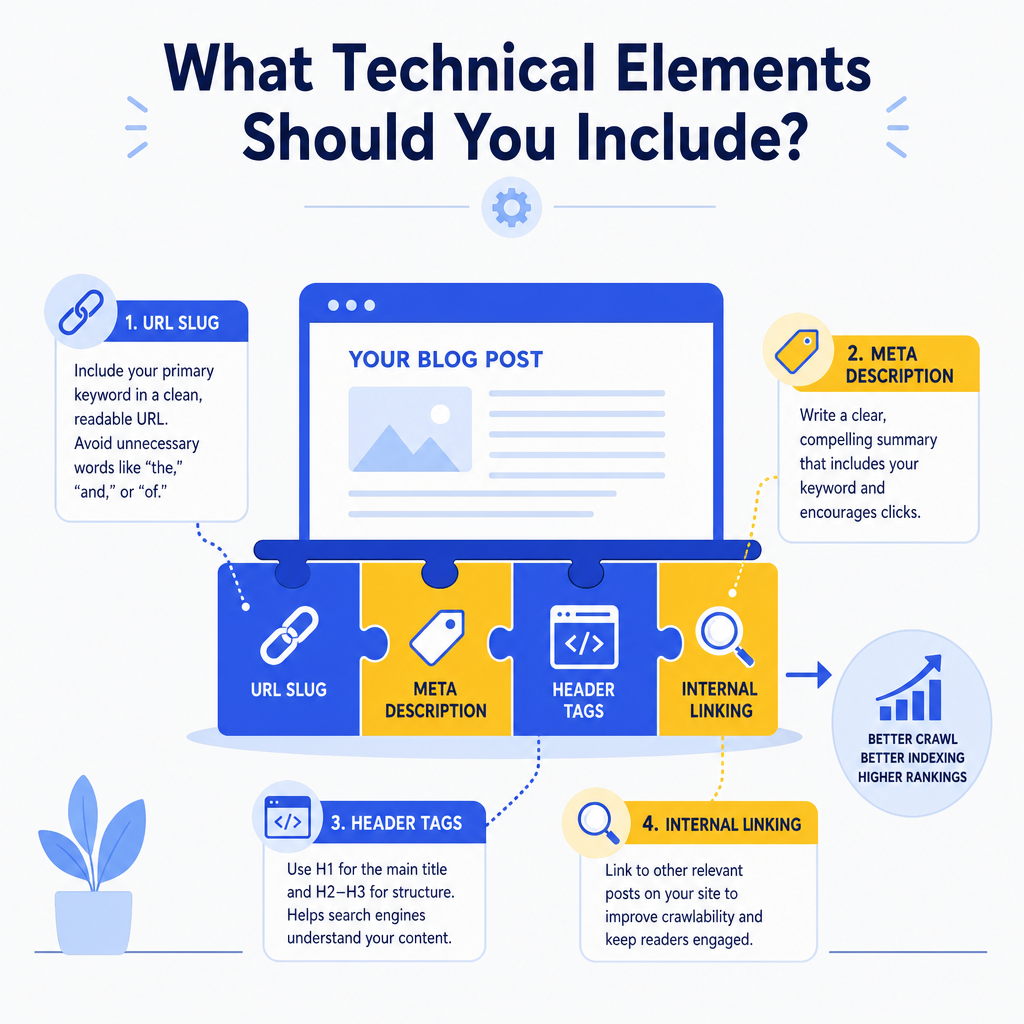
Technical SEO elements play a crucial role in how search engines crawl, index, and rank your blog posts. Start with optimizing your URL slug to include your primary keyword in a clean, readable format. Avoid unnecessary words like "the," "and," or "of" in your URLs.
Meta descriptions, while not direct ranking factors, significantly impact click-through rates from search results. Write compelling meta descriptions that include your primary keyword and clearly summarize the value readers will receive. Keep them between 150-160 characters to ensure they display fully in search results.
Internal linking helps search engines understand your site's structure while keeping readers engaged with related content. Link to relevant existing posts using descriptive anchor text that includes related keywords. External links to authoritative sources can also boost your content's credibility and provide additional value to readers.
Optimizing Images and Media
Images and other media elements require optimization to contribute positively to your SEO efforts. Use descriptive file names that include relevant keywords before uploading images. Alt text should accurately describe the image content while incorporating keywords when appropriate and natural.
Compress images to ensure fast loading times, as page speed remains a crucial ranking factor. Consider using next-generation image formats like WebP for better compression and faster loading. Video content, when relevant to your topic, can increase time on page and provide additional ranking opportunities through video search results.
How Do You Measure and Improve Your SEO Blog Post Performance?
Tracking the performance of your SEO blog posts helps you understand what works and identify areas for improvement. Monitor key metrics like organic traffic, keyword rankings, time on page, and bounce rate through tools like Google Analytics and Google Search Console.
Pay attention to which posts generate the most engagement and try to identify patterns in topics, formats, or optimization techniques. This data can inform your future content strategy and help you refine your approach to writing SEO blog posts.
Regular content updates can help maintain and improve rankings over time. Search engines favor fresh, current content, so consider updating older posts with new information, additional sections, or improved optimization based on current best practices.
Conclusion
Learning how to write blog posts for SEO requires balancing technical optimization with genuine value creation for your readers. By focusing on thorough keyword research, strategic content structure, compelling headlines, and proper technical implementation, you can create blog posts that both rank well and genuinely serve your audience's needs. Remember that SEO is a long-term strategy, and consistent application of these principles will compound over time to drive significant organic traffic growth. Start implementing these techniques in your next blog post and monitor the results to refine your approach for even better performance in 2026 and beyond.
Frequently Asked Questions
Most top-ranking blog posts contain between 1,500 and 3,000 words, but quality and relevance matter more than raw length. Focus on thoroughly answering your audience's questions rather than padding content to reach a specific word count.
Include your primary keyword in the title, first paragraph, at least one subheading, and conclusion. Secondary keywords should be woven naturally throughout body paragraphs at a rate of 2-3 times per 1,000 words while maintaining readability.
Understanding whether users are seeking information, trying to navigate to a site, or ready to purchase helps you create content that matches what searchers actually want. This alignment improves rankings and engagement metrics that search engines now prioritize.
Use a compelling title with your primary keyword, followed by an engaging introduction, logical H2 and H3 heading hierarchy, scannable body content with lists and tables, and a conclusion that reinforces key points. This structure helps both search engines and readers navigate your content.
Long-tail keywords often provide better opportunities for newer websites because they have lower competition and higher conversion rates due to clearer user intent. They're more specific phrases like 'how to write blog posts for small businesses' rather than generic terms.

Stefan Winter
Founder & SEO Expert
Founder of Fast SEO Fix and SEO automation expert. Stefan built Fast SEO Fix to solve the tedious problem of manual SEO work. He specializes in SEO optimized content generation, keyword research, and automated SEO strategies.
