What Does SEO Automation Actually Mean for Your Business?
Posted by
 Stefan Winter
How to Automate SEO: A Complete Step-by-Step Implementation Guide
SEO automation has revolutionized how businesses manage their search engine optimization efforts in 2026. Instead of manually tracking keywords, analyzing competitor data, and optimizing content piece by piece, smart marketers are leveraging automation tools and workflows to scale their SEO operations efficiently. This comprehensive guide will walk you through the exact steps to implement SEO automation in your business, from setting up your first automated workflows to advanced techniques that can transform your organic search performance.
What Does SEO Automation Actually Mean for Your Business?
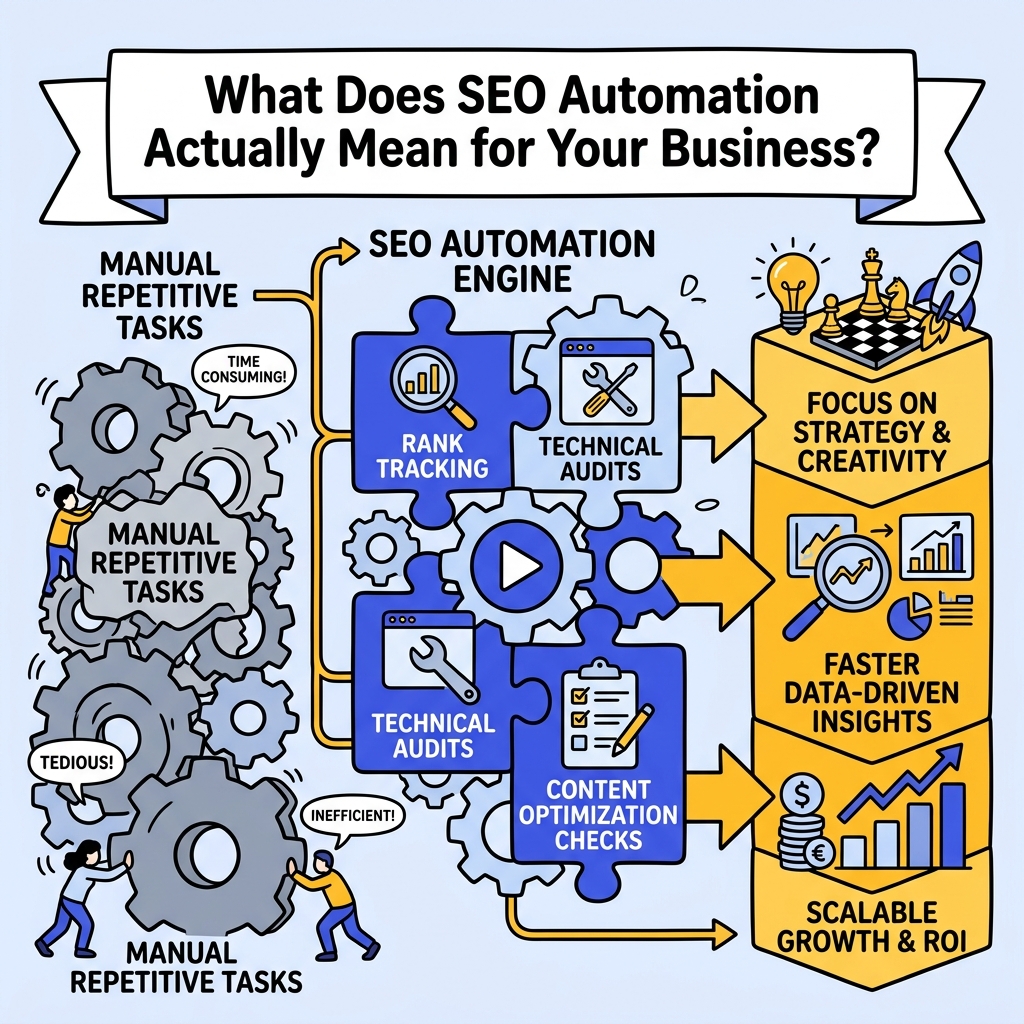
SEO automation involves using software tools, scripts, and workflows to handle repetitive SEO tasks without constant manual intervention. Rather than spending hours each week on routine activities like rank tracking, technical audits, or content optimization checks, automation allows you to focus on strategy and high-impact activities while maintaining consistent SEO performance.
The key difference between manual SEO and automated SEO lies in scalability and consistency. While manual processes work fine for small websites, automation becomes essential when managing multiple sites, hundreds of keywords, or large content libraries. Modern SEO automation can handle everything from keyword research and content briefs to technical monitoring and reporting.
Understanding what is SEO automation and why does it matter provides the foundation for implementing these systems effectively in your business.
Step 1: Set Up Automated Keyword Research and Tracking
Your first automation priority should be keyword research and rank tracking. Start by connecting tools like SEMrush, Ahrefs, or Google Search Console to automated workflows that monitor your target keywords daily.
Create automated keyword discovery by setting up alerts for new keyword opportunities in your niche. Tools like Answer The Public and KeywordTool.io offer API access that can feed fresh keyword ideas directly into your content planning system. Set these to run weekly and compile results into a master keyword database.
For rank tracking automation, configure your chosen SEO tool to monitor your top 50-100 keywords daily. Set up automated reports that email you weekly summaries showing ranking changes, new opportunities, and potential issues. This eliminates the need to manually check rankings while ensuring you never miss important changes.
| Automation Task | Recommended Frequency | Primary Benefit |
|---|---|---|
| Keyword Discovery | Weekly | Identifies new opportunities |
| Rank Tracking | Daily | Monitors performance changes |
| Competitor Analysis | Bi-weekly | Reveals strategy gaps |
| Search Volume Updates | Monthly | Keeps data current |
How Do You Automate Technical SEO Monitoring?
Technical SEO automation focuses on continuously monitoring your website's health without manual intervention. Start by implementing automated crawling using tools like Screaming Frog SEO Spider or Sitebulb, scheduled to run weekly comprehensive site audits.
Set up Google Search Console to send automated alerts for critical issues like crawl errors, security problems, or significant traffic drops. Connect these alerts to your project management system or Slack channels so your team can respond immediately to technical problems.
Configure automated monitoring for page speed using Google PageSpeed Insights API or GTmetrix. Create workflows that test your most important pages monthly and alert you when performance drops below acceptable thresholds. This proactive approach prevents technical issues from impacting your search rankings.
Step 2: Automate Content Creation and Optimization Workflows
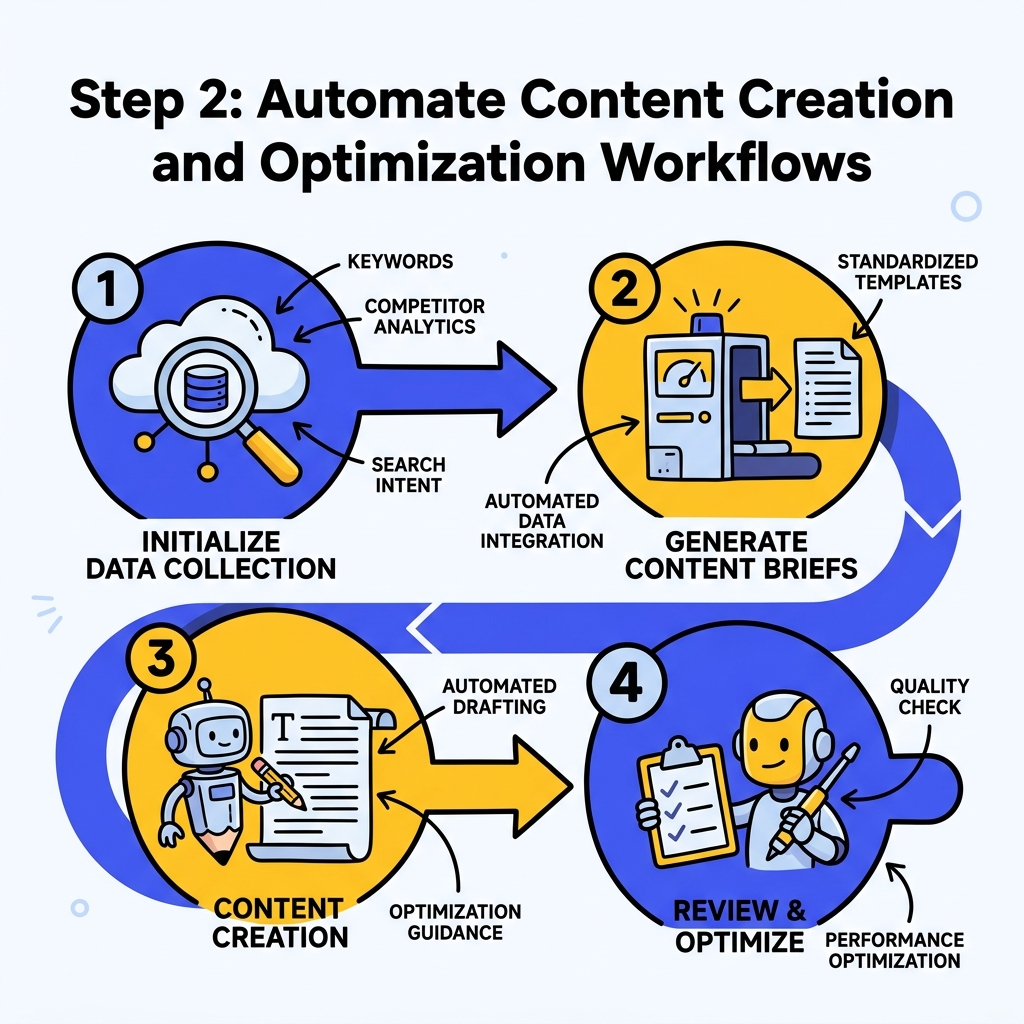
Content automation represents one of the most powerful applications of SEO automation. Begin by creating automated content briefs that pull keyword data, competitor analysis, and search intent information into standardized templates.
Develop content brief templates that automatically populate with target keywords, related terms, competitor content analysis, and optimization guidelines. Tools like MarketMuse or Clearscope can integrate with your content management system to provide real-time optimization suggestions as writers create content.
Implement automated content auditing by scheduling quarterly reviews of existing content performance. Set up workflows that identify underperforming pages, suggest optimization opportunities, and prioritize content updates based on traffic potential and current rankings.
Automating Content Distribution and Promotion
Once your content creation process is automated, extend automation to content distribution. Set up automated social media posting schedules that share new content across your channels with optimized captions and hashtags.
Create email automation sequences that notify subscribers about new content relevant to their interests. Use segmentation based on previous engagement to ensure subscribers receive content most likely to interest them.
Implement automated internal linking by using tools that suggest relevant internal links as you publish new content. This ensures consistent internal link distribution while saving time on manual link building efforts.
How Can You Automate Link Building and Outreach?
Link building automation requires careful balance between efficiency and personalization. Start by automating prospect research using tools like Hunter.io or Pitchbox to identify potential link partners in your industry.
Set up automated email sequences for outreach campaigns, but ensure each message includes personalized elements like the recipient's name, website details, and specific collaboration ideas. According to Backlinko's link building research, personalized outreach emails have significantly higher response rates than generic templates.
Automate link monitoring by setting up alerts for new backlinks, lost links, and competitor link acquisitions. Tools like Ahrefs or Majestic can send automated reports showing your link profile changes and new opportunities based on competitor analysis.
Understanding backlink directory strategies can enhance your automated link building efforts by providing consistent, high-quality link sources.
Step 3: Implement Automated Reporting and Analytics
Automated reporting transforms raw SEO data into actionable insights without manual data compilation. Create automated dashboards using Google Data Studio or similar tools that pull data from multiple sources including Google Analytics, Search Console, and your SEO tools.
Set up automated monthly reports that highlight key performance indicators like organic traffic growth, keyword ranking improvements, and conversion metrics. Include automated annotations that explain significant changes and provide context for data fluctuations.
Configure automated competitor monitoring reports that track competitor keyword rankings, content publication frequency, and backlink acquisition. This intelligence helps you identify opportunities and adjust your strategy based on market changes.
Creating Automated Performance Alerts
Implement smart alerts that notify you of significant changes requiring immediate attention. Set up automated monitoring for sudden traffic drops, ranking losses for important keywords, or technical issues affecting site performance.
Create positive alerts for significant improvements like first-page rankings for target keywords or traffic milestones. These celebrations help maintain team motivation while ensuring you capitalize on successful strategies.
According to Google's Search Quality Guidelines, consistent monitoring and quick response to issues significantly impact long-term search performance.
How Do You Scale SEO Automation Across Multiple Projects?
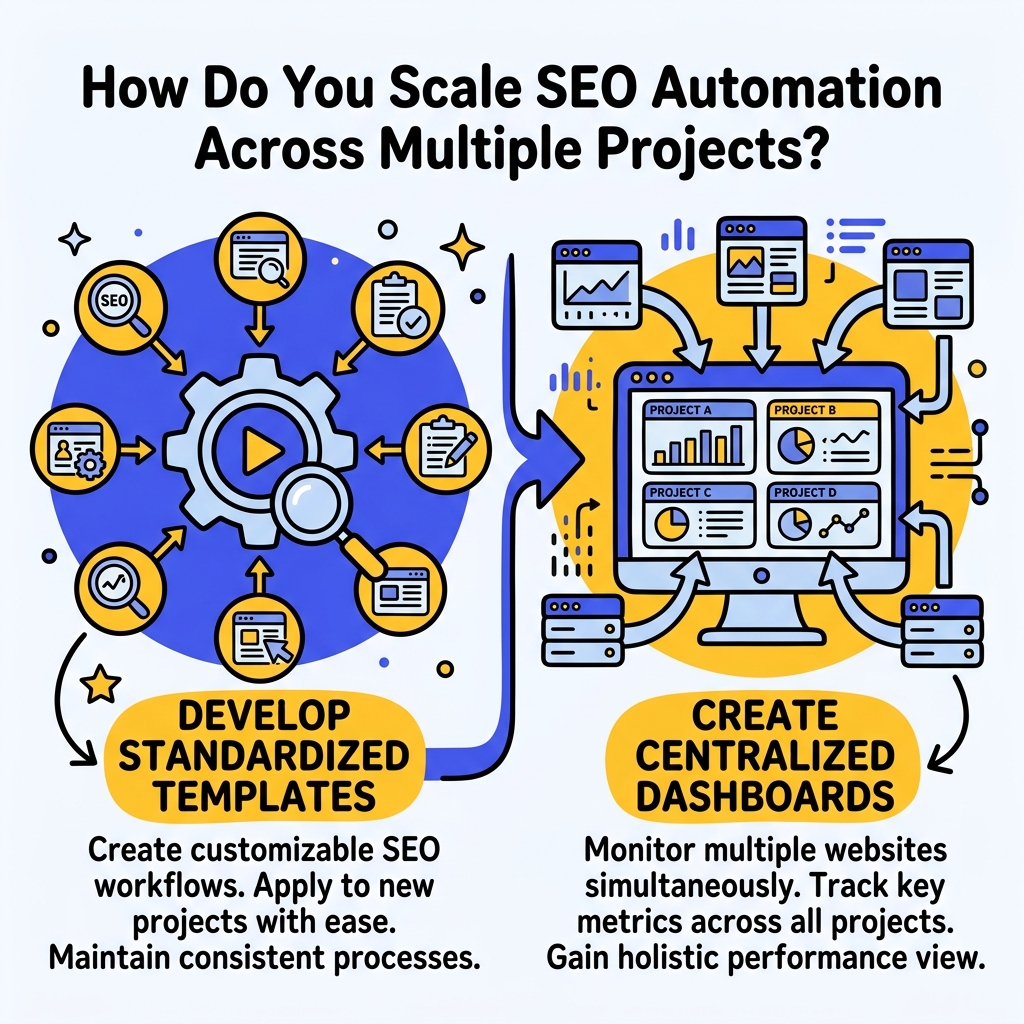
Scaling SEO automation requires systematic workflows that work across different websites and industries. Develop standardized automation templates that can be customized for specific projects while maintaining consistent processes.
Create centralized dashboards that monitor multiple websites simultaneously, allowing you to identify trends and issues across your entire portfolio. Use tools that support multi-project management like Agency Analytics or SEMrush Agency accounts.
Implement automated workflow documentation that records successful automation sequences and makes them reusable for new projects. This knowledge base accelerates implementation while ensuring consistent results across all your SEO efforts.
Building comprehensive SEO workflows provides the foundation for successful automation scaling across multiple projects and teams.
Advanced Automation: AI and Machine Learning Integration
Advanced SEO automation in 2026 leverages artificial intelligence to make strategic decisions based on data patterns. Implement AI-powered content optimization tools that automatically adjust content based on search performance and user engagement metrics.
Use machine learning algorithms to predict keyword opportunities and content topics likely to perform well based on your historical data. Tools like BrightEdge or MarketMuse offer predictive analytics that can guide your content strategy automatically.
Explore automated A/B testing for title tags, meta descriptions, and content elements. Set up systems that automatically implement winning variations while continuing to test new approaches for continuous improvement.
What Are the Common Pitfalls to Avoid in SEO Automation?
Over-automation represents the biggest risk in SEO automation implementation. Maintain human oversight for strategic decisions, content quality control, and relationship building activities that require personal touch.
Avoid automating tasks that require nuanced understanding like content creation for sensitive topics or personalized outreach to high-value prospects. Balance efficiency gains with quality maintenance to protect your brand reputation.
Monitor automated systems regularly to ensure they continue performing as expected. Set up alerts for automation failures and have backup processes ready when automated systems experience issues.
Conclusion
SEO automation transforms time-intensive manual processes into efficient, scalable systems that improve your search performance while freeing up resources for strategic activities. By implementing the step-by-step approach outlined in this guide, you can automate keyword research, technical monitoring, content optimization, link building, and reporting while maintaining the quality and personalization that drives results.
Start with basic automation like rank tracking and technical monitoring, then gradually expand to more complex workflows involving content creation and link building. Remember that successful SEO automation requires ongoing optimization and human oversight to achieve the best results.
Ready to implement SEO automation in your business? Begin with one area like keyword tracking or technical monitoring, master that process, then expand your automation efforts systematically across all aspects of your SEO strategy.

Stefan Winter
Founder & SEO Expert
Founder of Fast SEO Fix and SEO automation expert. Stefan built Fast SEO Fix to solve the tedious problem of manual SEO work. He specializes in SEO optimized content generation, keyword research, and automated SEO strategies.
