What Is an SEO Workflow and Why Does It Matter?
Posted by
 Stefan Winter
How to Build a High-Converting SEO Workflow That Delivers Results in 2026

Creating content that ranks and converts requires more than just writing great articles. Success comes from following a systematic SEO workflow that ensures every piece of content serves both search engines and your audience. In this comprehensive guide, you'll discover how to build a streamlined SEO workflow that transforms your content creation process from chaotic to consistently profitable.
What Is an SEO Workflow and Why Does It Matter?

An SEO workflow is a structured, repeatable process that guides your content creation from initial keyword research through publication and performance analysis. Think of it as your content production assembly line, where each step builds upon the previous one to create optimized content that ranks higher and converts better.
Without a defined workflow, most businesses create content haphazardly. They write about topics that sound interesting, optimize halfheartedly, and wonder why their traffic remains stagnant. A well-designed SEO workflow eliminates guesswork and ensures every piece of content serves a strategic purpose.
The most successful content teams follow workflows that integrate seamlessly with their broader marketing goals. These systems don't just improve search rankings; they create content that genuinely helps users while driving measurable business results.
How to Design Your SEO Workflow Foundation
Step 1: Map Your Content Goals to Business Objectives
Before diving into keyword research or content creation, establish clear connections between your SEO efforts and business outcomes. Ask yourself what specific actions you want readers to take after consuming your content. Are you building brand awareness, generating leads, or driving direct sales?
Document these objectives clearly because they'll guide every decision in your workflow. For example, if lead generation is your primary goal, your workflow should emphasize creating content that naturally leads readers toward your email signup or consultation request.
Step 2: Choose Your Workflow Tools and Platforms
Successful SEO workflows depend on having the right tools integrated smoothly. You'll need platforms for keyword research, content creation, optimization checking, and performance tracking. The key is selecting tools that communicate with each other rather than creating data silos.
Consider tools that offer API integrations or native connections with your existing systems. This integration prevents the manual data transfer that often breaks down workflows and leads to inconsistent optimization practices.
What Are the Core Phases of an Effective SEO Workflow?
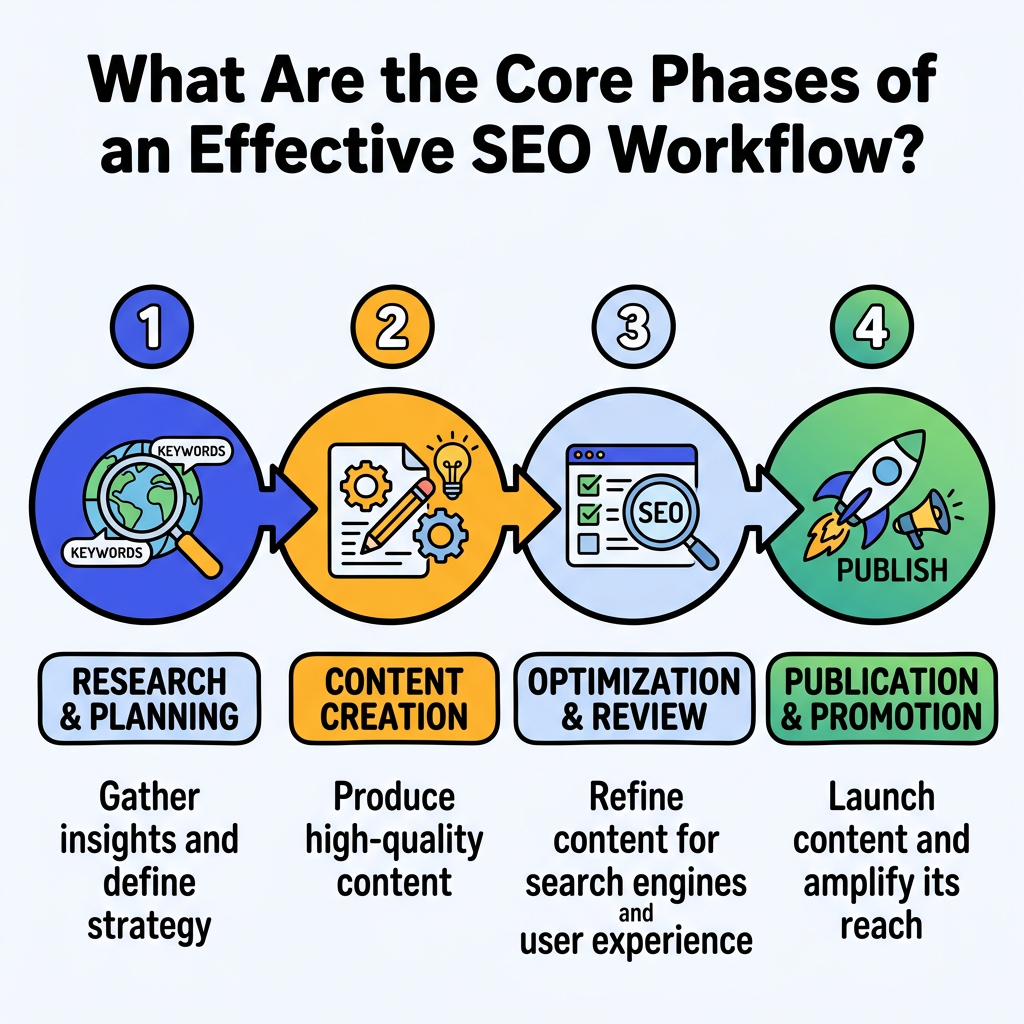
Every high-performing SEO workflow includes four essential phases: research and planning, content creation, optimization and review, and publication with promotion. Each phase serves a specific purpose and feeds into the next.
Phase 1: Strategic Research and Topic Planning
Begin each content piece with comprehensive keyword research that goes beyond search volume numbers. Focus on understanding user intent behind your target keywords and identifying content gaps your competitors haven't filled.
During this phase, analyze what type of content currently ranks for your target keywords. Are users looking for how-to guides, product comparisons, or industry insights? This analysis shapes your content format and approach before you write a single word.
Create a content brief that includes your primary keyword, related terms, target audience, content format, and key points to cover. This brief becomes your roadmap and keeps writers focused on SEO objectives while creating valuable content. For deeper insights into organizing your keyword strategy, explore our guide on SEO keyword clustering and why it matters.
Phase 2: Content Creation with SEO Integration
Write your content with both users and search engines in mind. Start with a compelling headline that includes your target keyword naturally, then structure your content using clear headings that guide readers through your main points.
During the writing process, incorporate your target keywords organically throughout the content. Avoid keyword stuffing by focusing on semantic variations and related terms that support your main topic. Remember that modern search algorithms prioritize content that thoroughly covers a topic rather than content that simply repeats keywords.
How to Optimize Content Within Your SEO Workflow
Technical Optimization Checklist
Create a standardized checklist that covers all technical SEO elements for every piece of content. This includes optimizing title tags, meta descriptions, header structure, image alt text, and internal linking opportunities.
Your checklist should also include readability factors like sentence length, paragraph structure, and use of bullet points or numbered lists. These elements improve user experience while supporting your SEO goals.
| Optimization Element | Target Specification | Impact Level |
|---|---|---|
| Title Tag Length | 50-60 characters | High |
| Meta Description | 150-160 characters | Medium |
| Header Structure | H1, H2, H3 hierarchy | High |
| Internal Links | 2-3 relevant links | Medium |
| Image Optimization | Alt text + compression | Medium |
| Content Length | 1500+ words (varies by topic) | High |
Content Quality Review Process
Implement a multi-step review process that evaluates both content quality and SEO optimization. Have someone other than the writer review each piece for clarity, accuracy, and alignment with your content brief.
During the review phase, verify that your content answers the questions users are actually asking about your topic. Use tools to check readability scores and ensure your content matches your target audience's reading level.
How to Integrate Content Promotion into Your SEO Workflow?

Publication and Distribution Strategy
Don't treat publication as the end of your workflow. Plan your content distribution strategy during the creation phase, identifying which channels will help your content reach its intended audience most effectively.
Consider how your content fits into your broader content marketing strategy and which existing pieces it should connect to through internal links. Strong internal linking helps search engines understand your content relationships while keeping users engaged with your site longer.
For comprehensive guidance on optimizing your content after creation, review our detailed approach to content optimization strategies.
Performance Monitoring and Iteration
Build performance tracking into your workflow from day one. Establish baseline metrics for each piece of content and set up monitoring systems that alert you to significant changes in rankings or traffic.
Use this performance data to refine your workflow continuously. If certain types of content consistently outperform others, adjust your creation process to emphasize those successful elements in future pieces.
What Tools Should Power Your SEO Workflow?
Essential SEO Workflow Software
Invest in tools that streamline your workflow rather than complicating it. Look for platforms that offer workflow automation features, collaborative editing capabilities, and integration with your existing marketing stack.
The best SEO workflow tools provide templates and checklists that ensure consistency across all your content while allowing customization for different content types or team members. For insights into selecting the right tools for your content creation process, explore our analysis of SEO writing tools and their importance.
Workflow Automation Opportunities
Identify repetitive tasks in your current process that can be automated without sacrificing quality. This might include automatically generating content briefs from keyword research, setting up approval workflows, or scheduling social media promotion for published content.
Automation works best when it handles administrative tasks while leaving creative and strategic decisions to human team members. Focus on automating data collection, formatting, and scheduling rather than content creation itself.
How to Scale Your SEO Workflow for Growing Teams?
Building Repeatable Processes
Document every step of your workflow clearly enough that new team members can follow it independently. Create templates, checklists, and standard operating procedures that maintain quality while allowing for individual creativity and expertise.
Consider different workflow paths for different content types. Blog posts, product pages, and resource guides may require variations in your standard process while maintaining the same quality standards and optimization principles.
Quality Control at Scale
As your content production increases, implement quality control measures that catch issues before publication. This might include automated SEO audits, peer review systems, or spot-checking processes that maintain standards without slowing down production.
Regular workflow audits help identify bottlenecks or quality issues before they impact your results. Schedule monthly reviews of your process effectiveness and make adjustments based on team feedback and performance data.
Conclusion
Building an effective SEO workflow transforms content creation from a hit-or-miss activity into a predictable system for driving traffic and conversions. By following the structured approach outlined in this guide, you'll create content that consistently ranks well while serving your audience's needs and business objectives.
Remember that the best workflow is one your team actually follows consistently. Start with the core phases we've discussed, then refine and customize based on your specific needs and results. The key is maintaining the systematic approach while allowing flexibility for creativity and optimization.
Ready to implement these workflow strategies for your business? Start by conducting a comprehensive SEO audit to understand your current content performance and identify the biggest opportunities for improvement through better workflow processes.

Stefan Winter
Founder & SEO Expert
Founder of Fast SEO Fix and SEO automation expert. Stefan built Fast SEO Fix to solve the tedious problem of manual SEO work. He specializes in SEO optimized content generation, keyword research, and automated SEO strategies.
