What is SEO Keyword Clustering and Why Does it Matter?
Posted by
 Stefan Winter
How to Master SEO Keyword Clustering in 2026: A Step-by-Step Guide
SEO keyword clustering is transforming how successful websites approach content strategy and search rankings. Instead of targeting individual keywords in isolation, smart marketers now group related terms into powerful clusters that capture entire topics and search intents. This comprehensive guide will walk you through exactly how to implement keyword clustering to boost your organic traffic and dominate search results.
What is SEO Keyword Clustering and Why Does it Matter?
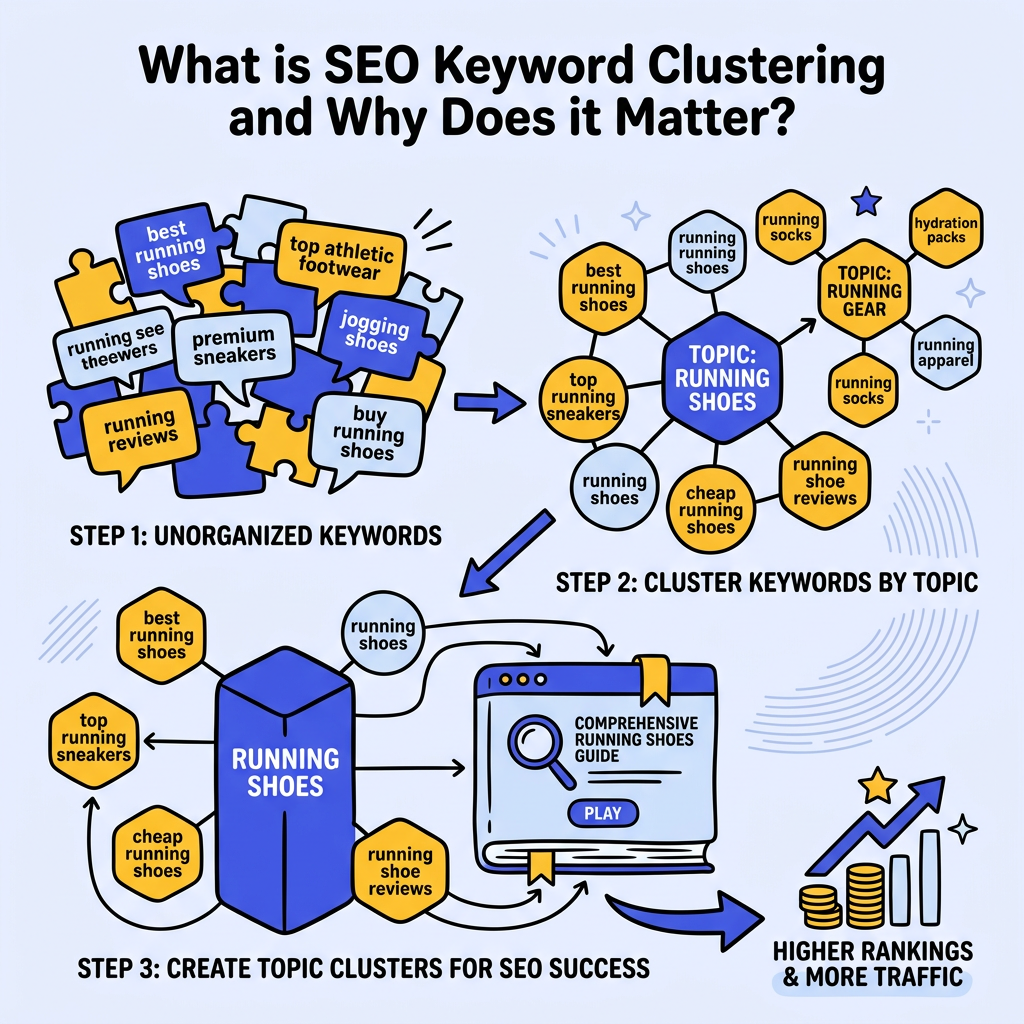
SEO keyword clustering is the strategic process of grouping related keywords and search terms around a central topic or theme. Rather than creating separate pages for "best running shoes," "top athletic footwear," and "premium sneakers for runners," you cluster these terms together to create one comprehensive, authoritative page that targets all related search queries.
This approach aligns perfectly with how modern search engines understand content. Google's algorithms have evolved far beyond simple keyword matching to focus on topical authority and semantic relationships. When you create content clusters, you're speaking the same language as search engines while providing more valuable, comprehensive resources for your audience.
The benefits extend beyond just rankings. Keyword clustering helps you avoid content cannibalization, where multiple pages compete against each other for the same search terms. It also streamlines your content creation process and helps establish your website as an authoritative source on specific topics.
How Do Search Engines Respond to Keyword Clusters?
Modern search algorithms, particularly Google's RankBrain and BERT updates, prioritize content that demonstrates comprehensive topical coverage. When you implement keyword clustering effectively, you're creating content that matches multiple search intents simultaneously, which search engines interpret as high-quality, authoritative resources.
Search engines also use keyword clusters to better understand the context and relationships between different search queries. This semantic understanding helps them deliver more relevant results to users, and websites that organize their content around these natural topic clusters often see improved visibility across multiple related search terms.
The clustering approach also supports featured snippets and other SERP features. Comprehensive clustered content often provides the depth and breadth that search engines look for when selecting content for position zero results.
Step 1: Research and Identify Your Core Topics
Start by identifying the main topics that are most relevant to your business and audience. Use keyword research tools like Ahrefs, SEMrush, or Google Keyword Planner to discover the primary keywords in your niche. Look for terms with substantial search volume that align with your business objectives.
Create a spreadsheet to organize your findings. List your core topics in one column, then begin adding related keywords, long-tail variations, and question-based queries. Don't worry about perfect organization at this stage – focus on gathering comprehensive keyword data.
Pay special attention to search intent patterns. Group keywords that represent similar user intentions, whether they're informational ("how to choose running shoes"), navigational ("Nike running shoes"), or transactional ("buy running shoes online").
Step 2: Analyze Keyword Relationships and Search Intent
Once you have your initial keyword list, analyze the relationships between different terms. Look for semantic connections, shared root keywords, and similar search intents. Tools like Answer The Public and Google's "People Also Ask" feature can reveal additional related queries you might have missed.
Create intent-based categories for your keywords:
- Informational clusters: Keywords where users seek knowledge or answers
- Commercial clusters: Terms indicating research before purchase
- Transactional clusters: Keywords with clear buying intent
- Navigational clusters: Searches for specific brands or products
Step 3: Group Keywords into Logical Clusters

Now comes the crucial clustering process. Group keywords that share similar themes, search intent, and could realistically be covered comprehensively on a single page. A well-formed cluster typically includes one primary keyword and 5-15 related terms.
Here's a sample keyword cluster structure:
| Cluster Type | Primary Keyword | Supporting Keywords | Search Intent |
|---|---|---|---|
| Product Category | "running shoes for beginners" | "best starter running shoes," "beginner runner footwear," "entry-level athletic shoes" | Commercial |
| How-to Guide | "how to choose running shoes" | "running shoe selection guide," "picking the right sneakers," "shoe buying tips" | Informational |
| Comparison | "Nike vs Adidas running shoes" | "best running shoe brands," "athletic shoe comparison," "top sneaker brands" | Commercial |
How Do You Create Content Around Keyword Clusters?
Content creation for keyword clusters requires a strategic approach that naturally incorporates all related terms while maintaining readability and value. Start with your primary keyword as the main focus, then weave supporting keywords throughout the content in a natural, contextual manner.
Structure your content to address the various search intents within your cluster. If your cluster includes both "how to" queries and "best of" searches, create sections that satisfy both needs. This comprehensive approach helps you capture traffic from multiple related searches with a single, authoritative piece of content.
Remember that creating high-quality SEO content requires balancing optimization with user experience. Your clustered content should read naturally while comprehensively covering the topic from multiple angles.
Step 4: Map Clusters to Your Content Strategy
Develop a content mapping strategy that assigns each keyword cluster to specific pages or content pieces. This prevents overlap and ensures comprehensive coverage of your target topics. Create a master document that shows which clusters will be covered by existing content and which require new pages.
Consider the content format that best serves each cluster. Some clusters work well as comprehensive guides, others as comparison posts, and some as step-by-step tutorials. The format should match both the search intent and the competitive landscape for those terms.
Plan your internal linking strategy at this stage. Clusters should link to related clusters where appropriate, creating a web of topical authority that search engines can easily understand and navigate. This approach supports the broader content marketing strategy for building domain authority.
Step 5: Implement and Optimize Your Clustered Content
When creating content around your clusters, focus on comprehensive coverage rather than keyword density. Modern SEO rewards content that thoroughly addresses a topic and satisfies user intent. Include your primary keyword in key locations like the title, headers, and naturally throughout the content.
Use semantic variations and related terms from your cluster throughout the content. This helps search engines understand the full scope of your topic coverage and can improve rankings for the entire cluster of terms.
Monitor your content's performance using tools like Google Search Console and Google Analytics. Track rankings for all keywords in each cluster, not just the primary term. According to Google's SEO documentation, comprehensive content that covers topics thoroughly often ranks for many more keywords than initially targeted.
What Tools Can Help with SEO Keyword Clustering?
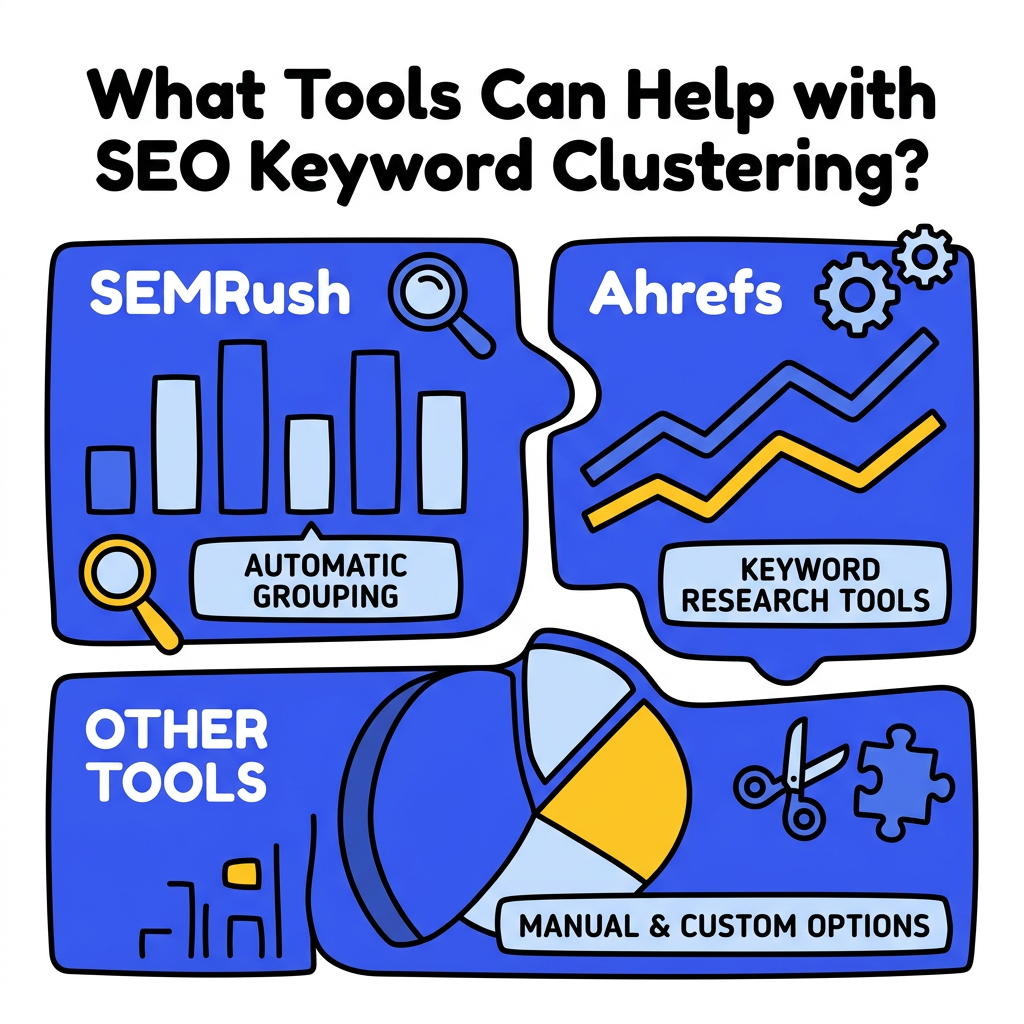
Several specialized tools can streamline your keyword clustering process. SEMrush offers a dedicated keyword clustering feature that automatically groups related terms based on search results similarity. Ahrefs provides keyword grouping capabilities within their keyword research tools.
For those preferring manual approaches or working with smaller budgets, Google Sheets or Excel can effectively organize clusters when combined with keyword research from free tools like Google Keyword Planner and Answer The Public.
More advanced users might consider tools like Serpstat or SE Ranking, which offer clustering features alongside comprehensive SEO analysis. The key is choosing tools that fit your workflow and budget while providing the clustering capabilities you need.
How Do You Measure Keyword Clustering Success?
Success in keyword clustering goes beyond individual keyword rankings. Monitor your overall organic traffic growth, particularly for topic-related terms that weren't initially targeted but now rank due to your comprehensive coverage.
Track improvements in average time on page and user engagement metrics. Well-clustered content typically keeps visitors engaged longer because it comprehensively addresses their needs and related questions.
Measure your progress in capturing featured snippets and other SERP features. Clustered content often performs better for these opportunities because it provides the comprehensive information search engines seek for enhanced results.
Common Keyword Clustering Mistakes to Avoid
One frequent mistake is creating clusters that are too broad, trying to cover unrelated topics on a single page. Keep clusters focused on closely related terms that a user would reasonably expect to find covered together.
Avoid keyword stuffing when implementing clusters. The goal is natural, comprehensive coverage, not forced inclusion of every possible variation. Search engines can detect and penalize unnatural keyword usage.
Don't neglect the user experience in favor of SEO optimization. Your clustered content should provide genuine value and read naturally. If you're implementing DIY SEO strategies, remember that user satisfaction ultimately drives search engine success.
Advanced Keyword Clustering Strategies for 2026
As we move further into 2026, consider implementing AI-assisted clustering techniques that can identify semantic relationships beyond obvious keyword variations. Machine learning tools can uncover subtle connections between search terms that manual analysis might miss.
Develop dynamic clustering strategies that evolve with search trends and seasonal variations. Your clusters should be living documents that adapt to changing search behaviors and emerging related terms.
Consider voice search optimization within your clusters. Include natural language variations and question-based keywords that reflect how people speak their searches rather than type them.
Conclusion
SEO keyword clustering represents the evolution of modern search optimization, moving beyond individual keyword targeting to comprehensive topic coverage. By implementing the strategies outlined in this guide, you'll create more effective content that serves both search engines and users while building lasting topical authority in your niche.
Start with thorough keyword research, organize terms into logical clusters based on intent and relationships, then create comprehensive content that naturally addresses all related search queries. Monitor your results and refine your approach based on performance data and changing search trends.
Ready to transform your SEO strategy with keyword clustering? Begin by auditing your existing content to identify clustering opportunities, then implement these techniques systematically across your website. The investment in proper keyword clustering will pay dividends in improved rankings, increased organic traffic, and stronger topical authority in 2026 and beyond.

Stefan Winter
Founder & SEO Expert
Founder of Fast SEO Fix and SEO automation expert. Stefan built Fast SEO Fix to solve the tedious problem of manual SEO work. He specializes in SEO optimized content generation, keyword research, and automated SEO strategies.
