What Makes Content Marketing Essential for Agency Business Growth?
Posted by
 Stefan Winter
TL;DR
Content marketing is essential for agency growth in 2026 because it positions your business as an industry authority, attracts higher-quality clients, and creates scalable revenue streams beyond trading time for money. By identifying strategic content opportunities, leveraging high-ROI formats like case studies and educational content, and optimizing for search visibility, agencies can transform their client acquisition and establish thought leadership.
How to Scale Your Agency Business with Strategic SEO Content Creation in 2026
Running a successful agency business requires more than just delivering great work for clients. In 2026, the most profitable agencies understand that strategic content creation and SEO optimization are essential for sustainable growth. Whether you're operating a digital marketing agency, consulting firm, or creative services business, implementing the right SEO content strategies can transform your agency from a service provider into an industry authority.
This comprehensive guide will walk you through proven methods to leverage content creation for agency growth, helping you attract higher-quality clients, establish thought leadership, and build scalable revenue streams that don't depend solely on trading time for money.
What Makes Content Marketing Essential for Agency Business Growth?
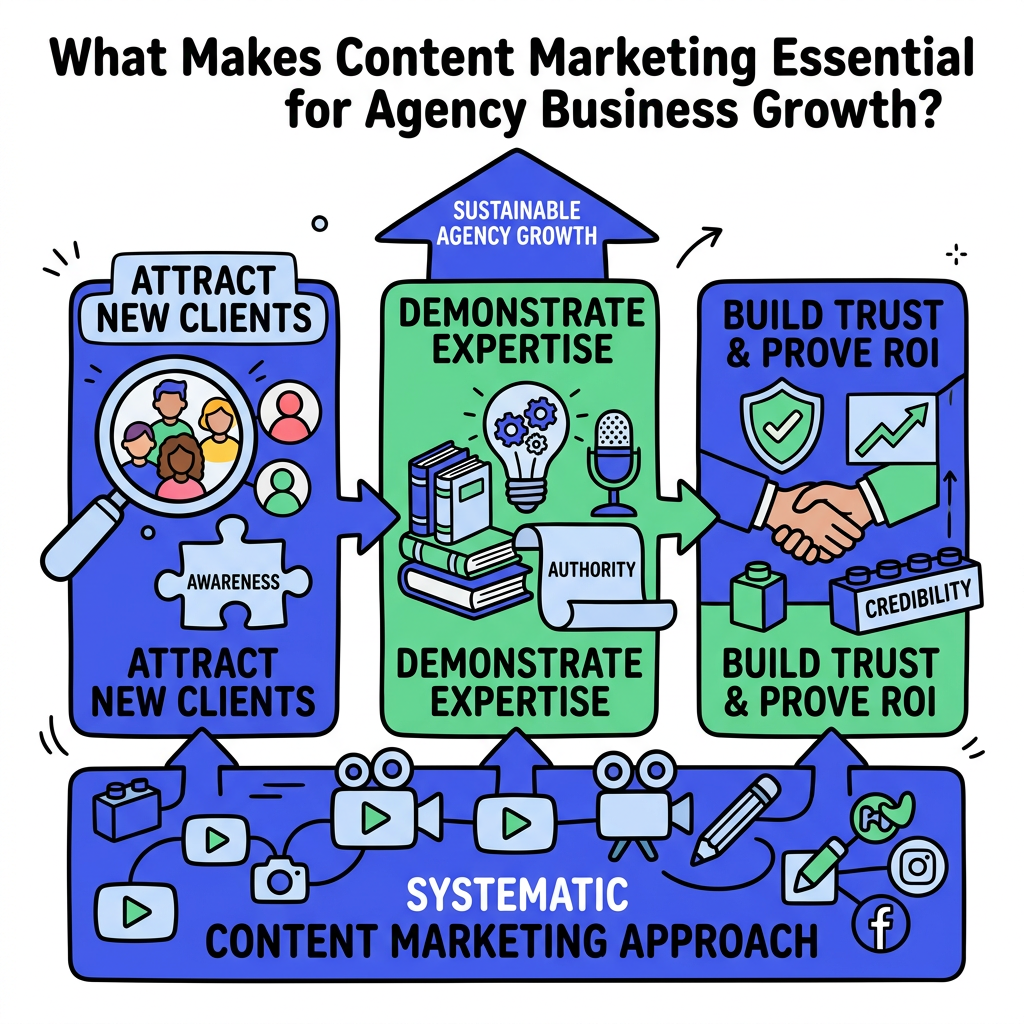
Agency businesses face unique challenges that traditional companies don't encounter. You're constantly competing for client attention, justifying your expertise, and proving ROI while managing multiple client relationships. Content marketing addresses these pain points by creating a systematic approach to demonstrate your capabilities.
When potential clients search for solutions in your industry, they're not just looking for a service provider. They want to work with agencies that understand their challenges and can articulate solutions clearly. Strategic content creation positions your agency business as the obvious choice by showcasing your expertise before prospects even contact you.
The most successful agencies in 2026 treat content creation as a client acquisition system rather than a marketing afterthought. This shift in perspective transforms how you approach every piece of content, ensuring each blog post, case study, and resource serves a specific business purpose.
How Do You Identify Content Opportunities That Drive Agency Growth?
The foundation of effective agency content starts with understanding your ideal client's journey. Unlike B2C businesses, agency clients typically have longer decision-making processes and involve multiple stakeholders. Your content strategy must address different stages of this complex buying cycle.
Start by mapping out the specific challenges your target clients face at each stage of their business growth. Early-stage companies need different solutions than established enterprises, and your content should reflect these distinctions. Create detailed client personas that go beyond basic demographics to include business goals, pain points, and decision-making criteria.
Keyword gap analysis becomes particularly valuable for agency businesses because it reveals content opportunities your competitors are missing. This research helps you identify topics where you can establish authority while your competition focuses on generic industry content.| Content Type | Best For | Typical ROI Timeline | Client Stage |
|---|---|---|---|
| Case Studies | Proof of concept | 3-6 months | Decision stage |
| Industry Reports | Thought leadership | 6-12 months | Awareness stage |
| How-to Guides | Problem solving | 1-3 months | Research stage |
| Tool Comparisons | Solution evaluation | 2-4 months | Consideration stage |
What Content Formats Generate the Highest ROI for Agencies?
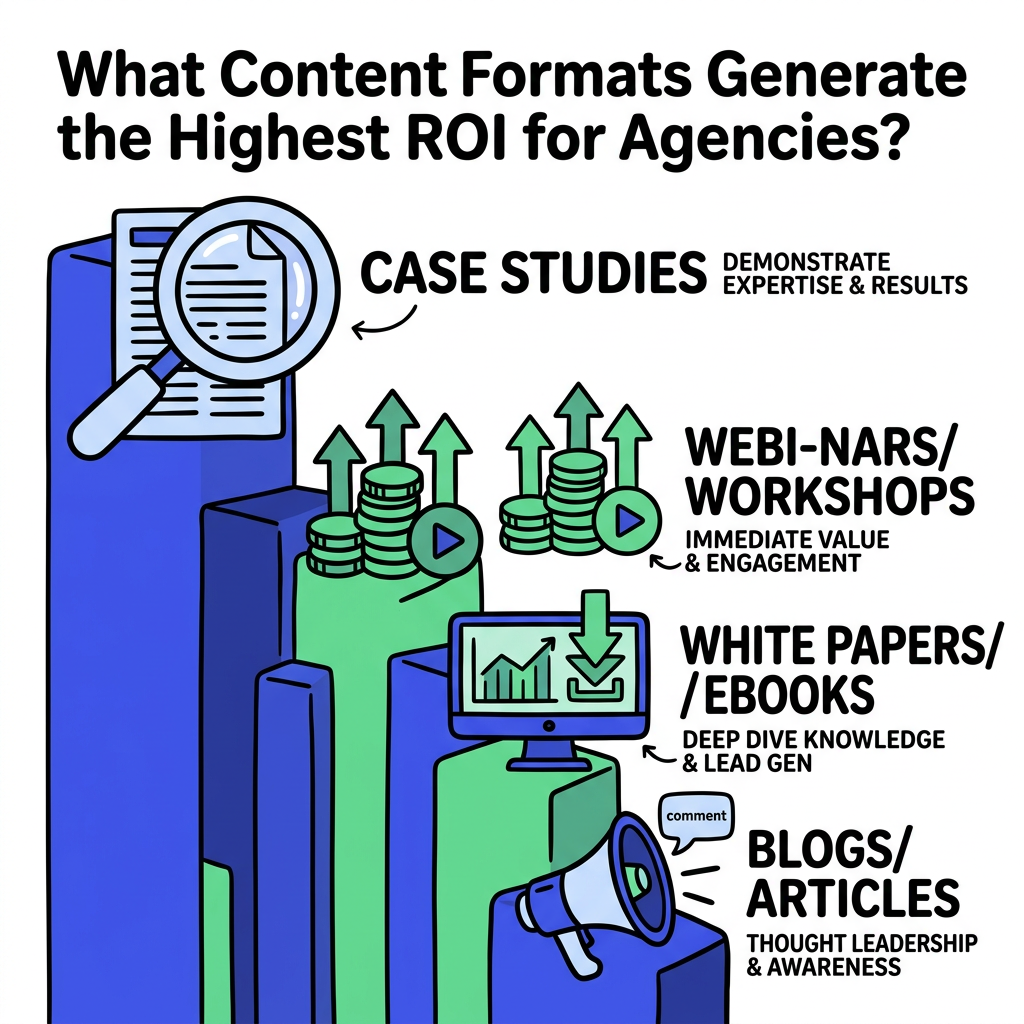
Agency businesses benefit most from content formats that demonstrate expertise while providing immediate value. Case studies remain the gold standard because they showcase real results and build credibility with prospects facing similar challenges. However, the most effective case studies go beyond basic before-and-after metrics to tell compelling stories about problem-solving processes.
Educational content that teaches prospects how to evaluate solutions in your industry positions your agency as a trusted advisor. When potential clients understand the criteria for success, they're more likely to recognize the value in your approach. This educational content also helps qualify leads by attracting prospects who appreciate strategic thinking over quick fixes.
Interactive content formats like assessments, calculators, and diagnostic tools serve dual purposes for agency businesses. They provide immediate value to prospects while capturing valuable lead information and insights about potential clients' needs. These tools often become some of the highest-converting assets in your content portfolio.
How to Create Case Studies That Convert Prospects into Clients
Effective case studies for agency businesses follow a specific structure that resonates with B2B decision-makers. Start with context that helps prospects see themselves in similar situations, then detail your strategic approach before revealing results. The key is demonstrating your thinking process, not just the outcomes.
Include specific metrics and timelines that prospects can use to evaluate potential ROI from working with your agency. However, balance quantitative results with qualitative insights that show how your work impacted the client's broader business goals. This approach helps prospects understand the full value of your services beyond immediate deliverables.
How Do You Optimize Agency Content for Search Visibility?
Agency businesses often compete in highly competitive search landscapes where generic content gets lost in the noise. The solution lies in creating highly specific, actionable content that addresses niche problems within your target market. Instead of writing about broad topics like "digital marketing strategies," focus on specific challenges like "how SaaS companies can reduce customer acquisition costs through content marketing."
SEO content creation for agencies requires balancing search optimization with the need to demonstrate expertise to sophisticated business audiences. Your content must rank well in search results while also impressing C-level executives and marketing directors who will ultimately make hiring decisions.Technical SEO becomes particularly important for agency websites because you're often competing against other agencies with strong SEO knowledge. Ensure your site loads quickly, provides excellent user experience, and follows current SEO best practices. Potential clients expect agencies to demonstrate expertise through their own digital presence.
What Keywords Should Agency Businesses Target?
Focus on keywords that indicate commercial intent rather than just high search volume. Terms like "hire [service type] agency," "best [industry] marketing firm," and "[service] agency pricing" attract prospects actively seeking to hire external help. These keywords typically have lower search volume but much higher conversion rates.
Long-tail keywords that include industry-specific terminology often provide the best opportunities for agency businesses. These searches indicate that prospects understand their needs and are looking for specialized expertise rather than general information.
How Can Agencies Measure Content Marketing ROI Effectively?
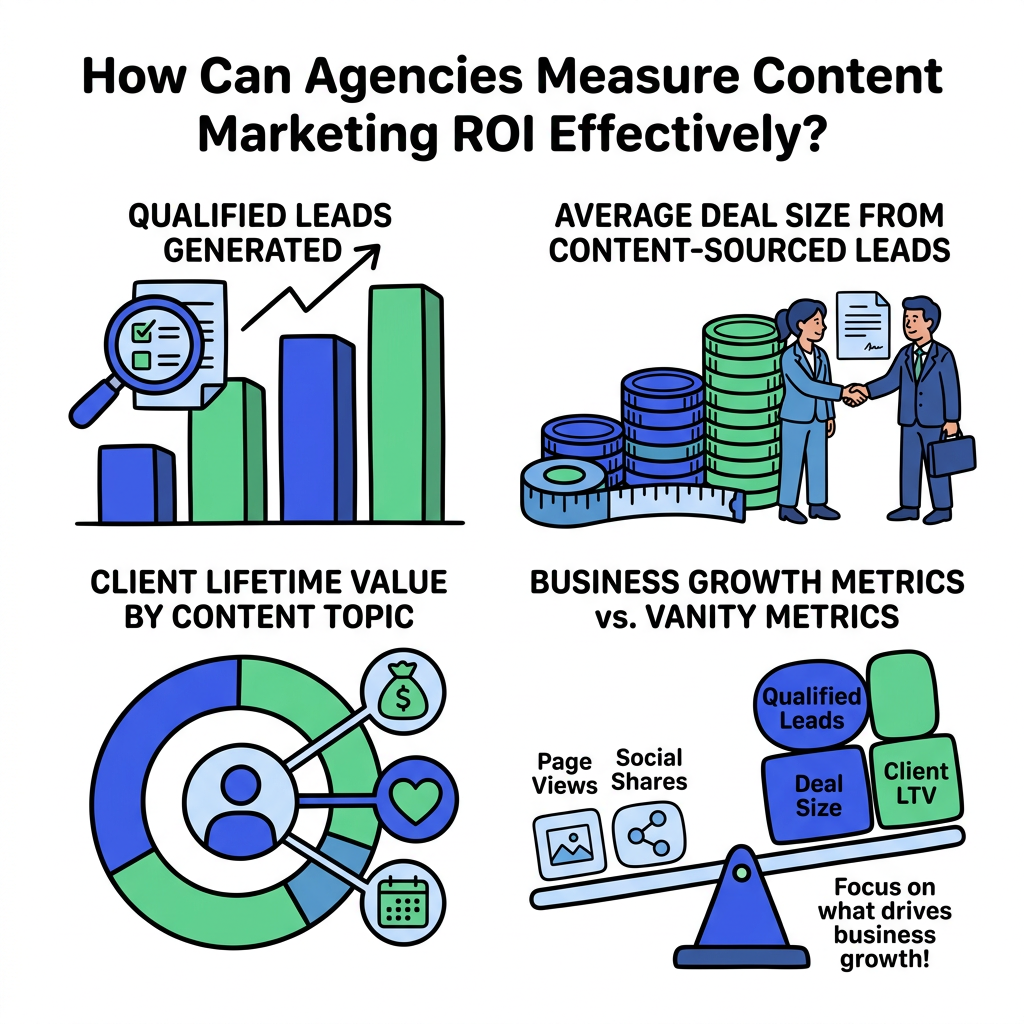
Traditional content marketing metrics like page views and social shares don't tell the complete story for agency businesses. Instead, focus on metrics that directly correlate with business growth: qualified leads generated, average deal size from content-sourced leads, and client lifetime value by acquisition channel.
Track how different content types contribute to your sales pipeline. Many agencies discover that while blog posts generate the most traffic, in-depth resources like whitepapers and case studies produce higher-quality leads that convert at better rates. This insight helps optimize your content production priorities.
According to research from the Content Marketing Institute, B2B companies that measure content marketing ROI are significantly more likely to achieve their business goals. For agencies, this measurement becomes even more critical because content marketing often represents a significant investment of billable time.
Client attribution tracking reveals which content assets influence prospect decisions throughout the buying cycle. Many agency clients interact with multiple pieces of content before making contact, and understanding these touchpoints helps optimize your content strategy for maximum impact.
How Do You Scale Content Production Without Sacrificing Quality?
Growing agency businesses often struggle to maintain content quality while increasing production volume. The solution involves creating systematic processes and leveraging team expertise across multiple content pieces. Develop content templates and frameworks that ensure consistency while allowing for customization based on specific topics and audiences.
Content brief generators and planning tools become essential as your content operation scales. These tools help maintain quality standards while reducing the time investment required from senior team members for each piece of content.Consider repurposing high-performing content across multiple formats. A comprehensive case study can become a blog post, social media content, a conference presentation, and sales collateral. This approach maximizes the ROI from your content creation efforts while ensuring consistent messaging across all client touchpoints.
What Role Should Team Members Play in Content Creation?
Successful agency content strategies involve multiple team members rather than relying on a single content creator. Subject matter experts can provide insights and expertise while dedicated writers handle the actual content production. This division of labor ensures technical accuracy while maintaining high writing standards.
Client-facing team members often have valuable insights about common questions and challenges that can inform content topics. Create systems to capture these insights and transform them into content ideas that address real client needs.
What Content Distribution Strategies Work Best for Agencies?
Creating excellent content is only half the battle for agency businesses. Effective distribution ensures your content reaches potential clients when they're actively seeking solutions. LinkedIn often provides the highest ROI for B2B agencies because it allows direct access to decision-makers and influencers within target companies.
Email marketing remains highly effective for agency businesses, particularly when segmented by industry or service area. Regular newsletters that provide genuine value help maintain relationships with prospects who aren't ready to hire immediately while positioning your agency as a trusted resource.
Industry publications and guest posting opportunities can significantly expand your reach within target markets. Focus on publications that your ideal clients read regularly rather than general marketing blogs. This targeted approach generates higher-quality traffic and positions your agency within relevant industry conversations.
Conclusion
Building a successful agency business through strategic content creation requires consistent effort and a systematic approach. By focusing on content that demonstrates expertise, addresses specific client challenges, and optimizes for both search visibility and business impact, your agency can attract higher-quality prospects and command premium pricing.
The key to success lies in treating content creation as a core business strategy rather than a marketing tactic. When you consistently publish valuable, optimized content that showcases your agency's capabilities, you create a sustainable competitive advantage that compounds over time.
Ready to transform your agency's growth trajectory through strategic content marketing? Start by conducting a comprehensive audit of your current content assets and identifying the biggest gaps in your content strategy. Focus on creating one exceptional piece of content each week that directly addresses your ideal client's most pressing challenges.
Frequently Asked Questions
Agencies face unique challenges in proving expertise and ROI to prospects with longer decision-making cycles. Strategic content creation systematically demonstrates capabilities and positions the agency as the obvious choice before prospects even make contact, addressing these specific pain points.
Case studies, educational how-to guides, industry reports, and interactive tools like assessments and calculators deliver the highest ROI. Case studies are particularly effective because they showcase real results and build credibility, while interactive content captures lead information while providing immediate value.
Instead of creating generic content about broad topics, agencies should focus on highly specific, actionable content addressing niche problems within their target market. This approach helps agencies compete in crowded search landscapes by establishing authority in specific areas where competitors aren't focused.
Start by mapping your ideal client's journey and creating detailed personas that include business goals, pain points, and decision-making criteria. Then conduct keyword gap analysis to identify content opportunities your competitors are missing and where you can establish authority.
ROI timelines vary by content type: how-to guides typically convert in 1-3 months, tool comparisons in 2-4 months, case studies in 3-6 months, and industry reports in 6-12 months. The key is treating content creation as a systematic client acquisition system rather than a short-term marketing tactic.

Stefan Winter
Founder & SEO Expert
Founder of Fast SEO Fix and SEO automation expert. Stefan built Fast SEO Fix to solve the tedious problem of manual SEO work. He specializes in SEO optimized content generation, keyword research, and automated SEO strategies.
