The Complete Guide to SEO Content Creation: Mastering Search-Driven Writing in 2026
Posted by
 Stefan Winter
The Complete Guide to SEO Content Creation: Mastering Search-Driven Writing in 2026
Creating content that ranks well in search engines while genuinely serving your audience has become both an art and a science. SEO content creation combines strategic keyword research, user intent understanding, and compelling storytelling to produce material that search engines love and readers find valuable. In this comprehensive guide, you'll discover the proven strategies, tools, and techniques that top content creators use to dominate search results and drive meaningful traffic to their websites.
What Is SEO Content Creation and Why Does It Matter?
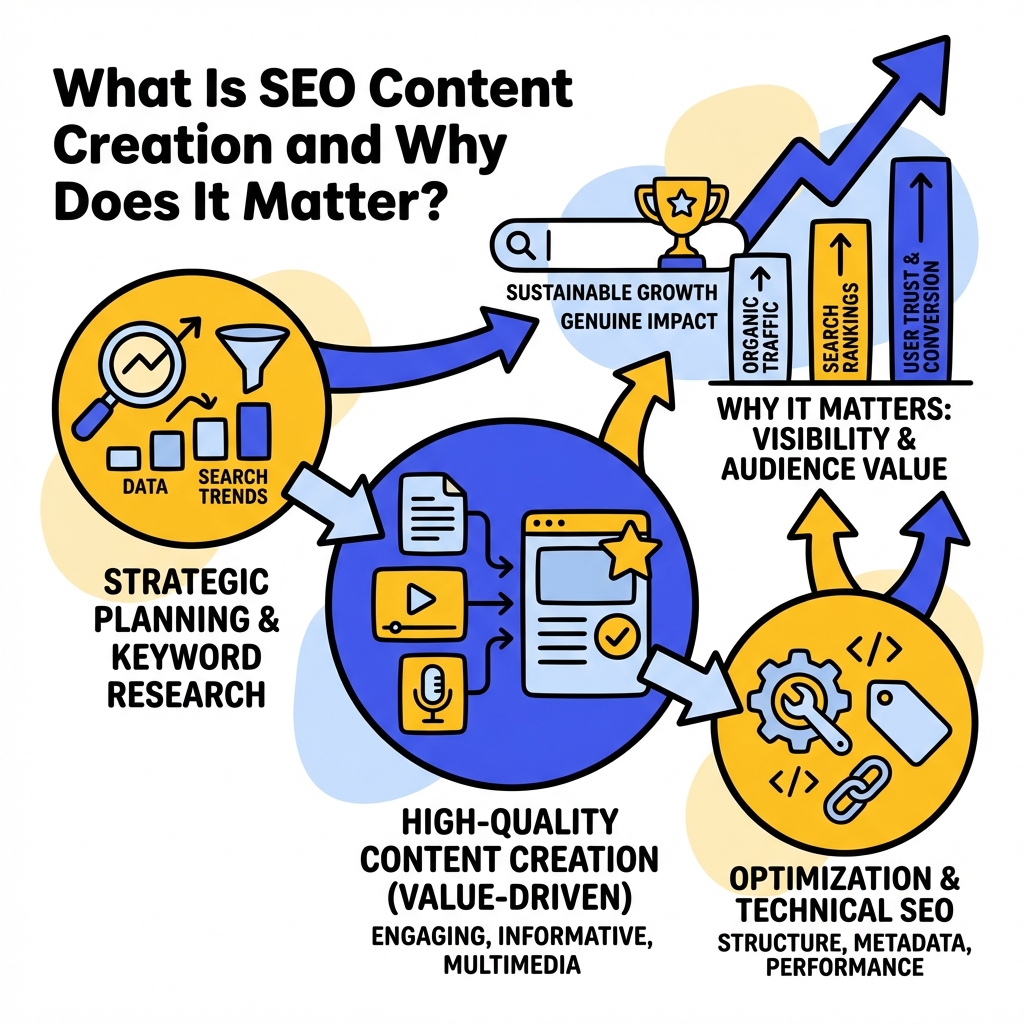
SEO content creation is the strategic process of developing written, visual, or multimedia content specifically designed to rank highly in search engine results while providing genuine value to your target audience. Unlike traditional content writing, this approach requires a deep understanding of search algorithms, user behavior, and technical optimization factors.
The landscape of SEO content creation has evolved dramatically in recent years. Search engines now prioritize content that demonstrates expertise, authority, and trustworthiness (E-A-T), while also considering user experience signals like page load speed, mobile responsiveness, and engagement metrics. This means that successful SEO content creation in 2026 requires balancing technical optimization with authentic, helpful information that keeps readers engaged.
Modern SEO content creation also involves understanding search intent, which refers to the underlying reason behind a user's query. Whether someone is looking for information, trying to navigate to a specific website, or ready to make a purchase, your content must align with their specific needs and stage in the buyer's journey.
How Do You Research Keywords for Effective SEO Content Creation?
Keyword research forms the foundation of successful SEO content creation, but the approach has become more sophisticated than simply targeting high-volume search terms. Today's content creators must understand the nuances of semantic search, long-tail keywords, and topic clusters to create comprehensive content strategies.
Start by identifying your primary topic and related subtopics using tools like Google Keyword Planner, SEMrush, or Ahrefs. Look for keywords with a good balance of search volume and competition level, but don't ignore low-volume, high-intent keywords that could drive qualified traffic. These long-tail keywords often convert better because they capture users with specific needs.
Consider the search intent behind each keyword. Informational keywords (how to, what is, why) require educational content, while commercial keywords (best, review, compare) need persuasive, comparison-focused material. Transactional keywords (buy, discount, near me) should lead to product pages or service offerings. Understanding this intent helps you create content that matches what users actually want to find.
| Keyword Type | Search Intent | Content Format | Example Keywords |
|---|---|---|---|
| Informational | Learning/Research | Blog posts, guides, tutorials | "how to create SEO content" |
| Commercial | Comparison shopping | Reviews, comparisons, lists | "best SEO tools 2026" |
| Transactional | Ready to purchase | Product pages, landing pages | "buy SEO software" |
| Navigational | Find specific site | Brand pages, contact info | "Google Search Console" |
What Are the Essential Elements of SEO-Optimized Content Structure?
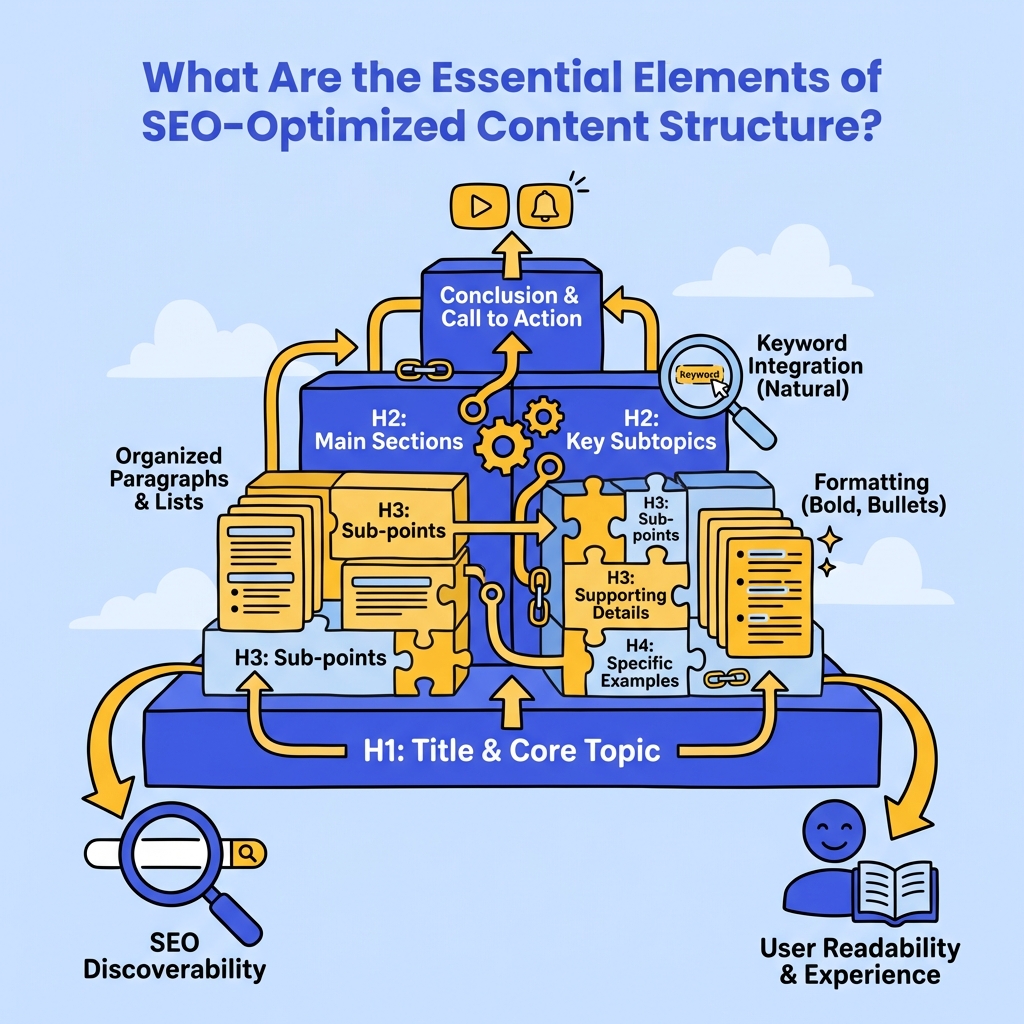
The structure of your content plays a crucial role in both search engine rankings and user experience. SEO content creation requires careful attention to how information is organized, presented, and formatted to maximize both discoverability and readability.
Your content should follow a logical hierarchy using proper heading tags (H1, H2, H3). The H1 tag should contain your primary keyword and clearly communicate the main topic, while H2 and H3 tags help organize subtopics and include related keywords naturally. This structure helps search engines understand your content's organization and makes it easier for users to scan and navigate.
Include your target keywords in strategic locations without overstuffing. The title tag, meta description, first paragraph, and a few subheadings should contain your primary keyword, but focus on natural language that serves the reader first. Modern search algorithms are sophisticated enough to understand context and related terms, so you can use synonyms and variations throughout your content.
Optimizing Content Length and Depth
Content length matters, but depth and comprehensiveness matter more. While there's no magic word count for SEO success, longer content (typically 1,500+ words) tends to rank better because it can cover topics more thoroughly. However, the key is providing complete, valuable information rather than adding fluff to hit a word count target.
Create content that fully addresses the user's query and related questions they might have. Use tools like AnswerThePublic or Google's "People Also Ask" feature to identify common questions around your topic. Addressing these questions within your content increases its value and helps you capture featured snippets and voice search results.
How Do You Create Content That Satisfies User Intent?
Understanding and satisfying user intent is perhaps the most critical aspect of modern SEO content creation. Search engines have become incredibly sophisticated at determining what users really want when they enter a query, and they reward content that best fulfills those needs.
Analyze the current top-ranking pages for your target keywords to understand what type of content Google considers most relevant. Look at the format (blog post, product page, video), length, topics covered, and user engagement signals. This competitive analysis reveals what users expect to find and what search engines consider high-quality for that particular query.
Create comprehensive content that goes beyond the basic query to address related questions and concerns. If someone searches for "SEO content creation tips," they might also want to know about tools, common mistakes, measurement metrics, and implementation timelines. By anticipating and addressing these related needs, your content becomes more valuable and engaging.
Consider the user's journey stage when creating content. Someone searching for "what is SEO" needs educational, beginner-friendly content, while someone looking for "advanced SEO techniques" wants detailed, tactical information. Matching your content's complexity and focus to the user's knowledge level and goals improves both user satisfaction and search performance.
What Role Do Technical SEO Factors Play in Content Creation?
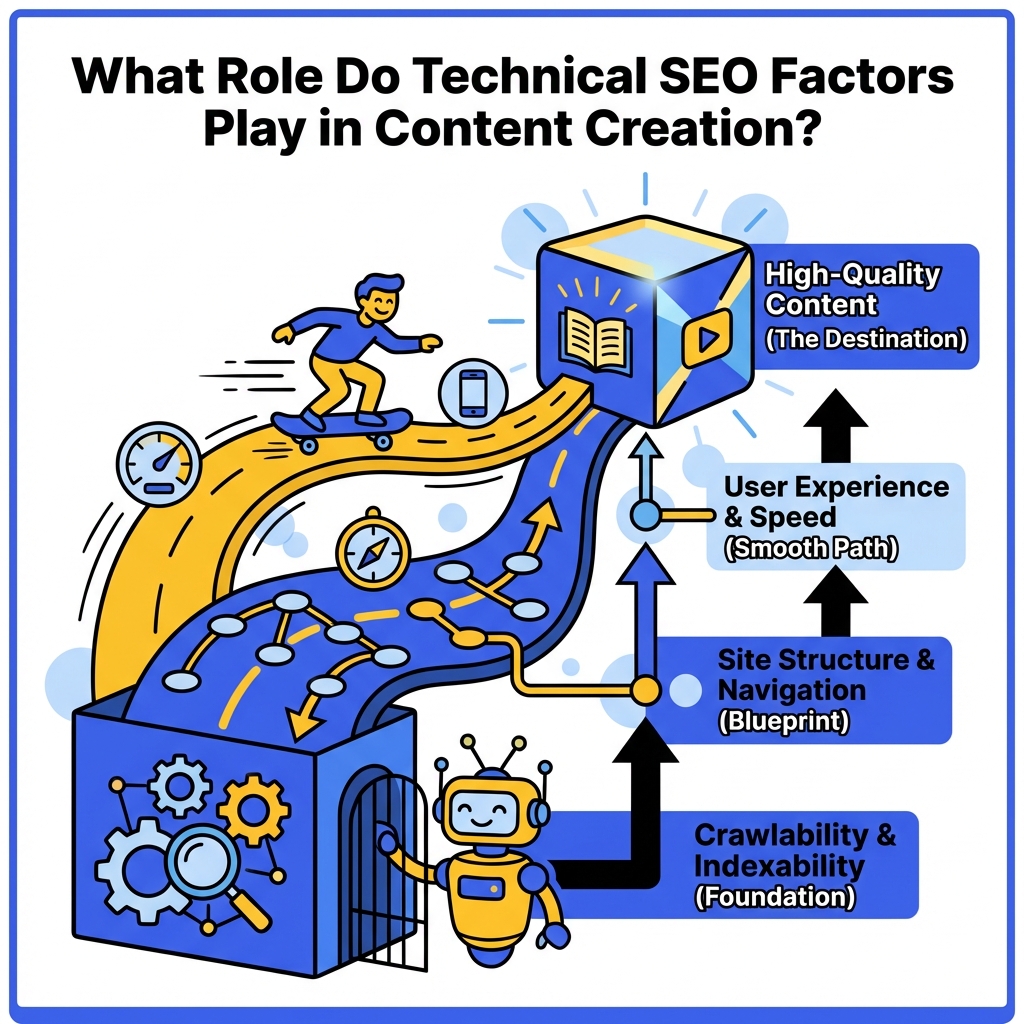
Technical SEO elements are integral to successful SEO content creation, as even the most valuable content won't rank well if it's not technically optimized. These factors ensure that search engines can easily crawl, index, and understand your content while providing a smooth user experience.
Page loading speed significantly impacts both search rankings and user experience. Optimize images by compressing them and using appropriate file formats, minimize plugin usage, and consider using a content delivery network (CDN). Google's Core Web Vitals have made page speed an official ranking factor, making technical optimization crucial for content success.
Mobile optimization is no longer optional, as Google uses mobile-first indexing for all websites. Ensure your content displays properly on all device sizes, with readable fonts, appropriate spacing, and functional navigation. Test your content on various devices and screen sizes to guarantee a consistent experience across all platforms.
Internal Linking and Content Architecture
Strategic internal linking is a powerful but often overlooked aspect of SEO content creation. Link to relevant pages within your website using descriptive anchor text that includes related keywords. This helps search engines understand your site's structure and topic relationships while keeping users engaged with additional valuable content.
Create topic clusters by linking related content pieces together. This approach involves creating comprehensive pillar pages on broad topics and supporting them with more specific cluster content that links back to the main page. This structure demonstrates topical authority and helps both users and search engines navigate your content more effectively.
How Do You Measure and Improve Your SEO Content Performance?
Measuring the success of your SEO content creation efforts requires tracking multiple metrics beyond just search rankings. While ranking positions matter, they don't tell the complete story of how your content performs in driving business results and serving user needs.
Monitor organic traffic growth, click-through rates from search results, and user engagement metrics like time on page, bounce rate, and pages per session. These metrics reveal whether your content attracts the right audience and provides value once they arrive. Use Google Analytics and Search Console to track these metrics and identify improvement opportunities.
Track keyword rankings for your target terms, but also monitor for unexpected keywords your content ranks for. Often, well-optimized content will rank for related terms you didn't specifically target, providing additional traffic opportunities. Use these insights to update and expand your content to capture more relevant search traffic.
Pay attention to featured snippets, local pack appearances, and other SERP features your content might qualify for. These special search result formats can dramatically increase your visibility and click-through rates. Structure your content with clear answers, lists, and tables to increase your chances of earning these valuable positions.
What Are the Common Mistakes to Avoid in SEO Content Creation?
Even experienced content creators can fall into traps that undermine their SEO efforts. Understanding these common mistakes helps you avoid them and create more effective content from the start.
Keyword stuffing remains a persistent problem, even as search algorithms have become more sophisticated. Forcing keywords into content where they don't belong naturally creates a poor reading experience and can actually hurt your rankings. Focus on creating valuable content first, then optimize it naturally for your target keywords.
Neglecting user experience in favor of search engine optimization is another critical mistake. While technical optimization matters, content that doesn't serve real user needs won't succeed long-term. Search engines increasingly use user behavior signals to evaluate content quality, so prioritizing user value ultimately benefits your SEO performance as well.
Failing to update and maintain existing content can limit your SEO success. Search engines favor fresh, accurate information, and user needs evolve over time. Regularly review and update your top-performing content to ensure it remains relevant, accurate, and comprehensive. This maintenance often provides better ROI than creating entirely new content.
Conclusion
SEO content creation in 2026 requires a sophisticated understanding of search algorithms, user behavior, and technical optimization factors. Success comes from balancing strategic keyword targeting with genuine value creation, ensuring your content serves both search engines and human readers effectively. The most successful content creators focus on understanding user intent, creating comprehensive resources, and maintaining technical excellence while never losing sight of their audience's real needs and goals.
Ready to transform your content strategy? Start by conducting thorough keyword research for your next piece, structure it with clear headings and comprehensive coverage, and don't forget to measure your results. The investment in proper SEO content creation will pay dividends in increased organic traffic, better user engagement, and stronger search visibility for years to come.

Stefan Winter
Founder & SEO Expert
Founder of Fast SEO Fix and SEO automation expert. Stefan built Fast SEO Fix to solve the tedious problem of manual SEO work. He specializes in SEO optimized content generation, keyword research, and automated SEO strategies.
