What Is Keyword Gap Analysis and Why Does It Matter?
Posted by
 Stefan Winter
How to Master Keyword Gap Analysis and Outrank Your Competition in 2026

Discovering the keywords your competitors rank for while you don't is like finding hidden treasure in the SEO world. Keyword gap analysis reveals these opportunities, showing you exactly where to focus your content efforts for maximum impact. In this comprehensive guide, you'll learn how to conduct thorough keyword gap analysis, identify high-value opportunities, and implement strategies that drive real results.
What Is Keyword Gap Analysis and Why Does It Matter?
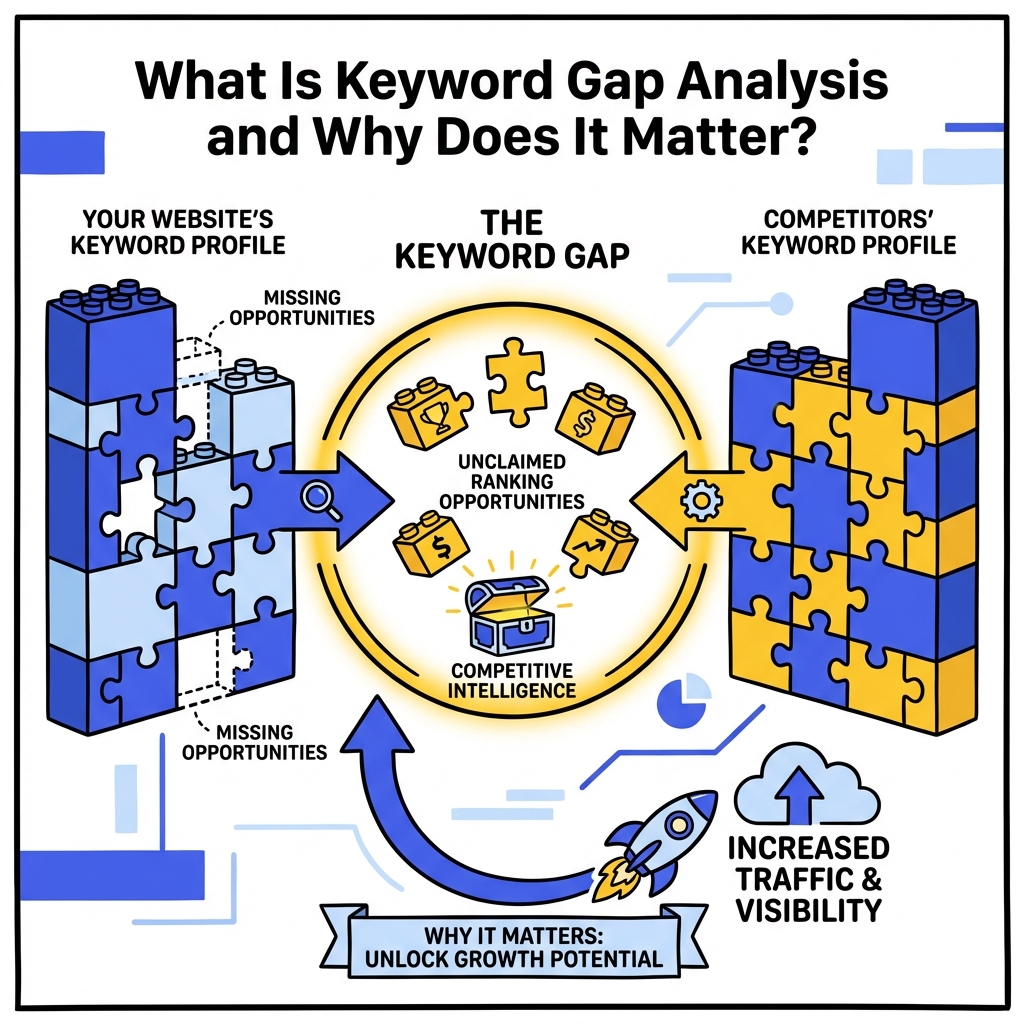
Keyword gap analysis is the process of comparing your website's keyword profile against your competitors to identify ranking opportunities you're missing. Think of it as competitive intelligence that reveals the search terms driving traffic to your rivals but not to your site.
This analysis goes beyond simple keyword research. While traditional keyword research helps you find relevant terms in your industry, gap analysis specifically targets keywords where competitors have already proven success. You're essentially getting a roadmap of tested, profitable keywords that are already converting in your market.
The strategic value becomes clear when you consider that most businesses only capture a fraction of their potential organic traffic. By systematically identifying and targeting these gaps, you can expand your search visibility and capture traffic that's currently flowing to competitors.
How to Identify Your True SEO Competitors
Before diving into keyword gaps, you need to identify the right competitors to analyze. Your business competitors aren't always your SEO competitors, and this distinction is crucial for effective analysis.
Start by searching for your primary keywords and noting which websites consistently appear in the top 10 results. These are your SEO competitors regardless of whether they compete with you directly in business. A local bakery might find that food blogs and recipe sites are their main SEO competitors for certain keywords.
Use tools like SEMrush, Ahrefs, or Moz to discover which domains share the most keyword overlap with your site. Look for websites that target similar audiences but approach the topic from different angles. For comprehensive SEO strategies that incorporate competitive analysis, explore our guide on what exactly is complete SEO.
Step-by-Step Process for Conducting Keyword Gap Analysis
Step 1: Gather Your Competitor List
Compile a list of 3-5 primary SEO competitors identified through your research. Focus on domains with similar authority levels to yours, as targeting gaps from significantly more authoritative sites may require longer-term strategies.
Document each competitor's domain authority, estimated monthly traffic, and primary content focus. This baseline information helps prioritize which gaps to pursue first.
Step 2: Extract Competitor Keywords
Using your chosen SEO tool, export the complete keyword lists for each competitor. Most tools allow you to filter by search volume, keyword difficulty, and ranking position to focus on the most valuable opportunities.
Pay special attention to keywords where competitors rank in positions 1-10, as these represent proven opportunities in your market. Keywords with search volumes between 100-1,000 monthly searches often provide the best balance of opportunity and achievability.
Step 3: Identify the Gaps
Compare your keyword profile against each competitor to identify terms where they rank but you don't appear in the top 50 results. Modern SEO tools automate this process, generating gap reports that highlight specific opportunities.
| Gap Type | Definition | Priority Level | Typical Search Volume |
|---|---|---|---|
| High-Value Gaps | Keywords with high search volume, low competition | High | 1,000+ monthly searches |
| Quick Wins | Low competition keywords you can rank for quickly | High | 100-500 monthly searches |
| Long-Tail Opportunities | Specific phrases with clear intent | Medium | 50-200 monthly searches |
| Brand Adjacent | Keywords related to competitor brands | Low | Varies widely |
Step 4: Analyze Search Intent and Relevance
Not every gap represents a genuine opportunity. Analyze the search intent behind each keyword to ensure alignment with your business goals and audience needs. Keywords might have high search volume but attract visitors who won't convert for your specific offerings.
Group keywords by intent type: informational, navigational, commercial, and transactional. This categorization helps prioritize content creation and determines the type of content needed to compete effectively.
Which Tools Deliver the Best Keyword Gap Insights?
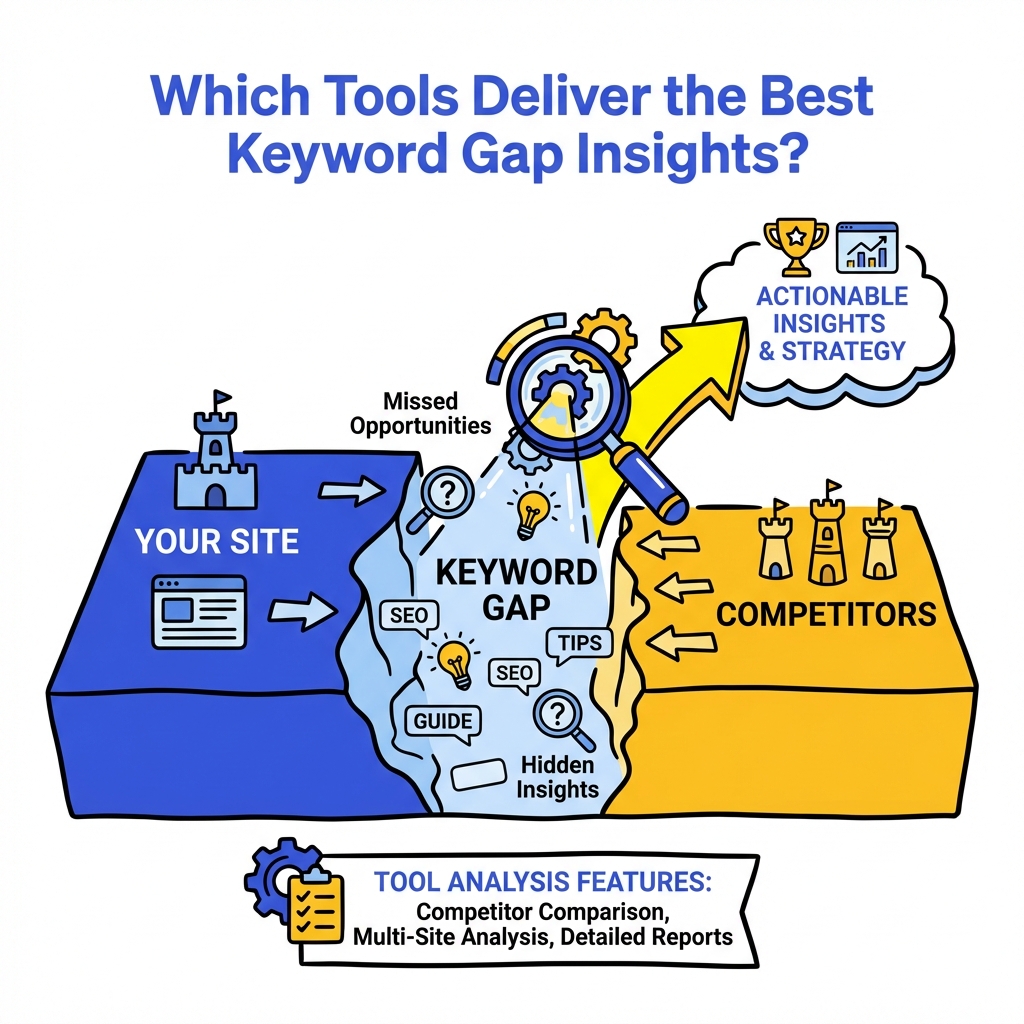
Several tools excel at keyword gap analysis, each offering unique strengths for different business needs and budgets.
SEMrush provides comprehensive gap analysis with detailed competitor insights and the ability to analyze multiple competitors simultaneously. Their gap analysis tool shows keyword difficulty, search volume trends, and SERP features for each opportunity.
Ahrefs offers robust keyword gap functionality with excellent data accuracy and the ability to filter gaps by various criteria. Their Content Gap tool specifically identifies pages where competitors rank for multiple related keywords, revealing content opportunities rather than just individual keyword gaps.
For businesses seeking affordable SEO solutions, free tools like Google Keyword Planner combined with manual competitor analysis can provide basic gap insights. While more time-intensive, this approach works for smaller businesses with limited budgets.
How to Prioritize Keyword Gap Opportunities
Effective prioritization separates successful gap analysis from overwhelming keyword lists. Start by scoring each opportunity across multiple factors to create a systematic approach.
Consider search volume, keyword difficulty, business relevance, and competitive intensity for each gap. Keywords with moderate search volume (500-2,000 monthly searches) and lower difficulty scores often provide the best starting points.
Evaluate your ability to create superior content for each keyword. If competitors have comprehensive, well-optimized content, ensure you can produce something genuinely better before committing resources. Quality content creation processes become essential here, which is why understanding effective content creation workflows proves invaluable.
Group related keywords into content clusters rather than targeting each gap individually. This approach allows you to create comprehensive content that targets multiple gaps simultaneously while building topical authority.
What Content Strategies Work Best for Gap Keywords?
Creating content that successfully captures gap keywords requires strategic planning beyond basic keyword optimization. Your content must not only target the keyword but also provide superior value compared to existing results.
Analyze the current top-ranking content for each gap keyword to understand what search engines and users value. Look for content gaps within the existing results where you can provide additional value, updated information, or different perspectives.
Develop content formats that match user intent and search behavior. Informational keywords often perform well with comprehensive guides, while commercial keywords may require comparison content or product-focused pages.
Consider the user journey when creating gap content. Many gap keywords represent different stages of the buyer's journey, so align your content depth and calls-to-action accordingly.
How to Track and Measure Gap Analysis Success
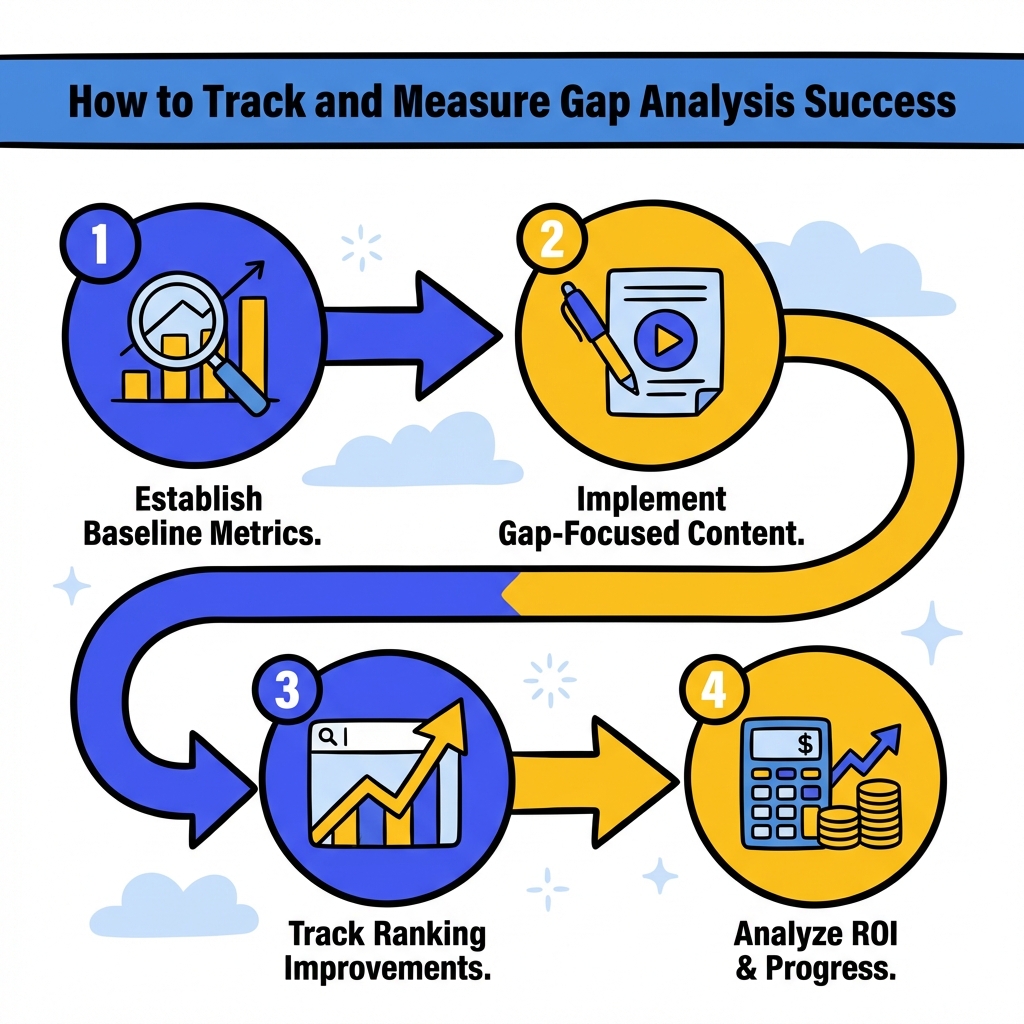
Monitoring your gap analysis results ensures continuous improvement and demonstrates ROI from your efforts. Establish baseline metrics before implementing gap-focused content to measure progress accurately.
Track ranking improvements for targeted gap keywords using your SEO tool's rank tracking features. Monitor not just rankings but also organic traffic increases and conversion rates from gap-focused content.
Set realistic timelines for gap keyword success. Most gap keywords require 3-6 months to show significant ranking improvements, depending on competition levels and content quality.
Document which types of gaps produce the best results for your business. This intelligence improves future gap analysis efforts and helps refine your targeting criteria.
Advanced Keyword Gap Analysis Techniques
Beyond basic gap identification, advanced techniques can uncover hidden opportunities and provide competitive advantages. Seasonal gap analysis reveals keywords where competitors gain temporary advantages during specific periods.
Analyze gaps across different search engines, as keyword performance varies between Google, Bing, and other platforms. Some businesses find significant opportunities in non-Google search engines where competition remains lighter.
Geographic gap analysis identifies location-specific opportunities, particularly valuable for businesses with multiple locations or those expanding into new markets. Local search gaps often provide quicker wins with higher conversion rates.
Consider gaps in SERP features like featured snippets, image results, and video carousels. These opportunities can provide visibility even without traditional top-10 rankings.
Conclusion
Keyword gap analysis transforms competitive intelligence into actionable SEO strategy, revealing proven opportunities that can dramatically expand your organic reach. By systematically identifying, prioritizing, and targeting these gaps, you're following a data-driven path to improved search visibility.
The key to successful gap analysis lies in consistent execution and continuous refinement. Start with a focused list of your most achievable gaps, create superior content, and monitor results to build momentum. As you gain experience and see results, expand your analysis to capture larger opportunities.
Ready to discover the keyword opportunities your competitors don't want you to find? Fast SEO Fix specializes in comprehensive keyword gap analysis that reveals your biggest organic growth opportunities. Contact us today to uncover the gaps that could transform your search traffic.

Stefan Winter
Founder & SEO Expert
Founder of Fast SEO Fix and SEO automation expert. Stefan built Fast SEO Fix to solve the tedious problem of manual SEO work. He specializes in SEO optimized content generation, keyword research, and automated SEO strategies.
