What Is a Content Brief Generator and Why Do You Need One?
Posted by
 Stefan Winter
How to Create Powerful Content Briefs with a Content Brief Generator in 2026
Creating consistent, high-quality content at scale remains one of the biggest challenges for marketing teams and agencies. While brainstorming topics and crafting compelling articles takes significant time and expertise, a content brief generator can streamline this process dramatically. In this comprehensive guide, you'll discover how to leverage these powerful tools to produce detailed content briefs that drive results, save time, and ensure your content strategy stays on track.
What Is a Content Brief Generator and Why Do You Need One?
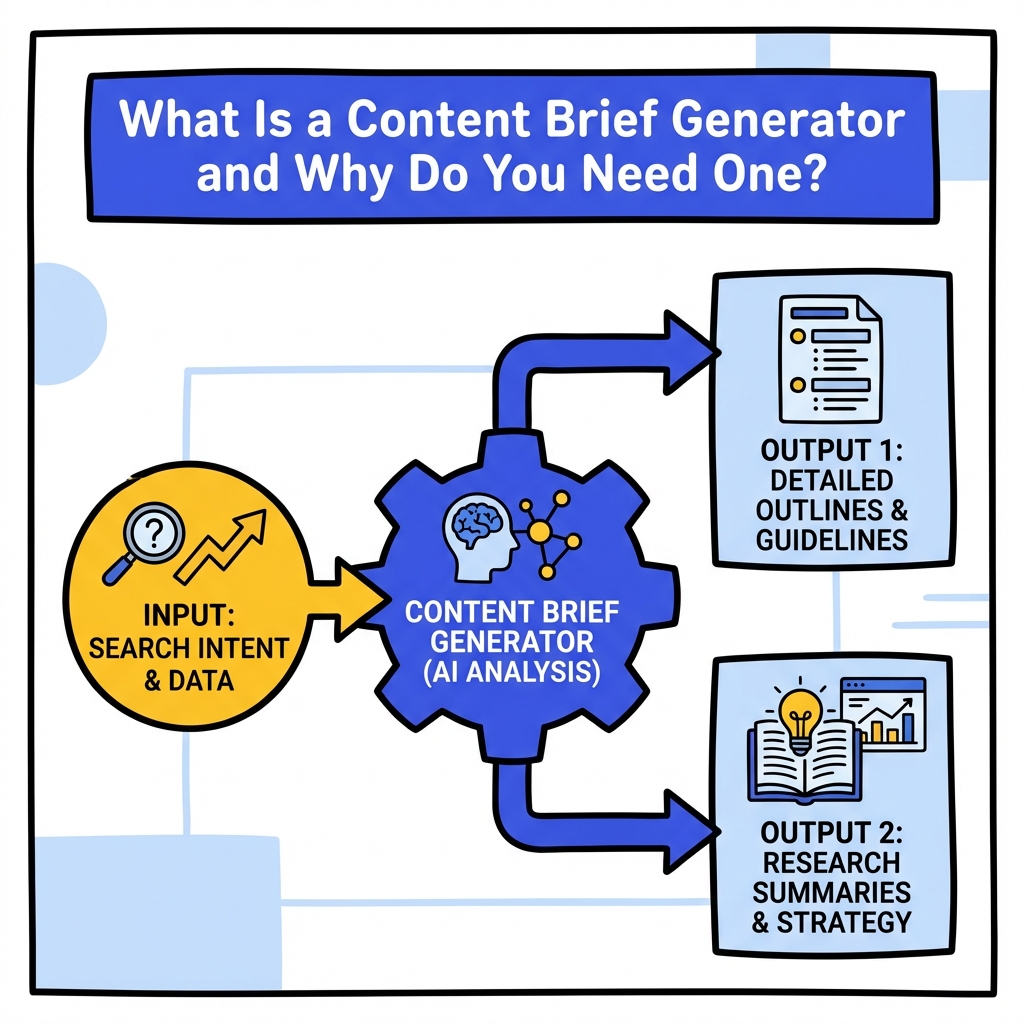
A content brief generator is a specialized tool that automatically creates detailed content outlines, research summaries, and strategic guidelines for writers and content creators. Unlike basic topic generators, these tools analyze search intent, competitor content, and keyword opportunities to produce comprehensive briefs that serve as blueprints for high-performing articles.
Modern content brief generators combine artificial intelligence with SEO data to deliver actionable insights. They examine top-ranking pages for your target keywords, identify content gaps, and suggest structural elements that improve your chances of ranking well. This approach transforms content creation from guesswork into a data-driven process.
The benefits extend beyond time savings. Content brief generators help maintain consistency across multiple writers, ensure comprehensive topic coverage, and align content with search engine requirements. For agencies managing dozens of clients or businesses publishing regularly, these tools become essential for scaling content operations effectively.
How Does a Content Brief Generator Actually Work?
Understanding the mechanics behind content brief generators helps you choose the right tool and maximize its potential. Most generators follow a systematic process that begins with keyword analysis and extends through comprehensive content planning.
The process starts when you input your target keyword or topic. The generator immediately analyzes search engine results pages (SERPs) for that keyword, examining factors like content length, heading structures, and semantic keywords used by top-ranking pages. This analysis reveals what search engines consider valuable for your topic.
Next, the tool performs competitor content analysis, identifying common themes, questions addressed, and content gaps in existing articles. Advanced generators also analyze user intent, determining whether searchers want informational content, product comparisons, or how-to guides. This intelligence shapes the brief's recommendations for tone, structure, and key points to cover.
| Content Brief Component | Purpose | Generator Benefit |
|---|---|---|
| Target Keywords | SEO optimization | Identifies primary and secondary keywords automatically |
| Content Structure | Reader engagement | Suggests optimal heading hierarchy and flow |
| Competitor Analysis | Market positioning | Reveals content gaps and opportunities |
| Word Count Guidance | Search ranking | Recommends length based on top performers |
| Related Topics | Comprehensive coverage | Ensures thorough topic exploration |
What Features Should You Look for in a Content Brief Generator?
Not all content brief generators offer the same capabilities. The most effective tools combine several key features that directly impact your content's success and your team's efficiency.
Comprehensive keyword research capabilities rank among the most important features. Look for generators that identify not just primary keywords but also semantic variations, long-tail opportunities, and related terms that add topical authority. The best tools integrate with major keyword research platforms and provide search volume data alongside difficulty scores.
SERP analysis functionality separates good generators from great ones. This feature examines top-ranking pages in detail, providing insights about content length, heading structures, and common topics covered. Some advanced tools even analyze the reading level and sentiment of successful content, helping you match the tone that resonates with your audience.
Content structure recommendations prove invaluable for maintaining consistency and improving readability. Quality generators suggest heading hierarchies, identify questions to answer, and recommend content sections based on user intent analysis. This guidance helps writers create comprehensive articles that satisfy both readers and search engines.
Advanced Analytics and Reporting Capabilities
Modern content brief generators increasingly offer analytics features that track content performance over time. These tools monitor how articles created from their briefs perform in search rankings, providing feedback that improves future brief quality.
Integration capabilities with existing content management systems and SEO tools streamline workflow significantly. Look for generators that connect with popular platforms like WordPress, content calendars, and analytics suites. This connectivity eliminates manual data transfer and keeps your entire content operation synchronized.
How to Choose the Right Content Brief Generator for Your Needs
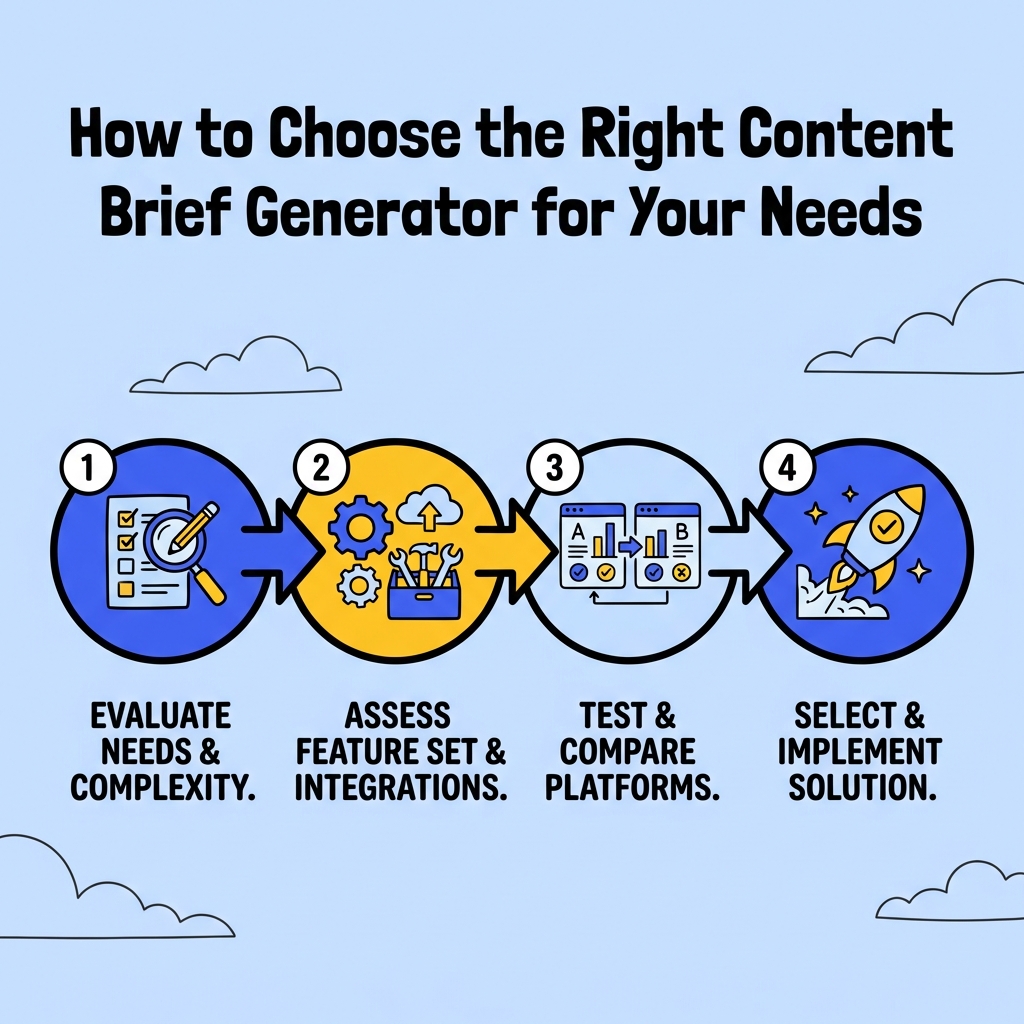
Selecting the optimal content brief generator requires careful consideration of your specific requirements, team size, and content goals. The decision impacts not just immediate productivity but also long-term content strategy success.
Start by evaluating your content volume and complexity needs. High-volume publishers benefit from generators with bulk processing capabilities and API access, while smaller teams might prioritize ease of use and comprehensive guidance for individual pieces. Consider whether you need industry-specific features or general-purpose functionality.
Budget considerations extend beyond subscription costs to include training time and integration expenses. Some generators offer extensive customization options that require technical setup, while others provide plug-and-play solutions with limited flexibility. Factor in the learning curve for your team and the time investment required to achieve proficiency.
Team collaboration features become crucial for agencies and larger organizations. Look for generators that support multiple users, allow brief sharing and commenting, and maintain version control. These capabilities prevent miscommunication and ensure everyone works from the same strategic foundation.
Step-by-Step Guide to Using a Content Brief Generator Effectively
Maximizing your content brief generator's potential requires a systematic approach that begins with proper setup and extends through content publication. Following these steps ensures consistent results and continuous improvement.
Begin by configuring your generator with accurate business and audience information. Input your brand voice guidelines, target audience demographics, and content goals. This foundational setup influences every brief the tool creates, so invest time in thorough configuration.
When creating individual briefs, start with comprehensive keyword research within the tool. Don't rely solely on your initial keyword ideas; explore the generator's suggestions for related terms and semantic variations. This exploration often reveals valuable content angles you might have missed.
Review and customize the generated brief before passing it to writers. While generators provide excellent starting points, your industry expertise and brand knowledge add crucial context. Adjust tone recommendations, add specific requirements, and incorporate any unique angles that differentiate your content from competitors.
Optimizing Brief Quality Through Iteration
The most successful users treat content brief generators as collaborative partners rather than automated solutions. After publishing content created from generated briefs, analyze performance metrics and identify patterns in successful pieces.
Use performance data to refine your generator settings and brief customization approach. If certain types of content consistently outperform others, adjust your brief templates to emphasize those successful elements. This iterative process compounds your results over time.
Effective content creation processes often integrate multiple tools and strategies, with content brief generators serving as the foundation for systematic content development.What Common Mistakes Should You Avoid When Using Content Brief Generators?
Even the most sophisticated content brief generators can produce suboptimal results when used incorrectly. Understanding common pitfalls helps you avoid wasted effort and disappointing outcomes.
Over-reliance on generated recommendations without human oversight represents the most frequent mistake. While generators excel at data analysis and pattern recognition, they lack the nuanced understanding of your specific audience and business context. Always review and refine generated briefs before implementation.
Ignoring brand voice and style guidelines when customizing briefs leads to inconsistent content that confuses readers and dilutes brand identity. Generators provide structural and topical guidance, but maintaining your unique voice requires conscious effort and clear communication with writers.
Failing to update generator settings as your content strategy evolves results in briefs that no longer align with current goals. Regular reviews of your configuration settings ensure the tool continues supporting your evolving needs rather than perpetuating outdated approaches.
Many users also make the mistake of treating all generated briefs as equally valuable. Some topics and keywords naturally produce more actionable briefs than others. Develop judgment about when to rely heavily on generated guidance versus when to apply more human creativity and expertise.
How Can Content Brief Generators Improve Your SEO Strategy?
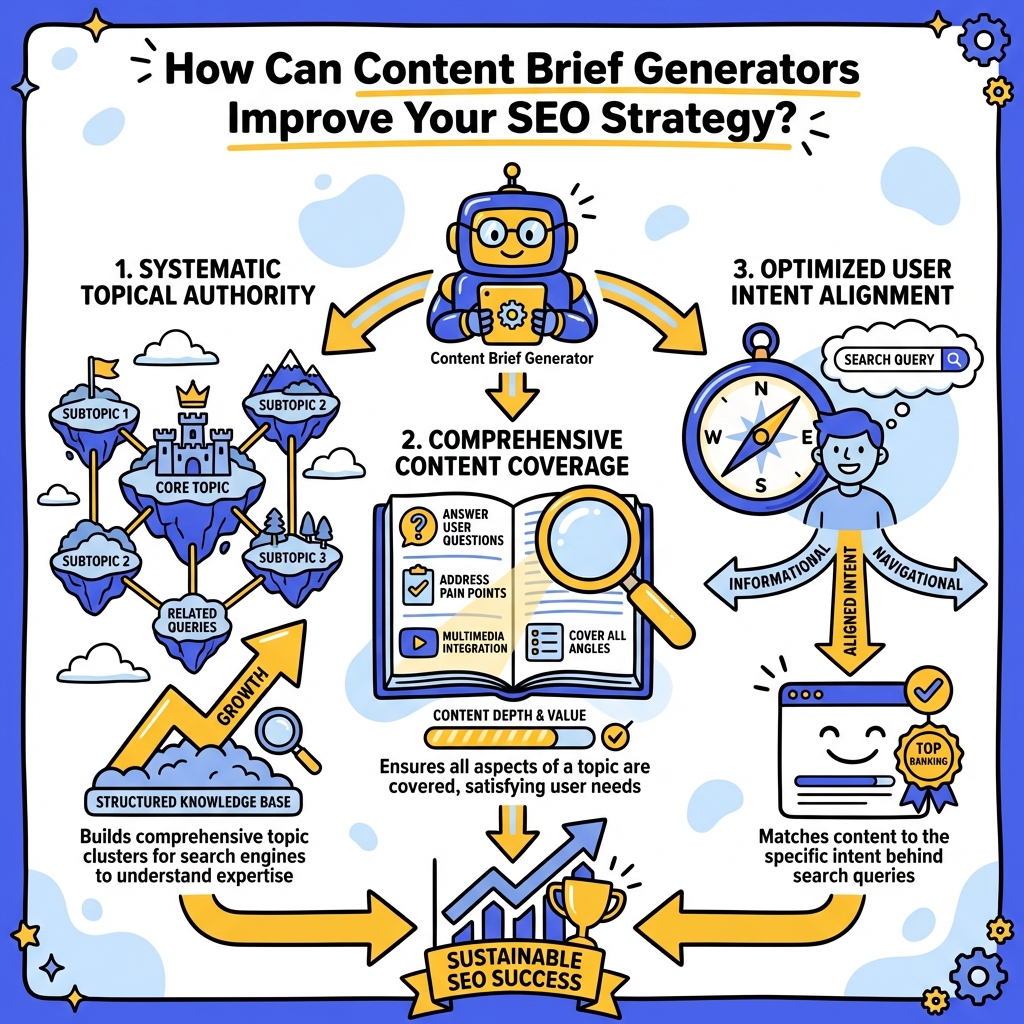
Content brief generators offer significant advantages for SEO beyond simple keyword optimization. Understanding these broader benefits helps you leverage these tools for comprehensive search engine success.
Topical authority development becomes more systematic with generator assistance. These tools identify related topics and subtopics that strengthen your content's relevance for target keywords. By following generator recommendations for comprehensive topic coverage, you build the topical depth that search engines increasingly reward.
Competitor analysis capabilities within generators reveal content gaps and opportunities that manual research might miss. This intelligence helps you create content that fills market voids while avoiding oversaturated topics. Strategic content positioning based on generator insights improves your chances of ranking success.
AI tools for SEO increasingly include content brief generation capabilities, making these features more accessible to businesses of all sizes.The consistency that generators provide across your content library creates stronger topical signals for search engines. When all your content follows similar structural and optimization principles, search engines develop greater confidence in your site's expertise and authority.
Advanced Strategies for Content Brief Generator Success
Experienced users develop sophisticated approaches that maximize generator value while maintaining content quality and uniqueness. These advanced strategies separate high-performing content operations from average ones.
Template customization based on content types improves brief relevance significantly. Create different generator configurations for blog posts, landing pages, and resource articles. Each content type serves different user intents and requires distinct approaches to structure and optimization.
Integration with broader content strategy planning ensures generator use supports long-term goals rather than just individual article creation. Use generator insights to inform content calendar planning, identify seasonal opportunities, and develop content series that build on each other.
Performance tracking and brief optimization create feedback loops that continuously improve results. Monitor which generated briefs lead to the most successful content, then analyze the common characteristics of those high-performing briefs. Apply these insights to future brief customization and generator configuration.
According to Content Marketing Institute research, organizations using structured content brief processes achieve 67% better content performance compared to those relying on ad-hoc approaches.
Integrating Content Brief Generators with Your Existing Workflow
Successful implementation requires thoughtful integration with existing content creation processes rather than wholesale workflow replacement. The goal is enhancement, not disruption of proven systems.
Start with pilot projects that test generator integration on a small scale. Choose content types and topics where you can easily measure improvement, then gradually expand usage as your team develops proficiency. This approach minimizes disruption while building confidence in the tool's value.
Training team members on generator capabilities and limitations ensures consistent usage across your organization. Develop internal guidelines for when to rely heavily on generated briefs versus when to emphasize human creativity and expertise. Clear protocols prevent confusion and maintain content quality standards.
Automated SEO approaches often incorporate content brief generation as part of comprehensive optimization strategies, demonstrating how these tools fit into broader marketing technology stacks.Communication protocols between brief creators and content writers prevent misunderstandings and ensure generated guidance translates into effective content. Establish clear expectations about which brief elements are requirements versus suggestions, and create feedback mechanisms for continuous improvement.
Measuring Success with Content Brief Generators
Quantifying the impact of content brief generators helps justify their cost and guides optimization efforts. Effective measurement combines immediate productivity metrics with longer-term content performance indicators.
Track time savings in content planning and research phases, comparing pre-generator workflows with current processes. Most users see 40-60% reductions in brief creation time, freeing resources for higher-value activities like strategy development and content promotion.
Content quality metrics provide insights into generator effectiveness beyond efficiency gains. Monitor factors like average time on page, bounce rates, and social sharing for content created from generated briefs compared to traditional approaches. Quality generators should improve these engagement metrics through better content structure and topic coverage.
Search engine performance represents the ultimate measure of content brief generator success. Track keyword rankings, organic traffic growth, and click-through rates for content created using generator guidance. The most effective tools show measurable improvements in these SEO metrics within 3-6 months of consistent use.
Conclusion
Content brief generators represent a significant evolution in content creation efficiency and effectiveness. By automating research, competitor analysis, and structural planning, these tools free creative professionals to focus on high-value activities like strategic thinking and compelling writing. The key to success lies not in blind reliance on generated recommendations, but in thoughtful integration of tool capabilities with human expertise and brand knowledge.
As search engines become increasingly sophisticated in evaluating content quality and relevance, the systematic approach that content brief generators provide becomes more valuable. Organizations that master these tools while maintaining authentic brand voices and unique perspectives will build sustainable competitive advantages in content marketing.
Ready to streamline your content creation process and improve your search engine rankings? Fast SEO Fix specializes in helping businesses implement effective content strategies that drive real results. Contact us today to discover how our comprehensive SEO solutions can transform your content marketing efforts and accelerate your organic growth.

Stefan Winter
Founder & SEO Expert
Founder of Fast SEO Fix and SEO automation expert. Stefan built Fast SEO Fix to solve the tedious problem of manual SEO work. He specializes in SEO optimized content generation, keyword research, and automated SEO strategies.
