What Exactly Is Automated SEO?
Posted by
 Stefan Winter
How to Implement Automated SEO: A Complete Guide to Streamlining Your Search Strategy
Search engine optimization has evolved dramatically over the past few years, and manual optimization processes that once took weeks can now be completed in hours. Automated SEO represents a fundamental shift in how businesses approach search visibility, combining artificial intelligence, machine learning, and sophisticated algorithms to handle repetitive optimization tasks at scale. This comprehensive guide will walk you through everything you need to know about automated SEO, from basic concepts to advanced implementation strategies that can transform your search performance in 2026 and beyond.
What Exactly Is Automated SEO?
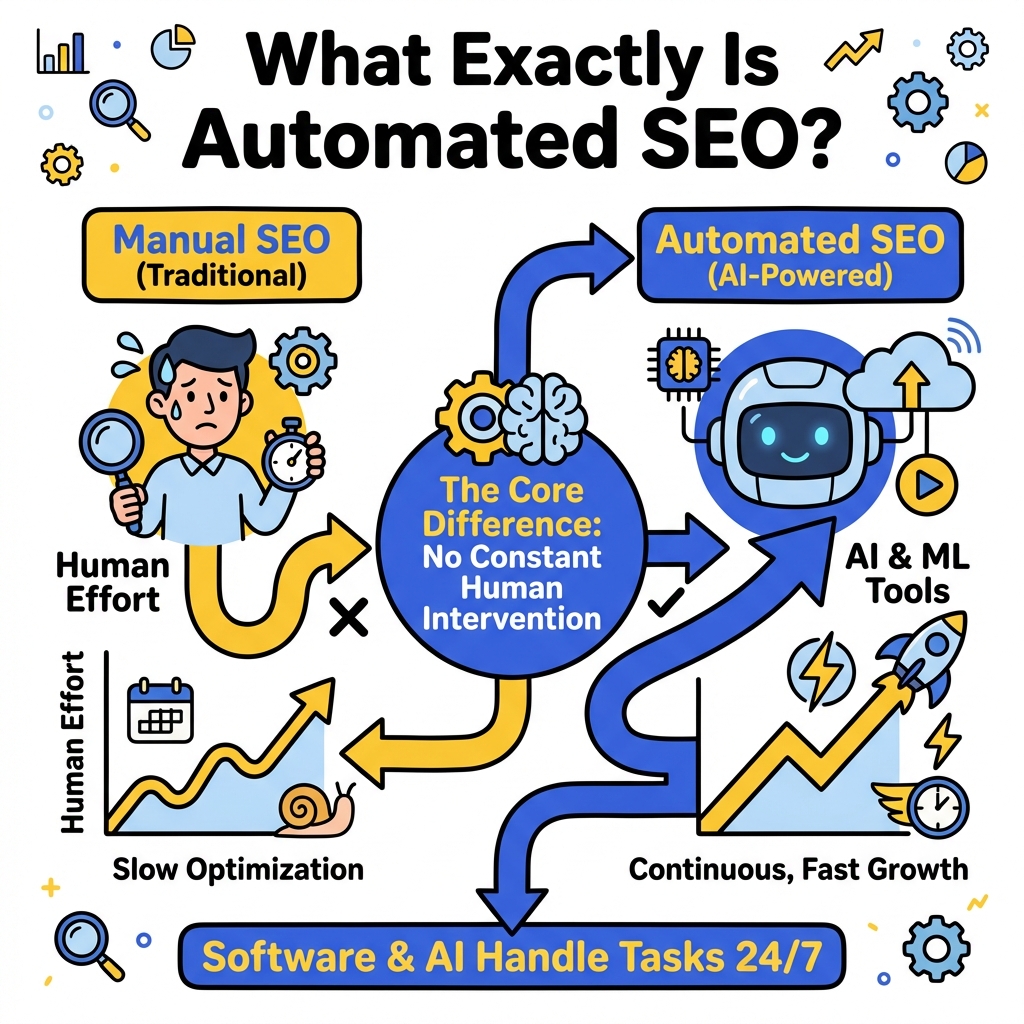
Automated SEO refers to the use of software tools, artificial intelligence, and machine learning algorithms to perform search engine optimization tasks without constant human intervention. Unlike traditional SEO approaches that require manual keyword research, content optimization, and performance monitoring, automated systems can analyze vast amounts of data, identify optimization opportunities, and implement changes across multiple web properties simultaneously.
The core principle behind automated SEO lies in its ability to process and act on data at speeds impossible for human teams. These systems continuously monitor search engine algorithm updates, competitor movements, keyword performance fluctuations, and user behavior patterns to make real-time optimization decisions. Modern automated SEO platforms can handle everything from technical audits and content generation to link building through AI link exchange platforms and performance reporting.
What makes automated SEO particularly powerful is its capacity for scalability. While a human SEO specialist might optimize 10-20 pages per day, automated systems can analyze and optimize thousands of pages simultaneously, ensuring consistent application of best practices across entire websites.
How Does Automated SEO Actually Work?
Automated SEO systems operate through a combination of data collection, analysis, and implementation phases. The process begins with comprehensive website crawling, where automated tools scan every page, analyzing technical elements like meta tags, header structures, internal linking patterns, and page load speeds. This initial audit creates a baseline understanding of current optimization levels.
Machine learning algorithms then compare this data against search engine ranking factors, competitor performance metrics, and historical optimization results. The system identifies specific areas where improvements can yield the greatest impact on search visibility. For websites just getting started with SEO, this automated analysis can reveal optimization opportunities that might take human analysts weeks to discover.
The implementation phase varies depending on the platform's capabilities. Some automated SEO tools generate detailed recommendations for human teams to execute, while more advanced systems can directly modify website elements like meta descriptions, internal links, and content structures. The most sophisticated platforms integrate with content management systems to make real-time adjustments based on performance data.
Key Components of Automated SEO Systems
Technical SEO Automation
Technical SEO automation handles the foundational elements that search engines use to crawl, index, and understand websites. These systems continuously monitor site speed, mobile responsiveness, SSL certificates, and crawl errors. When issues arise, automated alerts notify website administrators, and in some cases, the system can implement fixes automatically.
Advanced technical SEO automation includes schema markup implementation, XML sitemap generation and updates, and robots.txt file management. These systems ensure that technical optimization remains consistent even as websites grow and evolve.
Content Optimization Automation
Content-focused automated SEO tools analyze existing content for keyword density, semantic relevance, and user engagement signals. They can suggest content improvements, identify gaps in topic coverage, and even generate new content based on keyword research and competitor analysis. According to Google's documentation on helpful content, automated systems increasingly focus on user value rather than keyword stuffing.
Modern content automation platforms understand context and user intent, creating content that serves specific search queries while maintaining readability and engagement. These tools can optimize headlines, meta descriptions, and internal linking structures to improve both search visibility and user experience.
Benefits and Limitations of Automated SEO
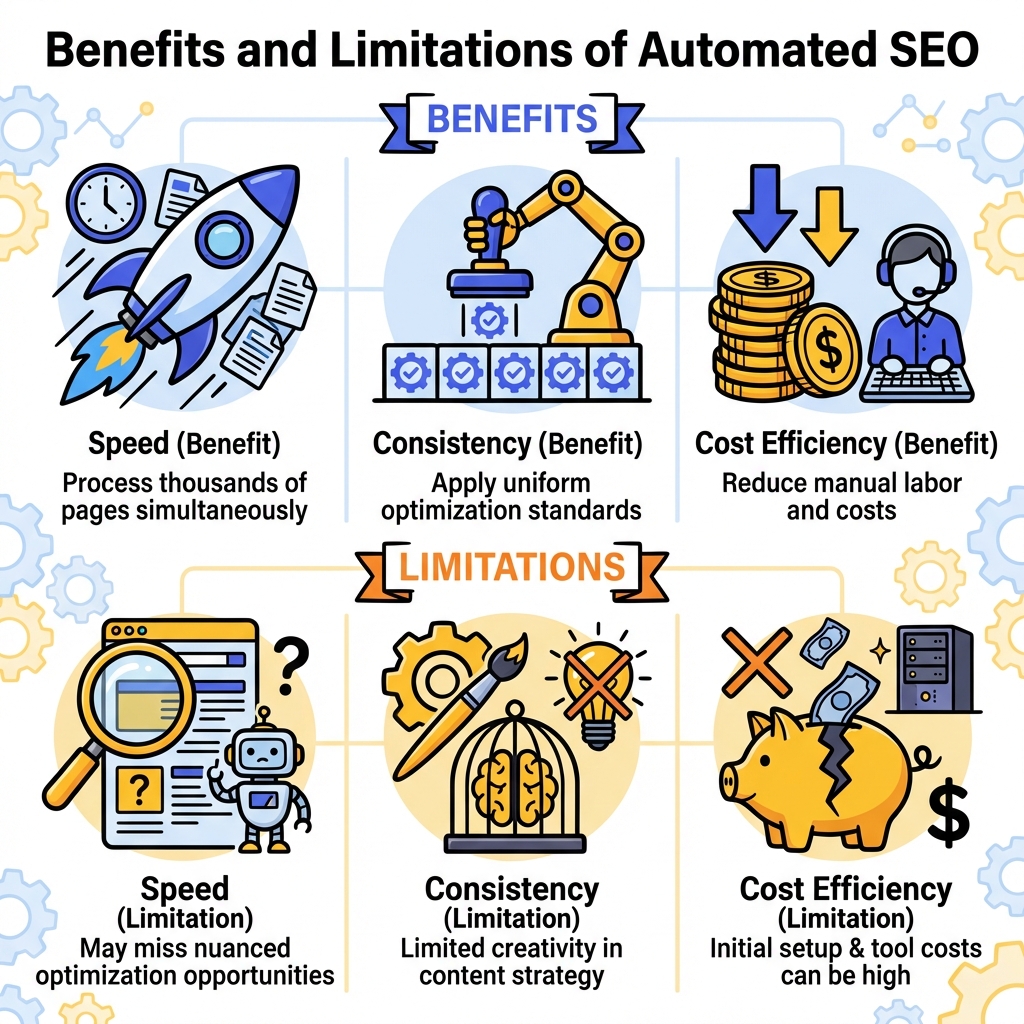
| Aspect | Benefits | Limitations |
|---|---|---|
| Speed | Process thousands of pages simultaneously | May miss nuanced optimization opportunities |
| Consistency | Apply uniform optimization standards | Limited creativity in content strategy |
| Cost Efficiency | Reduce manual labor costs | Initial setup and subscription expenses |
| Data Processing | Analyze vast datasets for insights | Potential over-reliance on historical data |
| Scalability | Handle multiple websites effortlessly | May require human oversight for complex decisions |
How to Choose the Right Automated SEO Solution
Selecting an appropriate automated SEO platform requires careful evaluation of your specific needs, technical capabilities, and growth objectives. Start by assessing your current SEO maturity level and identifying the most time-consuming manual processes in your optimization workflow. For businesses seeking complete SEO coverage, automated solutions should integrate seamlessly with existing tools and processes.
Consider the platform's integration capabilities with your content management system, analytics tools, and other marketing technologies. The best automated SEO solutions offer robust APIs and native integrations that eliminate the need for manual data transfers. Evaluate the quality of customer support and training resources, as successful implementation often requires initial guidance and ongoing optimization.
Budget considerations extend beyond subscription costs to include implementation time, training requirements, and potential productivity gains. Calculate the return on investment by comparing current manual SEO costs against projected automation savings, factoring in improved efficiency and scalability potential.
What Are the Best Practices for Implementing Automated SEO?
Start with Clear Objectives
Before implementing any automated SEO system, define specific, measurable goals for your optimization efforts. Whether you're focused on increasing organic traffic, improving keyword rankings, or enhancing technical performance, clear objectives guide platform selection and configuration decisions.
Establish baseline metrics for current SEO performance, including organic traffic levels, keyword rankings, technical audit scores, and conversion rates. These benchmarks enable accurate measurement of automated SEO impact and help identify areas where human intervention may still be necessary.
Maintain Human Oversight
While automation handles routine optimization tasks efficiently, human expertise remains crucial for strategic decisions, creative content development, and complex problem-solving. Successful automated SEO implementation combines machine efficiency with human creativity and strategic thinking.
Regular review of automated recommendations ensures alignment with business objectives and brand guidelines. Some optimization suggestions may conflict with user experience goals or brand messaging, requiring human judgment to balance SEO benefits against other considerations.
How to Monitor and Optimize Automated SEO Performance
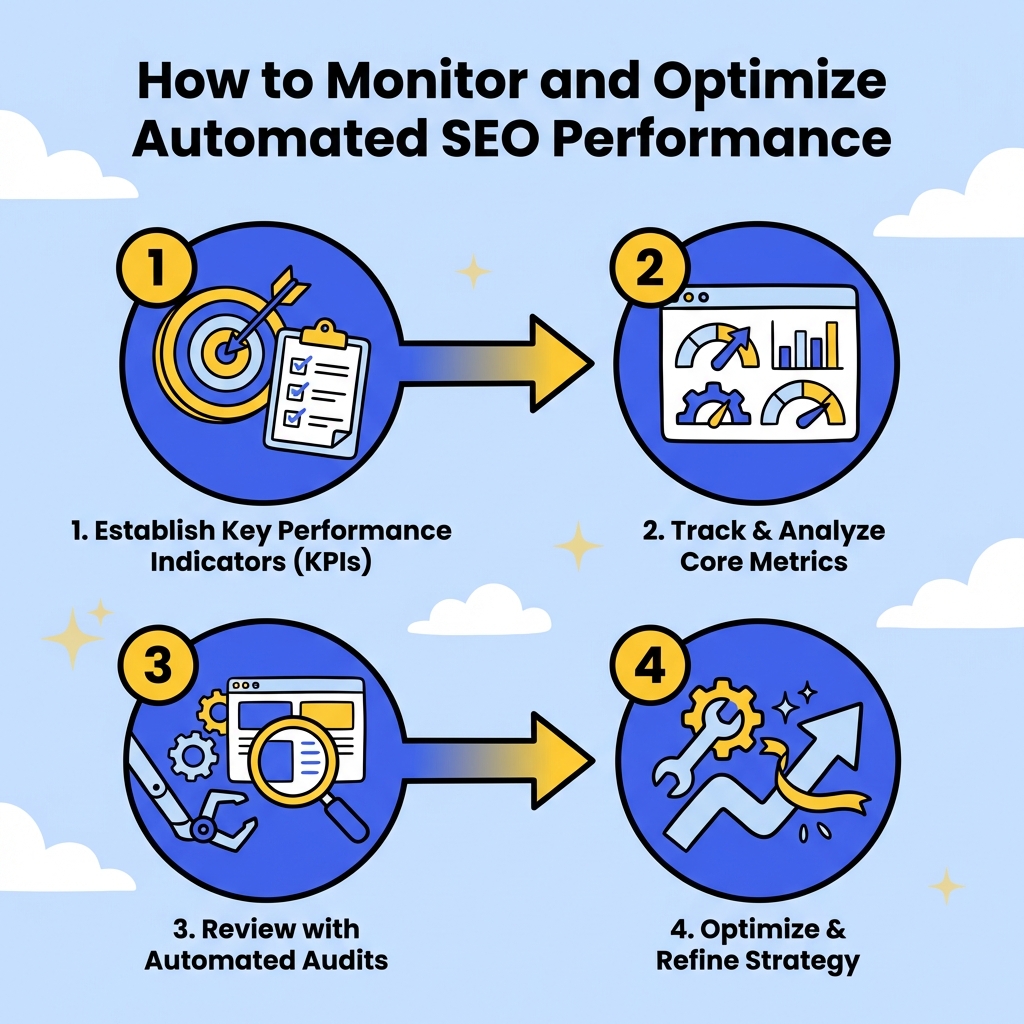
Effective monitoring of automated SEO systems requires establishing key performance indicators that align with business objectives. Track metrics like organic traffic growth, keyword ranking improvements, technical audit scores, and content engagement levels. Most automated platforms provide comprehensive dashboards, but supplementing with third-party analytics tools offers additional insights.
Set up automated reporting systems that deliver regular performance updates to stakeholders. Weekly or monthly reports should highlight significant changes, successful optimizations, and areas requiring attention. For businesses using rank tracking tools, integration with automated SEO platforms provides comprehensive visibility into optimization impact.
Continuous optimization of automated systems involves refining algorithms based on performance data, adjusting targeting parameters, and expanding automation scope as confidence grows. Regular platform updates often introduce new features and capabilities that can enhance optimization effectiveness.
What Does the Future Hold for Automated SEO?
The evolution of automated SEO continues accelerating, driven by advances in artificial intelligence, natural language processing, and machine learning capabilities. Future automated SEO systems will likely offer more sophisticated content generation, predictive optimization based on algorithm changes, and seamless integration with emerging search technologies.
Voice search optimization, visual search capabilities, and AI-powered search experiences will require new automated approaches. According to research from Search Engine Land, the integration of AI in search algorithms demands more intelligent automation tools that can adapt to rapidly changing ranking factors.
Businesses investing in automated SEO today position themselves advantageously for future search landscape changes. The key lies in selecting flexible platforms that evolve with technological advances while maintaining focus on user value and search engine guidelines.
Conclusion
Automated SEO represents a powerful evolution in search engine optimization, offering unprecedented scalability, efficiency, and data-driven insights for businesses of all sizes. By understanding how these systems work, recognizing their benefits and limitations, and implementing best practices for deployment and monitoring, organizations can significantly enhance their search visibility while reducing manual optimization workloads.
Success with automated SEO requires balancing machine efficiency with human strategic oversight, ensuring that optimization efforts align with business objectives and user needs. As search engines continue evolving and automated tools become more sophisticated, early adopters will maintain competitive advantages in the digital marketplace.
Ready to explore how automated SEO can transform your search strategy? Fast SEO Fix specializes in implementing and optimizing automated SEO solutions that deliver measurable results. Contact our team today to discover how automation can accelerate your search engine optimization success.

Stefan Winter
Founder & SEO Expert
Founder of Fast SEO Fix and SEO automation expert. Stefan built Fast SEO Fix to solve the tedious problem of manual SEO work. He specializes in SEO optimized content generation, keyword research, and automated SEO strategies.
