What AI Tools Should You Start With for SEO?
Posted by
 Stefan Winter
How to Use AI for SEO: A Complete Implementation Guide for 2026
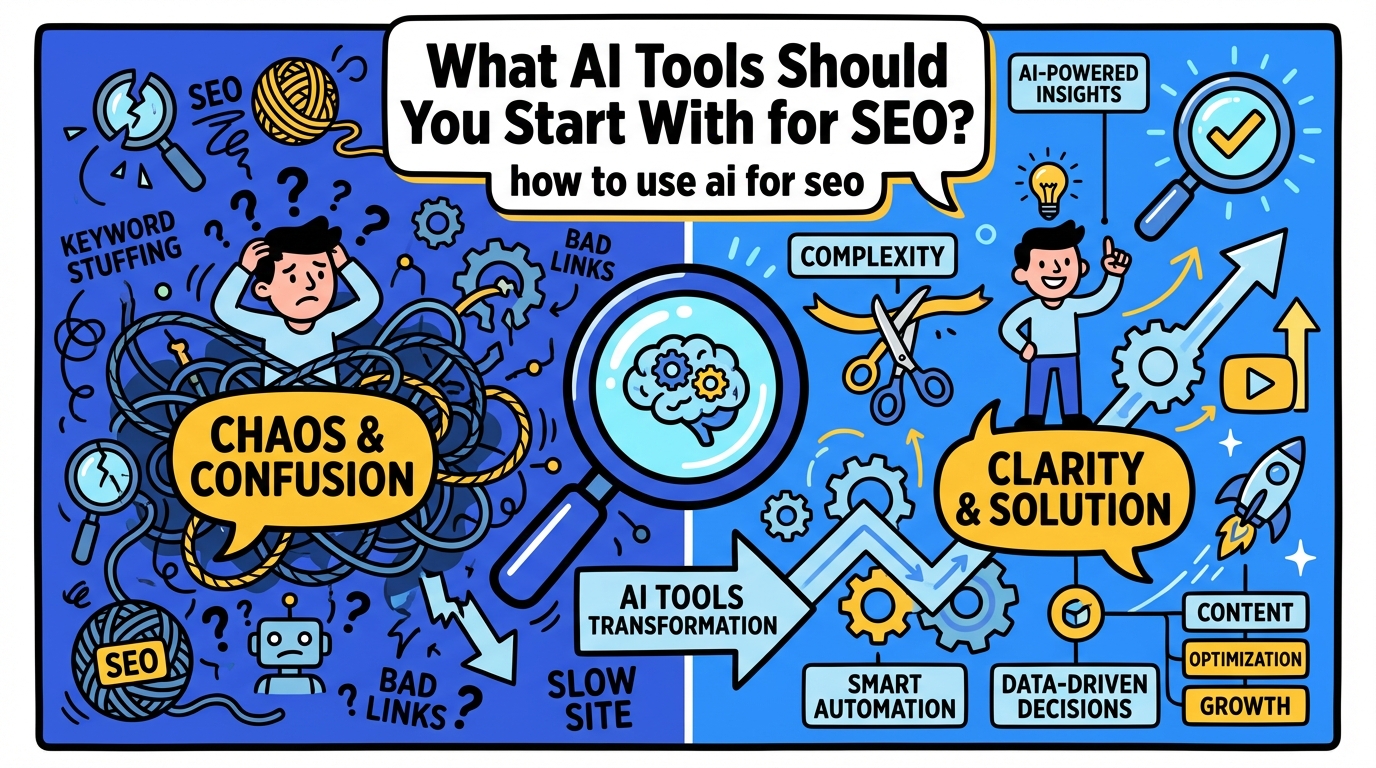
Artificial intelligence has revolutionized search engine optimization, transforming how businesses approach keyword research, content creation, and technical optimization. If you're wondering how to use AI for SEO effectively, you're not alone. Modern SEO professionals are leveraging AI tools to automate time-consuming tasks, uncover hidden opportunities, and scale their optimization efforts like never before. This comprehensive guide will walk you through practical AI applications that can dramatically improve your search rankings and organic traffic.
What AI Tools Should You Start With for SEO?
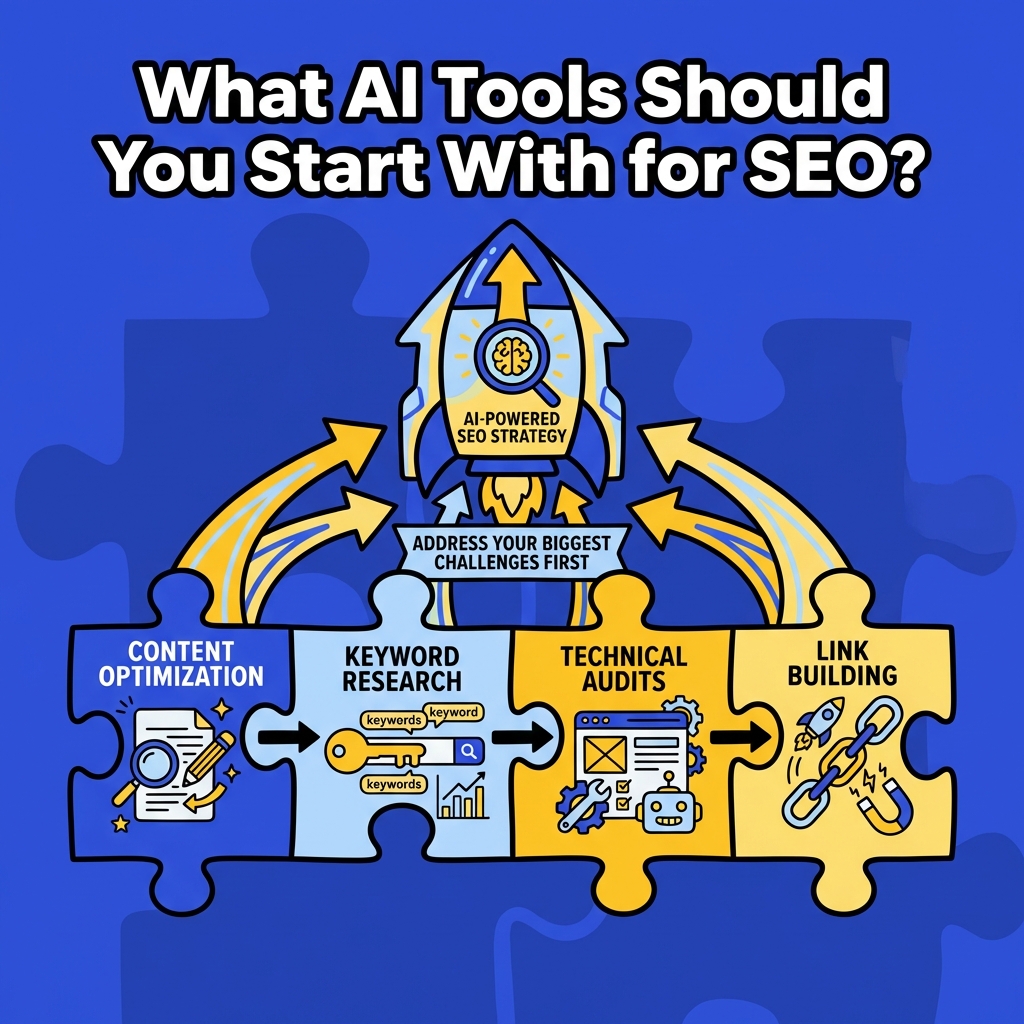
The foundation of using AI for SEO begins with selecting the right tools for your specific needs. Modern AI-powered SEO platforms offer everything from content optimization to technical audits, but knowing where to start can feel overwhelming.
Begin with AI tools that address your biggest SEO challenges. For most businesses, this means focusing on keyword research, content optimization, and performance tracking. Popular AI SEO tools like Surfer, MarketMuse, and Clearscope use machine learning algorithms to analyze top-ranking pages and provide data-driven recommendations for improvement.
When evaluating AI SEO tools, look for platforms that integrate with your existing workflow. The best AI tools should complement your current processes rather than completely replace them. Consider factors like ease of use, accuracy of recommendations, and the tool's ability to learn from your specific industry and target audience.
How Can AI Transform Your Keyword Research Process?
AI has fundamentally changed how SEO professionals approach keyword discovery and analysis. Traditional keyword research often relied on basic search volume data, but AI tools can now predict keyword difficulty, identify semantic relationships, and uncover long-tail opportunities that competitors miss.
Start by using AI-powered keyword research tools that analyze search intent patterns. These tools examine user behavior data to identify keywords that are more likely to convert. For example, AI can distinguish between informational queries and commercial intent searches, helping you prioritize keywords that align with your business goals.
Advanced AI keyword research involves clustering related terms and identifying topic gaps in your content strategy. Machine learning algorithms can analyze your competitors' content and reveal keyword opportunities they haven't fully optimized for. This approach is particularly effective when combined with automated SEO strategies that can scale your optimization efforts across hundreds or thousands of pages.
Step-by-Step AI Keyword Research Implementation
1. Input your seed keywords into an AI research tool 2. Analyze the semantic clusters generated by the AI 3. Review search intent classifications for each keyword group 4. Prioritize keywords based on AI-predicted difficulty and opportunity scores 5. Export and organize your keyword lists for content planning
According to Google's research on AI and search, understanding user intent through AI analysis leads to 40% better content performance compared to traditional keyword targeting methods.
Which AI Content Optimization Techniques Drive Results?
Content optimization represents one of the most powerful applications of AI in SEO. AI tools can analyze top-ranking content for your target keywords and provide specific recommendations for improving your own pages. This goes far beyond simple keyword density calculations.
Modern AI content optimization tools examine factors like semantic keyword usage, content structure, readability scores, and topic coverage depth. They can identify gaps in your content compared to top competitors and suggest specific sections or subtopics to add. This data-driven approach to content creation processes ensures your content meets both user needs and search engine requirements.
The most effective AI content optimization involves real-time suggestions as you write. Tools like Surfer's Content Editor or MarketMuse's optimization platform provide live feedback on keyword usage, content length, and topic coverage. This immediate guidance helps writers create SEO-optimized content without sacrificing quality or readability.
| AI Content Feature | Traditional Method | AI-Enhanced Result |
|---|---|---|
| Keyword Research | Manual analysis | Semantic clustering with intent prediction |
| Content Structure | Basic outlines | AI-generated topic hierarchies |
| Optimization Speed | Hours per page | Minutes per page |
| Competitor Analysis | Manual review | Automated gap identification |
| Content Scoring | Subjective assessment | Objective performance predictions |
How Do You Implement AI for Technical SEO Audits?
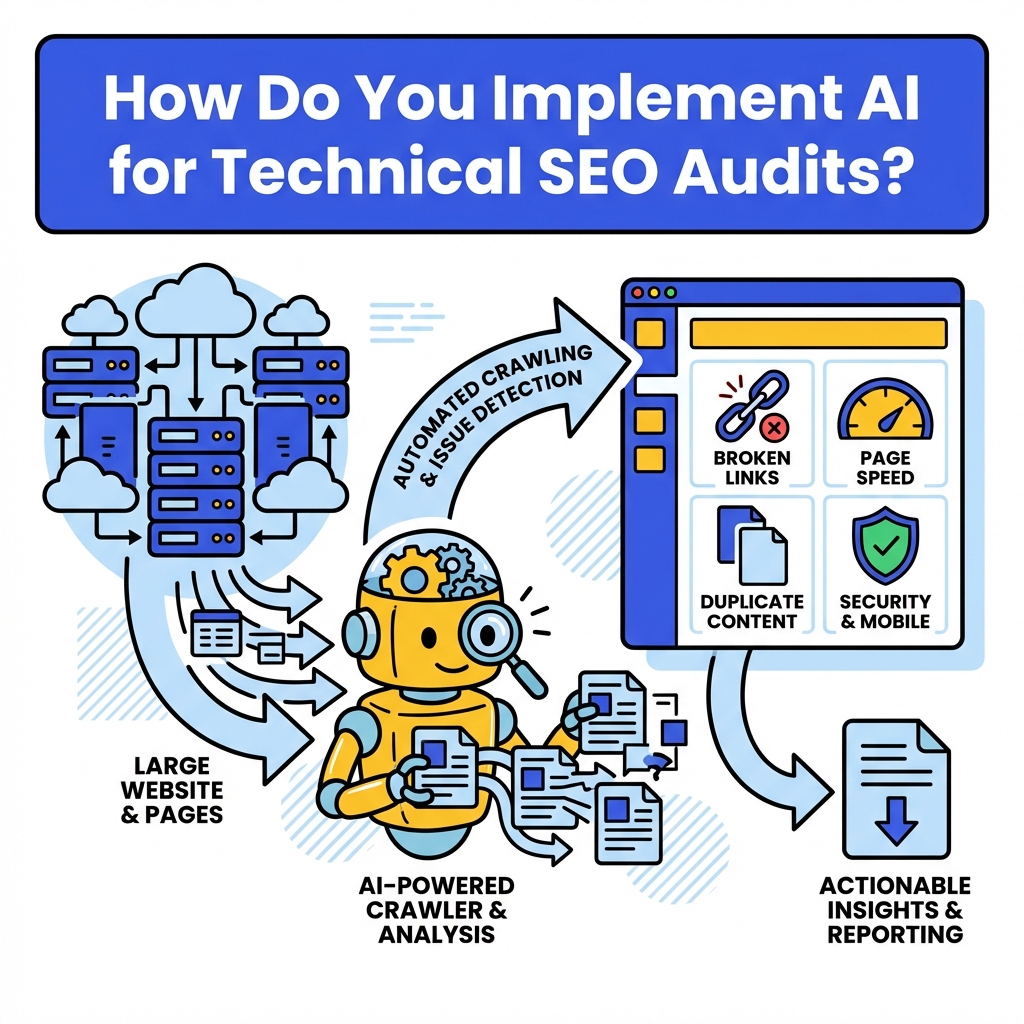
Technical SEO audits benefit tremendously from AI automation, particularly when dealing with large websites that have thousands of pages. AI can quickly identify technical issues that would take human auditors days or weeks to discover manually.
AI-powered technical SEO tools can crawl your website and automatically detect problems like broken links, duplicate content, slow-loading pages, and mobile usability issues. More advanced AI systems can prioritize these issues based on their potential impact on search rankings and organic traffic.
The key to successful AI technical auditing is setting up automated monitoring systems that continuously check your website's health. Tools like Screaming Frog's AI features or DeepCrawl's machine learning capabilities can alert you to new technical issues as they arise, preventing small problems from becoming major ranking factors.
Essential AI Technical SEO Monitoring Areas
- Page speed optimization with AI-powered performance recommendations
- Mobile usability testing using automated AI crawlers
- Schema markup validation through intelligent error detection
- Internal linking analysis with AI-suggested improvements
- Content duplicate detection using machine learning algorithms
What Role Does AI Play in Link Building Strategies?
AI has transformed link building from a manual outreach process into a data-driven strategy that identifies high-value opportunities with greater precision. Modern AI tools can analyze link profiles, predict link success rates, and even personalize outreach messages for better response rates.
Begin your AI-enhanced link building by using tools that analyze your competitors' backlink profiles. AI can identify patterns in successful link acquisition, such as the types of websites that frequently link to your industry, the content formats that attract the most links, and the optimal timing for outreach campaigns.
Advanced AI link building involves predictive analysis that scores potential link opportunities based on domain authority, relevance, and likelihood of success. This approach helps you focus your outreach efforts on prospects most likely to provide valuable backlinks, significantly improving your conversion rates.
The integration of AI with complete SEO strategies allows for more sophisticated link building campaigns that consider multiple ranking factors simultaneously.
How Can AI Improve Your Local SEO Performance?
Local businesses can leverage AI to optimize their presence across multiple search engines and directories simultaneously. AI tools can monitor local search rankings, manage business listings, and even respond to customer reviews using natural language processing.
AI-powered local SEO platforms can automatically update your business information across hundreds of directories, ensuring consistency in your NAP (Name, Address, Phone) data. This automation prevents the manual errors that often hurt local search visibility and saves countless hours of administrative work.
For businesses with multiple locations, AI becomes even more valuable. Machine learning algorithms can identify location-specific optimization opportunities, track local competitor activities, and adjust strategies based on regional search patterns and user behavior.
What Are the Best Practices for AI-Driven SEO Analytics?
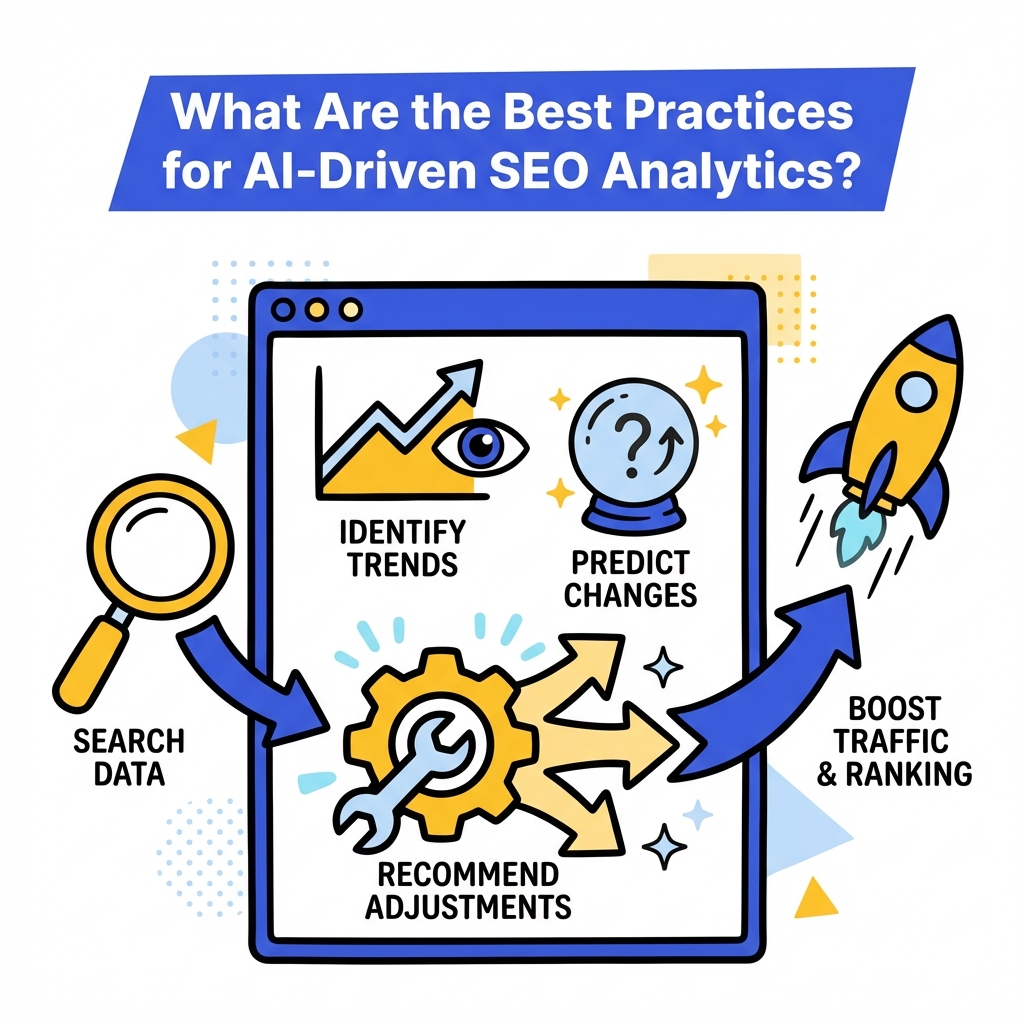
Effective use of AI in SEO requires proper analytics setup and interpretation. AI analytics tools can process vast amounts of search data to identify trends, predict ranking changes, and recommend strategic adjustments before problems impact your traffic.
Set up AI-powered dashboards that combine data from multiple sources, including Google Search Console, Google Analytics, and your chosen AI SEO tools. This comprehensive view allows AI algorithms to identify correlations and patterns that might not be obvious when looking at individual data sources.
The most successful AI SEO implementations involve continuous learning and refinement. AI systems become more accurate as they process more data about your website's performance, so consistent monitoring and feedback are essential for long-term success.
According to Search Engine Land's 2026 AI SEO study, businesses using comprehensive AI SEO strategies see an average 65% improvement in organic traffic within six months of implementation.
How Should You Measure AI SEO Success?
Measuring the effectiveness of your AI SEO efforts requires tracking both traditional SEO metrics and AI-specific performance indicators. Focus on metrics that demonstrate the unique value AI brings to your optimization process.
Track time savings as a key performance indicator. AI should significantly reduce the hours spent on routine SEO tasks like keyword research, content optimization, and technical audits. Document these efficiency gains to calculate the ROI of your AI SEO investments.
Monitor the accuracy of AI predictions and recommendations over time. The best AI SEO tools improve their suggestions as they learn from your website's performance. Keep records of which AI recommendations led to ranking improvements and which didn't perform as expected.
Advanced measurement involves comparing AI-optimized pages against traditionally optimized content. This A/B testing approach helps you understand where AI provides the most value and where human expertise remains crucial for success.
What Common AI SEO Mistakes Should You Avoid?
While AI offers powerful SEO capabilities, several common mistakes can limit its effectiveness or even harm your search rankings. Understanding these pitfalls helps you implement AI strategies more successfully.
Avoid over-relying on AI-generated content without human review. While AI can create helpful content drafts and optimization suggestions, search engines still prioritize content that provides genuine value to users. Always review and refine AI-generated content to ensure it meets quality standards and reflects your brand voice.
Don't ignore the importance of human oversight in AI SEO strategies. AI tools excel at data analysis and pattern recognition, but they may miss nuanced aspects of user intent or industry-specific considerations that human experts would catch.
Another critical mistake is implementing too many AI tools simultaneously without proper integration planning. Start with one or two AI SEO tools and master their capabilities before expanding your AI toolkit. This approach prevents workflow confusion and ensures you can properly measure the impact of each tool.
How Will AI SEO Evolve in 2027 and Beyond?
Looking ahead, AI's role in SEO will continue expanding as search engines become more sophisticated in their use of machine learning algorithms. Understanding these trends helps you prepare for future changes and maintain competitive advantages.
Expect AI to play a larger role in voice search optimization and conversational queries. As more users interact with search engines through voice assistants and chatbots, AI tools will need to optimize content for natural language patterns and question-based searches.
The integration of AI with emerging technologies like augmented reality and Internet of Things devices will create new SEO opportunities. Businesses that begin experimenting with these AI applications now will be better positioned for future search algorithm updates.
Predictive SEO analytics will become more accurate as AI systems process larger datasets and longer historical trends. This evolution will enable more proactive SEO strategies that anticipate ranking changes before they occur.
Conclusion
Implementing AI for SEO in 2026 offers unprecedented opportunities to improve your search rankings while reducing manual workload. By starting with keyword research automation, progressing to AI-powered content optimization, and eventually incorporating predictive analytics, you can build a comprehensive AI SEO strategy that delivers measurable results.
The key to success lies in balancing AI automation with human expertise. Use AI to handle data-intensive tasks and pattern recognition while maintaining human oversight for strategy decisions and quality control. Remember that the most effective AI SEO implementations are those that enhance human capabilities rather than replace them entirely.
Ready to transform your SEO strategy with AI? Start by identifying your biggest optimization challenges and selecting AI tools that address those specific needs. With proper implementation and continuous refinement, AI can become your most valuable asset for achieving sustainable organic growth in an increasingly competitive search landscape.

Stefan Winter
Founder & SEO Expert
Founder of Fast SEO Fix and SEO automation expert. Stefan built Fast SEO Fix to solve the tedious problem of manual SEO work. He specializes in SEO optimized content generation, keyword research, and automated SEO strategies.
