What Is SEO Automation and Why Does It Matter?
Posted by
 Stefan Winter
How to Implement SEO Automation: A Complete Guide for 2026

SEO automation has revolutionized how businesses approach search engine optimization, transforming time-consuming manual tasks into streamlined, efficient processes. If you're wondering what SEO automation is and how it can transform your digital marketing strategy, you're in the right place. This comprehensive guide will walk you through everything you need to know about implementing SEO automation tools and techniques to scale your optimization efforts while maintaining quality results.
What Is SEO Automation and Why Does It Matter?
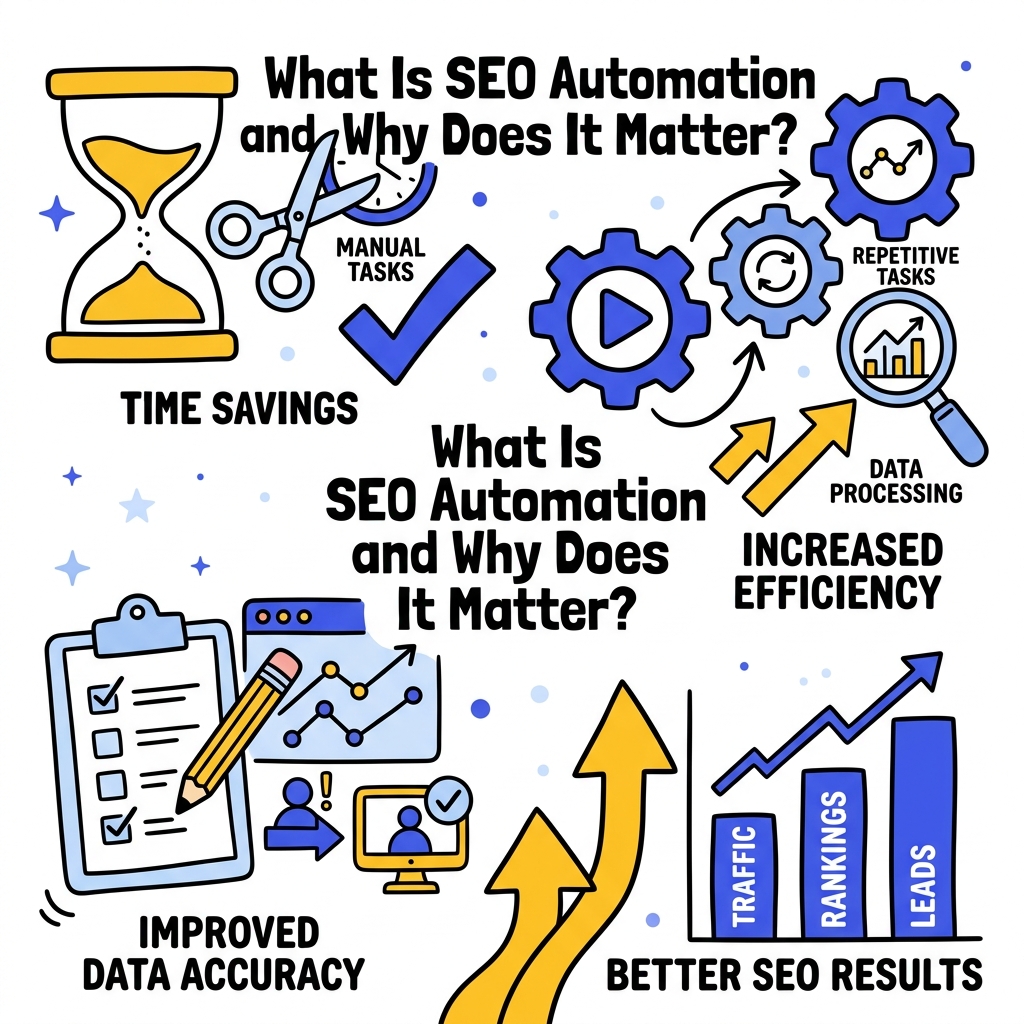
SEO automation refers to the use of software tools, scripts, and artificial intelligence to perform repetitive SEO tasks without manual intervention. Instead of spending hours on routine activities like keyword research, rank tracking, or technical audits, automation handles these processes systematically and consistently.
The core principle behind SEO automation involves identifying repetitive tasks that follow predictable patterns and delegating them to specialized tools. This includes everything from automated content optimization suggestions to scheduled reporting and even dynamic meta tag generation based on page content.
Modern SEO automation has evolved far beyond simple rank tracking. Today's sophisticated platforms can analyze competitor strategies, identify content gaps, monitor technical issues, and even suggest optimization improvements in real-time. This evolution makes SEO workflows more efficient and data-driven than ever before.
How Does SEO Automation Actually Work?
Understanding the mechanics of SEO automation helps you make informed decisions about which processes to automate. Most automation tools operate through APIs that connect to search engines, analytics platforms, and your website's content management system.
The automation process typically begins with data collection. Tools continuously gather information about your website's performance, keyword rankings, competitor activities, and technical health. This data feeds into algorithms that analyze patterns, identify opportunities, and trigger predetermined actions based on your configured rules.
For example, an automated system might detect that a specific page's rankings have dropped for target keywords. The tool can then analyze the page content, compare it with top-ranking competitors, and generate optimization recommendations. Some advanced platforms can even implement certain changes automatically, such as updating meta descriptions or internal linking structures.
Key Components of SEO Automation Systems
Modern SEO automation platforms consist of several interconnected components that work together seamlessly:
| Component | Function | Automation Level |
|---|---|---|
| Data Collection | Gathers ranking, traffic, and competitor data | Fully Automated |
| Analysis Engine | Identifies patterns and opportunities | Automated with human oversight |
| Reporting System | Generates scheduled performance reports | Fully Automated |
| Implementation Tools | Makes approved changes to website | Semi-automated |
| Alert System | Notifies of critical issues or opportunities | Fully Automated |
What SEO Tasks Should You Automate First?
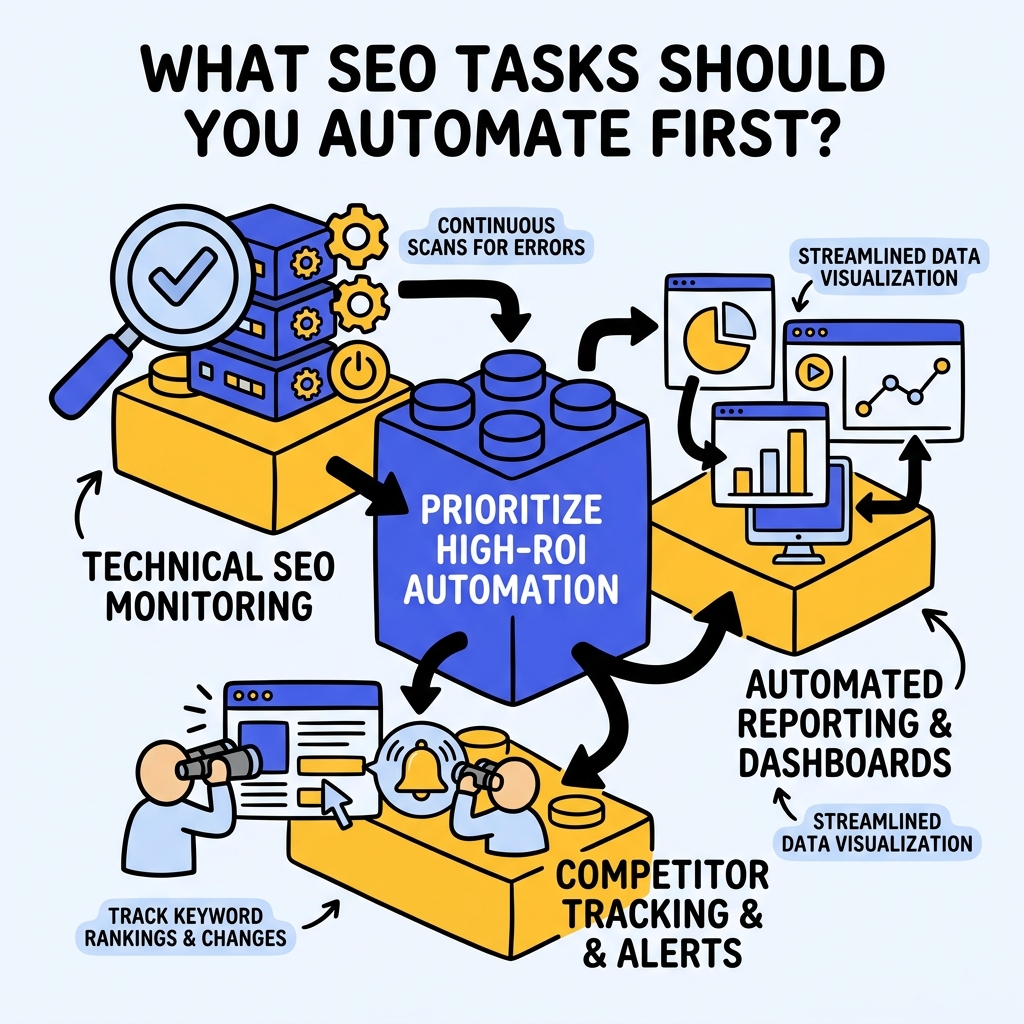
Not all SEO tasks are suitable for automation. The key is identifying which activities provide the highest return on investment when automated while maintaining quality standards.
Technical SEO monitoring represents the most straightforward automation opportunity. Tools can continuously scan your website for broken links, page speed issues, crawl errors, and other technical problems. This constant monitoring ensures issues are identified and addressed quickly, preventing negative impacts on your search performance. Rank tracking and reporting automation eliminates the tedious process of manually checking keyword positions across multiple search engines. Automated systems can track thousands of keywords simultaneously, generate visual reports, and alert you to significant ranking changes that require immediate attention.Content optimization presents another excellent automation opportunity. Modern tools can analyze your existing content against top-performing competitors, suggest relevant keywords to incorporate, and even recommend structural improvements. This connects directly with developing a solid content optimization strategy that scales efficiently.
Advanced Automation Opportunities
As you become more comfortable with basic automation, consider these advanced implementations:
Competitor monitoring automation tracks your competitors' content publication schedules, keyword targeting strategies, and backlink acquisition efforts. This intelligence helps you identify market opportunities and adjust your strategy proactively. Local SEO automation becomes particularly valuable for businesses with multiple locations. Tools can automatically update business listings, monitor review platforms, and ensure consistent NAP (Name, Address, Phone) information across all directories.How to Choose the Right SEO Automation Tools
Selecting appropriate automation tools requires careful consideration of your specific needs, technical capabilities, and budget constraints. The market offers everything from comprehensive enterprise platforms to specialized tools focusing on specific aspects of SEO.
Enterprise-level platforms like BrightEdge, Conductor, or seoClarity provide comprehensive automation capabilities but require significant investment and technical expertise. These platforms excel at handling complex, multi-site SEO operations with advanced reporting and integration capabilities. Mid-tier solutions such as SEMrush, Ahrefs, or Moz offer robust automation features at more accessible price points. These tools strike an excellent balance between functionality and usability, making them ideal for most businesses looking to implement SEO automation.According to Search Engine Land's 2026 SEO Tools Survey, businesses using integrated automation platforms see 40% faster implementation of SEO improvements compared to those using manual processes.
When evaluating tools, prioritize platforms that integrate well with your existing SEO writing tools and content management systems. Seamless integration ensures your automation efforts complement rather than complicate your current workflows.
What Are the Common Pitfalls of SEO Automation?
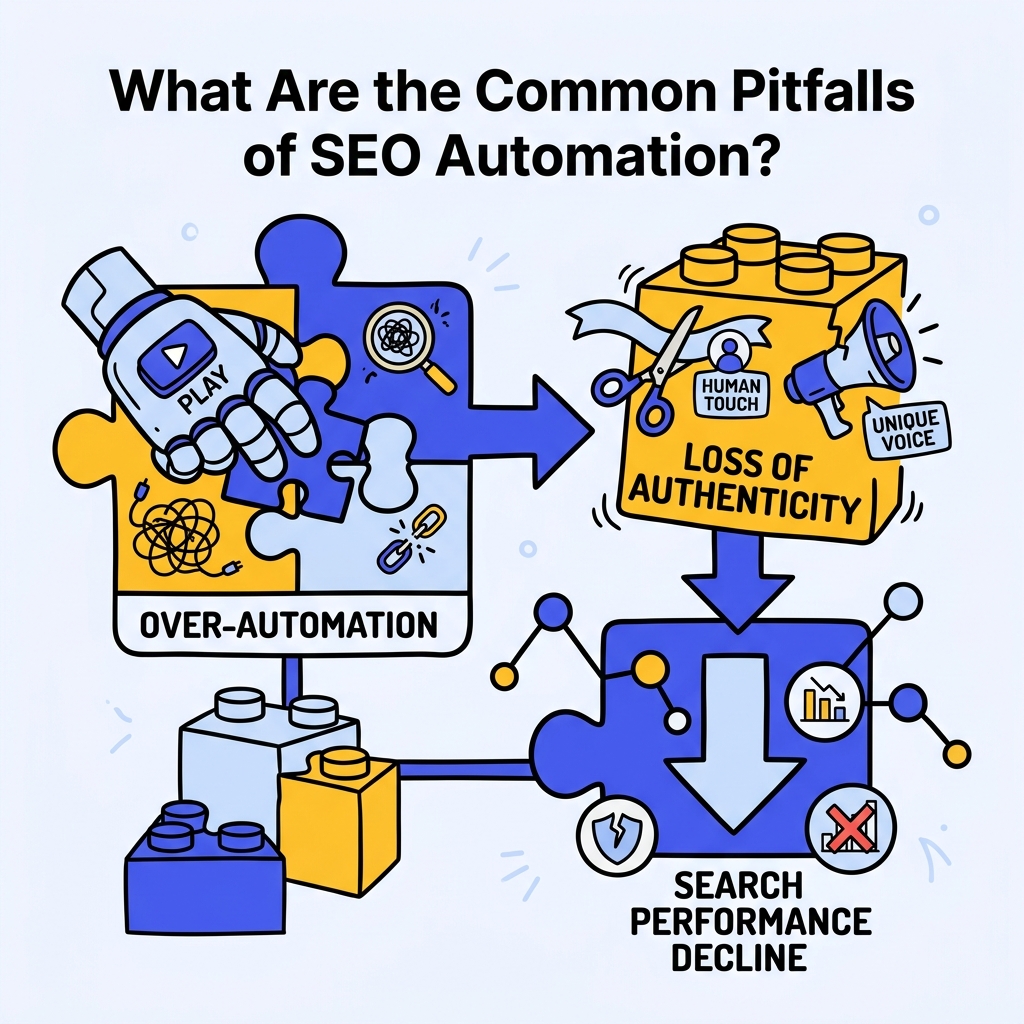
While SEO automation offers tremendous benefits, several common mistakes can undermine your efforts or even harm your search performance. Understanding these pitfalls helps you implement automation more effectively.
Over-automation represents the most frequent mistake businesses make. Automating every possible task without human oversight can lead to generic, low-quality optimizations that fail to resonate with your target audience. The most successful SEO strategies combine automation efficiency with human creativity and strategic thinking. Neglecting quality control in automated processes can result in serious issues. For instance, automated meta description generation might create technically correct but uninspiring descriptions that reduce click-through rates. Regular auditing of automated outputs ensures quality standards are maintained. Ignoring context and nuance presents another significant challenge. Automation tools excel at pattern recognition and data analysis but struggle with understanding brand voice, industry-specific terminology, or cultural sensitivities that human experts naturally consider.How to Avoid Automation Mistakes
Successful SEO automation requires establishing clear guidelines and monitoring systems:
- Set up approval workflows for significant automated changes
- Regularly audit automated content and optimizations
- Maintain human oversight for strategy and creative decisions
- Test automation rules on small sample sizes before full implementation
- Keep detailed logs of automated actions for troubleshooting
How Does SEO Automation Impact Long-term Strategy?
SEO automation fundamentally changes how businesses approach long-term search optimization strategy. Rather than reactive, manual adjustments, automation enables proactive, data-driven optimization that scales with your business growth.
The strategic advantage of automation becomes apparent when considering organic traffic growth over time. Automated systems can identify emerging keyword opportunities, content gaps, and technical issues before they impact performance, allowing you to maintain competitive advantages more effectively.
Predictive capabilities in modern automation tools analyze historical data patterns to forecast future performance and recommend preemptive optimizations. This forward-thinking approach helps businesses stay ahead of algorithm changes and market shifts.According to Google's AI and Automation Report 2026, websites using comprehensive SEO automation strategies show 65% more consistent year-over-year organic growth compared to those relying primarily on manual optimization efforts.
The integration of artificial intelligence with SEO automation continues evolving rapidly. Machine learning algorithms now provide increasingly sophisticated recommendations that consider multiple ranking factors simultaneously, creating more holistic optimization strategies.
What Results Can You Expect from SEO Automation?
Setting realistic expectations for SEO automation results helps you measure success accurately and make informed decisions about expanding your automation efforts. Most businesses see initial improvements within 30-60 days of implementing basic automation, with more significant results appearing over 3-6 months.
Time savings represent the most immediate benefit. Businesses typically reduce time spent on routine SEO tasks by 60-80% after implementing comprehensive automation. This efficiency gain allows teams to focus on strategic initiatives and creative content development. Consistency improvements often produce measurable results within the first quarter. Automated monitoring and optimization ensure that best practices are applied consistently across all pages and content, eliminating the human error factor that can impact performance. Scalability benefits become apparent as your content library and website complexity grow. Manual optimization approaches become increasingly difficult to maintain as you add more pages, target additional keywords, or expand into new markets. Automation scales effortlessly with your growth.Measuring SEO Automation Success
Track these key metrics to evaluate your automation effectiveness:
- Time reduction in routine SEO tasks
- Consistency of optimization implementation across pages
- Speed of issue identification and resolution
- Overall organic traffic and ranking improvements
- Return on investment for automation tools and implementation
Conclusion
SEO automation represents a fundamental shift in how successful businesses approach search optimization in 2026. By understanding what SEO automation is and implementing it strategically, you can scale your SEO efforts while maintaining quality and consistency that drives real results.
The key to successful SEO automation lies in finding the right balance between efficiency and human insight. Start with basic automation for technical monitoring and reporting, then gradually expand into more sophisticated applications as you gain experience and confidence with the tools.
Remember that automation should enhance, not replace, your strategic thinking and creative content development. The most successful SEO strategies combine the efficiency of automation with the strategic insight that only human experts can provide.
Ready to transform your SEO approach with automation? Start by conducting a comprehensive SEO audit to identify which tasks in your current workflow would benefit most from automation, then gradually implement tools and processes that align with your specific business goals.

Stefan Winter
Founder & SEO Expert
Founder of Fast SEO Fix and SEO automation expert. Stefan built Fast SEO Fix to solve the tedious problem of manual SEO work. He specializes in SEO optimized content generation, keyword research, and automated SEO strategies.
