Why Content Marketing and SEO Must Work Together
Posted by
 Stefan Winter
How to Align Content Marketing and SEO for Maximum Digital Impact
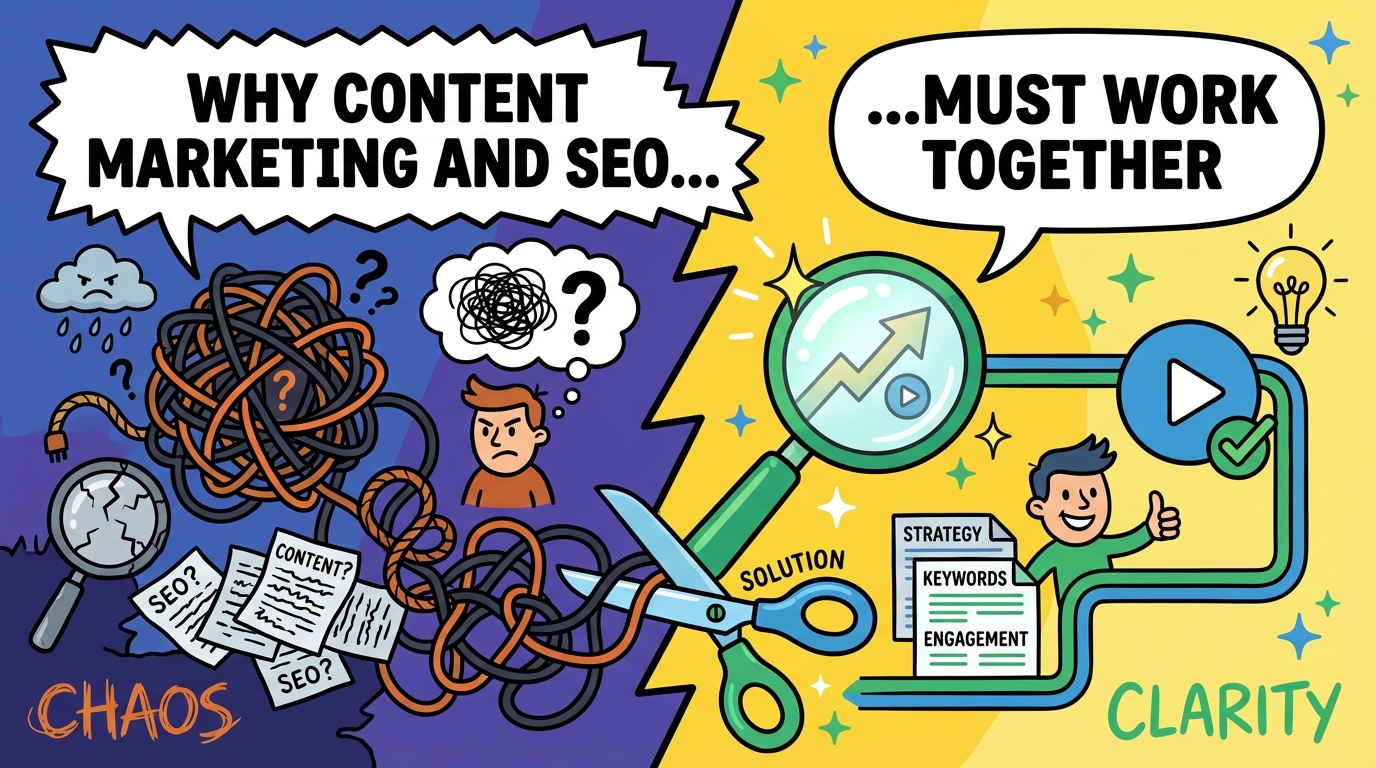
Creating content that both engages your audience and ranks well in search engines isn't just a nice-to-have anymore—it's essential for digital success. Many businesses struggle with treating content marketing and SEO as separate disciplines, missing out on the powerful synergy that occurs when these strategies work together. In this comprehensive guide, you'll learn how to seamlessly integrate content marketing and SEO to drive more traffic, generate quality leads, and build lasting brand authority.
Why Content Marketing and SEO Must Work Together
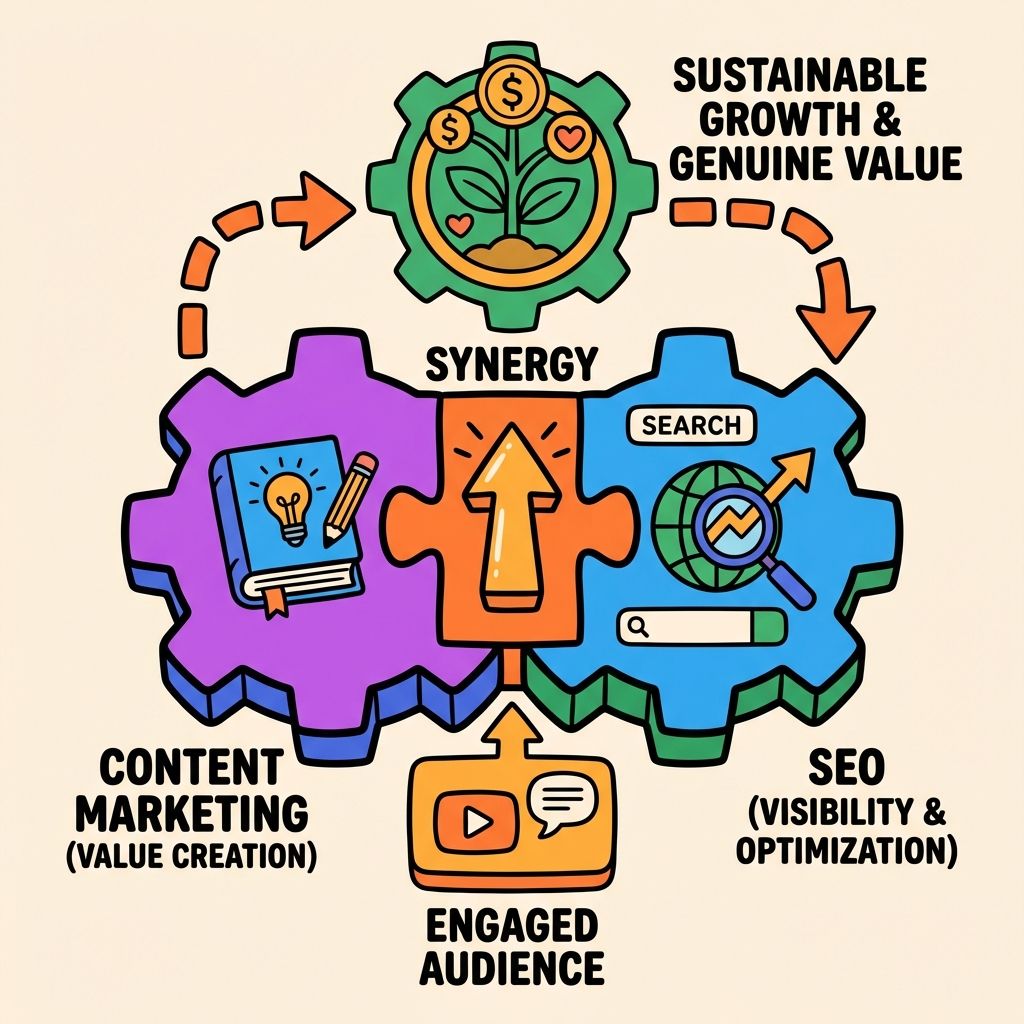
The days of keyword stuffing and purely promotional content are long gone. Modern search engines reward websites that provide genuine value to users, making the alignment of content marketing and SEO more critical than ever. When these strategies complement each other, you create a powerful engine for sustainable growth.
Content marketing focuses on creating valuable, relevant content that attracts and retains your target audience. SEO ensures that content gets discovered by the right people at the right time. Together, they form a comprehensive approach that addresses both user intent and search engine requirements.
This integration becomes even more important when you consider that Google processes over 8.5 billion searches per day. Your content needs to stand out in this massive volume of information while serving your business objectives.
How to Research Keywords That Support Content Goals
Effective keyword research forms the foundation of successful content marketing and SEO integration. However, this isn't about finding high-volume keywords and forcing them into generic content. Instead, focus on understanding the search intent behind keywords and how they align with your audience's journey.
Start by identifying topics that matter to your audience, then expand into specific keyword opportunities. Use tools like Google Keyword Planner, SEMrush, or Ahrefs to discover related terms and phrases. Pay special attention to long-tail keywords, as these often indicate higher purchase intent and face less competition.
The key is balancing search volume with relevance to your business goals. A keyword with moderate search volume that perfectly matches your expertise will often outperform a high-volume keyword that's only tangentially related to your services. For more detailed guidance on this process, explore our comprehensive resource on what is keyword research and why does it matter.
Mapping Keywords to Content Types
Different keywords serve different purposes in your content strategy. Informational keywords work well for blog posts and guides, while commercial keywords might be better suited for service pages or case studies. Create a content mapping document that connects specific keywords to appropriate content formats and stages of the buyer journey.
How to Create Content That Satisfies Both Users and Search Engines
The secret to successful content marketing and SEO lies in creating content that genuinely serves your audience while following SEO best practices. This means moving beyond thin, keyword-focused articles toward comprehensive resources that thoroughly address user needs.
Start each piece of content by clearly defining the user problem you're solving. Then structure your content to address that problem systematically, using headers, bullet points, and clear sections that make information easy to digest. Search engines favor well-organized content that demonstrates expertise and provides complete answers to user queries.
Quality content naturally incorporates keywords in a way that feels organic to readers. Instead of forcing keywords into awkward sentences, focus on thoroughly covering your topic. When you comprehensively discuss a subject, you'll naturally use related terms and phrases that search engines associate with authority and relevance.
| Content Element | SEO Benefit | User Benefit |
|---|---|---|
| Clear Headlines | Improved click-through rates | Easy content scanning |
| Structured Data | Enhanced search features | Better information accessibility |
| Internal Links | Improved site authority | Helpful related resources |
| Original Research | Attracts backlinks | Unique valuable insights |
| Regular Updates | Maintains relevance signals | Current, accurate information |
What Makes Content Marketing and SEO Integration Successful?
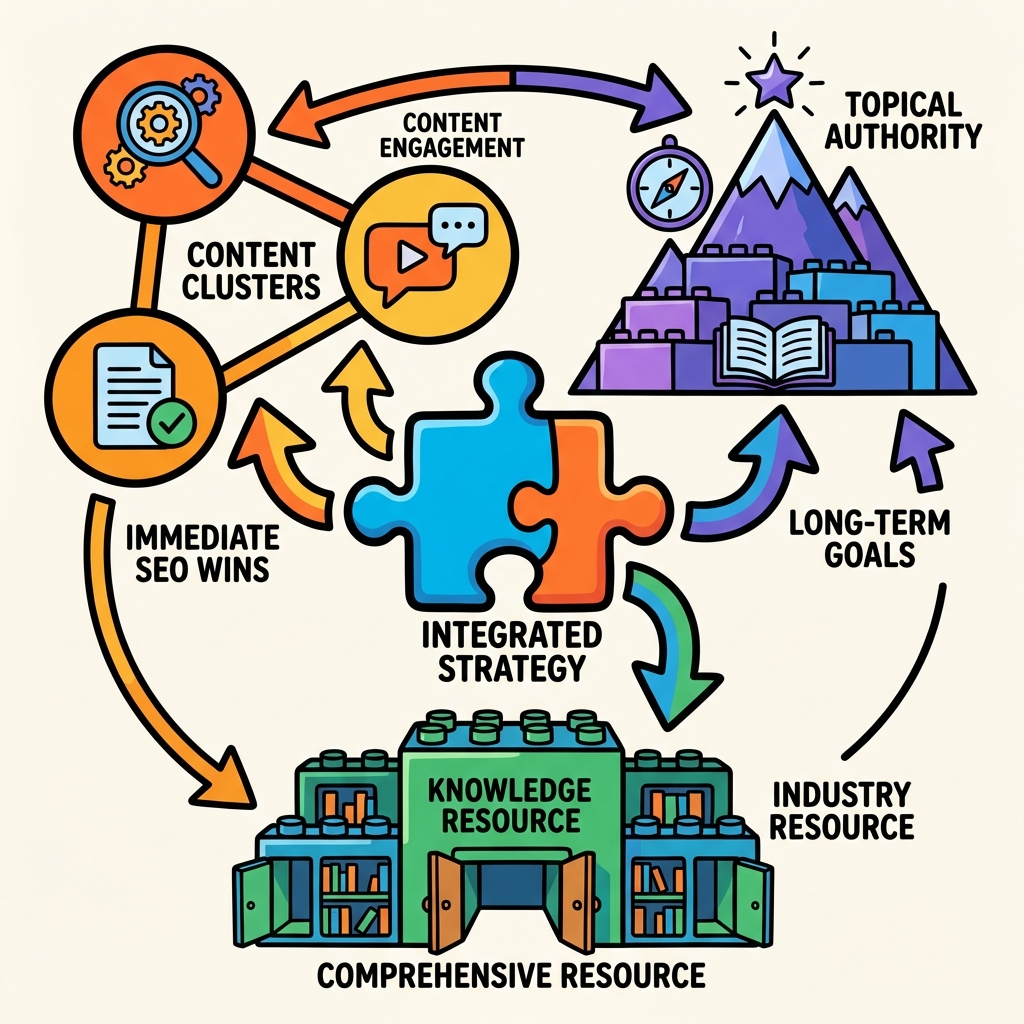
Successful integration requires a strategic approach that considers both immediate SEO wins and long-term content marketing goals. This means creating content clusters around core topics, building topical authority, and establishing your website as a comprehensive resource in your industry.
Content clusters involve creating a pillar page that covers a broad topic comprehensively, then supporting it with multiple related articles that dive deeper into specific aspects. This structure helps search engines understand your expertise while providing users with thorough coverage of topics they care about.
Consistency plays a crucial role in this integration. Regular publishing schedules, consistent brand voice, and ongoing optimization efforts signal to search engines that your website is active and authoritative. However, consistency shouldn't come at the expense of quality. It's better to publish one exceptional piece of content monthly than four mediocre pieces weekly.
How to Measure the Success of Your Integrated Strategy
Measuring success requires tracking metrics that reflect both content marketing and SEO performance. Traditional SEO metrics like rankings and organic traffic remain important, but they should be complemented by engagement metrics that indicate content quality and user satisfaction.
Key performance indicators should include organic search traffic growth, time on page, pages per session, and conversion rates from organic traffic. These metrics help you understand whether your content is not only being found but also providing value to visitors.
Google Search Console provides valuable insights into how your content performs in search results, including impression data, click-through rates, and the specific queries that bring users to your content. Use this data to identify opportunities for content expansion and optimization.Setting Up Effective Tracking Systems
Implement tracking that connects content performance to business outcomes. Use UTM parameters for social media promotion, set up goal tracking in Google Analytics for content-driven conversions, and create custom dashboards that show the relationship between content creation efforts and business results.
How to Optimize Content for Different Search Engines
While Google dominates search market share, optimizing for multiple search engines can expand your reach and protect against algorithm changes. Each search engine has slightly different ranking factors and user behaviors, requiring tailored approaches within your overall strategy.
Understanding what are the major search engines you should target helps you prioritize optimization efforts effectively. Bing, for example, tends to favor older domains and exact-match keywords more than Google, while newer search engines may prioritize different signals entirely.
The foundation remains the same across all platforms: create high-quality, user-focused content that thoroughly addresses search intent. However, you can fine-tune your approach based on where your audience is most likely to search and which platforms drive the most qualified traffic to your website.
What Common Mistakes Should You Avoid?
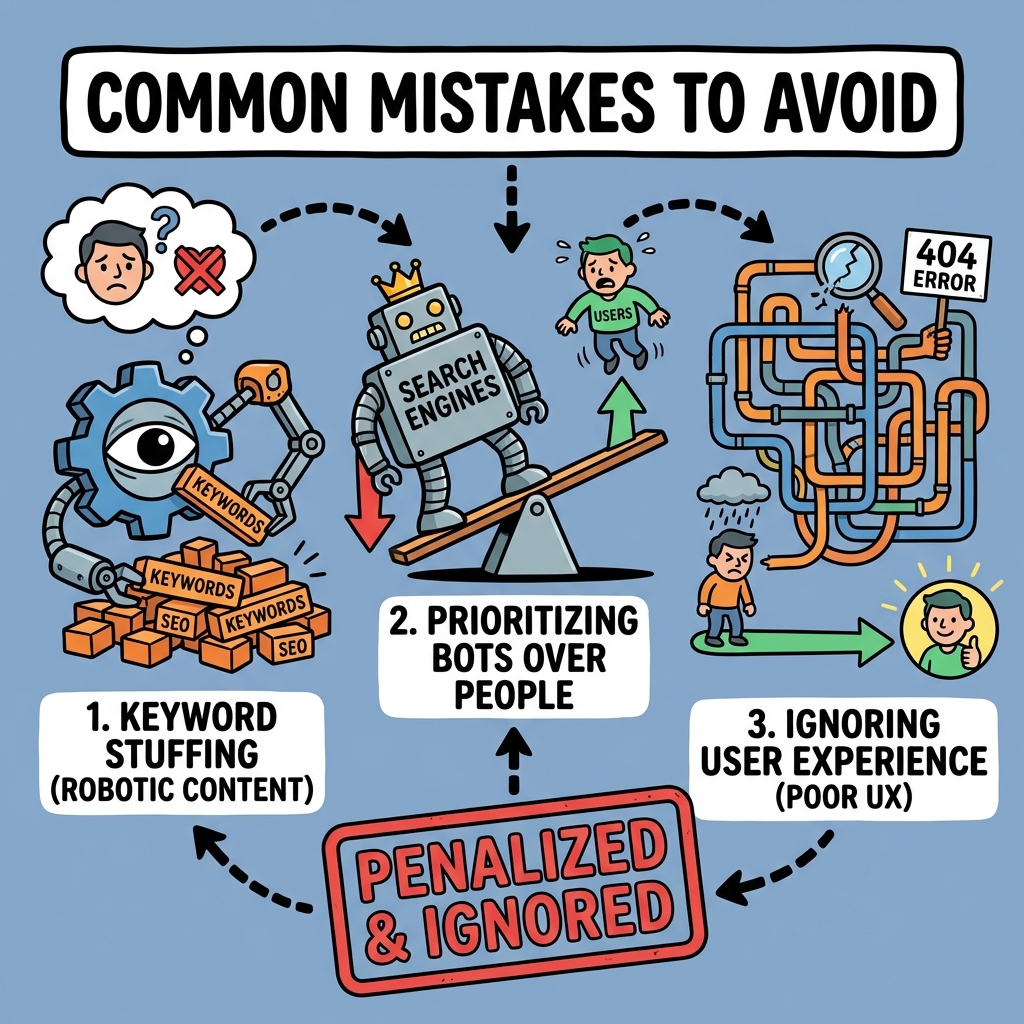
One of the biggest mistakes in content marketing and SEO integration is prioritizing search engines over users. While optimization is important, content that feels robotic or keyword-stuffed will ultimately fail to engage users and may be penalized by search engines.
Another common error is treating content marketing and SEO as separate initiatives with different goals. This leads to missed opportunities and inefficient resource allocation. Instead, ensure your content team and SEO specialists collaborate closely, sharing insights and aligning strategies.
Neglecting the technical aspects of SEO while focusing solely on content creation can also limit your success. Page speed, mobile optimization, and proper schema markup all contribute to how well your content performs in search results, regardless of how well-written it might be.
How to Scale Your Content Marketing and SEO Efforts
As your strategy matures, scaling becomes essential for continued growth. This involves developing systems and processes that maintain quality while increasing output. Consider creating content templates, establishing editorial workflows, and building relationships with freelance writers who understand your brand and SEO requirements.
Repurposing content across multiple formats and channels maximizes the value of your creation efforts. A comprehensive blog post can become a video script, social media series, email newsletter content, and podcast episode outline. This approach amplifies your reach while maintaining consistency across all touchpoints.
Building a sustainable content marketing and SEO program also requires ongoing education and adaptation. Search algorithms evolve, user behaviors change, and new content formats emerge regularly. Stay informed about industry developments and be prepared to adjust your strategy accordingly.
Conclusion
Successfully aligning content marketing and SEO creates a powerful foundation for digital growth that compounds over time. By focusing on user intent, creating comprehensive content, and maintaining consistent optimization efforts, you build authority that drives both immediate traffic and long-term brand recognition.
The key is viewing content marketing and SEO as complementary disciplines rather than competing priorities. When your content serves users while following SEO best practices, you create the conditions for sustainable, scalable growth that withstands algorithm changes and market fluctuations.
Ready to transform your digital marketing approach? Fast SEO Fix specializes in creating integrated content marketing and SEO strategies that drive real business results. Contact us today to discover how we can help you build a content strategy that attracts, engages, and converts your ideal customers.

Stefan Winter
Founder & SEO Expert
Founder of Fast SEO Fix and SEO automation expert. Stefan built Fast SEO Fix to solve the tedious problem of manual SEO work. He specializes in SEO optimized content generation, keyword research, and automated SEO strategies.
