What Are the Major Search Engines You Should Target?
Posted by
 Stefan Winter
How to Optimize Your Website for All Major Search Engines (Not Just Google)
Most website owners make a critical mistake: they optimize exclusively for Google and ignore other valuable search engines that could drive significant traffic to their site. While Google dominates with over 90% market share, platforms like Bing, Yahoo, DuckDuckGo, and specialized search engines serve millions of users daily. This comprehensive guide will show you exactly how to create a multi-engine optimization strategy that maximizes your visibility across the entire search landscape.
What Are the Major Search Engines You Should Target?
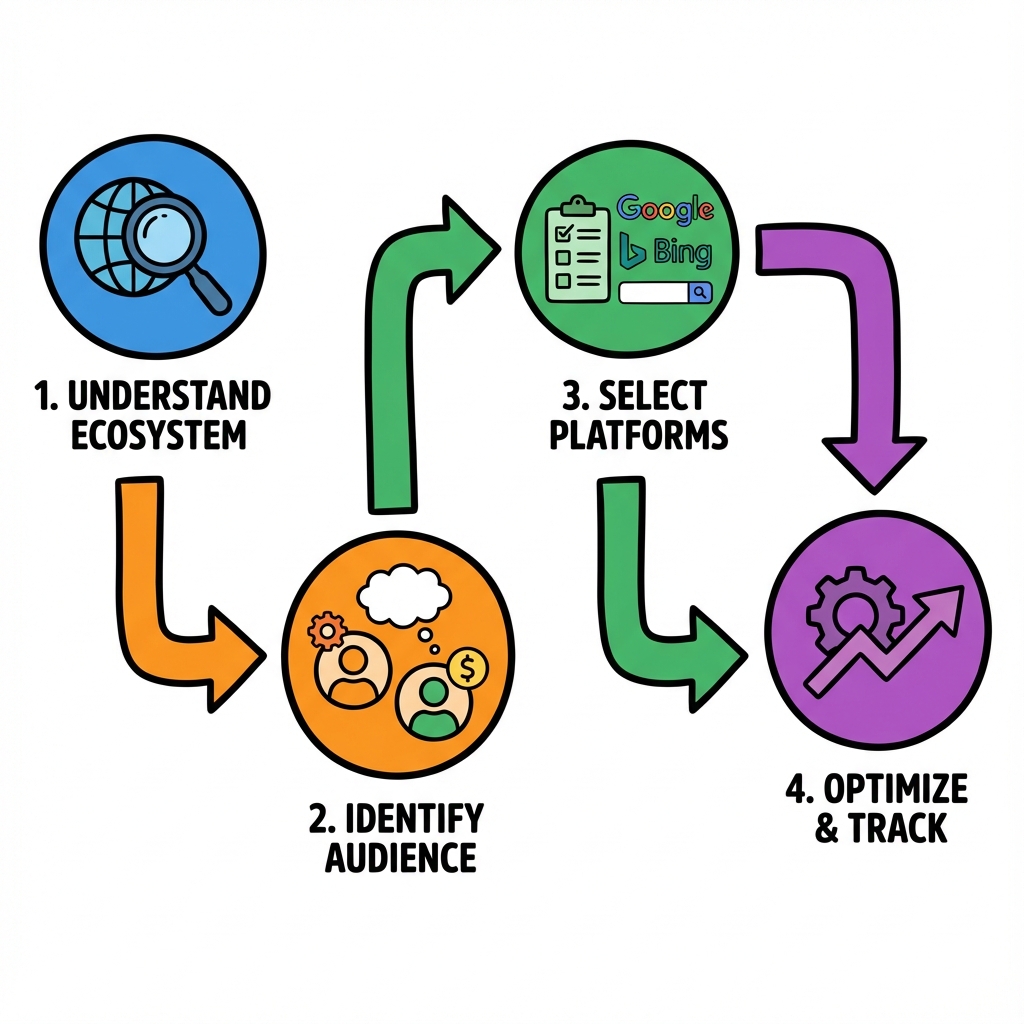
Understanding the search engine ecosystem is your first step toward comprehensive optimization. While Google leads the pack, several other platforms deserve your attention based on your target audience and business goals.
Google remains the undisputed leader, processing over 8.5 billion searches daily. However, Microsoft Bing powers approximately 6% of global searches and serves as the default engine for Windows devices and Microsoft Edge browsers. Yahoo still maintains a loyal user base, particularly among older demographics, while DuckDuckGo attracts privacy-conscious users with its no-tracking policy.Beyond traditional search engines, consider specialized platforms relevant to your industry. Amazon dominates product searches, YouTube serves as the second-largest search engine globally, and professional networks like LinkedIn drive B2B discovery. Each platform has unique algorithms and user behaviors that require tailored optimization approaches.
| Search Engine | Market Share | Primary User Base | Key Optimization Factor |
|---|---|---|---|
| 92% | General users worldwide | E-A-T and user experience | |
| Bing | 6% | Windows users, older demographics | Social signals and exact keywords |
| Yahoo | 1.5% | Email users, news readers | Content freshness and authority |
| DuckDuckGo | 0.6% | Privacy-focused users | Clean technical SEO |
How Do Different Search Engines Actually Work?
Each search engine operates with distinct algorithms and ranking factors, making a one-size-fits-all approach ineffective. Understanding these differences allows you to create targeted strategies that perform well across multiple platforms.
Google's algorithm prioritizes user experience signals, content quality, and expertise-authority-trust (E-A-T) factors. The search giant uses machine learning through RankBrain to interpret search intent and deliver contextually relevant results. Google also heavily weights mobile-first indexing, page speed, and core web vitals in its ranking decisions.
Bing takes a different approach, placing stronger emphasis on social media signals and exact keyword matches. Microsoft's search engine gives more weight to older, established domains and tends to favor websites with strong social media presence. Bing also processes meta keywords (though with minimal impact) and shows preference for multimedia content like images and videos.
Why Social Signals Matter More on Some Search Engines
Social media integration varies significantly across search platforms. While Google officially states that social signals don't directly impact rankings, Bing openly acknowledges using Facebook shares, Twitter mentions, and other social metrics as ranking factors.
This difference creates opportunities for businesses with strong social media presence to gain competitive advantages on Bing and Yahoo. Websites that generate consistent social engagement often see better performance on these alternative search engines compared to their Google rankings.
How to Conduct Multi-Engine Keyword Research
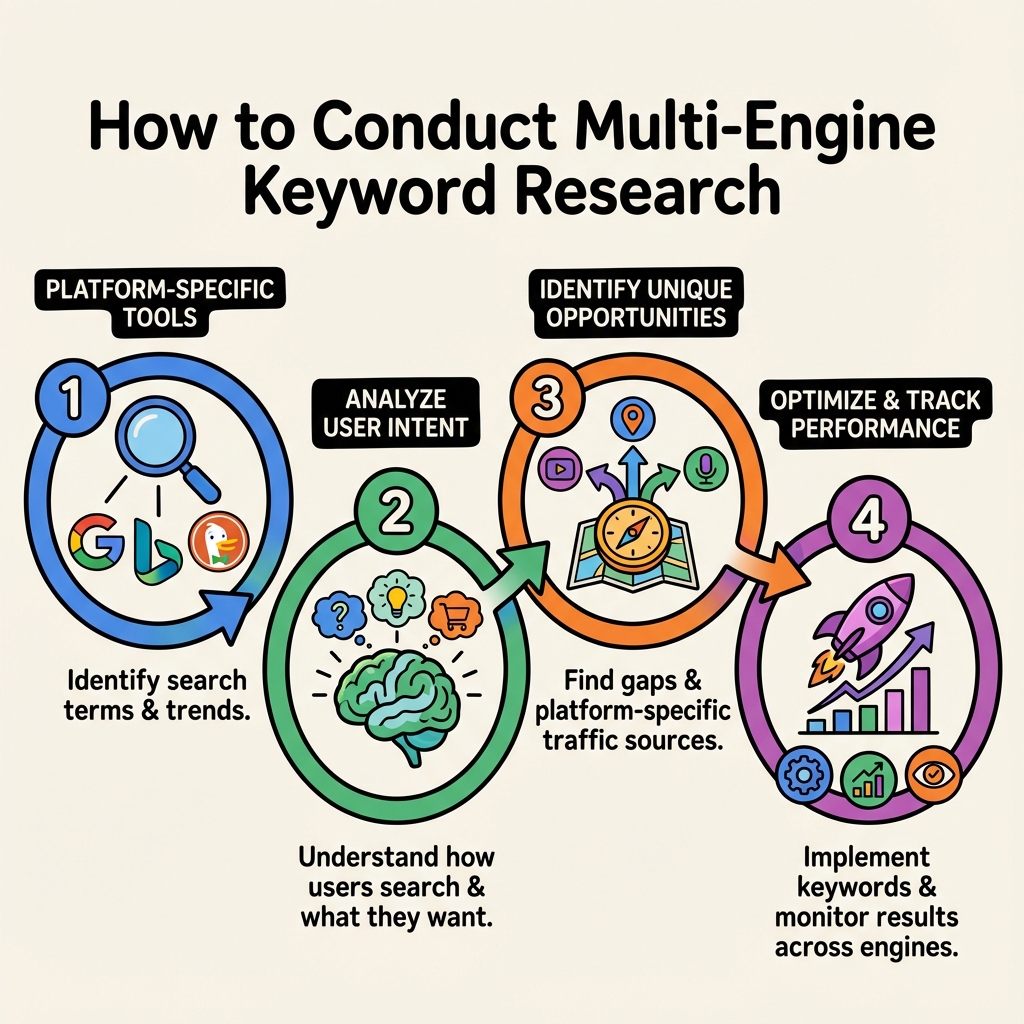
Effective keyword research for multiple search engines requires understanding how different platforms interpret and prioritize search terms. Each engine's user base searches differently, creating unique opportunities for traffic generation.
Start with platform-specific keyword tools to identify search volume variations. Google Keyword Planner provides insights for Google searches, while Bing Keyword Research Tool reveals different search patterns on Microsoft's platform. You'll often discover that keyword research strategies vary significantly between engines, with some terms performing better on specific platforms.
Consider search intent differences across engines. Bing users often perform more commercial searches, making it valuable for e-commerce optimization. DuckDuckGo users frequently search for privacy-related topics and alternative solutions. Yahoo users tend to search for news, entertainment, and lifestyle content more than other platforms.
Long-tail keyword opportunities often differ dramatically between search engines. A phrase that's highly competitive on Google might have minimal competition on Bing, creating easier ranking opportunities. Use this insight to target valuable traffic from multiple sources while building your overall search presence.What Technical SEO Elements Do All Search Engines Share?
Despite algorithmic differences, all major search engines share fundamental technical requirements that form the foundation of your multi-engine optimization strategy. Focusing on these universal elements ensures your website performs well across all platforms.
Site structure and navigation remain critical across every search engine. Clean URL structures, logical site hierarchies, and intuitive navigation help all search bots crawl and index your content effectively. Implement breadcrumb navigation, create comprehensive XML sitemaps, and ensure every page is accessible within three clicks from your homepage. Page loading speed impacts rankings on every major search engine, though the specific metrics and thresholds vary. Google emphasizes Core Web Vitals, while Bing focuses more on overall page load times. Optimize images, minimize HTTP requests, and leverage browser caching to improve performance across all platforms.Mobile responsiveness has become non-negotiable for modern search engines. Google's mobile-first indexing means the mobile version of your site determines rankings, while Bing and other engines increasingly prioritize mobile-friendly websites. Ensure your responsive design works flawlessly across devices and screen sizes.
How to Optimize Meta Tags for Multiple Search Engines
Meta tag optimization requires balancing the preferences of different search engines while maintaining readability for users. While Google focuses primarily on title tags and meta descriptions for snippet generation, other engines place varying emphasis on different meta elements.
Title tags should incorporate your primary keywords naturally while staying within 50-60 characters for optimal display across all search engines. Bing tends to favor exact keyword matches in titles more than Google, so consider creating slight variations for different pages targeting similar terms. Meta descriptions serve as your sales pitch in search results across all platforms. Write compelling descriptions between 150-160 characters that include your target keywords and a clear value proposition. While meta descriptions don't directly impact rankings, they significantly influence click-through rates on every search engine.How to Create Content That Ranks Across Multiple Search Engines
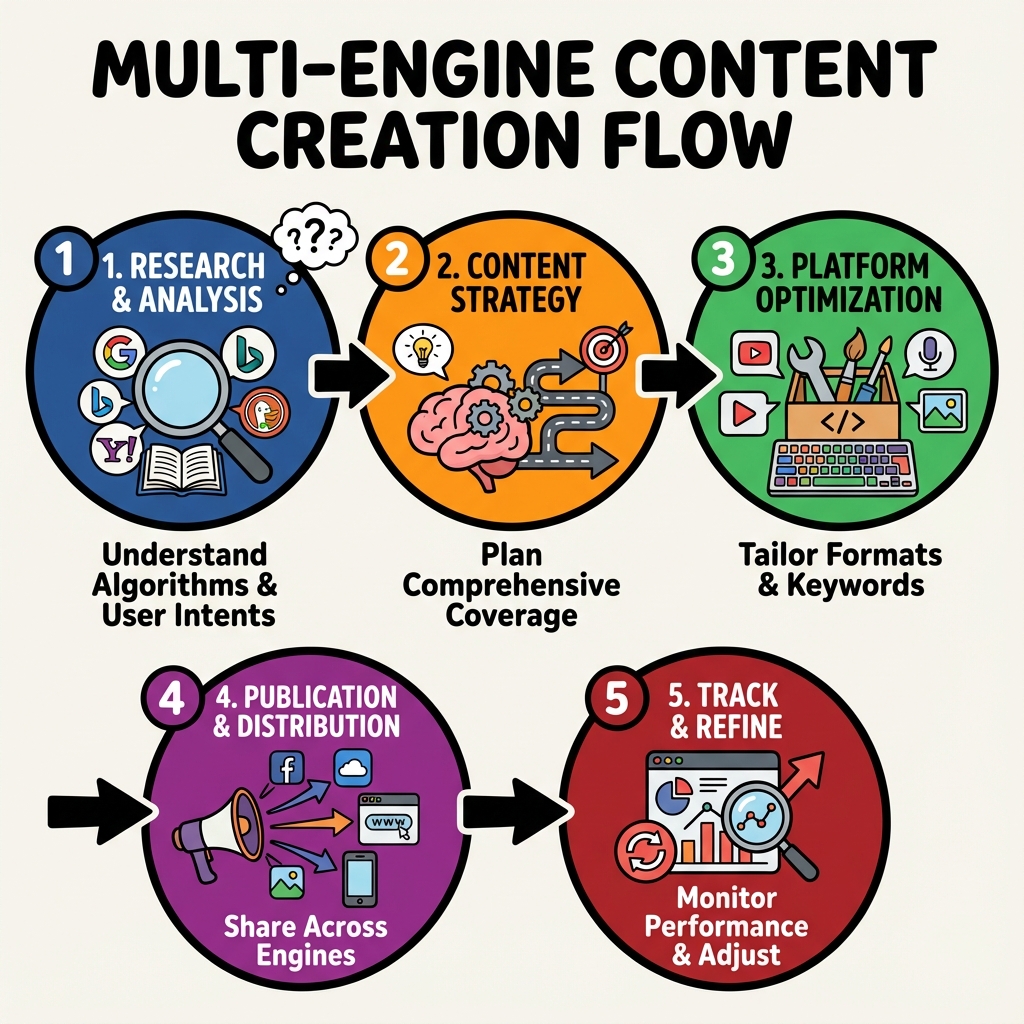
Content creation for multiple search engines requires understanding the unique preferences and user behaviors of each platform while maintaining quality and relevance. Successful multi-engine content strategies focus on comprehensive coverage, user intent satisfaction, and platform-specific optimization techniques.
Content depth and comprehensiveness perform well across all major search engines, though the ideal length and structure may vary. Google rewards in-depth content that thoroughly covers topics, while Bing often favors content with clear headings and bullet points. Create detailed resources that answer user questions completely while organizing information in scannable formats. Keyword integration strategies should adapt to each search engine's preferences. Google's advanced natural language processing allows for more semantic keyword usage, while Bing responds better to exact keyword matches and synonyms. Structure your content marketing approach to include both natural language variations and specific keyword phrases. Content freshness impacts different search engines in unique ways. Google values updated content and shows preference for recently published or refreshed pages in competitive niches. Yahoo places even stronger emphasis on content recency, particularly for news and trending topics. Bing considers content age as a trust signal, balancing freshness with domain authority.What Content Formats Work Best for Each Search Engine?
Different search engines show varying preferences for content formats, creating opportunities to optimize your content mix for maximum visibility. Understanding these preferences helps you create diverse content that performs well across multiple platforms.
Video content receives preferential treatment on Google through featured snippets and video carousels, while Bing integrates video results directly into standard search results. YouTube optimization becomes crucial for Google visibility, while native video uploads can improve Bing performance. Image optimization varies significantly across search engines. Google's advanced image recognition capabilities reward properly optimized alt text and descriptive filenames. Bing places stronger emphasis on image file names and surrounding text context. Both engines benefit from structured data markup for images.How to Monitor and Track Multi-Engine Performance
Effective performance monitoring across multiple search engines requires dedicated tools and strategies that go beyond standard Google Analytics. Understanding your visibility and performance on each platform enables data-driven optimization decisions.
Google Search Console provides comprehensive insights for Google performance, including click-through rates, average positions, and indexing status. For Bing optimization, Bing Webmaster Tools offers similar functionality with Microsoft-specific insights and recommendations. Third-party SEO tools like SEMrush, Ahrefs, or Moz provide multi-engine tracking capabilities that show your rankings across different search platforms. These tools help identify opportunities where your content ranks well on alternative search engines but poorly on Google, or vice versa.Set up separate tracking for each search engine's referral traffic in Google Analytics. Create custom segments that isolate traffic from Google, Bing, Yahoo, and other search engines. This segmentation reveals which platforms drive the most valuable traffic and conversions for your business.
How Often Should You Check Rankings Across Different Search Engines?
Search engine ranking fluctuations occur at different frequencies across platforms, requiring adjusted monitoring schedules for optimal insights. Google updates rankings multiple times daily, while other search engines may update less frequently but show more dramatic changes.
Weekly monitoring provides sufficient insight for most websites across all search engines. This frequency captures meaningful trends without getting lost in daily fluctuations. Focus on tracking your most important keywords across Google, Bing, and any specialized search engines relevant to your industry. Monthly comprehensive reviews should analyze performance trends, identify new opportunities, and adjust strategies based on multi-engine data. Compare your rankings, traffic, and conversions from each search engine to determine where to focus optimization efforts.How to Leverage Search Engine-Specific Features
Each search engine offers unique features and opportunities that can significantly boost your visibility when properly utilized. Understanding and optimizing for these platform-specific elements gives you competitive advantages that many websites overlook.
Google's featured snippets, knowledge panels, and local pack results require specific optimization techniques including structured data markup, FAQ formatting, and local SEO signals. These features can dramatically increase your click-through rates and establish authority in your niche. Bing's integration with Microsoft products creates opportunities through Office 365, Windows 10, and Cortana optimization. Bing also offers unique features like visual search and places stronger emphasis on social media integration than other search engines. DuckDuckGo's instant answers and Yahoo's news integration provide additional visibility opportunities for websites that create timely, relevant content. These platforms often surface content differently than Google, creating alternative paths to discovery.Understanding how Google Search Console optimization differs from other webmaster tools helps you maximize performance across all platforms while avoiding the common mistake of Google-only optimization.
Conclusion
Optimizing for multiple search engines isn't just about hedging your bets against Google algorithm changes. It's about maximizing your total search visibility and reaching users wherever they choose to search. By understanding the unique characteristics, user behaviors, and ranking factors of different search engines, you can create comprehensive strategies that drive traffic from multiple sources.
Start implementing these multi-engine optimization techniques today by auditing your current search performance across Google, Bing, and other relevant platforms. Focus on the universal technical elements first, then gradually incorporate platform-specific optimizations based on where you see the greatest opportunities.
Ready to expand your search engine optimization beyond Google? Fast SEO Fix can help you develop and implement comprehensive multi-engine strategies that maximize your visibility across the entire search landscape. Contact us to discover how automated SEO solutions can streamline your multi-platform optimization efforts.

Stefan Winter
Founder & SEO Expert
Founder of Fast SEO Fix and SEO automation expert. Stefan built Fast SEO Fix to solve the tedious problem of manual SEO work. He specializes in SEO optimized content generation, keyword research, and automated SEO strategies.
