What Makes a Marketing Strategy Different from Random Marketing Tactics?
Posted by
 Stefan Winter
How to Build a Complete Marketing Strategy That Actually Drives Results

Marketing can feel overwhelming when you're staring at endless tactics, tools, and strategies scattered across the internet. The truth is, most businesses jump from one marketing trend to another without a solid foundation, wasting time and money on efforts that don't connect or compound. This comprehensive guide will walk you through building a complete marketing strategy from the ground up, focusing on sustainable growth and measurable results. You'll learn how to identify your audience, choose the right channels, create compelling content, and measure success in a way that actually moves your business forward.
What Makes a Marketing Strategy Different from Random Marketing Tactics?
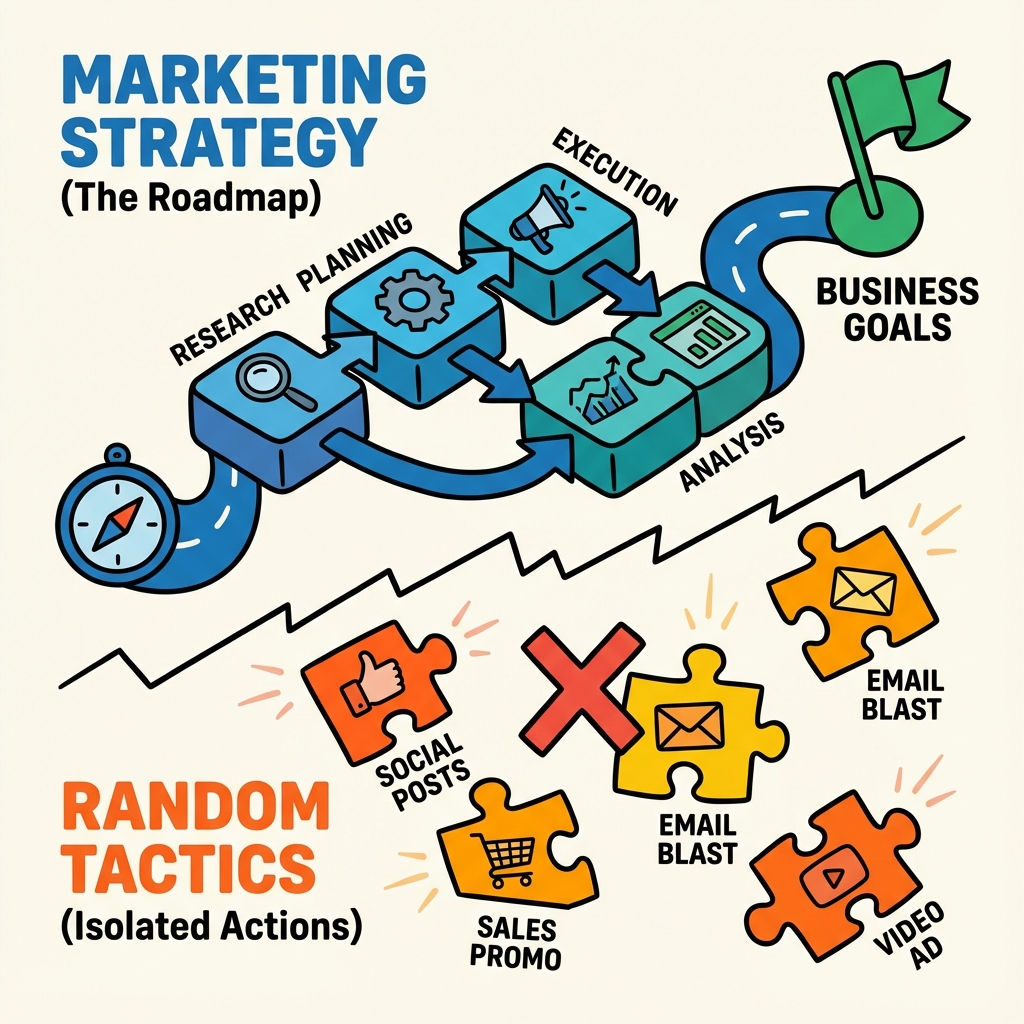
A marketing strategy serves as your roadmap, connecting every marketing activity to specific business goals. Unlike isolated tactics that might generate temporary spikes in traffic or engagement, a well-planned strategy creates a system where each component reinforces the others.
Think of marketing tactics as individual tools in a toolbox. You might have a hammer, screwdriver, and saw, but without a blueprint, you're just randomly hitting things and hoping something useful emerges. A marketing strategy provides that blueprint, showing you which tools to use, when to use them, and how they work together to build something meaningful.
The most successful marketing strategies align three critical elements: your business objectives, your target audience's needs, and the channels where those two intersect most effectively. This alignment prevents the common mistake of choosing marketing channels based on personal preference or industry trends rather than where your actual customers spend their time and attention.
How to Define Your Target Audience Beyond Basic Demographics?
Understanding your audience goes far deeper than knowing their age, location, and income level. Effective marketing requires insight into their motivations, challenges, preferred communication styles, and decision-making processes.
Start by identifying the specific problems your product or service solves, then work backward to understand who experiences these problems most acutely. Create detailed profiles that include not just demographic information, but psychographic details like values, interests, media consumption habits, and communication preferences.
Consider the customer journey from awareness to purchase and beyond. Different audience segments may enter this journey at different points and require different types of information and persuasion. A first-time buyer needs education and trust-building, while a repeat customer might respond better to loyalty rewards and exclusive offers.
What Questions Should You Ask to Understand Your Audience?
The right questions reveal insights that transform your marketing from generic messaging to targeted communication that resonates. Focus on understanding their current situation, desired outcomes, and the obstacles preventing them from achieving those outcomes.
Ask about their information consumption habits: Where do they go when they need to learn something new? What influences their purchasing decisions? Who do they trust for recommendations? Understanding these patterns helps you position your marketing in the right places with the right tone and format.
How to Choose Marketing Channels That Actually Work for Your Business?
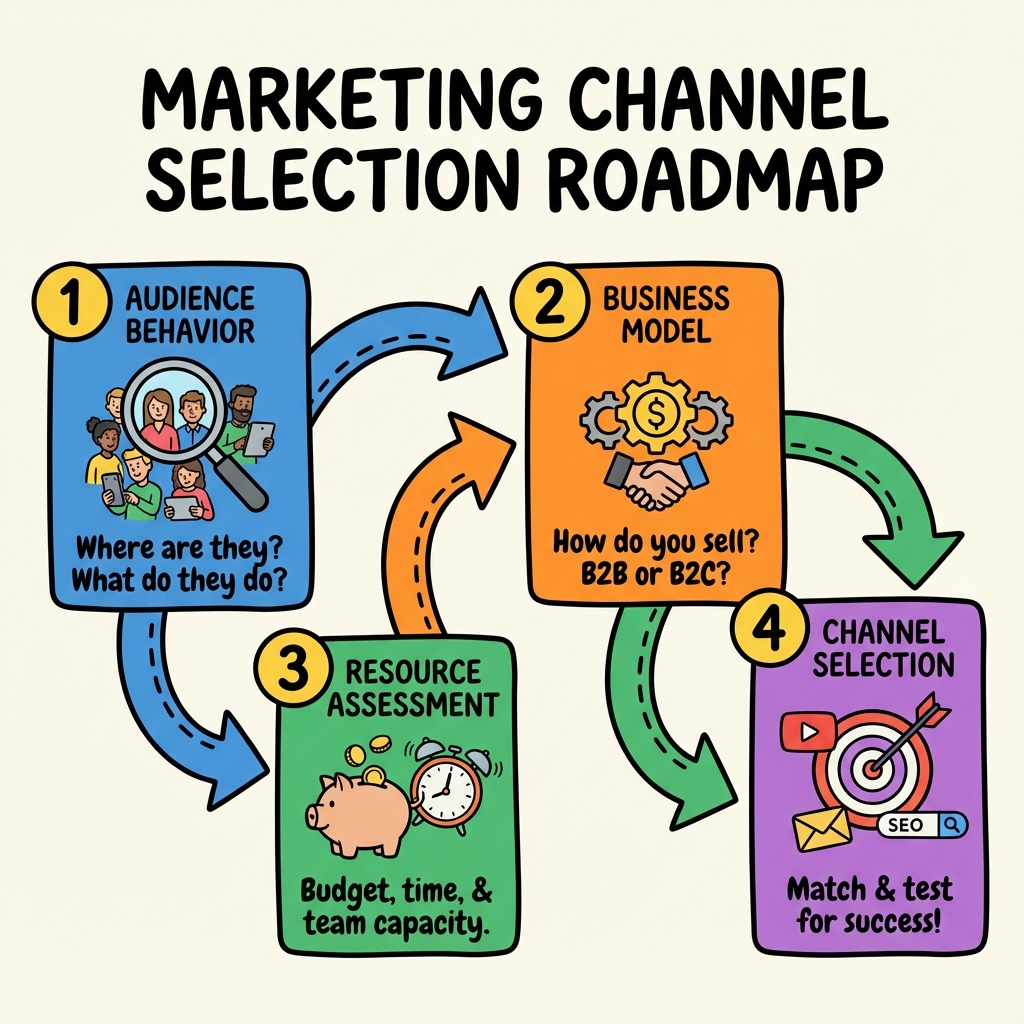
Channel selection often determines marketing success or failure, yet many businesses choose channels based on assumptions rather than evidence. The key lies in matching your audience's behavior patterns with your business model and resources.
Evaluate each potential channel across three dimensions: audience presence, message fit, and resource requirements. A channel might have your ideal audience, but if your message doesn't translate well to that format, or if you lack the resources to execute effectively, it won't deliver results.
Start with one or two channels and master them before expanding. This focused approach allows you to understand what works, refine your messaging, and build systems for consistent execution. Understanding keyword research becomes crucial when selecting search-based channels, as it reveals how your audience actually searches for solutions.
| Channel Type | Best For | Resource Requirements | Measurement Focus |
|---|---|---|---|
| Search Marketing | High-intent prospects | Medium to High | Keyword rankings, conversion rates |
| Social Media | Brand awareness, engagement | Medium | Engagement rates, follower growth |
| Email Marketing | Nurturing, retention | Low to Medium | Open rates, click-through rates |
| Content Marketing | Education, trust-building | High | Traffic growth, lead generation |
How to Create Content That Connects with Your Audience?
Content creation becomes exponentially more effective when you understand the intersection between what your audience needs to know and what your business needs them to understand. This sweet spot generates content that provides genuine value while moving prospects closer to a purchasing decision.
Develop content themes that address different stages of the customer journey. Awareness-stage content should focus on problems and education, consideration-stage content should compare solutions and approaches, and decision-stage content should address specific concerns about choosing your particular solution.
Content marketing strategies work best when they're built around consistent value delivery rather than sporadic promotional messages. Create a content calendar that balances educational content, industry insights, and strategic promotion of your solutions.What Content Formats Drive the Best Results?
Different content formats serve different purposes and appeal to different learning styles and consumption preferences. Video content excels at demonstration and emotional connection, while written content provides depth and reference value that audiences can return to repeatedly.
Interactive content like quizzes, calculators, and assessments generates higher engagement and provides valuable data about your audience's specific situations and preferences. Long-form content establishes authority and captures search traffic for competitive keywords, while short-form content maintains regular touchpoints and social media presence.
How to Integrate Multiple Marketing Channels for Maximum Impact?
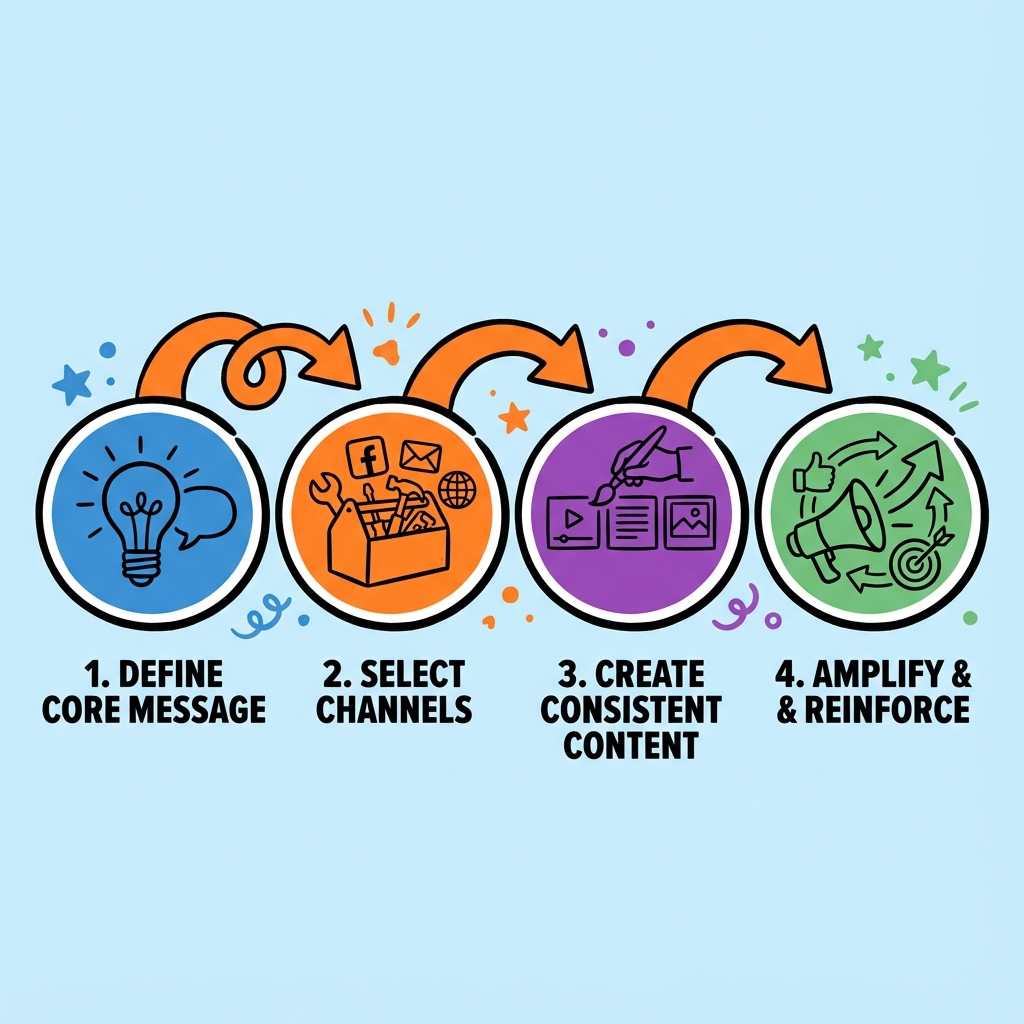
Integration transforms individual marketing channels from separate activities into a cohesive system where each channel amplifies the others. This approach maximizes your marketing investment by creating multiple touchpoints that reinforce your core messages.
Design your integration around consistent messaging and complementary strengths. Your content marketing might generate awareness and establish expertise, your email marketing nurtures those prospects over time, and your search marketing captures them when they're ready to take action.
Cross-channel data sharing enables more sophisticated targeting and personalization. Someone who engages with your content but doesn't convert immediately can be retargeted with specific messages addressing common objections or highlighting relevant case studies. Google Search Console insights can inform content creation for other channels by revealing what questions your audience is actually asking.
How to Measure Marketing Success Beyond Vanity Metrics?
Meaningful marketing measurement connects activity metrics to business outcomes, revealing which efforts actually contribute to growth versus those that simply generate impressive-looking numbers without substance.
Focus on metrics that indicate progress toward your specific business goals. If your goal is lead generation, track not just the number of leads, but lead quality, conversion rates, and customer lifetime value. If brand awareness is the priority, measure reach, engagement quality, and brand mention sentiment rather than just follower counts.
Establish baseline measurements before launching new marketing initiatives, and track progress over meaningful time periods. Marketing often requires time to compound, so monthly or quarterly reviews provide better insights than daily fluctuations.
What Tools Help Track Marketing Performance Effectively?
The right measurement tools depend on your marketing channels and business model, but most effective marketing measurement combines platform-specific analytics with broader business intelligence tools that connect marketing activities to revenue outcomes.
Google Analytics provides comprehensive website behavior data, while social media platforms offer detailed engagement and audience insights. Email marketing platforms track delivery, open, and click-through rates, and CRM systems connect marketing touchpoints to actual sales outcomes. Automated blog systems can help maintain consistent content creation while tracking which topics and formats generate the best results.
How to Optimize and Scale Your Marketing Strategy?
Optimization requires systematic testing and refinement based on actual performance data rather than assumptions or industry best practices that may not apply to your specific situation.
Implement a regular review process that examines both individual channel performance and cross-channel interactions. Look for patterns in your most successful content, campaigns, and customer interactions, then systematically test ways to replicate and amplify those successes.
Scaling successful marketing requires systems and processes that maintain quality while increasing volume. This might involve creating content templates, establishing approval workflows, or investing in marketing automation tools that handle routine tasks while preserving the personal touch that makes your marketing effective.
Conclusion
Building a complete marketing strategy requires patience, systematic thinking, and a commitment to continuous improvement based on real results rather than marketing folklore. The businesses that succeed long-term focus on understanding their audience deeply, choosing channels strategically, creating valuable content consistently, and measuring what actually matters to their bottom line.
Your marketing strategy should evolve as your business grows and market conditions change, but the fundamentals of audience understanding, channel selection, content value, and meaningful measurement remain constant. Start with these foundations, execute consistently, and refine based on evidence rather than trends.
Ready to transform your marketing from random tactics into a strategic system? Begin by clearly defining your target audience and their specific challenges, then choose one primary marketing channel to master before expanding your efforts.

Stefan Winter
Founder & SEO Expert
Founder of Fast SEO Fix and SEO automation expert. Stefan built Fast SEO Fix to solve the tedious problem of manual SEO work. He specializes in SEO optimized content generation, keyword research, and automated SEO strategies.
