What Does SEO Automated Actually Mean?
Posted by
 Stefan Winter
Related reading
The Complete Guide to Building a Successful Blog Post Website in 2026
The Complete Guide to Building a Successful Blog Post Website in 2026 Creating a blog post website has become one of the most powerful ways to establish an onli...
What Exactly Is Keyword Research in SEO?
What Makes Keyword Research in SEO Different from General Keyword Research? When most people think about keyword research, they picture brainstorming popular se...
What Makes Keyword Research in SEO Different from General Keyword Research?
How to Master Keyword Research in SEO: A Complete Step-by-Step Guide Keyword research in SEO serves as the foundation of every successful digital marketing stra...
How to Implement SEO Automated Solutions That Actually Drive Results
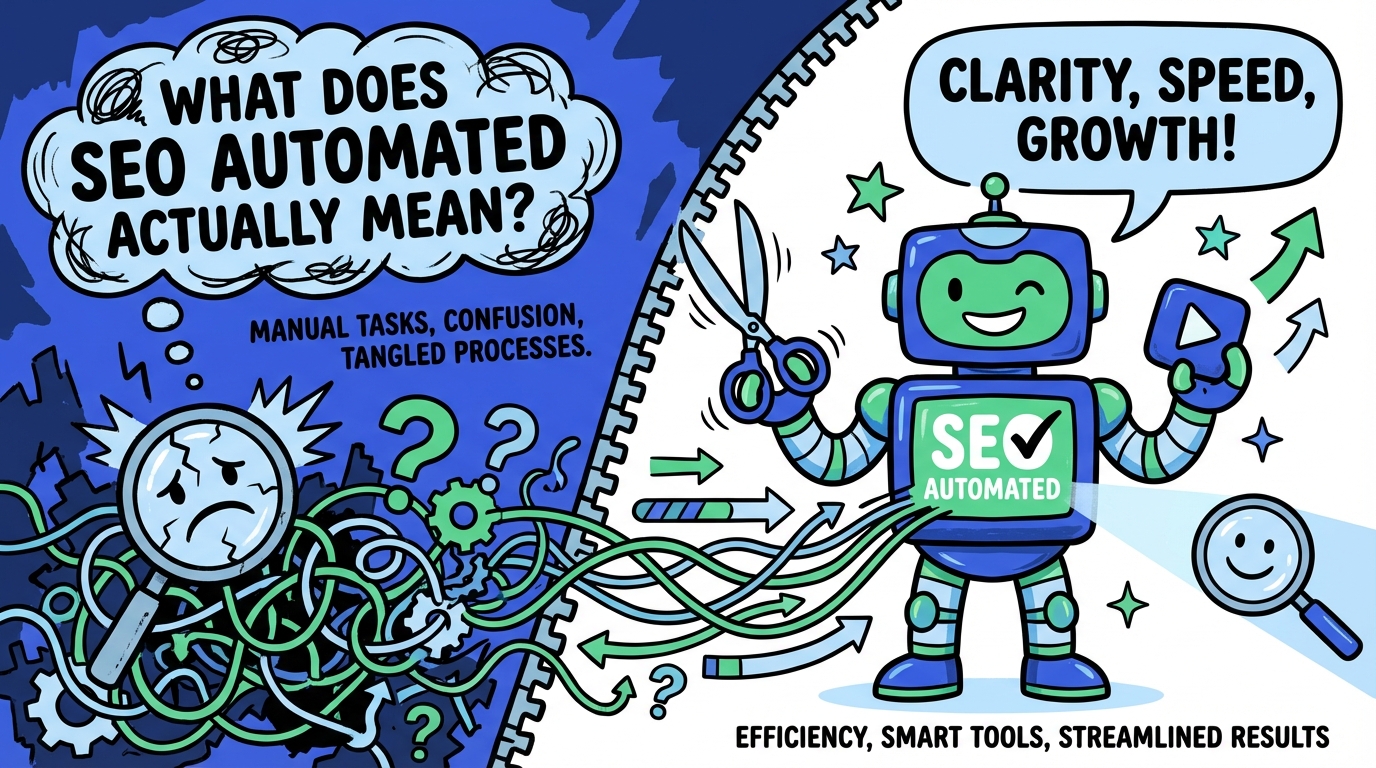
Implementing automated SEO can transform your digital marketing strategy, but only when done correctly. Many businesses struggle with understanding what SEO automated truly means and how to leverage it effectively. In this comprehensive guide, you'll discover how to implement automated SEO solutions that deliver measurable results, streamline your optimization processes, and scale your search engine visibility without sacrificing quality.
What Does SEO Automated Actually Mean?
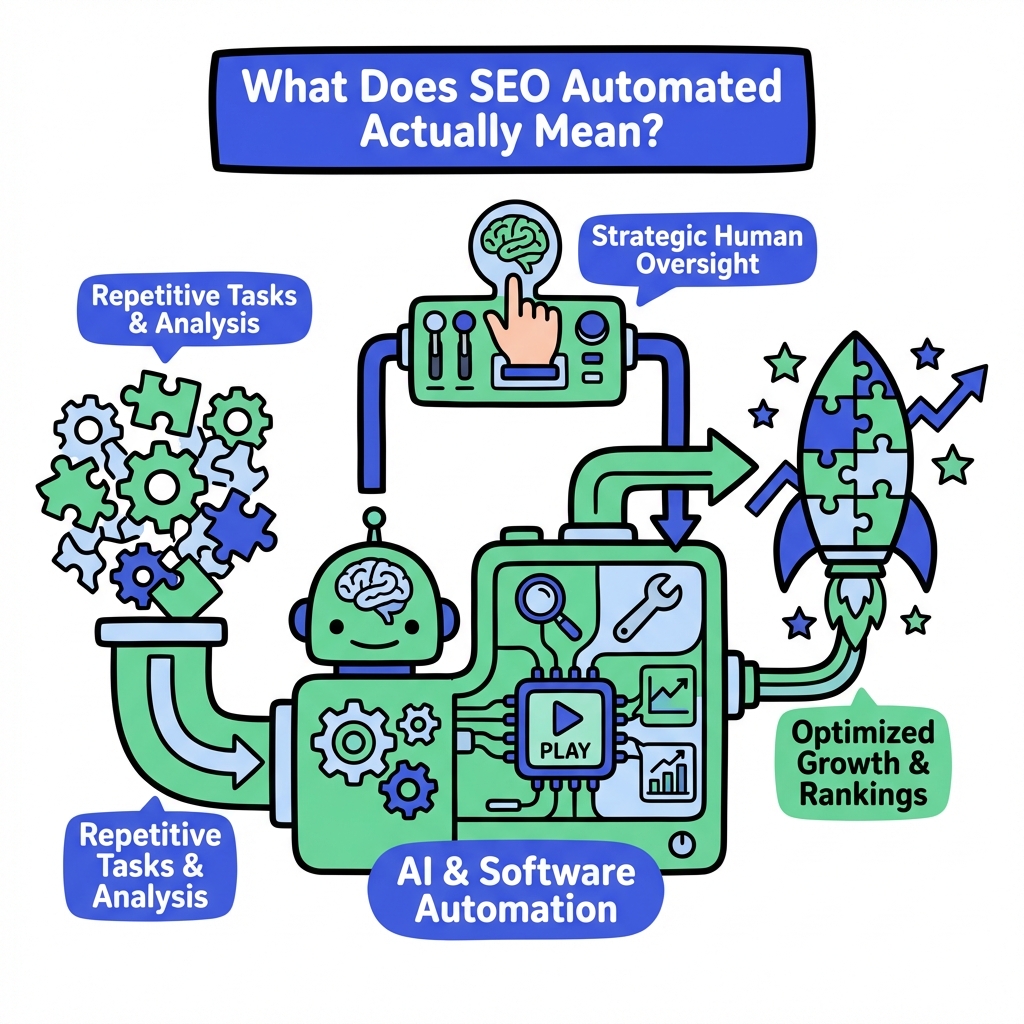
SEO automated refers to the strategic use of software, tools, and artificial intelligence to handle repetitive SEO tasks while maintaining human oversight for strategic decisions. Unlike manual SEO processes that require constant hands-on work, automated SEO systems can monitor rankings, analyze competitor strategies, update meta descriptions, and identify optimization opportunities around the clock.
The key distinction lies in understanding that true SEO automated solutions don't replace human expertise. Instead, they amplify your team's capabilities by handling time-consuming tasks like keyword tracking, technical audits, and content optimization suggestions. This approach allows SEO professionals to focus on high-level strategy, creative content development, and complex problem-solving.
Modern automated SEO platforms integrate with multiple search engines and provide real-time insights that would be impossible to gather manually. According to Search Engine Land's latest automation study, businesses using properly implemented automated SEO see 40% faster improvements in their search rankings compared to purely manual approaches.
How to Choose the Right SEO Automated Platform
Selecting the appropriate automated SEO platform requires careful evaluation of your specific needs and technical capabilities. Start by assessing your current SEO workload and identifying which tasks consume the most time without requiring creative input.
Essential features to look for include comprehensive keyword research automation, technical SEO monitoring, content optimization suggestions, and competitor analysis capabilities. The platform should integrate seamlessly with your existing tools and provide actionable insights rather than overwhelming data dumps.
Consider platforms that offer customizable automation rules, allowing you to set specific parameters for different types of content or website sections. This flexibility ensures that your automated processes align with your unique business goals and brand voice.
Evaluating Platform Integration Capabilities
Your chosen SEO automated solution must integrate with your content management system, analytics tools, and existing marketing stack. Poor integration leads to data silos and reduces the effectiveness of your automation efforts.
Test the platform's API capabilities and ensure it can sync with tools you already use for content marketing and SEO coordination. Seamless integration allows for more sophisticated automation workflows that span multiple marketing channels.
Setting Up Your First Automated SEO Workflow
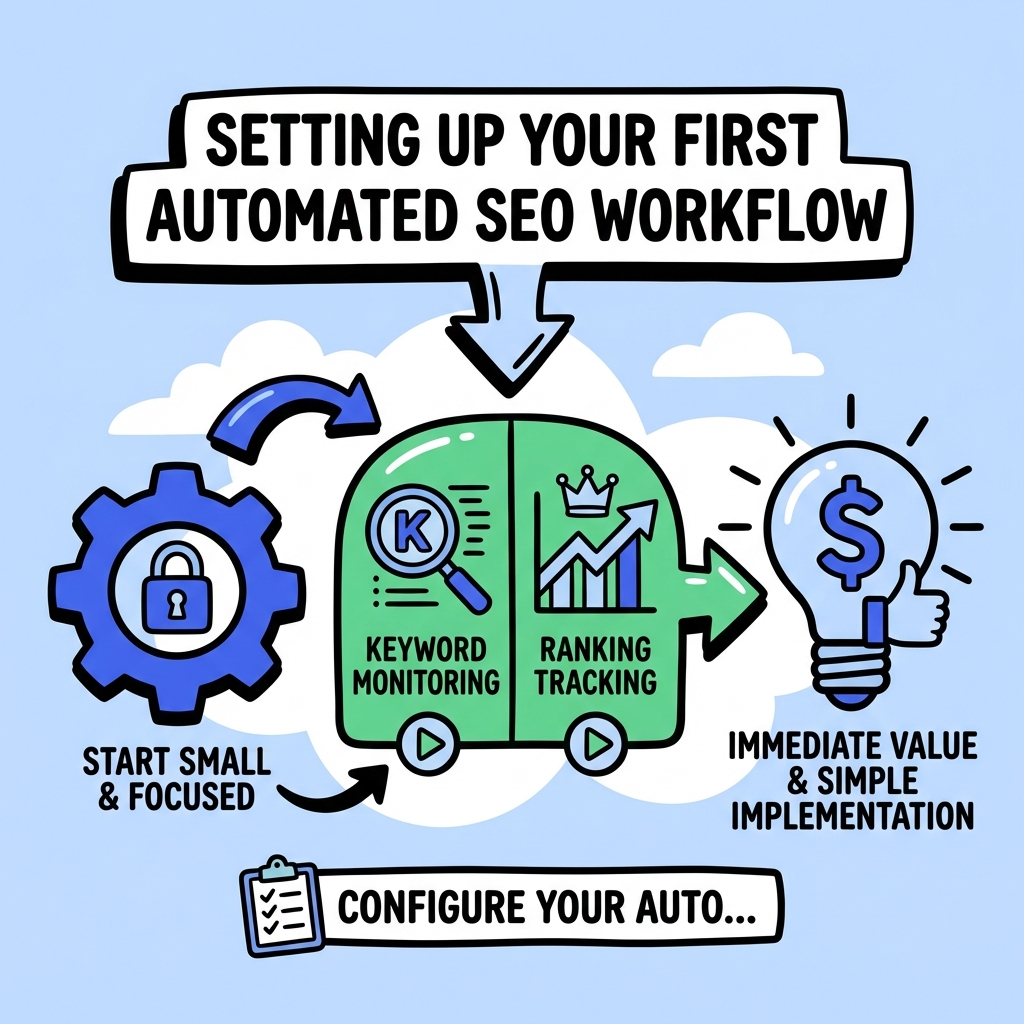
Begin your SEO automation journey by focusing on one specific area rather than attempting to automate everything simultaneously. Keyword monitoring and ranking tracking make excellent starting points because they provide immediate value while being relatively simple to implement.
Configure your automated system to monitor your primary keywords across major search engines and set up alerts for significant ranking changes. This foundation allows you to respond quickly to algorithm updates or competitor movements.
Establish clear parameters for when the system should trigger alerts versus when it should take autonomous action. For example, you might allow automatic meta description updates for product pages but require human approval for blog post modifications.
Creating Automation Rules That Work
Effective automation rules balance efficiency with quality control. Start with conservative settings that require approval for major changes while allowing automatic execution of minor optimizations like image alt text updates or internal link suggestions.
Document your automation rules clearly and review them regularly. As your comfort level with the system grows, you can gradually expand the scope of autonomous actions while maintaining quality standards.
| Automation Task | Frequency | Human Oversight Required |
|---|---|---|
| Keyword Ranking Monitoring | Daily | No |
| Technical SEO Audits | Weekly | Review flagged issues |
| Meta Description Updates | As needed | Approve before publishing |
| Internal Link Suggestions | Continuous | Review monthly |
| Content Gap Analysis | Monthly | Strategy review required |
What Common Mistakes Should You Avoid with SEO Automated Systems?
The most critical mistake businesses make is treating automated SEO as a "set it and forget it" solution. While automation handles routine tasks efficiently, it requires ongoing monitoring and adjustment to remain effective.
Avoid over-automating creative elements like headline writing or content strategy development. These areas benefit from human insight and brand understanding that current AI cannot replicate effectively. Focus your automation efforts on data collection, monitoring, and technical optimization tasks.
Another common pitfall involves ignoring the learning curve associated with new automated tools. Invest time in properly training your team and understanding the platform's capabilities before implementing complex workflows.
How to Maintain Quality While Scaling Automation
Implement quality checkpoints throughout your automated processes to catch potential issues before they impact your search performance. Regular audits of automated changes help identify patterns that might need human intervention.
Establish clear guidelines for when automated systems should pause and request human input. Complex technical issues, significant ranking drops, or unusual pattern detection should always trigger manual review processes.
Measuring the Success of Your SEO Automated Efforts
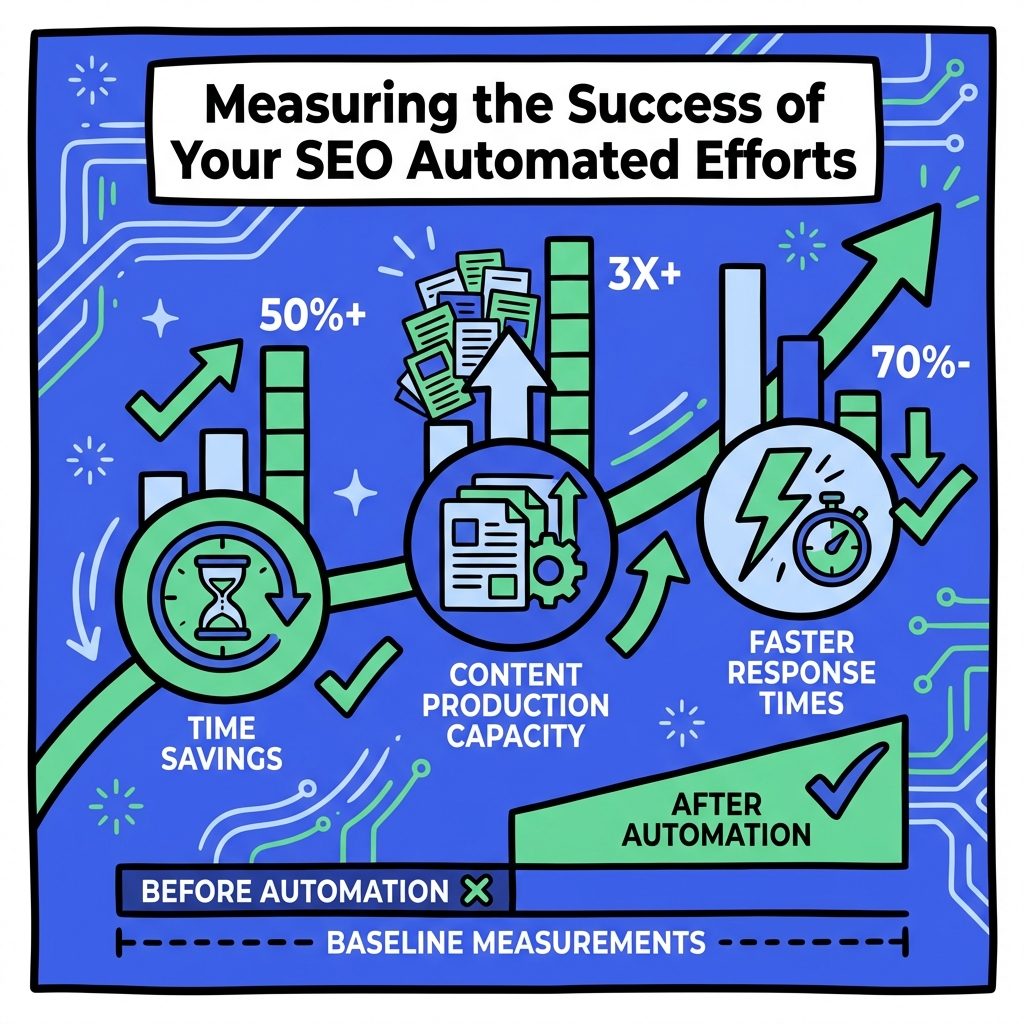
Track specific metrics that demonstrate the value of your automation investment beyond basic ranking improvements. Monitor time savings, increased content production capacity, and faster response times to algorithm changes or competitive threats.
Establish baseline measurements before implementing automation to accurately assess improvements. Key performance indicators should include ranking velocity, technical issue resolution time, and content optimization throughput.
Compare your automated SEO performance against industry benchmarks and your previous manual efforts. This data helps justify continued investment in automation tools and identifies areas for further optimization.
When evaluating automation success, consider both quantitative metrics and qualitative improvements like team satisfaction and strategic focus time. A successful marketing agency approach balances efficiency gains with maintained service quality.
Advanced Metrics for SEO Automation Success
Beyond traditional SEO metrics, track automation-specific indicators like error rates, false positive alerts, and system uptime. These operational metrics ensure your automated systems remain reliable and trustworthy.
Monitor the correlation between automated actions and organic traffic improvements to validate that your automation rules produce meaningful results. Adjust parameters based on performance data to continuously improve system effectiveness.
Conclusion
Implementing SEO automated solutions successfully requires strategic planning, careful tool selection, and ongoing optimization. By focusing on repetitive tasks while maintaining human oversight for creative and strategic decisions, you can significantly scale your SEO efforts without compromising quality.
Start with simple automation workflows like keyword monitoring and technical audits, then gradually expand your automated processes as you gain confidence and expertise. Remember that the goal of SEO automation is to amplify human capabilities, not replace human judgment.
Ready to transform your SEO strategy with intelligent automation? Contact Fast SEO Fix today to discover how our automated SEO solutions can accelerate your search engine success while freeing your team to focus on high-impact strategic initiatives.

Stefan Winter
Founder & SEO Expert
Founder of Fast SEO Fix and SEO automation expert. Stefan built Fast SEO Fix to solve the tedious problem of manual SEO work. He specializes in SEO optimized content generation, keyword research, and automated SEO strategies.
