What Makes SEO for Startups Different from Enterprise SEO?
Posted by
 Stefan Winter
How to Build a Winning SEO Strategy for Your Startup from Day One
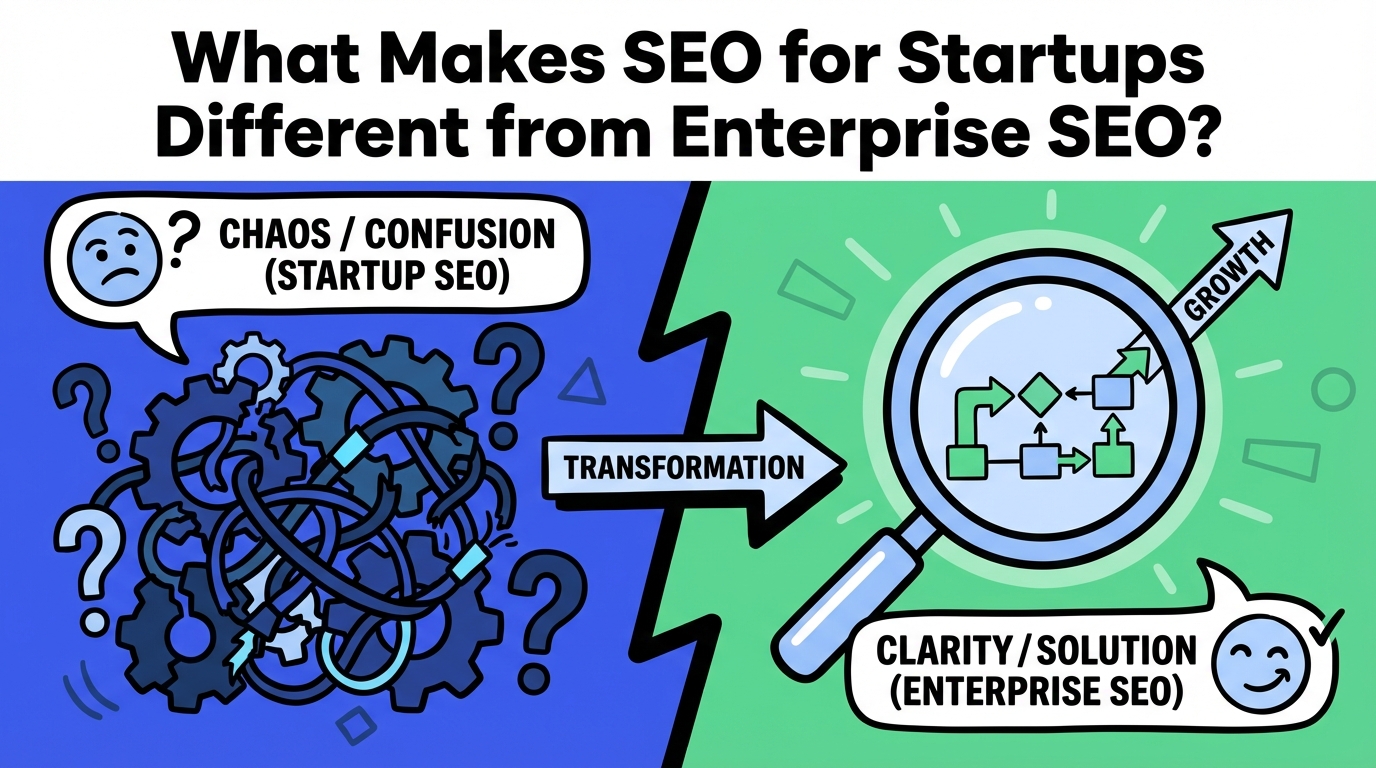
Starting a new business is challenging enough without worrying about online visibility. Yet for most startups today, search engine optimization isn't optional. It's the difference between thriving and struggling to find customers. While established companies can rely on brand recognition and hefty advertising budgets, startups must be smarter and more strategic with their limited resources. This comprehensive guide will show you exactly how to build an effective SEO foundation that drives real results without breaking the bank.
What Makes SEO for Startups Different from Enterprise SEO?
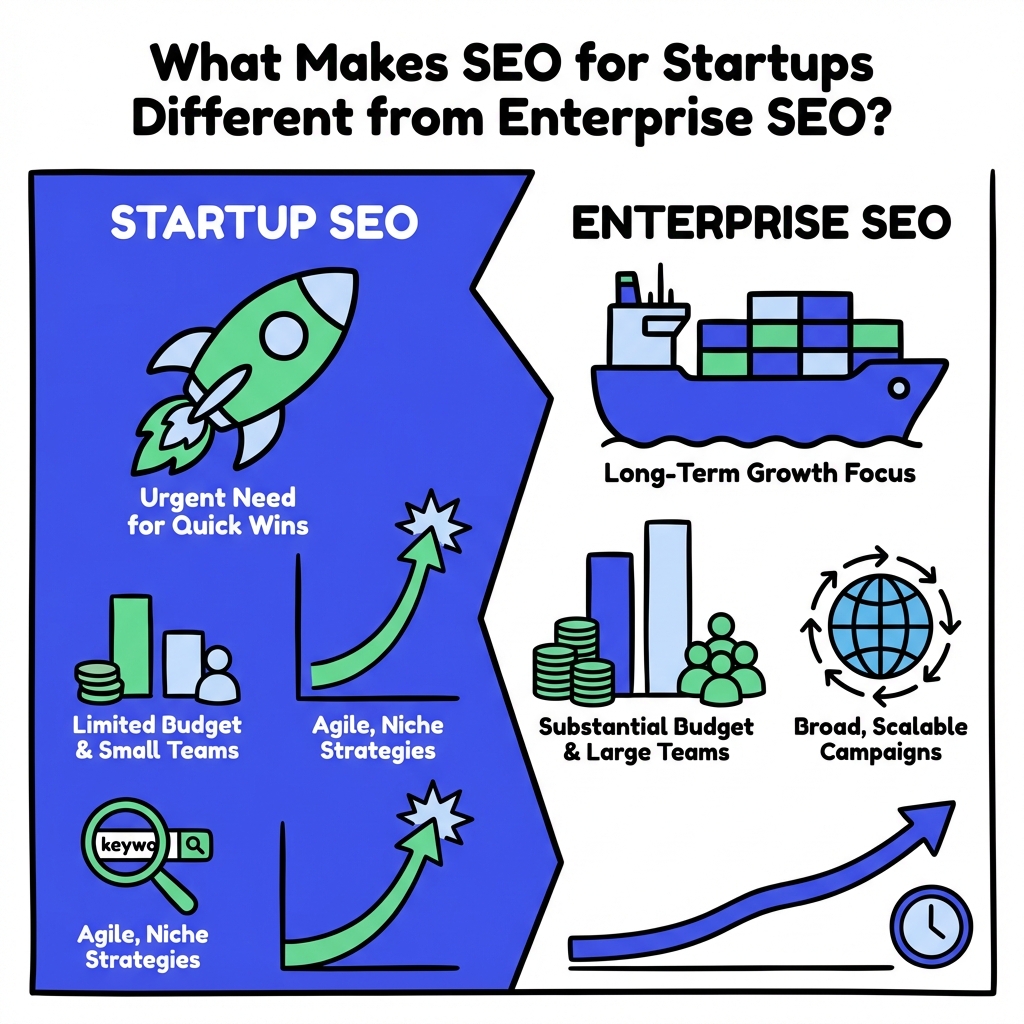
Startup SEO operates under completely different constraints than enterprise-level optimization. You're working with limited budgets, smaller teams, and the urgent need to show results quickly. Unlike large corporations that can afford to wait months for SEO campaigns to mature, startups need strategies that balance long-term growth with immediate visibility wins.
The key difference lies in resource allocation and risk tolerance. Startups must focus on high-impact, low-cost tactics that deliver measurable results. This means prioritizing local SEO if you serve specific geographic areas, targeting long-tail keywords with less competition, and creating content that directly addresses your ideal customer's pain points.
Your startup's agility is actually an advantage here. You can pivot quickly when you discover what works, test new approaches without layers of corporate approval, and build SEO into your product development process from the beginning rather than retrofitting it later.
Step 1: How to Conduct Startup-Focused Keyword Research
Effective keyword research for startups starts with understanding your unique value proposition and target market. Begin by identifying the specific problems your product or service solves, then research how your potential customers search for solutions to these problems.
Start with seed keywords related to your industry, but don't stop there. Use tools like Google's autocomplete feature, "People also ask" sections, and competitor analysis to uncover longer, more specific keyword phrases. These long-tail keywords typically have lower competition and higher conversion rates, making them perfect for startup budgets.
Keyword research tools and techniques become crucial at this stage, but focus on free and low-cost options initially. Google Keyword Planner, Ubersuggest's free tier, and Answer the Public can provide valuable insights without significant investment.Creating Your Startup Keyword Priority Matrix
Organize your keywords using a simple priority matrix that considers search volume, competition level, and business relevance. Here's how to structure your analysis:
| Keyword Type | Search Volume | Competition | Business Value | Priority Level |
|---|---|---|---|---|
| Brand Keywords | Low | Low | High | High |
| Problem-Solving Keywords | Medium | Medium | High | High |
| Product Keywords | Medium | High | Medium | Medium |
| Industry Keywords | High | High | Low | Low |
Step 2: How to Optimize Your Website Foundation
Your website's technical foundation determines whether search engines can effectively crawl, index, and rank your content. For startups, this means getting the basics right without overcomplicating the process.
Start with site speed optimization. A slow website kills both user experience and search rankings. Compress images, minimize code, and choose a reliable hosting provider that can handle your growth. Many startups make the mistake of choosing the cheapest hosting option, only to face performance issues as traffic increases.
Mobile optimization isn't optional in today's search landscape. Google prioritizes mobile-friendly websites in its rankings, and most of your potential customers will discover you through mobile searches. Ensure your website loads quickly and functions perfectly on smartphones and tablets.
Essential Technical SEO Checklist for Startups
Your technical SEO foundation should include these critical elements:
- SSL certificate installation for secure browsing
- XML sitemap creation and submission to search engines
- Robots.txt file optimization to guide search engine crawlers
- Clean URL structure that's both user and search engine friendly
- Proper heading tag hierarchy (H1, H2, H3) throughout your content
- Image alt text optimization for accessibility and SEO
Step 3: What Content Strategy Works Best for Startup SEO?
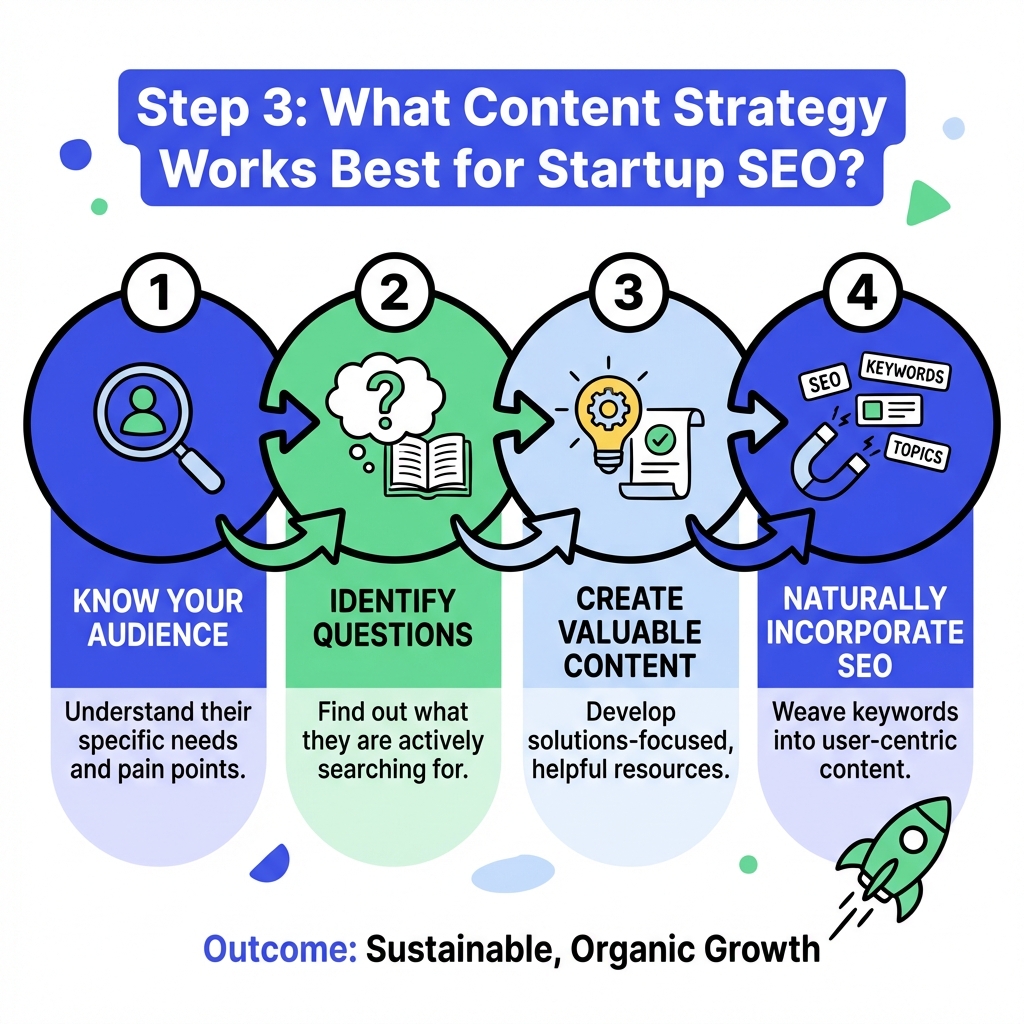
Content marketing and SEO work hand in hand for startups, but your content strategy must be laser-focused on your target audience's needs. Avoid the common mistake of creating content just for search engines. Instead, develop content that serves your potential customers while naturally incorporating your target keywords.
Focus on creating comprehensive, helpful content that positions your startup as a solution to specific problems. This might include detailed how-to guides, industry insights, case studies from early customers, or tools and resources that provide immediate value.
Content marketing strategies for startups should emphasize quality over quantity. It's better to publish one exceptional piece of content per week than seven mediocre posts. Each piece should be thoroughly researched, well-written, and optimized for both users and search engines.Building Your Content Calendar Around SEO Goals
Plan your content calendar around keyword themes and business objectives. Group related keywords into content clusters, where one comprehensive pillar page covers a broad topic and several supporting pages dive deeper into specific aspects.
This approach helps establish topical authority in your niche while creating internal linking opportunities that boost your overall SEO performance. For example, if you're a project management software startup, your pillar page might cover "project management best practices" while supporting pages address specific methodologies, tools comparisons, and implementation guides.
How to Leverage Local SEO for Startup Growth?
Local SEO presents a massive opportunity for startups, especially those serving specific geographic markets or operating physical locations. Local search results often have less competition than national keywords, making it easier for startups to achieve visibility.
Start by claiming and optimizing your Google My Business listing. This free tool puts your business directly in local search results and Google Maps, providing essential information like your address, phone number, business hours, and customer reviews.
Consistency across all online directories and citations is crucial for local SEO success. Ensure your business name, address, and phone number (NAP) are identical across Google My Business, Yelp, industry directories, and your website. Even small variations can confuse search engines and hurt your local rankings.
Step 4: How to Build Authority Through Strategic Link Building?
Link building for startups requires creativity and relationship building rather than big budgets. Focus on earning links through valuable content, industry relationships, and community involvement rather than paying for low-quality link schemes that can harm your rankings.
Start with your existing network. Reach out to business partners, suppliers, customers, and industry contacts who might naturally link to your website. Guest posting on relevant industry blogs, participating in expert roundups, and creating shareable resources like industry reports or tools can generate quality backlinks.
Working with marketing agencies can help accelerate your link building efforts, but ensure any agency you consider understands startup constraints and focuses on white-hat techniques that build long-term authority.Startup-Friendly Link Building Tactics
Consider these cost-effective link building strategies:
- Creating free tools or resources that naturally attract links
- Participating in industry forums and communities (with genuine value, not spam)
- Building relationships with journalists and bloggers in your industry
- Collaborating with complementary businesses on content or events
- Earning mentions through PR efforts and thought leadership
How to Track and Measure Your Startup SEO Success?
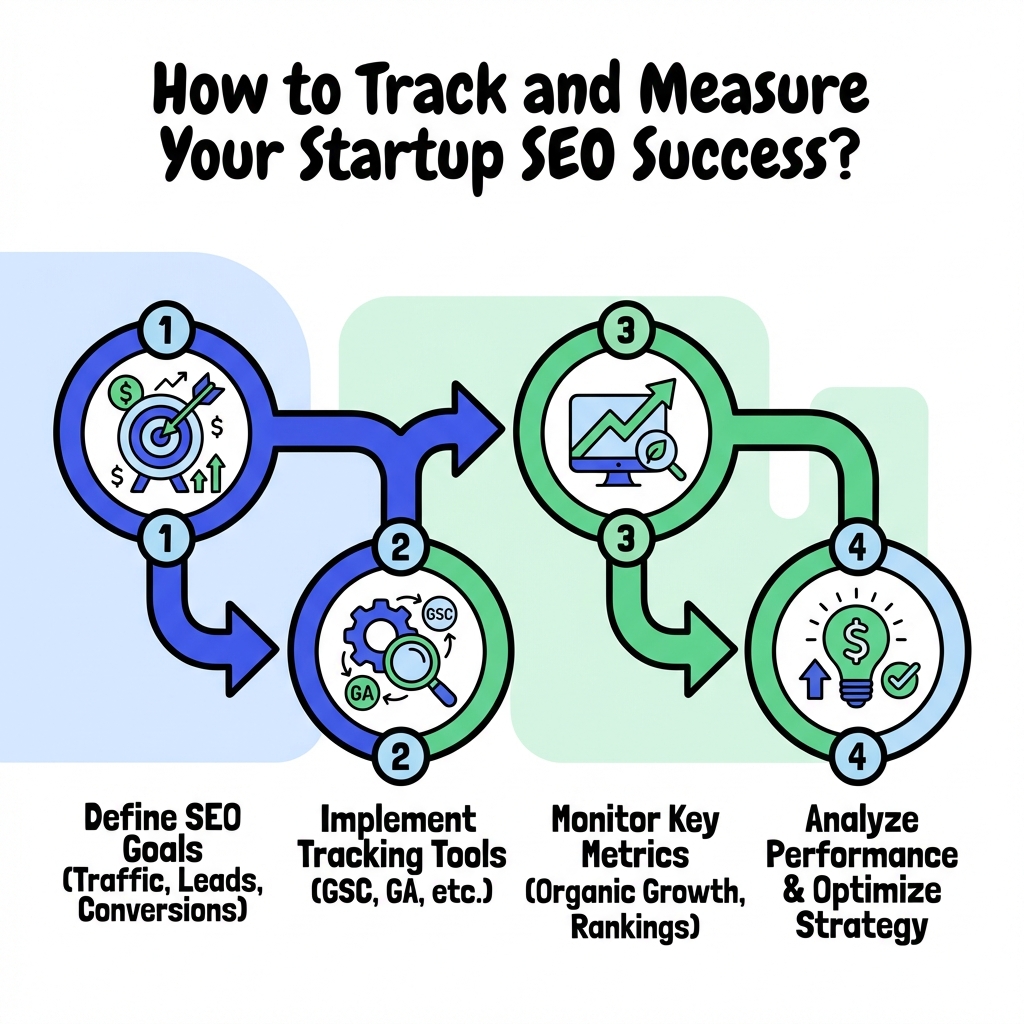
Measuring SEO success for startups goes beyond just tracking keyword rankings. While rankings matter, focus on metrics that directly impact your business goals: organic traffic growth, conversion rates from organic search, and the quality of leads generated through SEO efforts.
Google Search Console provides essential insights into your website's search performance, including which keywords drive traffic, how often your pages appear in search results, and technical issues that might hurt your rankings.Set up conversion tracking to understand which SEO efforts generate actual business results. This might include newsletter signups, demo requests, free trial activations, or direct sales, depending on your business model.
Key SEO Metrics for Startup Success
Track these essential metrics to gauge your SEO progress:
| Metric | Why It Matters | How to Track |
|---|---|---|
| Organic Traffic Growth | Shows overall SEO progress | Google Analytics |
| Keyword Rankings | Indicates search visibility | Google Search Console |
| Click-Through Rates | Measures content appeal | Google Search Console |
| Conversion Rate | Shows business impact | Google Analytics Goals |
| Page Load Speed | Affects rankings and UX | Google PageSpeed Insights |
What Common SEO Mistakes Should Startups Avoid?
Startups often make SEO mistakes that waste time and resources. The biggest error is trying to compete for highly competitive keywords right from the start. Instead of targeting "project management software," a startup might have better success with "project management software for remote creative teams."
Another common mistake is neglecting the user experience in favor of search engine optimization. While technical SEO matters, never sacrifice usability for the sake of rankings. Search engines increasingly prioritize websites that provide excellent user experiences.
Avoid the temptation to use black-hat SEO tactics or shortcuts. These might provide short-term gains but can result in penalties that devastate your search visibility. Focus on sustainable, white-hat strategies that build long-term success.
Conclusion
Building an effective SEO strategy for your startup doesn't require a massive budget or extensive technical expertise. It demands focus, consistency, and a deep understanding of your target audience's needs. Start with solid technical foundations, conduct thorough keyword research, create valuable content, and build authority through genuine relationships and quality backlinks.
Remember that SEO is a long-term investment that compounds over time. The strategies you implement today will continue generating results months and years into the future. Stay patient, track your progress, and adjust your approach based on data and results.
Ready to accelerate your startup's SEO success? Fast SEO Fix specializes in helping startups build search visibility that drives real business growth. Contact us today to discover how our targeted SEO strategies can help your startup compete and win in search results.

Stefan Winter
Founder & SEO Expert
Founder of Fast SEO Fix and SEO automation expert. Stefan built Fast SEO Fix to solve the tedious problem of manual SEO work. He specializes in SEO optimized content generation, keyword research, and automated SEO strategies.
