What Makes Google Ads Different from Traditional Advertising?
Posted by
 Stefan Winter
How to Maximize Your Google Ads Performance: A Complete Strategy Guide
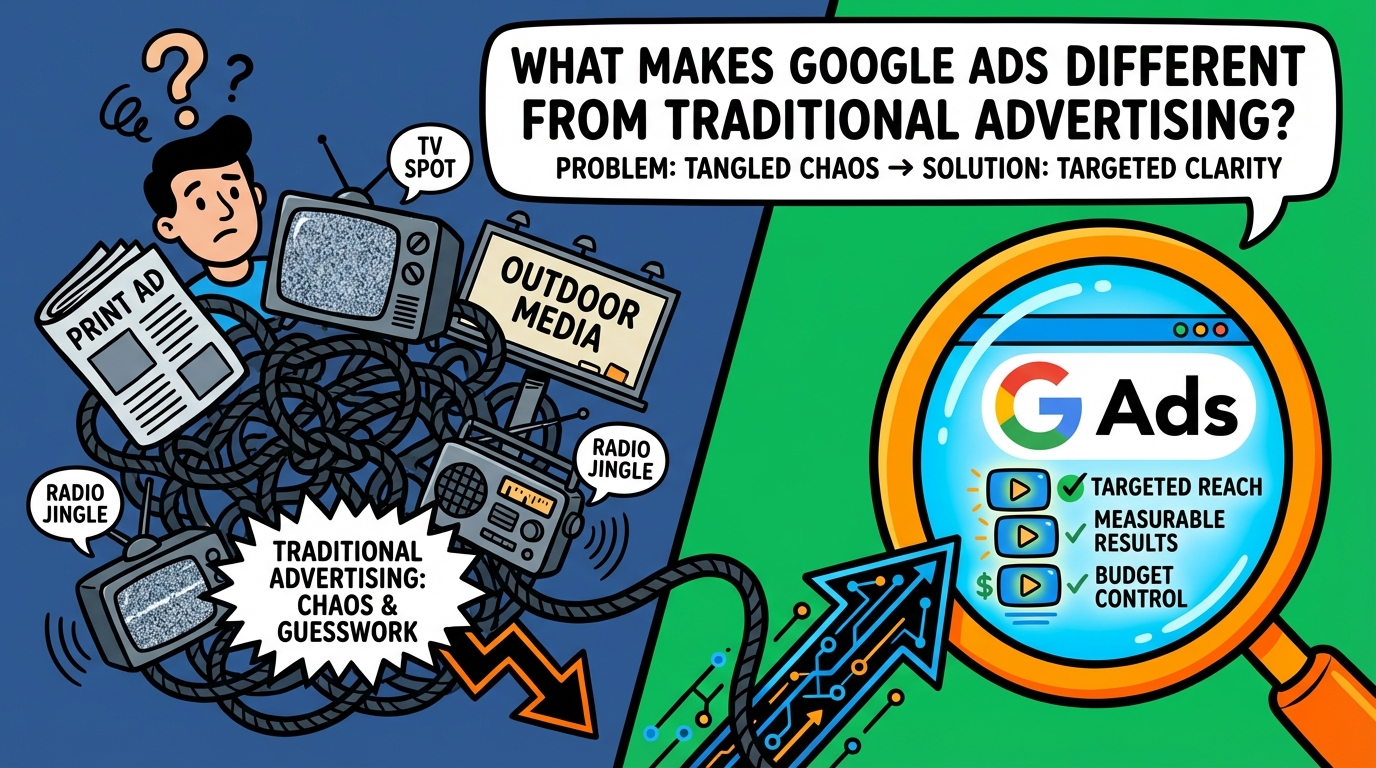
Google Ads can transform your business overnight, but only when executed correctly. With over 8.5 billion searches happening on Google daily, your potential customers are actively looking for what you offer. The question isn't whether you should use Google Ads, but how to leverage this powerful platform to drive meaningful results for your business.
This comprehensive guide will walk you through proven strategies to optimize your Google Ads campaigns, reduce wasted spend, and achieve higher returns on your advertising investment. Whether you're launching your first campaign or looking to improve existing performance, these actionable steps will help you master the art of Google Ads success.
What Makes Google Ads Different from Traditional Advertising?
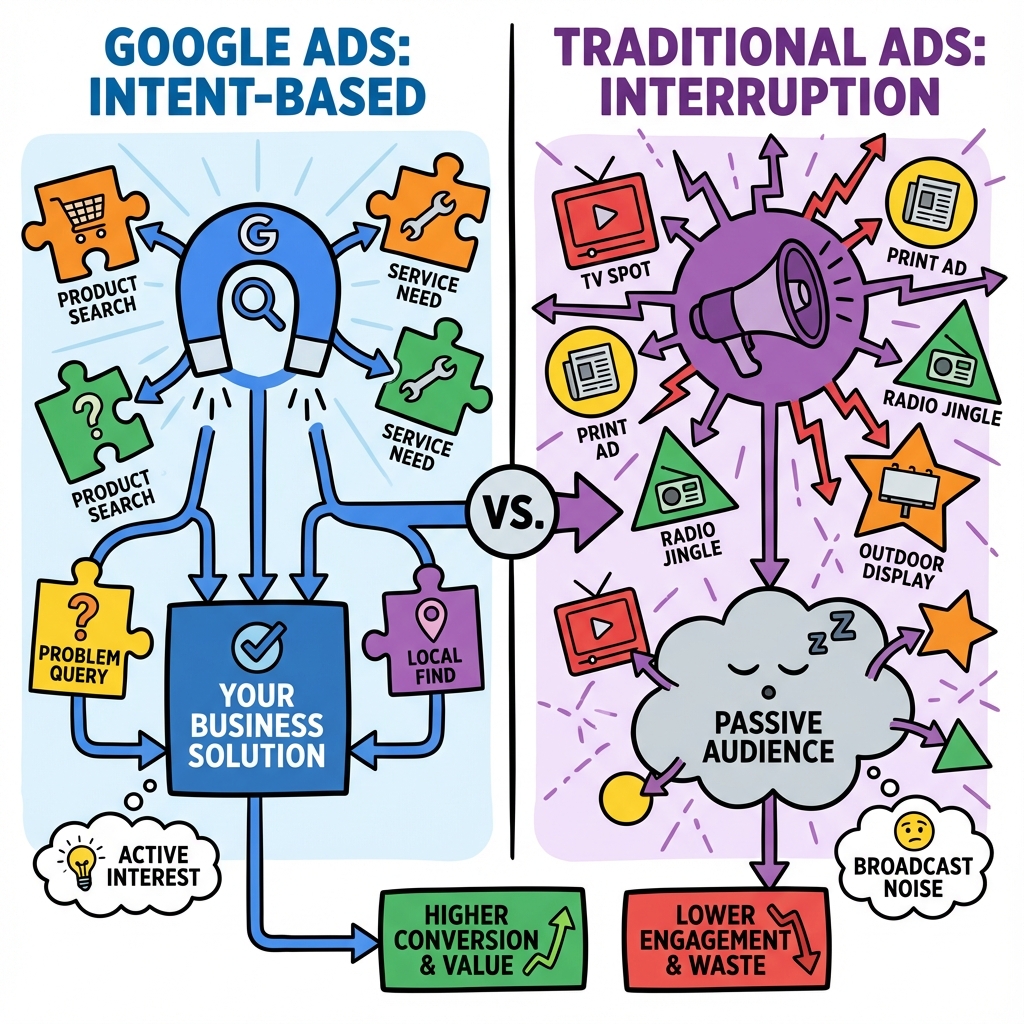
Google Ads operates on intent-based marketing, meaning you reach people actively searching for your products or services. Unlike traditional advertising that interrupts potential customers, Google Ads connects you with prospects already expressing interest through their search queries.
The platform's auction-based system ensures fair competition while rewarding advertisers who create relevant, high-quality campaigns. This approach benefits both businesses and users by displaying the most appropriate ads for each search query. Understanding this fundamental difference shapes how you should approach campaign creation and optimization.
Your success depends on aligning your ads with user intent rather than simply pushing your message to a broad audience. This targeted approach makes Google Ads particularly effective for businesses looking to complement their organic growth strategies.
How to Set Up Your Google Ads Account for Success
Step 1: Define Your Campaign Objectives
Start by identifying specific, measurable goals for your Google Ads campaigns. Common objectives include generating leads, increasing website traffic, driving online sales, or promoting brand awareness. Each goal requires different campaign types and optimization strategies.
Document your target cost per acquisition (CPA) and return on ad spend (ROAS) expectations. These benchmarks will guide your bidding strategies and help you evaluate campaign performance objectively. Consider how Google Ads fits into your broader digital marketing strategy, including your efforts to grow organic traffic through strategic content creation.
Step 2: Structure Your Account Hierarchy
Organize your account with a logical hierarchy: campaigns, ad groups, and keywords. Create separate campaigns for different product lines, services, or geographic regions. This structure allows for better budget control and more targeted messaging.
Within each campaign, group closely related keywords into specific ad groups. For example, if you sell running shoes, create separate ad groups for "men's running shoes," "women's running shoes," and "trail running shoes." This granular approach enables more relevant ad copy and improved Quality Scores.
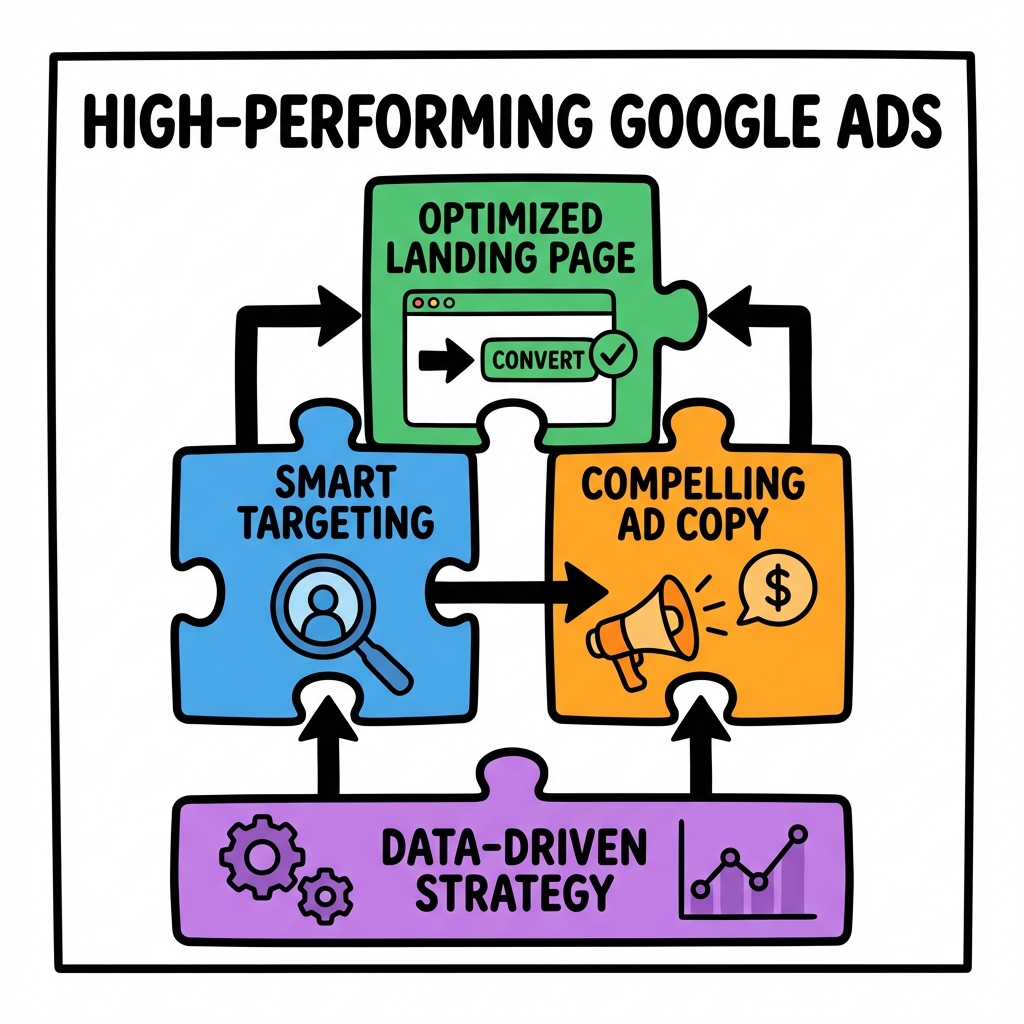
What Are the Essential Components of High-Performing Google Ads?
Keyword Research and Selection
Effective keyword research forms the foundation of successful Google Ads campaigns. Use tools like Google Keyword Planner, SEMrush, or Ahrefs to identify relevant search terms with adequate search volume and manageable competition levels.
Focus on a mix of keyword match types to balance reach and relevance. Exact match keywords provide the highest relevance but limited reach, while broad match keywords offer greater reach with less precision. According to Google's official documentation, using a combination of match types typically produces the best results.
Consider the search intent behind each keyword. Informational keywords (how to, what is) typically have lower conversion rates but can be valuable for building awareness. Commercial keywords (buy, purchase, hire) usually convert better but face higher competition and costs.
| Keyword Type | Search Volume | Competition | Conversion Rate | Best Use Case |
|---|---|---|---|---|
| Brand Keywords | Medium | Low | High | Protecting brand searches |
| Commercial Keywords | High | High | High | Direct sales/conversions |
| Informational Keywords | High | Medium | Low | Building awareness |
| Long-tail Keywords | Low | Low | Medium | Niche targeting |
Compelling Ad Copy Creation
Write ad headlines that directly address the searcher's query and highlight your unique value proposition. Include your target keywords naturally while maintaining readability and appeal. Your headlines should create curiosity or urgency while remaining truthful and compliant with Google's policies.
Use description lines to provide additional details about your offer, including benefits, features, or special promotions. Include clear calls-to-action that tell users exactly what to expect when they click your ad. Test different messaging approaches to identify what resonates best with your target audience.
How to Optimize Your Landing Pages for Google Ads Success?
Ensure Message Match Between Ads and Landing Pages
Your landing page content must align closely with your ad copy and the keywords that triggered the ad. This consistency improves user experience and increases conversion rates while positively impacting your Quality Score.
If your ad promotes "free shipping on running shoes," ensure your landing page prominently displays this offer. Mismatched messaging creates confusion and leads to higher bounce rates, wasting your advertising budget and hurting campaign performance.
Focus on Page Speed and Mobile Optimization
Google considers page loading speed when calculating Quality Scores and ad rankings. Use tools like Google PageSpeed Insights to identify and fix performance issues. Compress images, minimize code, and leverage browser caching to improve loading times.
With mobile devices accounting for over 60% of Google searches, ensure your landing pages provide excellent mobile experiences. Test your pages on various devices and screen sizes to verify functionality and readability. This attention to technical details supports both your paid advertising efforts and your broader strategy to improve organic search rankings.
What Bidding Strategies Work Best for Different Campaign Goals?
Manual vs. Automated Bidding
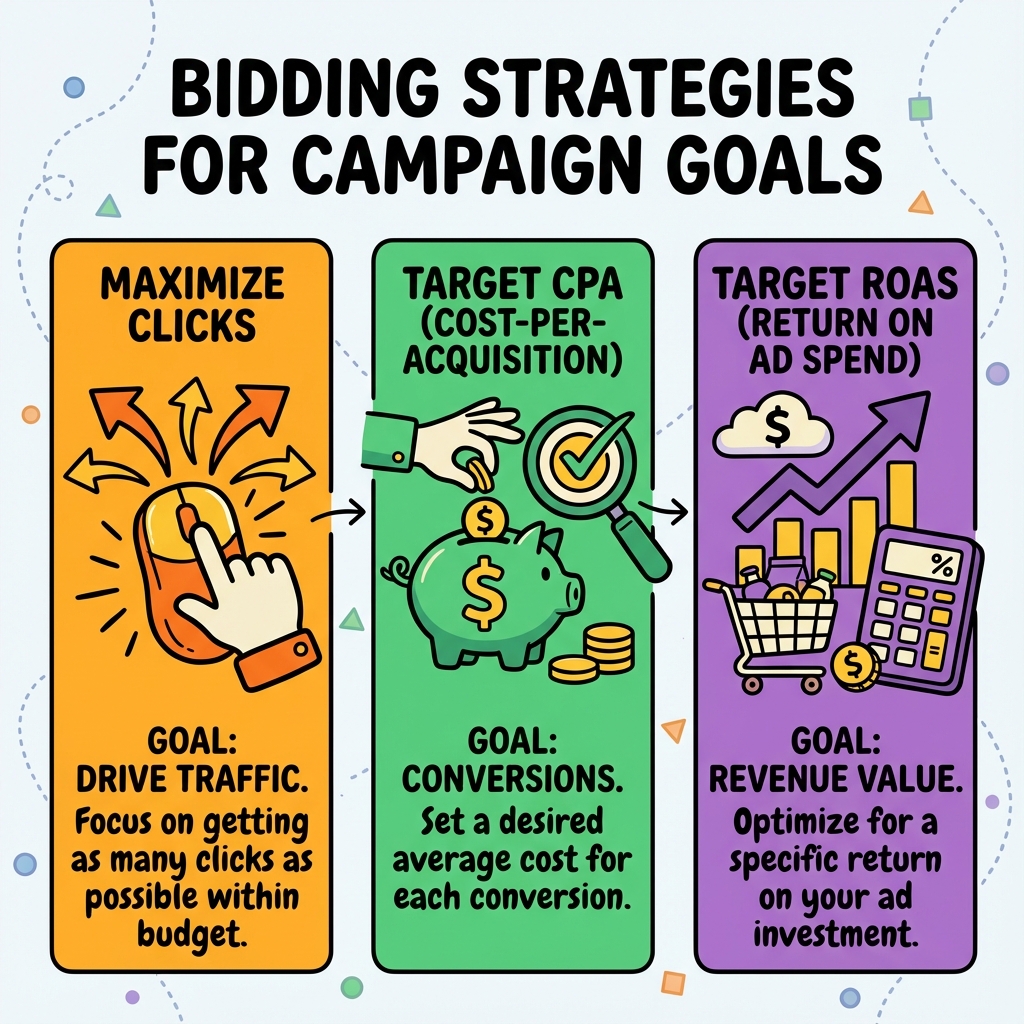
Manual bidding gives you complete control over individual keyword bids but requires constant monitoring and adjustment. This approach works well for experienced advertisers managing smaller accounts or campaigns with specific performance requirements.
Automated bidding strategies use machine learning to optimize bids based on your campaign objectives. Target CPA bidding focuses on achieving a specific cost per acquisition, while Target ROAS optimizes for return on ad spend. These strategies work best with sufficient conversion data and clearly defined goals.
Smart Bidding Implementation
Smart Bidding strategies like Enhanced CPC, Target CPA, and Target ROAS analyze numerous signals to optimize bids in real-time. These include device type, location, time of day, and user behavior patterns. According to Google's performance data, advertisers using Smart Bidding see an average 20% increase in conversions.
Start with Enhanced CPC if you're new to automated bidding, as it provides a gentle introduction while maintaining some manual control. Graduate to more aggressive automated strategies as you gather performance data and gain confidence in the system.
How to Monitor and Improve Campaign Performance?
Key Metrics to Track
Focus on metrics that align with your business objectives rather than vanity metrics. Click-through rate (CTR) indicates ad relevance, but conversion rate and cost per conversion directly impact your bottom line. Monitor Quality Score to identify opportunities for improvement in ad relevance, expected CTR, and landing page experience.
Track impression share to understand how often your ads appear for relevant searches. Low impression share might indicate insufficient budgets or low ad rankings, both of which limit your campaign's potential reach and effectiveness.
Regular Optimization Tasks
Schedule weekly reviews to analyze performance data and make necessary adjustments. Add negative keywords to prevent your ads from showing for irrelevant searches. This practice improves CTR, reduces wasted spend, and increases overall campaign efficiency.
Test different ad variations continuously to identify top-performing messages and formats. A/B testing headlines, descriptions, and calls-to-action provides valuable insights into what motivates your target audience to take action.
How Does Google Ads Complement Your Organic Growth Strategy?
Immediate Visibility While Building Organic Presence
Google Ads provides instant visibility for important keywords while you work on improving organic rankings. This dual approach ensures you don't miss potential customers during the time it takes to build organic authority and create strategic content that ranks naturally.
Use Google Ads data to inform your organic SEO strategy. Keywords that perform well in paid campaigns often make excellent targets for organic content creation. The search terms report reveals actual queries triggering your ads, providing valuable insights into user language and intent.
Data-Driven Decision Making
Google Ads generates immediate performance data that can guide broader marketing decisions. Conversion data, audience insights, and keyword performance metrics help refine your overall digital marketing approach. This information proves particularly valuable when developing automated SEO strategies and content plans.
The platform's detailed reporting capabilities enable precise measurement of marketing ROI, helping justify marketing investments and optimize budget allocation across different channels and campaigns.
Conclusion
Mastering Google Ads requires a strategic approach that combines thorough planning, continuous optimization, and data-driven decision making. By following the steps outlined in this guide, you'll create campaigns that not only drive immediate results but also support your long-term business growth objectives.
Remember that Google Ads success doesn't happen overnight. Start with small budgets, test different approaches, and scale successful campaigns gradually. Focus on providing value to your potential customers through relevant ads and excellent landing page experiences.
Ready to launch your first Google Ads campaign or optimize existing ones? Start by implementing the account structure and keyword research strategies discussed above. Your future customers are searching for your products and services right now, and Google Ads can help you connect with them at the perfect moment.

Stefan Winter
Founder & SEO Expert
Founder of Fast SEO Fix and SEO automation expert. Stefan built Fast SEO Fix to solve the tedious problem of manual SEO work. He specializes in SEO optimized content generation, keyword research, and automated SEO strategies.
