What Makes a Content Idea Worth Pursuing?
Posted by
 Stefan Winter
How to Generate Endless Content Ideas That Drive Organic Traffic

Running out of fresh content ideas can feel like hitting a creative wall, especially when you're trying to maintain consistent publishing schedules and drive organic traffic. The good news? Content ideation doesn't have to be a constant struggle. With the right strategies and systematic approaches, you can build a reliable pipeline of engaging topics that resonate with your audience and boost your search rankings. In this comprehensive guide, you'll discover proven methods to generate content ideas that not only capture attention but also convert visitors into loyal customers.
What Makes a Content Idea Worth Pursuing?

Not all content ideas are created equal. The most valuable content ideas share three key characteristics: they address genuine audience pain points, have search potential, and align with your business goals. Before diving into idea generation techniques, it's crucial to establish criteria for evaluating which concepts deserve your time and resources.
High-impact content ideas typically solve specific problems your target audience faces daily. These topics often emerge from customer support inquiries, sales conversations, or community discussions. Additionally, the best content ideas have measurable search demand, meaning people are actively looking for information on these topics. Tools like Google Keyword Planner and Answer The Public can help validate whether your ideas have search potential.
Finally, every piece of content should serve a strategic purpose in your marketing funnel. Whether you're building brand awareness, nurturing leads, or driving conversions, each content idea should contribute to your broader business objectives.
How to Mine Your Existing Resources for Content Gold?
Your best content ideas might already be hiding in plain sight within your existing business resources. Customer interactions, internal knowledge, and historical data often contain untapped content opportunities that can fuel months of publishing.
Start by analyzing your customer support tickets and frequently asked questions. These interactions reveal the exact language your audience uses to describe their challenges and the specific solutions they seek. Transform common support queries into detailed how-to guides, troubleshooting articles, or educational content that preemptively addresses these concerns.
Sales team conversations provide another goldmine of content ideas. Sales representatives regularly encounter objections, questions, and use cases that can become compelling content topics. Schedule regular brainstorming sessions with your sales team to capture these insights and turn them into content that supports the sales process.
| Content Source | Idea Generation Method | Content Type Examples |
|---|---|---|
| Support Tickets | FAQ analysis, problem categorization | How-to guides, troubleshooting posts |
| Sales Conversations | Objection handling, use case documentation | Case studies, comparison articles |
| Social Media Comments | Engagement analysis, question compilation | Q&A posts, discussion articles |
| Website Analytics | Search query review, page performance | Topic expansions, content updates |
What Questions Are Your Competitors Missing?
Competitive analysis reveals content gaps that represent immediate opportunities for your brand. However, effective competitive research goes beyond simply copying what others are doing. The goal is to identify topics your competitors are overlooking or addressing inadequately.
Use tools like SEMrush or Ahrefs to analyze your competitors' content performance and identify their most successful topics. Then, look for subtopics or related questions they haven't covered thoroughly. This approach allows you to create comprehensive content that fills market gaps while targeting keywords your competitors might have missed.
How to Leverage Search Data for Unlimited Content Ideas?
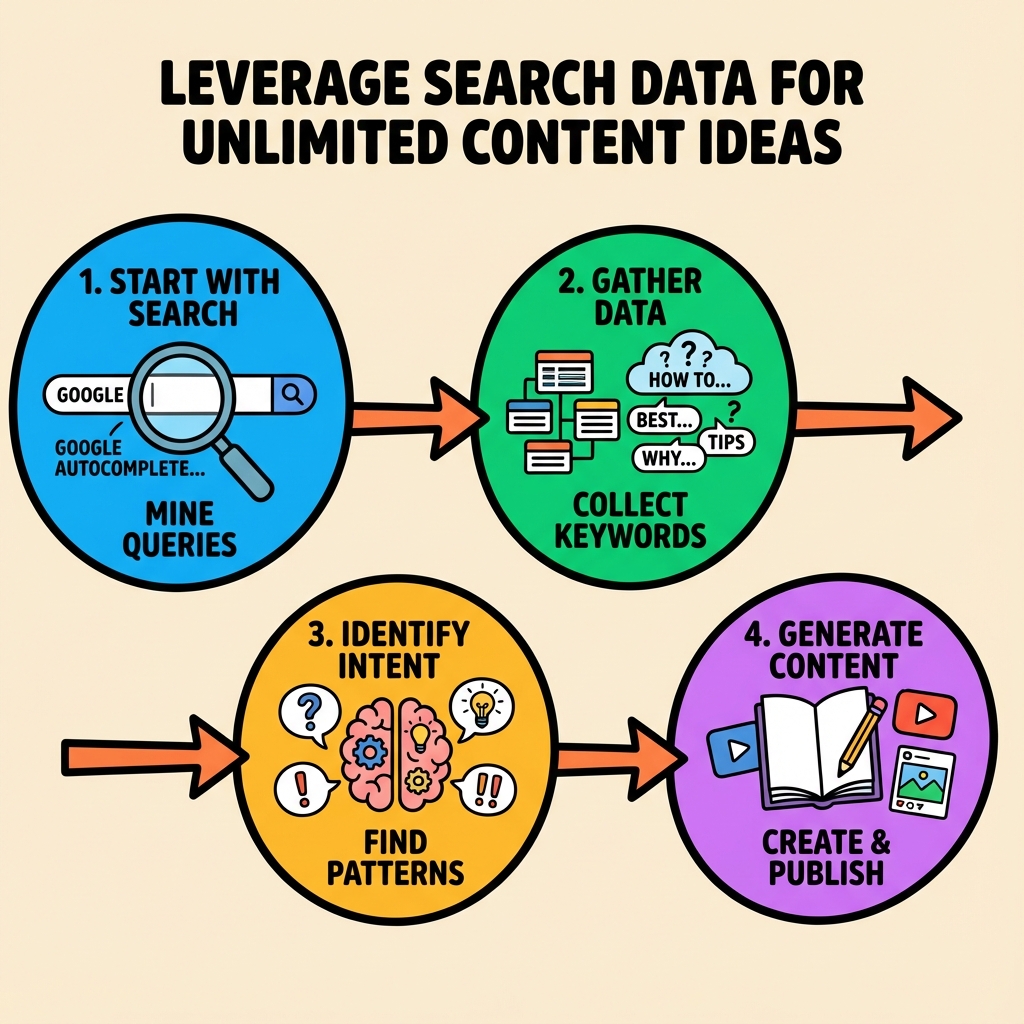
Search engines provide direct insight into what your audience wants to know, making search data one of the most reliable sources for content ideation. By systematically mining search data, you can discover hundreds of content opportunities that align with actual user intent.
Google's autocomplete feature offers immediate insight into popular search queries related to your topics. Simply start typing your main keyword and note the suggested completions. These suggestions represent real searches people are performing, making them excellent starting points for content development.
Google's "People Also Ask" boxes provide another valuable source of content ideas. These questions reveal the information gaps users experience when researching specific topics. Each question can become a dedicated piece of content or a section within a comprehensive guide. When you create content that directly answers these questions, you increase your chances of earning featured snippets and improving your search visibility.
The key to successful search-based content ideation is thinking beyond individual keywords. Consider the entire customer journey and the different types of information people need at each stage. Someone just discovering a problem needs educational content, while someone ready to make a purchase needs comparison guides and product information.
How to Turn Trending Topics Into Evergreen Content?
While trending topics can drive immediate traffic, the real value lies in identifying the evergreen principles within temporary trends. This approach allows you to capitalize on current interest while creating content that remains valuable long-term.
Monitor industry news, social media trends, and seasonal patterns to identify recurring themes that affect your audience. Instead of creating content about the specific trend, focus on the underlying concepts or strategies that remain relevant regardless of current events. For example, rather than writing about a specific social media algorithm change, create content about adapting to algorithm updates in general.
What Role Does Audience Research Play in Content Ideation?
Understanding your audience at a granular level transforms content ideation from guesswork into strategic planning. Effective audience research reveals not just what topics interest your audience, but how they think about problems, what language they use, and what format preferences they have.
Conduct surveys and interviews with your existing customers to uncover their biggest challenges, goals, and information preferences. Ask specific questions about their content consumption habits, preferred formats, and the types of information that influence their decision-making process. This direct feedback provides content ideas that are virtually guaranteed to resonate with your target audience.
Social media listening tools can help you monitor conversations about your industry, competitors, and related topics. Pay attention to the questions people ask, the complaints they voice, and the excitement they express about new developments. These organic conversations often reveal content opportunities that surveys might miss.
Online communities and forums specific to your industry offer another rich source of content ideas. Platforms like Reddit, Quora, and industry-specific forums host ongoing discussions about topics relevant to your audience. Look for recurring questions, heated debates, and requests for recommendations. These discussions indicate strong interest in specific topics and provide insight into how your audience naturally talks about these subjects.
How to Create Content Ideas That Support Different Funnel Stages?
Strategic content ideation considers where each piece of content fits within your marketing funnel. Different audience segments need different types of information, and your content ideas should reflect this diversity.
Top-of-funnel content ideas should focus on education and awareness. These topics address broad industry challenges, provide introductory information, and help people understand problems they might not have fully recognized. Creating high-converting blog posts at this stage requires balancing educational value with subtle brand positioning.
Middle-of-funnel content ideas dive deeper into specific solutions and methodologies. These topics help people evaluate different approaches and understand the implications of various choices. Case studies, comparison guides, and detailed how-to articles work well for this audience segment.
Bottom-of-funnel content ideas focus on implementation and decision-making support. These topics address specific use cases, provide detailed product information, and help people overcome final purchase objections.
How to Systematize Your Content Ideation Process?
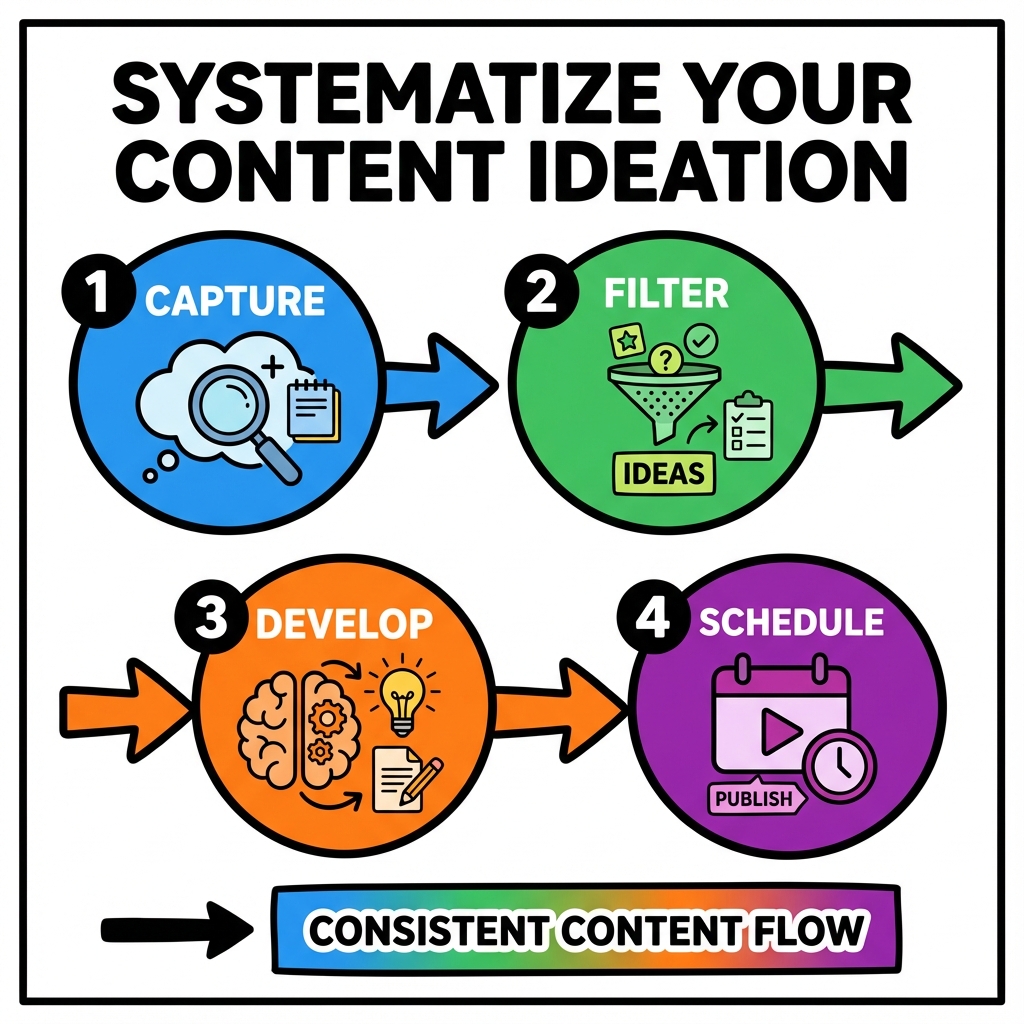
Sustainable content creation requires systematic approaches that generate ideas consistently rather than relying on sporadic inspiration. Building repeatable processes ensures you always have fresh content ideas ready for development.
Create a content idea collection system that captures inspiration from multiple sources. Whether you use a simple spreadsheet, a dedicated tool like Notion, or a content management platform, having a centralized location for ideas prevents valuable concepts from being forgotten. Include columns for the idea source, target keywords, audience stage, and priority level.
Establish regular idea generation sessions with your team. Schedule monthly brainstorming meetings that bring together perspectives from different departments. Sales, customer service, product development, and marketing teams all interact with customers in different ways and can contribute unique insights to your content ideation process.
Set up automated systems to continuously feed your idea pipeline. Google Alerts can notify you about industry developments, competitor content, and trending topics. Social media monitoring tools can track relevant conversations and emerging themes. These automated systems ensure you're always aware of new content opportunities without constant manual monitoring.
What Tools Can Accelerate Your Content Ideation?
While creativity and strategic thinking remain essential for content ideation, various tools can significantly accelerate the process and help you discover opportunities you might otherwise miss.
Answer The Public visualizes the questions people ask about specific topics, providing hundreds of content ideas based on real search queries. The tool organizes suggestions by question type, making it easy to identify different angles for covering the same topic. BuzzSumo shows the most shared content about specific topics, helping you understand what resonates with audiences and identify content gaps. The platform's question analyzer feature specifically highlights questions people ask on forums and social media.For businesses focused on growing organic traffic, keyword research tools like Ubersuggest and KWFinder can reveal long-tail keyword opportunities that represent specific content ideas. These tools often suggest related keywords and questions that can become individual pieces of content.
How to Validate Content Ideas Before Investing Time?
Not every content idea deserves full development. Smart content creators validate ideas before investing significant time and resources in creation. This validation process helps prioritize the most promising concepts and avoid content that won't deliver results.
Search volume data provides one validation metric, but it shouldn't be the only consideration. Some topics with lower search volume might have higher conversion potential or better alignment with your business goals. Use keyword research tools to understand search demand, but also consider factors like competition level and commercial intent.
Social media engagement can validate content ideas quickly and inexpensively. Share potential topics as social media posts or polls to gauge audience interest. High engagement rates often indicate topics worth developing into full content pieces.
Analyze your existing content performance to identify patterns in what resonates with your audience. Look at metrics like time on page, social shares, and conversion rates to understand which topics and formats perform best. Use these insights to evaluate new content ideas against proven success patterns.
Conclusion
Generating compelling content ideas doesn't have to be a constant struggle. By systematically mining existing resources, leveraging search data, conducting thorough audience research, and implementing repeatable processes, you can build a sustainable pipeline of content opportunities that drive real business results. Remember that the best content ideas solve genuine problems while supporting your strategic objectives. Start implementing these strategies today, and you'll never run out of valuable content to create. For businesses looking to automate their SEO efforts, consistent content creation based on solid ideation processes forms the foundation of long-term organic growth success.

Stefan Winter
Founder & SEO Expert
Founder of Fast SEO Fix and SEO automation expert. Stefan built Fast SEO Fix to solve the tedious problem of manual SEO work. He specializes in SEO optimized content generation, keyword research, and automated SEO strategies.
