What Makes Blog Examples High-Converting vs Generic?
Posted by
 Stefan Winter
High-Converting Blog Examples vs Generic Content: Which Drives Better Results?

When it comes to creating content that actually moves the needle for your business, the difference between high-converting blog examples and generic content can make or break your SEO strategy. Many website owners struggle to understand why some blog posts generate massive organic traffic and leads while others barely register a single click. The answer lies in understanding what separates truly effective blog examples from the sea of mediocre content flooding the internet.
In this comprehensive comparison, we'll examine the key differences between high-converting blog examples and generic content, analyze what makes certain approaches more successful, and provide you with actionable insights to transform your content strategy. Whether you're looking to boost organic traffic or improve engagement rates, understanding these distinctions will help you create content that delivers measurable results.
What Makes Blog Examples High-Converting vs Generic?

High-converting blog examples share several distinct characteristics that set them apart from generic content. The most significant difference lies in their strategic approach to addressing specific user intent rather than simply targeting keywords.
High-converting blog examples typically focus on solving real problems for their target audience. They provide actionable solutions, include data-driven insights, and often feature case studies or real-world applications. These posts are meticulously crafted to guide readers through a logical journey that culminates in a specific action, whether that's subscribing to a newsletter, downloading a resource, or making a purchase.
Generic content, on the other hand, often lacks this strategic focus. It tends to be surface-level, providing general information without diving deep into specific solutions or outcomes. Generic blog posts frequently rehash commonly available information without adding unique value or perspective, resulting in content that fails to engage readers or search engines effectively.
How Do Successful Blog Examples Structure Their Content?
The structural differences between high-converting and generic blog examples are immediately apparent to both readers and search algorithms. Successful blog examples employ a clear hierarchy that guides readers through complex information systematically.
Effective blog examples use compelling headlines that promise specific benefits, followed by introductions that immediately establish relevance and value. They incorporate subheadings that break down complex topics into digestible sections, making the content scannable and accessible. Understanding what makes a blog truly successful requires recognizing these structural elements that keep readers engaged throughout the entire piece.
| Content Element | High-Converting Examples | Generic Content |
|---|---|---|
| Headlines | Specific, benefit-driven | Vague, keyword-stuffed |
| Introduction | Problem-focused, engaging | Generic, broad statements |
| Structure | Logical flow, clear sections | Random organization |
| Call-to-Action | Strategic, relevant | Weak or missing |
| Value Proposition | Unique insights, actionable | Common knowledge |
Which Blog Examples Generate More Organic Traffic?
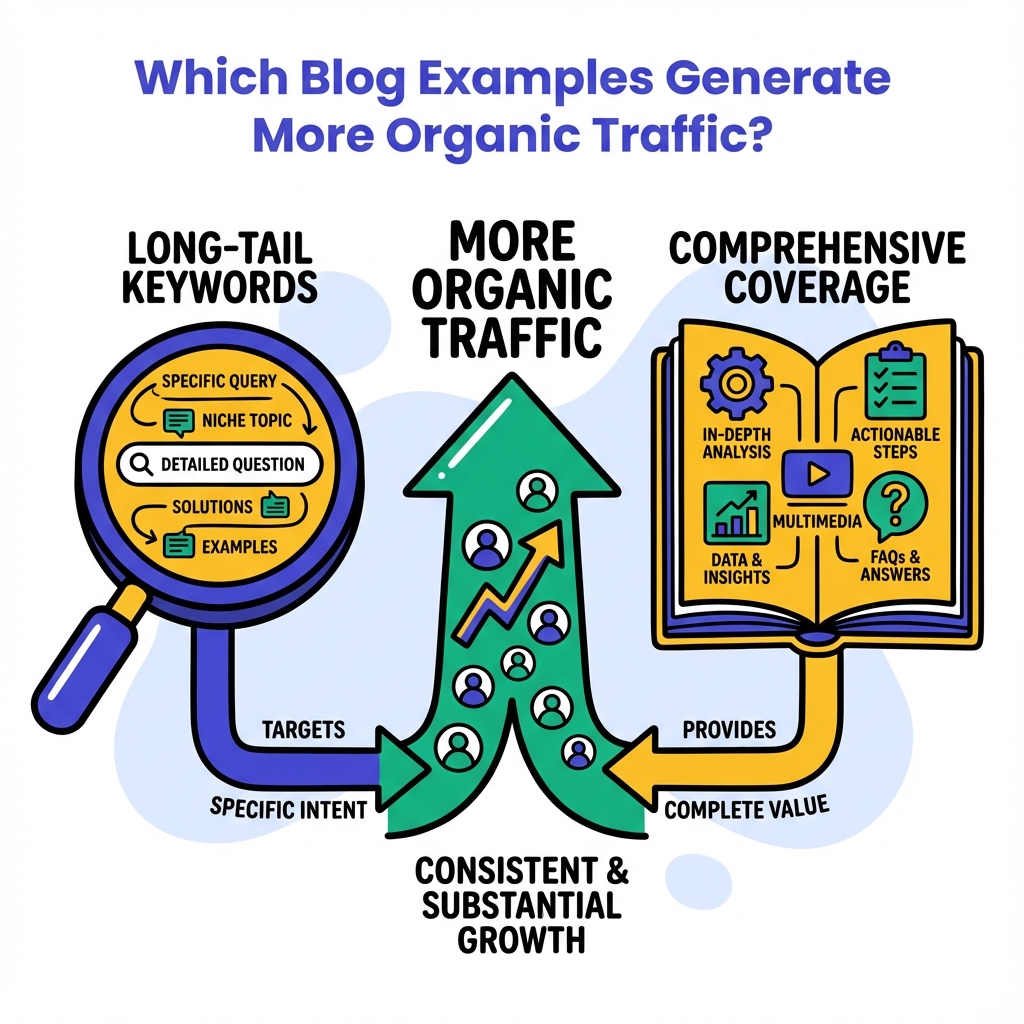
When analyzing blog examples that consistently generate substantial organic traffic, several patterns emerge that distinguish them from their generic counterparts. High-performing blog examples typically target long-tail keywords while providing comprehensive coverage of their chosen topics.
The most successful blog examples often take a pillar content approach, covering topics extensively while maintaining focus on user intent. These posts frequently exceed 1,500 words but justify their length with valuable, actionable information rather than filler content. According to HubSpot's research on content length and performance, longer-form content tends to generate more backlinks and social shares when it provides genuine value.
Traffic-generating blog examples also excel at incorporating relevant keywords naturally throughout the content without sacrificing readability. They understand that modern SEO requires balancing keyword optimization with user experience, creating content that satisfies both search algorithms and human readers.
Why Do Some Blog Examples Outperform Others in Search Results?
The performance gap between different blog examples often comes down to their approach to search engine optimization and user engagement. High-performing examples understand that SEO success requires more than keyword placement; it demands comprehensive topic coverage and exceptional user experience.
Superior blog examples typically feature extensive research, original insights, and multiple content formats within a single post. They might include infographics, videos, downloadable resources, or interactive elements that increase engagement and time on page. These elements signal to search engines that the content provides exceptional value to users.
Additionally, top-performing blog examples often incorporate semantic keywords and related terms naturally throughout the content. This approach helps search engines understand the content's context and relevance, improving rankings for multiple related queries rather than just the primary target keyword.
How Do Blog Examples Drive Conversions Compared to Generic Posts?
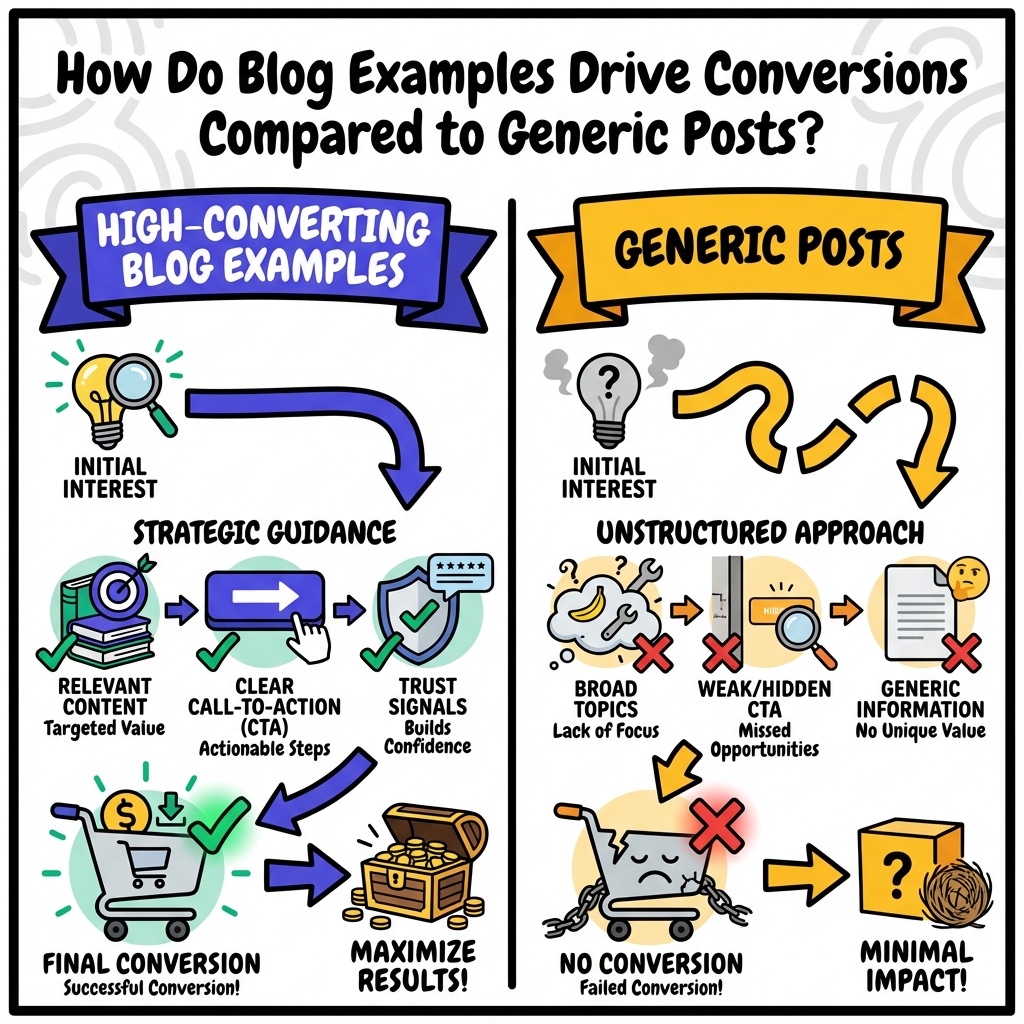
The conversion potential of different blog examples varies dramatically based on their strategic approach to guiding readers toward desired actions. High-converting blog examples create a logical pathway from initial interest to final conversion, while generic posts often fail to capitalize on reader engagement.
Effective blog examples incorporate multiple conversion opportunities throughout the content without being overly promotional. They might include newsletter signups, resource downloads, or product demonstrations that provide additional value while capturing leads. These conversion elements feel natural and relevant to the content rather than forced or intrusive.
The most successful blog examples also understand the importance of building trust and authority before asking for conversions. They establish credibility through data, case studies, and expert insights, making readers more likely to engage with conversion opportunities when they appear.
What Role Does Content Quality Play in Blog Example Performance?
Content quality serves as the fundamental differentiator between high-performing blog examples and generic alternatives. Quality encompasses multiple factors including accuracy, depth, originality, and practical value for readers.
High-quality blog examples typically feature original research, unique perspectives, or exclusive insights that readers cannot find elsewhere. They cite authoritative sources, include relevant statistics, and often feature expert quotes or interviews that add credibility and depth to the content.
Generic blog examples, conversely, often rely on recycled information and surface-level analysis. They may technically cover the topic but fail to provide the depth or unique value that distinguishes exceptional content from the competition.
Which Approach Better Supports Long-Term SEO Goals?
When evaluating blog examples for their long-term SEO impact, the strategic approach to content creation becomes crucial. High-quality, comprehensive blog examples tend to maintain and improve their search rankings over time, while generic content often experiences declining performance as competition increases.
Evergreen blog examples that provide timeless value consistently outperform trend-based generic content in long-term SEO performance. These posts continue generating organic traffic months or years after publication, providing sustained value for the investment in content creation.
The most effective blog examples also support broader SEO strategies by creating topic clusters and internal linking opportunities. Optimizing your overall SEO approach requires understanding how individual blog posts contribute to your site's overall authority and topical relevance.
How Do Blog Examples Impact Overall Website Authority?
The cumulative effect of consistently publishing high-quality blog examples versus generic content significantly impacts overall website authority and search performance. Websites that consistently produce exceptional blog examples tend to build stronger domain authority and attract more high-quality backlinks.
Superior blog examples often get referenced and linked to by other websites, contributing to the site's overall link profile and authority. This organic link building is far more valuable than the minimal linking that generic content typically attracts.
Conclusion
The choice between creating high-converting blog examples and settling for generic content ultimately determines your content marketing success. High-converting blog examples require more strategic planning and investment but deliver significantly better results in terms of organic traffic, user engagement, and conversion rates.
The evidence clearly shows that websites investing in comprehensive, valuable blog examples outperform those relying on generic content across all key metrics. From search rankings to conversion rates, the strategic approach to content creation pays dividends that justify the additional effort required.
Ready to transform your content strategy with high-converting blog examples? Start by auditing your existing content to identify opportunities for improvement, then focus on creating comprehensive, valuable posts that address specific user needs rather than just targeting keywords.

Stefan Winter
Founder & SEO Expert
Founder of Fast SEO Fix and SEO automation expert. Stefan built Fast SEO Fix to solve the tedious problem of manual SEO work. He specializes in SEO optimized content generation, keyword research, and automated SEO strategies.
