What Makes Content Writing Different from Regular Writing?
Posted by
 Stefan Winter
How to Master Content Writing That Actually Converts in 2026
Content writing has evolved far beyond simply putting words on a page. In 2026, successful content writing requires a strategic blend of audience psychology, SEO optimization, and conversion-focused techniques that drive real business results. Whether you're crafting blog posts, landing pages, or email campaigns, mastering the fundamentals of effective content writing can transform your digital marketing efforts and significantly boost your website's performance.
What Makes Content Writing Different from Regular Writing?
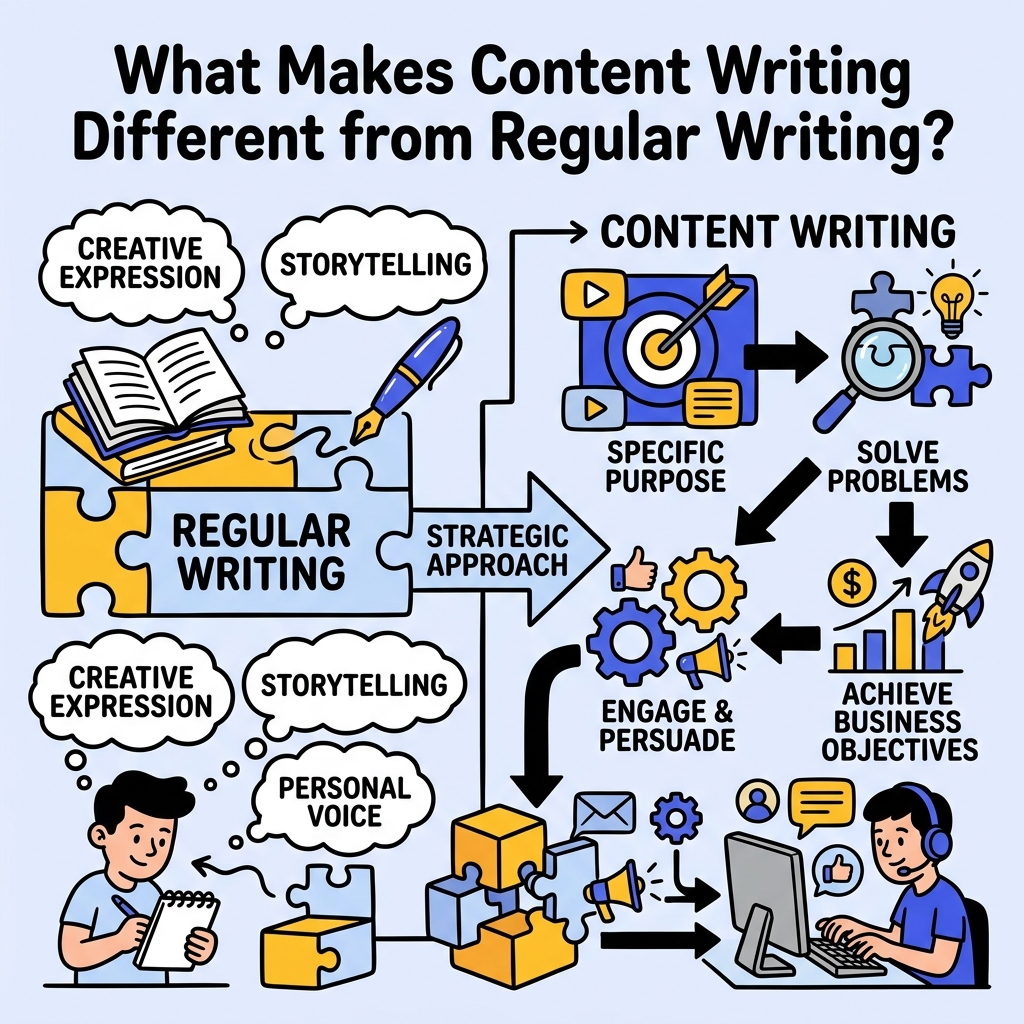
Content writing serves a specific purpose: to engage, inform, and ultimately persuade readers to take action. Unlike creative writing or journalism, content writing focuses on solving problems for your target audience while achieving business objectives. It combines storytelling with strategic marketing principles to create pieces that rank well in search engines and convert visitors into customers.
The most successful content writers understand that every piece of content must serve dual masters. First, it must provide genuine value to readers by answering their questions or solving their problems. Second, it must align with business goals, whether that's generating leads, building brand awareness, or driving sales.
Modern content writing also requires technical knowledge about search engine optimization, user experience principles, and digital marketing metrics. Writers must consider how their content will perform across different devices, how it will be discovered through search engines, and how it fits into the broader customer journey.
How Do You Research Your Audience for Better Content Writing?
Understanding your audience forms the foundation of all effective content writing. Start by creating detailed buyer personas that go beyond basic demographics to include pain points, goals, preferred communication styles, and content consumption habits. This research directly influences your writing tone, topic selection, and call-to-action placement.
Use analytics tools to examine your existing content performance and identify patterns in what resonates with your audience. Look at metrics like time on page, bounce rate, and conversion rates to understand which topics and writing styles generate the best engagement. Social media listening tools can also reveal the language your audience uses when discussing problems your content could address.
Survey your existing customers or website visitors to gather direct feedback about their content preferences. Ask specific questions about the types of information they find most valuable, their preferred content formats, and the challenges they face that your content could help solve. This primary research often reveals insights that analytics alone cannot provide.
What Questions Should Guide Your Content Strategy?
Before writing any piece of content, ask yourself these essential questions: What specific problem does this content solve for my reader? What action do I want them to take after reading? How does this content fit into their customer journey? What unique perspective or information can I provide that competitors haven't covered?
Consider the search intent behind your target keywords. Are readers looking for information, trying to make a purchase decision, or seeking to solve a specific problem? Your content structure and approach should align with this intent to maximize both search engine visibility and user satisfaction.
How to Structure Content Writing for Maximum Impact
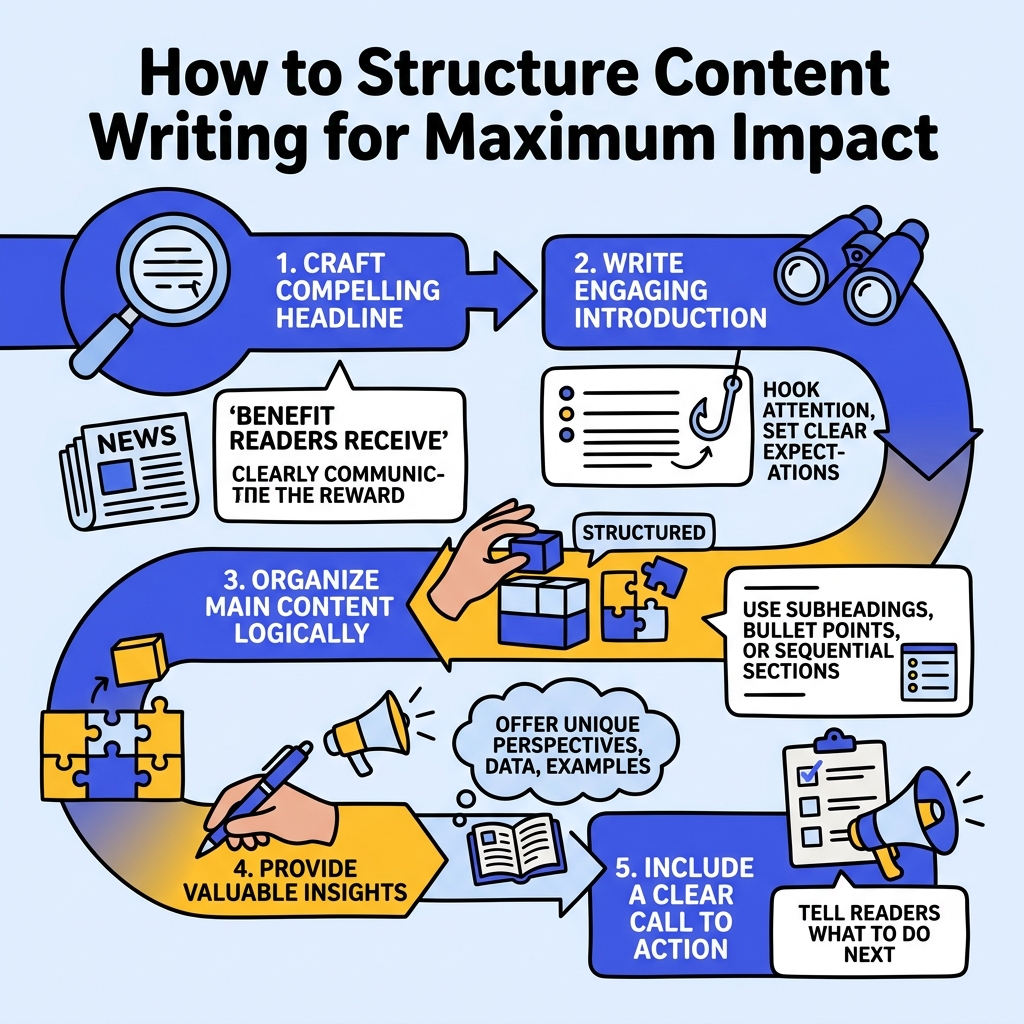
Effective content writing follows proven structural principles that guide readers through your message logically and persuasively. Start with a compelling headline that clearly communicates the benefit readers will receive. Your introduction should hook attention while setting clear expectations for what the content will deliver.
Use the inverted pyramid structure, placing the most important information early in your content. This approach respects readers' time while ensuring key messages are communicated even if they don't read the entire piece. Break up long paragraphs with subheadings, bullet points, and white space to improve readability across all devices.
Create a logical flow between sections using transitional phrases and connecting ideas. Each paragraph should build upon the previous one, leading readers naturally toward your desired action. End with a strong conclusion that reinforces key points and includes a clear, compelling call-to-action.
How Do You Write Headlines That Drive Clicks?
Headlines determine whether your content gets read at all. Effective headlines combine curiosity with clear value propositions. Use numbers, questions, or power words to create urgency and interest. Test different headline approaches to see what resonates best with your specific audience.
Consider the emotional impact of your headlines. Words that evoke curiosity, urgency, or benefit tend to perform better than generic descriptive phrases. However, ensure your headlines accurately represent your content to maintain trust and reduce bounce rates.
What Role Does SEO Play in Modern Content Writing?
Search engine optimization and content writing have become inseparable disciplines. Effective content writers understand how to naturally incorporate target keywords while maintaining readability and user value. This balance requires strategic keyword research and an understanding of search intent behind different query types.
Focus on creating content that thoroughly covers topics rather than simply targeting individual keywords. Search engines increasingly reward comprehensive, authoritative content that addresses user needs completely. This approach, known as topic clustering, helps establish your content as an authority source in your field.
Technical SEO elements like meta descriptions, header tags, and internal linking also play crucial roles in content performance. Understanding SEO automation tools can help streamline these technical aspects, allowing you to focus more energy on creating valuable content that serves your audience.
| Content Writing Element | SEO Impact | User Experience Impact |
|---|---|---|
| Compelling Headlines | High click-through rates | Clear expectations |
| Keyword Integration | Better search rankings | Natural, readable flow |
| Internal Linking | Improved site authority | Enhanced navigation |
| Meta Descriptions | Higher search visibility | Accurate content preview |
| Structured Content | Featured snippet opportunities | Easier content consumption |
How to Optimize Content Writing for Conversions
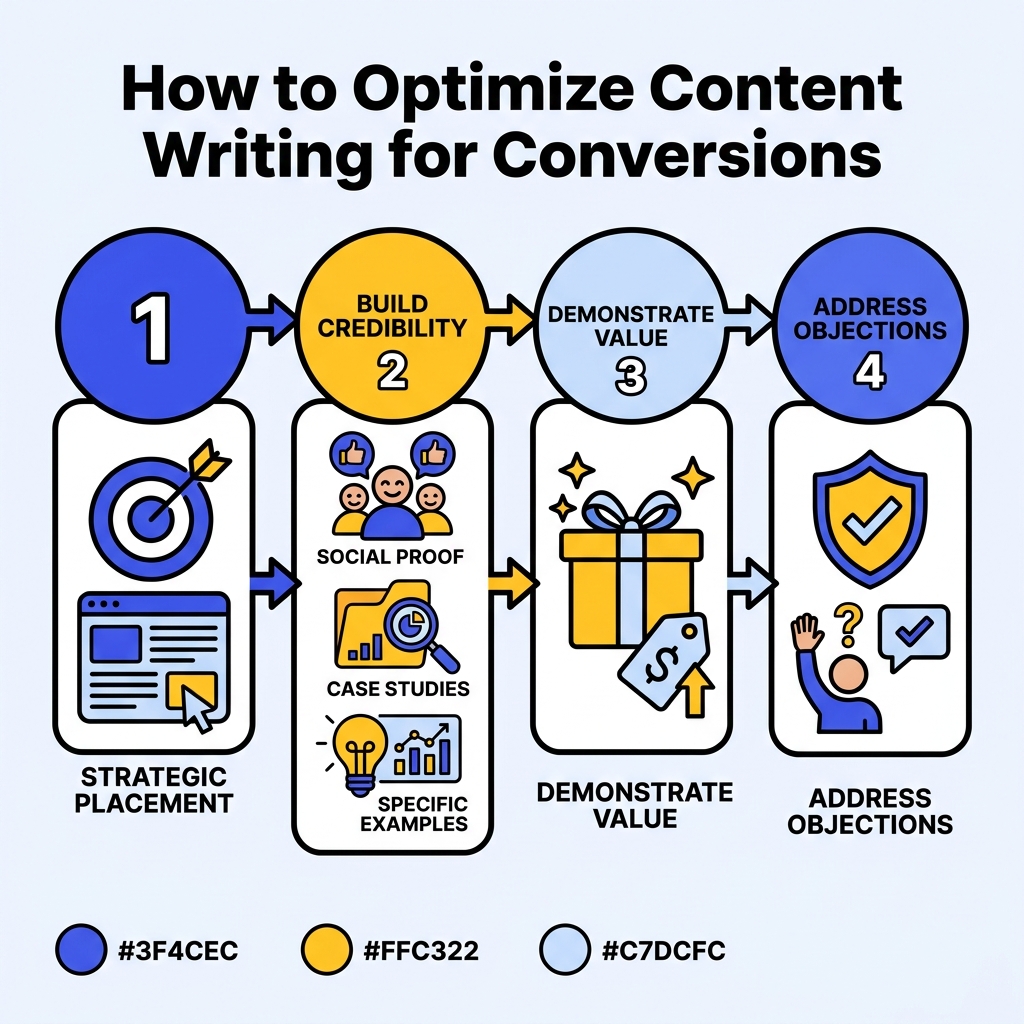
Converting readers into customers requires strategic placement of persuasive elements throughout your content. Use social proof, case studies, and specific examples to build credibility and demonstrate the value of your offerings. Address common objections or concerns your audience might have about taking action.
Create multiple conversion opportunities within longer content pieces. Not every reader will be ready to convert after reading your introduction, so include relevant calls-to-action at natural transition points throughout your content. Make these CTAs specific and action-oriented rather than generic phrases like "learn more."
Test different approaches to conversion optimization, including CTA placement, wording, and design. A systematic approach to testing and optimization can significantly improve your content's ability to generate leads and sales over time.
What Makes a Call-to-Action Effective?
Strong calls-to-action use action verbs and create urgency without being pushy. They clearly communicate what happens when readers click and what benefit they'll receive. Consider using first-person language ("Get my free guide") rather than second-person ("Get your free guide") to increase psychological ownership.
Position your most important CTAs above the fold and at the end of your content, but also include relevant offers throughout longer pieces. Match your CTA to the content's purpose and the reader's likely mindset when they reach that point in your article.
How Do You Measure Content Writing Success?
Successful content writing requires ongoing measurement and optimization based on performance data. Track metrics that align with your content goals, whether that's organic traffic growth, lead generation, or customer acquisition. Use tools like Google Analytics to monitor user behavior and identify opportunities for improvement.
Beyond basic traffic metrics, pay attention to engagement indicators like time on page, scroll depth, and social shares. These metrics provide insights into how well your content resonates with readers and holds their attention. Organic traffic growth strategies can help you understand how content writing contributes to long-term business success.
Set up conversion tracking to measure how effectively your content drives desired actions. This data helps you identify which topics, formats, and approaches generate the best results, allowing you to refine your content strategy over time.
What Tools Can Enhance Your Content Writing Process?
Modern content writers leverage various tools to improve efficiency and effectiveness. Grammar and style checkers help ensure professional quality, while SEO tools provide insights into keyword opportunities and competitive analysis. AI SEO tools can streamline research and optimization tasks, freeing up more time for creative and strategic work.
Content planning tools help organize editorial calendars and ensure consistent publishing schedules. Analytics platforms provide the data needed to measure success and identify improvement opportunities. However, remember that tools should enhance your writing process, not replace the strategic thinking and creativity that makes content truly effective.
Project management tools can help coordinate content creation workflows, especially when working with teams or managing multiple content projects simultaneously. The key is finding the right combination of tools that support your specific workflow without creating unnecessary complexity.
Conclusion
Mastering content writing in 2026 requires balancing multiple skills: understanding your audience, creating valuable and engaging content, optimizing for search engines, and driving conversions. Success comes from consistent practice, ongoing measurement, and willingness to adapt your approach based on performance data and changing audience needs.
The most effective content writers view themselves as problem-solvers first and writers second. They focus on creating content that genuinely helps their audience while achieving business objectives. By following the strategies outlined in this guide and continuously refining your approach, you can develop content writing skills that drive meaningful results for your business.
Ready to improve your content writing results? Start by implementing one or two of these strategies in your next piece of content, then gradually incorporate additional techniques as they become natural parts of your writing process.

Stefan Winter
Founder & SEO Expert
Founder of Fast SEO Fix and SEO automation expert. Stefan built Fast SEO Fix to solve the tedious problem of manual SEO work. He specializes in SEO optimized content generation, keyword research, and automated SEO strategies.
