What Makes an AI SEO Tool Worth Your Investment?
Posted by
 Stefan Winter
How to Choose the Best AI Tools for SEO in 2026: A Complete Selection Guide

Artificial intelligence has revolutionized search engine optimization, transforming how marketers approach keyword research, content creation, and technical optimization. With hundreds of AI-powered SEO tools flooding the market, choosing the right ones for your specific needs can feel overwhelming. This comprehensive guide will walk you through the essential steps to identify, evaluate, and select the best AI tools for SEO that will maximize your organic traffic growth and streamline your optimization workflow.
What Makes an AI SEO Tool Worth Your Investment?

Before diving into specific tools, you need to understand what separates exceptional AI SEO solutions from basic automation software. The best AI tools for SEO combine machine learning algorithms with real-time search data to provide actionable insights that traditional tools simply cannot match.
Look for tools that offer predictive analytics rather than just historical data reporting. These advanced platforms analyze search patterns, competitor movements, and algorithm updates to forecast ranking opportunities before your competitors discover them. Additionally, the most valuable AI SEO tools integrate seamlessly with your existing SEO workflow, eliminating the need to switch between multiple platforms throughout your optimization process.
The key differentiator lies in how these tools process natural language and understand search intent. Modern AI SEO platforms can analyze semantic relationships between keywords, identify content gaps in your niche, and suggest optimization strategies that align with how search engines actually interpret user queries in 2026.
How to Assess Your Current SEO Needs and Goals?
Successful tool selection starts with a thorough audit of your current SEO challenges and objectives. Begin by identifying the specific areas where manual processes are consuming too much time or where you lack sufficient data to make informed decisions.
Create a detailed inventory of your current SEO tasks, including keyword research frequency, content creation volume, technical audit requirements, and competitor monitoring needs. This assessment will reveal whether you need comprehensive SEO automation software or specialized tools for specific functions.
Consider your team's technical expertise level and available budget for new tools. Some AI SEO platforms require extensive setup and training, while others offer plug-and-play solutions that deliver immediate value. According to Search Engine Land's 2026 SEO Tools Survey, businesses that align tool complexity with team capabilities see 40% faster implementation and better long-term adoption rates.
Defining Your SEO Automation Priorities
Rank your SEO activities by impact and time investment to determine where AI tools can provide the greatest return on investment. High-impact, time-intensive tasks like comprehensive keyword research and competitor content analysis should be your primary automation targets.
Document your current performance metrics and establish clear benchmarks for improvement. The best AI tools for SEO should demonstrably enhance these key performance indicators within 90 days of implementation.
Which AI SEO Tool Categories Should You Prioritize?
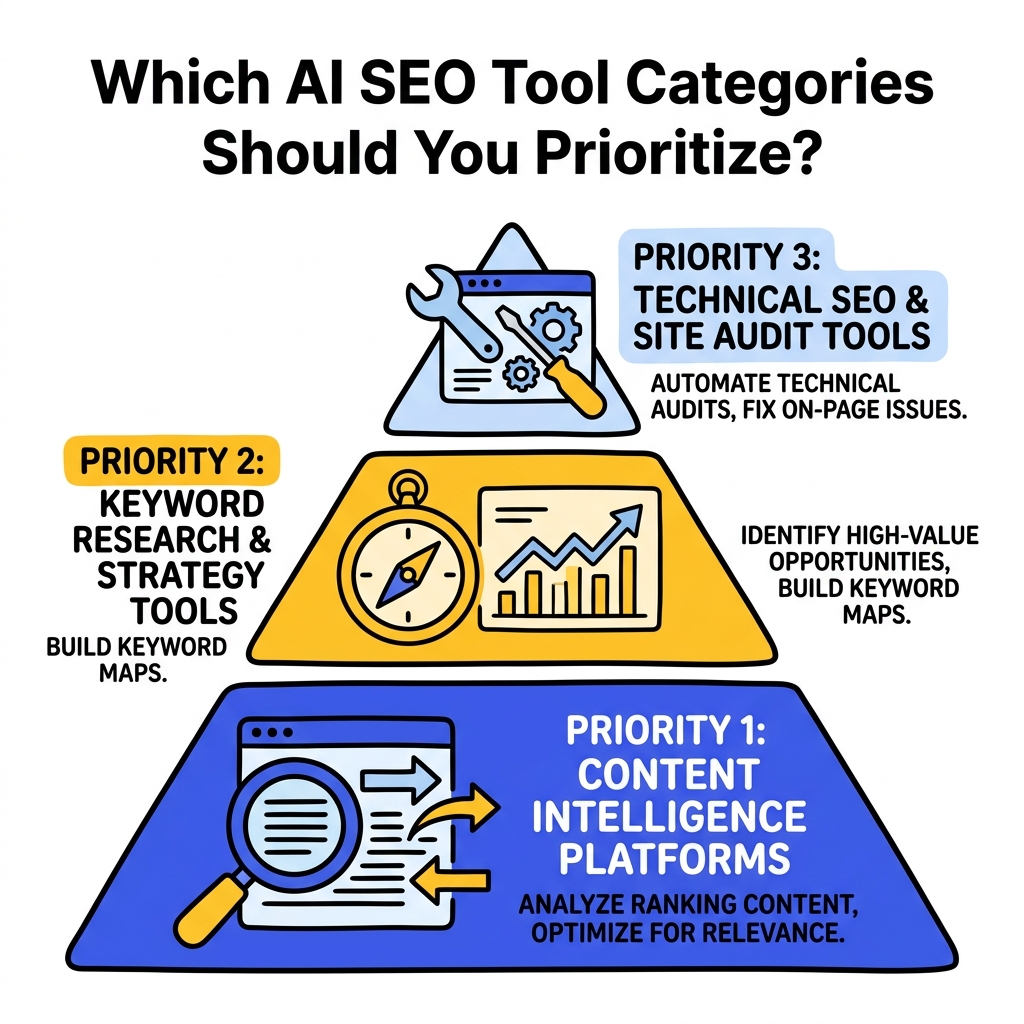
Understanding the different categories of AI SEO tools helps you build a comprehensive optimization stack without redundant functionality. Each category serves distinct purposes in your overall SEO strategy.
Content intelligence platforms use natural language processing to analyze top-ranking content and identify optimization opportunities. These tools excel at content optimization strategy development, suggesting semantic keywords, content structure improvements, and readability enhancements that align with current search algorithm preferences.
Technical SEO AI tools focus on site performance, crawlability, and indexation issues. They continuously monitor your website for technical problems and provide automated solutions or detailed remediation guidance. The most advanced platforms can predict technical issues before they impact your rankings.
| Tool Category | Primary Function | Best For | Average Cost Range |
|---|---|---|---|
| Content Intelligence | Content optimization and strategy | Content marketers, bloggers | $99-$500/month |
| Technical SEO AI | Site audits and monitoring | Technical teams, agencies | $149-$800/month |
| Keyword Research AI | Intent analysis and discovery | SEO specialists, researchers | $79-$300/month |
| Rank Tracking AI | Position monitoring and forecasting | All SEO professionals | $49-$400/month |
How to Evaluate AI Tool Accuracy and Reliability?
The effectiveness of AI SEO tools depends heavily on the quality and freshness of their underlying data sources. Before committing to any platform, investigate how frequently they update their search data and whether they pull information directly from search engines or rely on third-party aggregators.
Test potential tools using keywords and websites you already monitor with other platforms. Compare the accuracy of search volume estimates, keyword difficulty scores, and ranking data across multiple tools. The best AI tools for SEO should provide consistent results that align with your actual website performance and Google Search Console data.
Request access to case studies or performance reports from existing users in your industry. Reputable AI SEO tool providers should be able to demonstrate measurable improvements in organic traffic, ranking positions, and content performance for businesses similar to yours.
Understanding AI Model Limitations
Even the most sophisticated AI SEO tools have limitations that you need to understand before making selection decisions. Machine learning models are only as good as their training data, and search engine algorithms evolve faster than most AI systems can adapt.
Look for tools that clearly communicate their confidence levels in predictions and recommendations. The most trustworthy platforms will indicate when their suggestions are based on limited data or when manual verification is recommended.
What Integration Capabilities Should You Require?
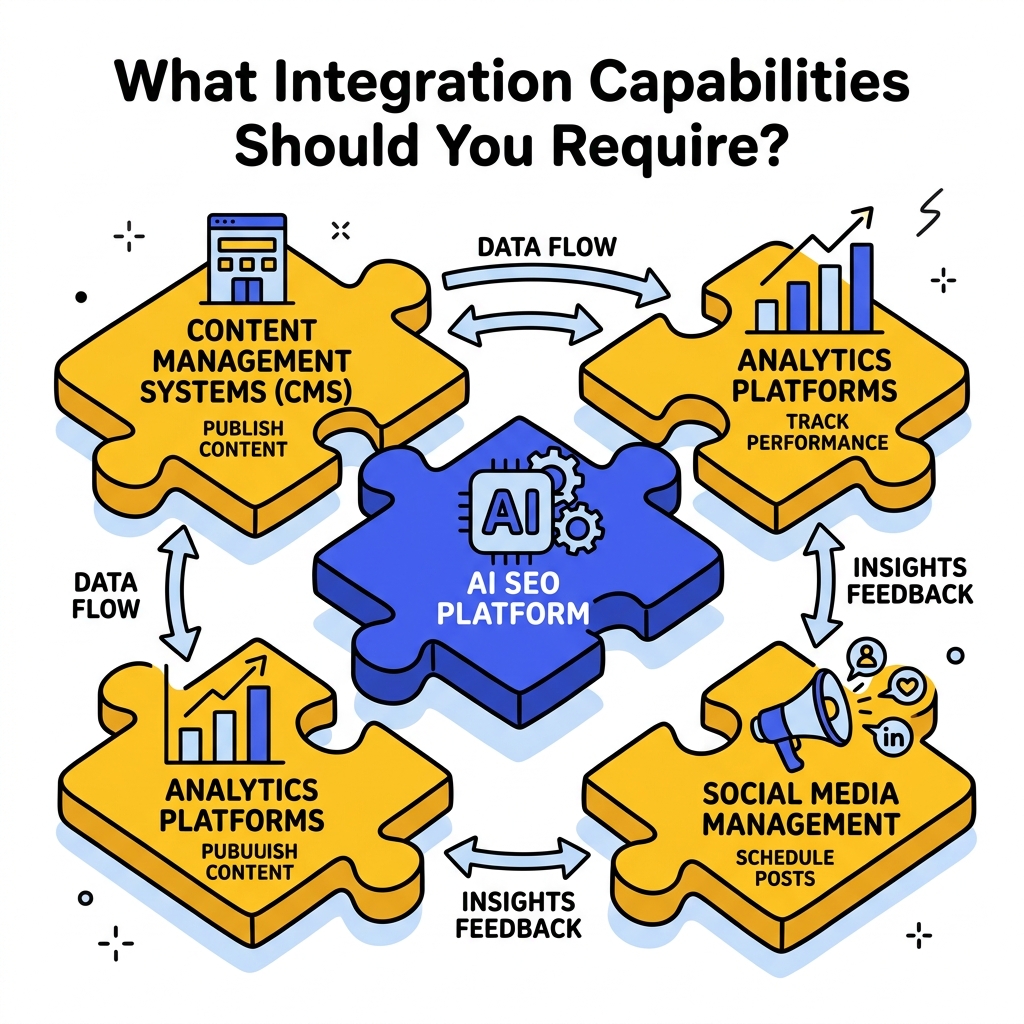
Seamless integration with your existing marketing technology stack is crucial for maximizing the value of AI SEO tools. The best platforms offer robust APIs and pre-built integrations with popular content management systems, analytics platforms, and social media management tools.
Evaluate how each tool handles data export and reporting. You should be able to easily share insights with stakeholders and incorporate SEO data into broader marketing performance dashboards. Tools that offer white-label reporting capabilities are particularly valuable for agencies and consultants.
Consider the learning curve associated with each platform's integration requirements. Some AI SEO tools require extensive technical setup, while others offer simple WordPress plugins or browser extensions that provide immediate functionality. According to Moz's Integration Study, businesses that prioritize easy integration see 60% higher tool adoption rates across their teams.
How to Test AI SEO Tools Before Making Long-term Commitments?
Most reputable AI SEO tool providers offer free trials or freemium versions that allow you to evaluate core functionality before purchasing. Take advantage of these opportunities to test tools with your actual website data and SEO challenges.
Create a standardized testing protocol that evaluates each tool's performance across your most important use cases. This might include running keyword research for a specific campaign, analyzing competitor content strategies, or conducting technical audits of key website sections.
During your trial period, pay attention to the tool's user interface, customer support responsiveness, and documentation quality. The best AI tools for SEO should feel intuitive to use and provide comprehensive resources for maximizing their capabilities. Track how much time you save on routine tasks and whether the tool's insights lead to actionable optimization strategies.
Building Your AI SEO Tool Testing Framework
Develop specific criteria for evaluating each tool category, including accuracy metrics, ease of use scores, and integration compatibility ratings. This systematic approach ensures you make objective decisions based on performance rather than marketing promises.
Document your testing results and share them with team members who will be using the tools regularly. Their feedback during the trial period is invaluable for predicting long-term adoption success and identifying potential workflow challenges.
Conclusion
Selecting the best AI tools for SEO requires a strategic approach that balances your specific needs, budget constraints, and technical capabilities. By following this systematic evaluation process, you can build an AI-powered SEO toolkit that delivers measurable improvements in organic traffic and search rankings while streamlining your optimization workflow.
Remember that the most expensive or feature-rich tools are not always the best choice for your situation. Focus on platforms that solve your most pressing SEO challenges and integrate seamlessly with your existing processes. Start with one or two core tools, master their capabilities, and gradually expand your AI SEO arsenal as your needs evolve.
Ready to transform your SEO strategy with artificial intelligence? Begin by conducting a thorough audit of your current SEO processes and identifying the specific areas where AI tools can provide the greatest impact. The investment in the right AI SEO tools today will compound into significant competitive advantages throughout 2026 and beyond.

Stefan Winter
Founder & SEO Expert
Founder of Fast SEO Fix and SEO automation expert. Stefan built Fast SEO Fix to solve the tedious problem of manual SEO work. He specializes in SEO optimized content generation, keyword research, and automated SEO strategies.
