What Makes an SEO Content Strategy Different from Regular Content Planning?
Posted by
 Stefan Winter
How to Build an SEO Content Strategy That Actually Drives Results in 2026
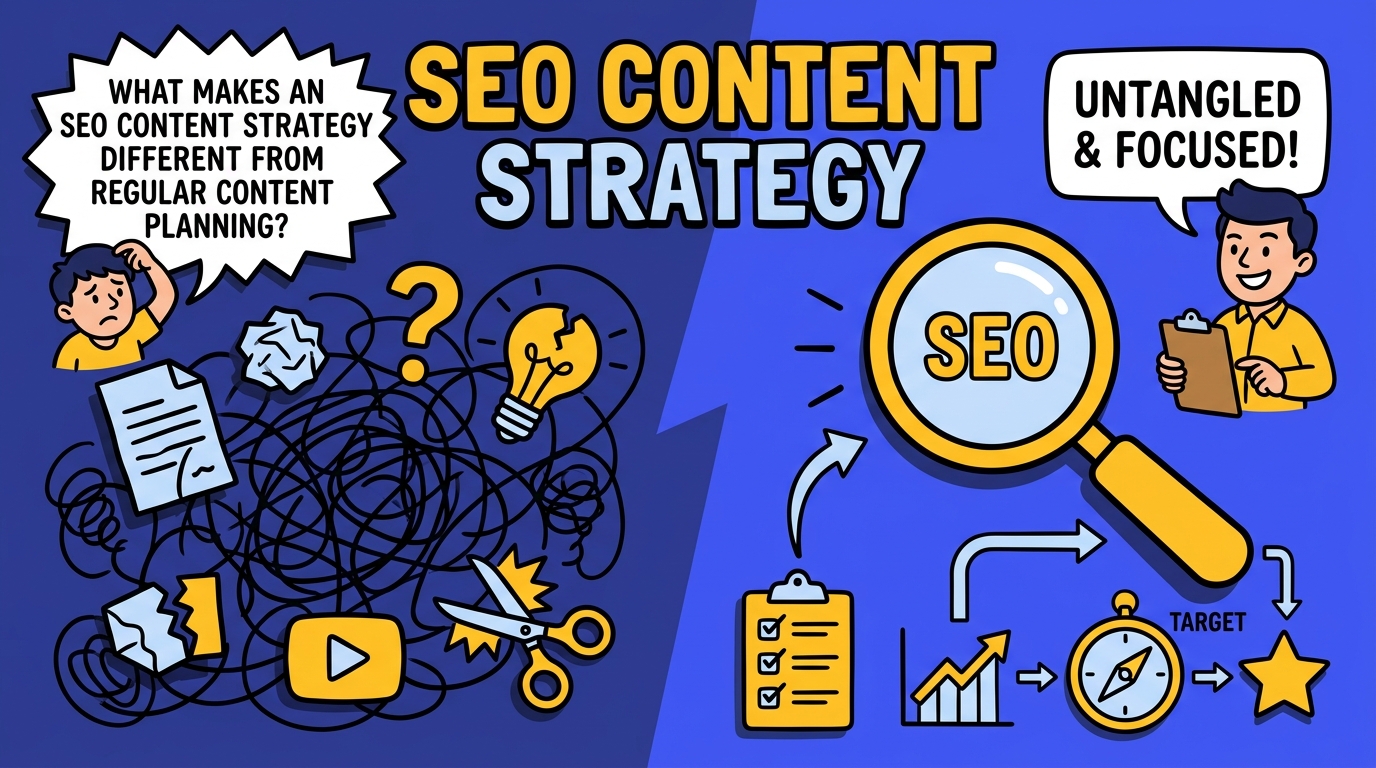
Creating content without a strategic approach is like shooting arrows in the dark. You might hit something, but you'll waste a lot of time and resources in the process. An effective SEO content strategy serves as your roadmap to creating content that not only engages your audience but also ranks well in search engines and drives meaningful business results.
This comprehensive guide will walk you through building a data-driven SEO content strategy from the ground up, covering everything from audience research to performance measurement. By the end, you'll have a clear framework for creating content that consistently attracts, engages, and converts your target audience.
What Makes an SEO Content Strategy Different from Regular Content Planning?
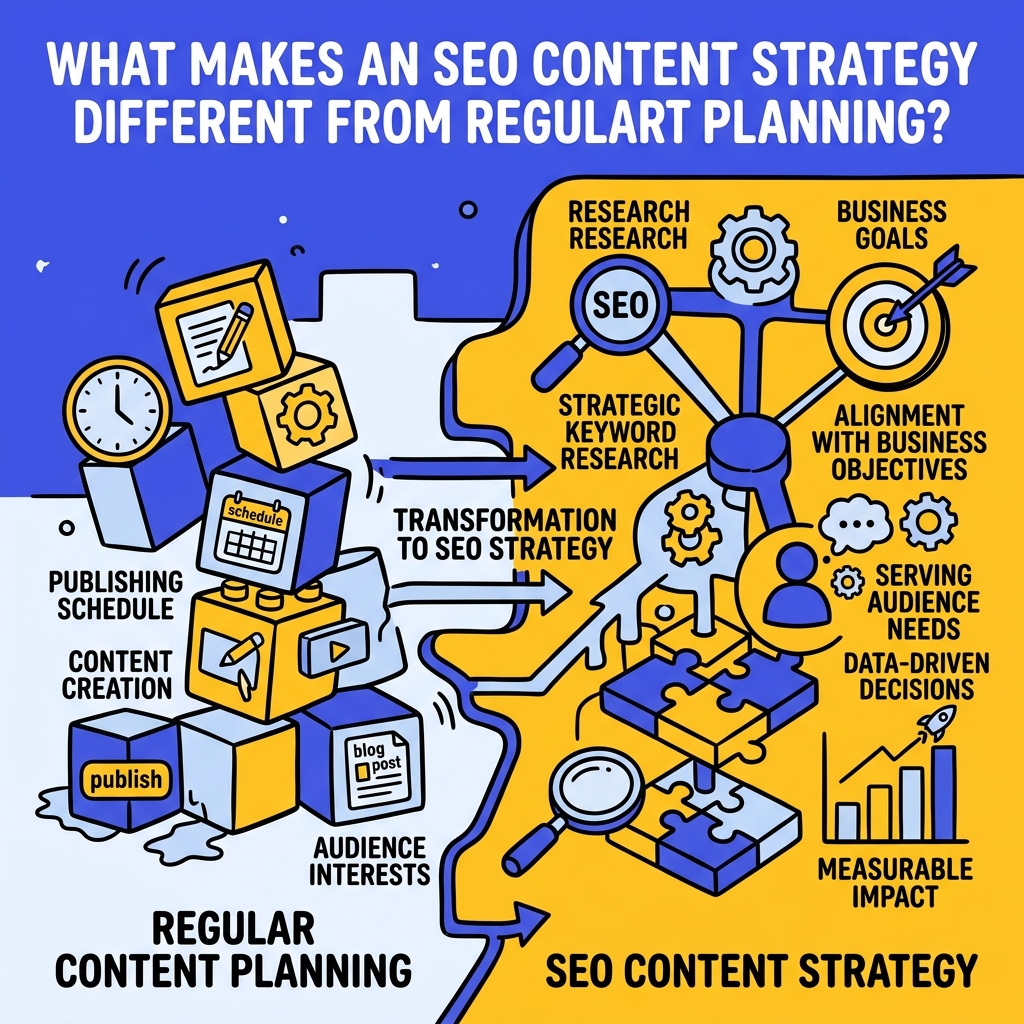
An SEO content strategy goes far beyond simply publishing blog posts on a schedule. It's a systematic approach that aligns your content creation with search engine optimization principles while serving your business objectives and audience needs.
Unlike traditional content marketing, an SEO content strategy starts with keyword research and search intent analysis. Every piece of content you create should target specific search queries that your potential customers are actually using. This approach ensures your content has the best chance of being discovered organically.
The strategy also considers the entire customer journey, from awareness to conversion. Each content piece serves a specific purpose in guiding prospects through your sales funnel, whether that's building brand awareness, educating about solutions, or driving purchase decisions.
How Do You Research and Define Your Target Audience for SEO Content?
Understanding your audience forms the foundation of any successful SEO content strategy. Start by analyzing your existing customer data to identify common demographics, pain points, and behavioral patterns. Look at your website analytics, customer surveys, and sales team feedback to build comprehensive buyer personas.
Next, conduct keyword research to understand how your target audience searches for information related to your industry. Tools like Google Keyword Planner, SEMrush, or Ahrefs can reveal the specific terms and phrases your potential customers use when looking for solutions you provide.
Don't forget to analyze your competitors' content strategies. Identify which topics generate the most engagement and backlinks for them, then look for gaps or opportunities to create better, more comprehensive content on similar subjects.
Creating Detailed Buyer Personas for Content Strategy
Develop 2-3 detailed buyer personas that represent your ideal customers. Include demographic information, professional roles, challenges they face, preferred content formats, and typical buyer journey stages. These personas will guide your content topics, tone, and distribution channels.
For each persona, map out their typical search behavior. What questions do they ask at different stages of their buying process? What type of content do they consume when researching solutions? This information directly informs your keyword targeting and content format decisions.
What Types of Content Should Your SEO Strategy Include?
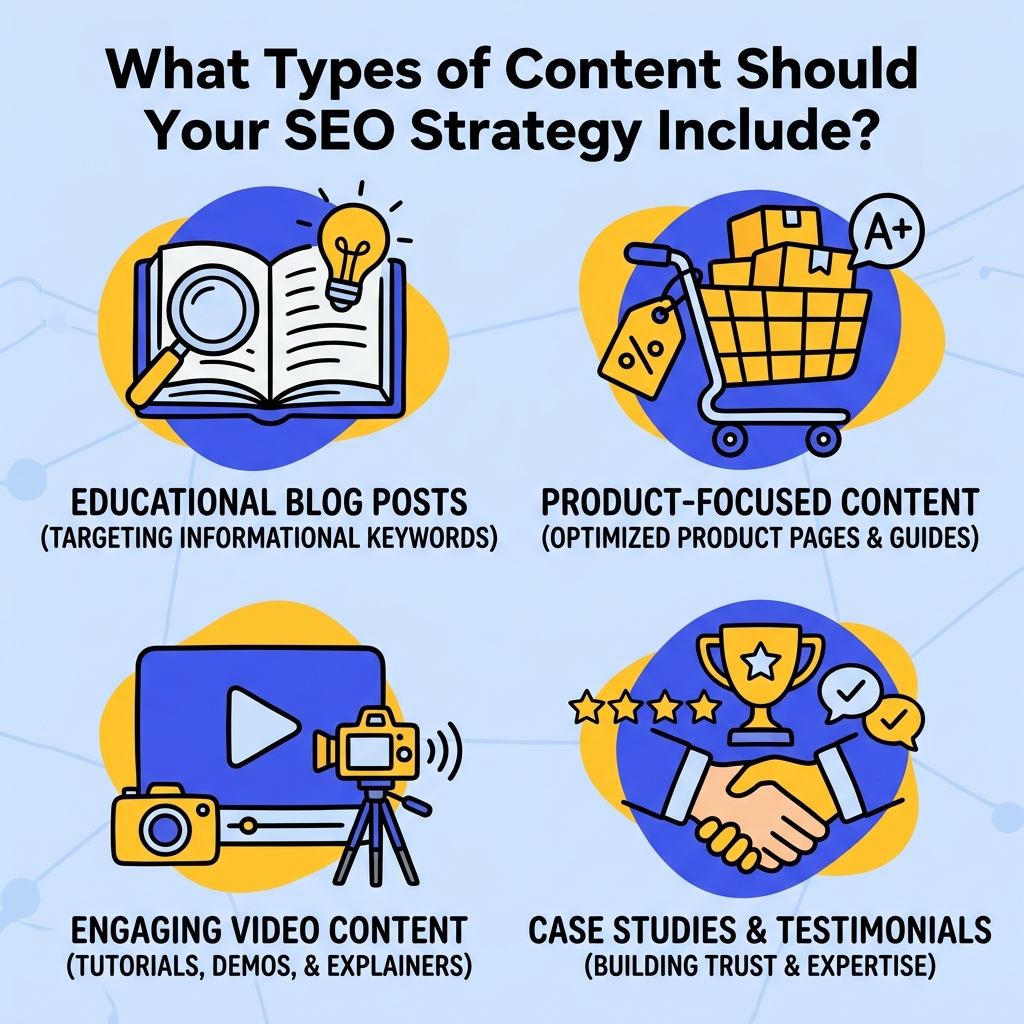
A well-rounded SEO content strategy incorporates multiple content types to serve different search intents and audience preferences. Educational blog posts typically form the backbone of most strategies, as they target informational keywords and help establish your expertise.
Product-focused content, including comparison guides and feature explanations, targets commercial intent keywords when prospects are evaluating solutions. Case studies and success stories serve both SEO purposes and social proof, often ranking well for industry-specific long-tail keywords.
Consider incorporating visual content like infographics, videos, and interactive tools. These formats often generate more backlinks and social shares, which indirectly support your SEO efforts. Professional content marketing services can help you diversify your content portfolio effectively.
| Content Type | Primary Search Intent | SEO Benefits | Best Use Cases |
|---|---|---|---|
| Educational Blog Posts | Informational | High search volume, authority building | Top-of-funnel awareness |
| How-to Guides | Informational | Featured snippets, long-tail rankings | Problem-solving content |
| Product Comparisons | Commercial | Buyer intent keywords | Mid-funnel evaluation |
| Case Studies | Commercial/Transactional | Industry-specific rankings | Social proof and credibility |
| Tool Reviews | Commercial | Product-related keywords | Affiliate and partnership content |
How Do You Conduct Effective Keyword Research for Content Planning?
Effective keyword research goes beyond finding high-volume search terms. Start with seed keywords related to your business, then expand using keyword research tools to discover related terms, questions, and long-tail variations that your audience actually searches for.
Analyze keyword difficulty alongside search volume to identify opportunities where you can realistically compete. Newer websites should focus on lower-competition keywords initially, while established sites can target more competitive terms.
Pay special attention to question-based keywords and "People Also Ask" suggestions in Google search results. These often represent content gaps you can fill with comprehensive, helpful resources. Understanding effective blog writing techniques helps you create content that naturally incorporates these keywords.
Understanding Search Intent Behind Keywords
Group your target keywords by search intent: informational, navigational, commercial, and transactional. This classification helps you create the right type of content for each keyword and set appropriate conversion expectations.
Informational keywords typically drive the most traffic but have lower immediate conversion rates. Commercial and transactional keywords generate less traffic but attract more qualified prospects ready to make purchasing decisions.
What Should Your Content Calendar and Production Process Look Like?
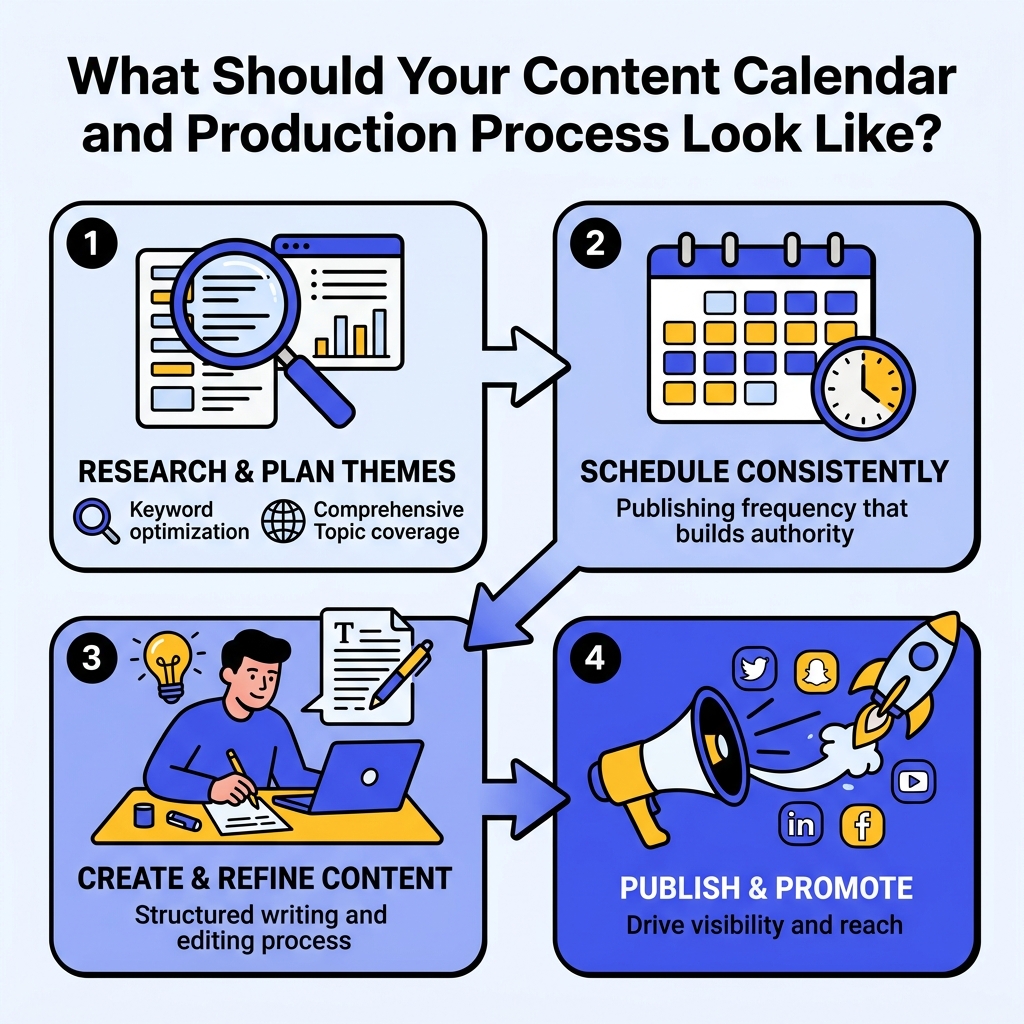
A strategic content calendar aligns your publishing schedule with business goals, seasonal trends, and keyword opportunities. Plan content themes around your target keywords, ensuring you cover topics comprehensively rather than creating shallow, competing pieces.
Establish a consistent publishing frequency that your team can maintain long-term. Quality consistently beats sporadic bursts of content creation. Most successful SEO content strategies publish new content weekly or bi-weekly, depending on resources and industry competition.
Build templates and workflows to streamline your content creation process. Standardize your research, writing, editing, and optimization procedures to maintain quality while improving efficiency. Content planning tools can help organize your editorial workflow and ensure nothing falls through the cracks.
Optimizing Content for Search Engines and Users
Each piece of content should target a primary keyword while naturally incorporating related terms and semantic variations. Structure your content with clear headings, bullet points, and logical flow to improve readability for both users and search engines.
Optimize technical elements including title tags, meta descriptions, header tags, and internal linking. According to Google's helpful content guidelines, focus on creating genuinely useful content that serves your audience's needs rather than gaming search algorithms.
How Do You Measure and Improve Your SEO Content Strategy Performance?
Track both SEO metrics and business outcomes to evaluate your content strategy's effectiveness. Monitor organic traffic growth, keyword rankings, and search visibility, but also measure leads generated, email subscriptions, and revenue attributed to organic content.
Set up Google Analytics and Google Search Console to monitor your content's performance. Track which pieces generate the most traffic, engage readers longest, and drive the most conversions. This data informs future content decisions and optimization priorities.
Regularly audit your existing content to identify improvement opportunities. Update outdated information, add new sections to comprehensive guides, and refresh old posts with current data and examples. SEO services often include ongoing content optimization as part of their strategy.
Creating a Feedback Loop for Continuous Improvement
Establish monthly or quarterly reviews of your content strategy performance. Analyze which topics and formats generate the best results, then double down on successful approaches while experimenting with new opportunities.
Gather feedback from your sales team about which content pieces help close deals and address common customer questions. This insight helps you create more targeted, conversion-focused content that supports your business objectives.
Conclusion
Building an effective SEO content strategy requires careful planning, consistent execution, and ongoing optimization. By focusing on your audience's needs, conducting thorough keyword research, and creating high-quality content that serves specific search intents, you'll develop a sustainable approach to organic growth.
Remember that SEO content strategy is a long-term investment. While you might see some quick wins, the most significant results typically emerge after 6-12 months of consistent effort. Stay committed to your strategy while remaining flexible enough to adapt based on performance data and changing market conditions.
Ready to transform your content marketing results? Start by implementing the audience research and keyword planning steps outlined above, then gradually build out your content calendar and optimization processes for sustainable SEO success.

Stefan Winter
Founder & SEO Expert
Founder of Fast SEO Fix and SEO automation expert. Stefan built Fast SEO Fix to solve the tedious problem of manual SEO work. He specializes in SEO optimized content generation, keyword research, and automated SEO strategies.
