What Makes a Content Planner Essential for Modern Businesses?
Posted by
 Stefan Winter
How to Build the Perfect Content Planner for Your SEO Strategy in 2026
Creating consistent, high-quality content is the backbone of any successful SEO strategy, but without proper planning, even the best content creators struggle to maintain momentum. A well-structured content planner transforms chaotic content creation into a streamlined, strategic process that drives real results. In this comprehensive guide, you'll discover how to build a content planner that not only organizes your ideas but also maximizes your search engine visibility and audience engagement.
What Makes a Content Planner Essential for Modern Businesses?
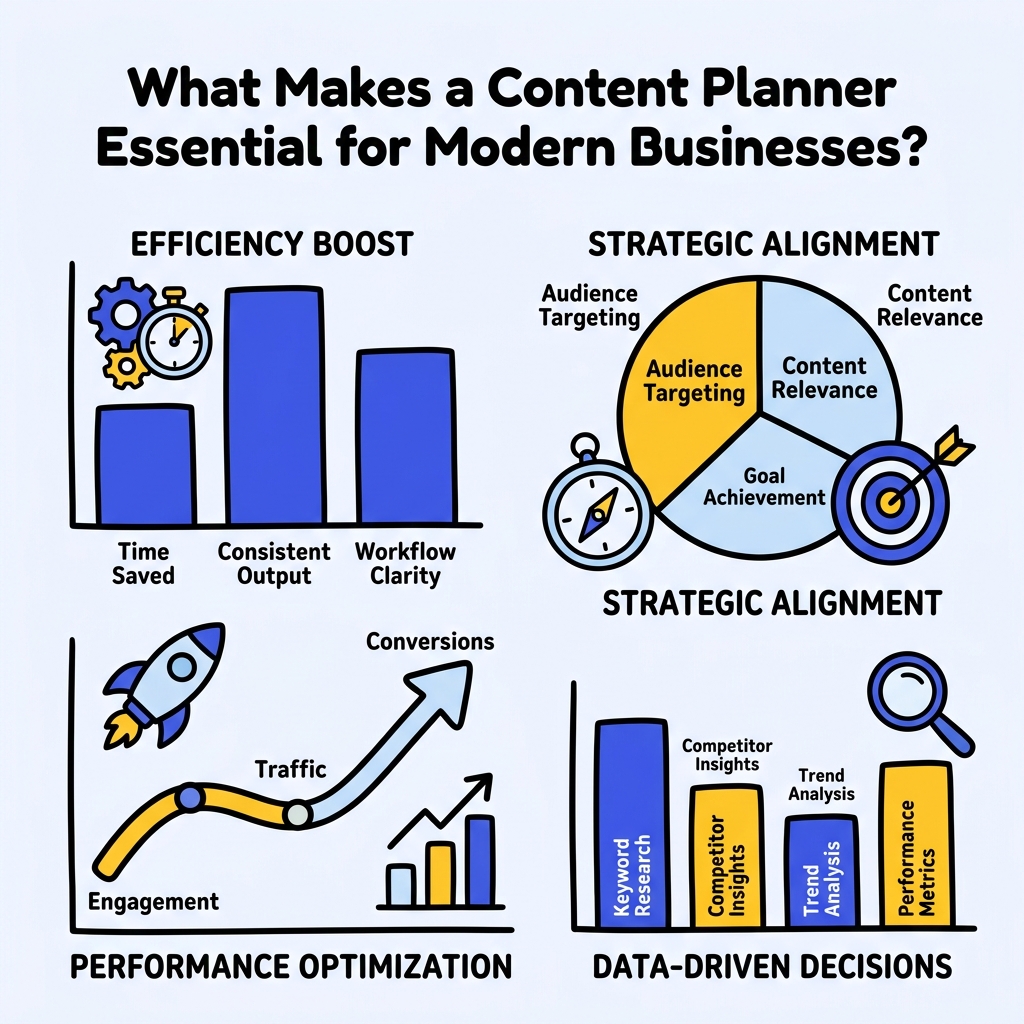
A content planner serves as your strategic roadmap for creating, scheduling, and optimizing content across all your digital channels. Unlike simple editorial calendars, modern content planners integrate keyword research, competitor analysis, and performance tracking into a unified system that guides every content decision.
The most effective content planners combine three critical elements: strategic planning, operational efficiency, and performance measurement. They help you identify content gaps, align your messaging with search intent, and ensure consistent publishing schedules that search engines favor. When properly implemented, a content planner reduces content creation time by up to 40% while improving organic traffic performance.
For businesses serious about SEO success, a content planner eliminates the guesswork from content strategy. It provides clear visibility into what content performs best, which topics resonate with your audience, and how your content supports broader business objectives.
How Do You Set Up Your Content Planner Foundation?
Building an effective content planner starts with understanding your content ecosystem and establishing clear objectives. Begin by auditing your existing content to identify patterns, gaps, and opportunities for improvement.
First, define your content goals using the SMART framework. Specify whether you're targeting increased organic traffic, higher conversion rates, or improved brand awareness. These objectives will shape every aspect of your content planner structure and help you measure success accurately.
Next, establish your content categories and themes based on your target audience's needs and search behavior. Create primary content pillars that align with your business expertise and secondary topics that support your main themes. This foundation ensures your content planner maintains focus while providing enough variety to engage different audience segments.
Choosing the Right Content Planner Format
Your content planner format depends on your team size, technical preferences, and collaboration needs. Spreadsheet-based planners offer flexibility and customization but require manual updates and lack automation features. Digital project management tools provide better collaboration and tracking capabilities, while specialized content planning software offers advanced features like SEO integration and performance analytics.
Consider hybrid approaches that combine multiple tools for different planning aspects. Many successful content teams use spreadsheets for high-level strategic planning while leveraging content creation tools for execution and optimization tasks.
What Information Should Your Content Planner Include?
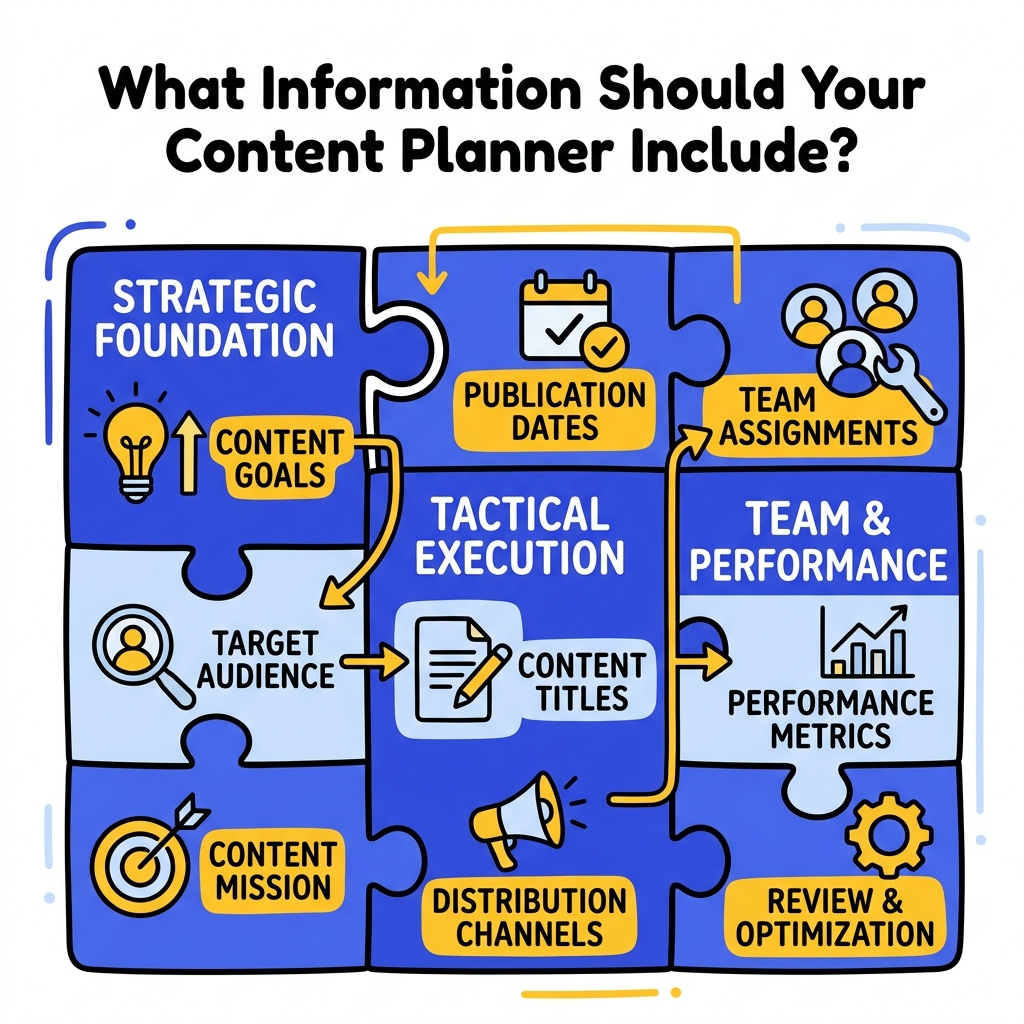
A comprehensive content planner captures both strategic and tactical information for each piece of content. Essential fields include publication dates, content titles, target keywords, content formats, and assigned team members. However, the most effective planners go beyond basic scheduling to include strategic elements that drive SEO success.
Include keyword difficulty scores, search volume data, and competitor analysis for each planned topic. Track content status through your production pipeline, from initial research through publication and promotion. Add fields for content performance metrics, including organic traffic, engagement rates, and conversion data to inform future planning decisions.
Your content planner should also capture content relationships and internal linking opportunities. Plan how new content connects to existing pieces, supporting your site's topical authority and helping search engines understand your content structure.
| Content Planner Component | Purpose | SEO Impact |
|---|---|---|
| Target Keywords | Focus content optimization | Direct ranking influence |
| Publication Schedule | Maintain consistent output | Supports crawl frequency |
| Content Format | Match user preferences | Affects engagement metrics |
| Internal Links | Connect related content | Builds topical authority |
| Performance Metrics | Measure content success | Guides optimization efforts |
How to Integrate Keyword Research Into Your Planning Process
Effective content planners seamlessly integrate keyword research into the planning workflow. Start by identifying seed keywords related to your business, then expand these into comprehensive keyword lists using research tools and competitor analysis.
Organize keywords by search intent, grouping informational, navigational, and transactional queries into separate planning categories. This organization helps you create content that matches user expectations and supports different stages of the customer journey. Plan content clusters around high-value keywords, creating comprehensive coverage that establishes your expertise in specific topic areas.
How Can You Optimize Your Content Planner for Team Collaboration?
Successful content planning requires clear communication and coordination across multiple team members. Design your content planner to facilitate collaboration by including role assignments, approval workflows, and progress tracking features.
Establish clear ownership for each content piece, from initial research through final publication. Include fields for content briefs, style guidelines, and brand requirements to ensure consistency across all team members. When team members understand their responsibilities and deadlines, content production becomes more efficient and predictable.
Regular planning meetings help teams stay aligned and address potential bottlenecks before they impact publishing schedules. Use your content planner as the central reference point for these discussions, reviewing upcoming deadlines, resource allocation, and performance insights that inform future planning decisions.
What Role Does Content Automation Play in Modern Planning?
Modern content planners increasingly incorporate automation to reduce manual tasks and improve efficiency. Content automation tools can handle routine tasks like social media scheduling, email notifications, and basic performance reporting.
However, strategic planning decisions still require human insight and creativity. Use automation to handle operational tasks while focusing your time on high-value activities like content strategy, audience analysis, and creative development. The most effective content planners balance automation capabilities with human oversight to maintain quality and strategic alignment.
How Do You Track and Measure Content Planner Success?
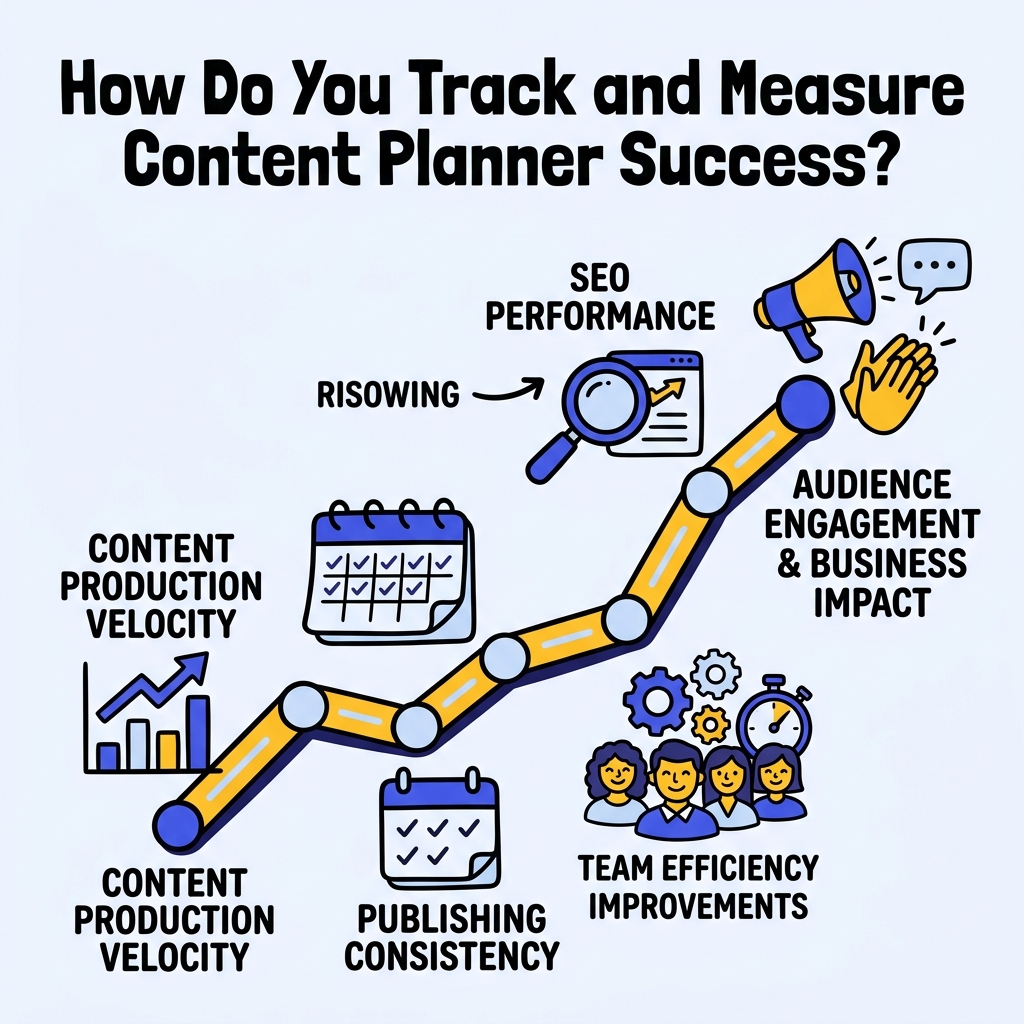
Measuring your content planner's effectiveness requires tracking both operational and strategic metrics. Operational metrics include content production velocity, publishing consistency, and team efficiency improvements. Strategic metrics focus on SEO performance, audience engagement, and business impact.
Monitor how well your content planner helps you meet publishing deadlines and maintain consistent output. Track whether planned content aligns with actual performance, identifying topics and formats that exceed expectations. This data helps refine your planning process and improve future content decisions.
Connect your content performance back to business objectives, measuring how planned content contributes to lead generation, brand awareness, and revenue growth. SEO automation tools can help track these connections and provide insights for optimizing your content strategy.
How Often Should You Update Your Content Planner?
Content planners require regular maintenance to remain effective and relevant. Review and update your planner weekly to adjust for changing priorities, new opportunities, and performance insights. Monthly reviews should focus on strategic adjustments, including keyword targeting updates and content theme modifications.
Quarterly planning sessions allow for more significant strategic shifts based on market changes, competitive developments, and business evolution. Use these sessions to evaluate your content planner's structure and make improvements that support your growing content needs.
What Common Content Planning Mistakes Should You Avoid?
Many businesses create content planners that focus too heavily on publishing schedules while neglecting strategic elements. Avoid this mistake by ensuring your planner includes keyword research, competitor analysis, and performance tracking alongside operational details.
Another common error involves creating overly complex planners that become difficult to maintain and use. Start with essential fields and gradually add complexity as your team becomes comfortable with the planning process. According to HubSpot's State of Marketing Report, companies with documented content strategies are 60% more likely to achieve their marketing goals.
Don't neglect the connection between content planning and broader SEO strategy. Your content planner should support your overall SEO objectives and integrate with other optimization efforts. Consider how planned content supports your SEO workflow and contributes to long-term organic growth.
Conclusion
Building an effective content planner transforms content creation from a reactive process into a strategic advantage that drives measurable SEO results. By incorporating keyword research, team collaboration features, and performance tracking into your planning process, you create a system that consistently produces high-quality content aligned with your business objectives.
The key to content planning success lies in finding the right balance between structure and flexibility. Your planner should provide enough guidance to maintain consistency while allowing room for creative opportunities and market responses. Start implementing these strategies today, and you'll see improved content performance, better team efficiency, and stronger SEO results in the months ahead.
Ready to revolutionize your content strategy? Begin by auditing your current content planning process and identifying the biggest gaps that a structured content planner could address.

Stefan Winter
Founder & SEO Expert
Founder of Fast SEO Fix and SEO automation expert. Stefan built Fast SEO Fix to solve the tedious problem of manual SEO work. He specializes in SEO optimized content generation, keyword research, and automated SEO strategies.
