What Makes an Effective SEO Audit Checklist Different from Generic Templates?
Posted by
 Stefan Winter
How to Create the Ultimate SEO Audit Checklist That Actually Drives Results in 2026

Conducting an SEO audit without a systematic checklist is like trying to diagnose a complex medical condition without running proper tests. You might catch some obvious issues, but you'll likely miss critical problems that could be costing you thousands of visitors and potential customers every month. A comprehensive SEO audit checklist serves as your roadmap to uncovering hidden optimization opportunities, fixing technical roadblocks, and creating a data-driven strategy for sustainable growth.
In this guide, we'll walk you through building and implementing an SEO audit checklist that goes beyond surface-level analysis to deliver actionable insights that move the needle on your search engine rankings.
What Makes an Effective SEO Audit Checklist Different from Generic Templates?
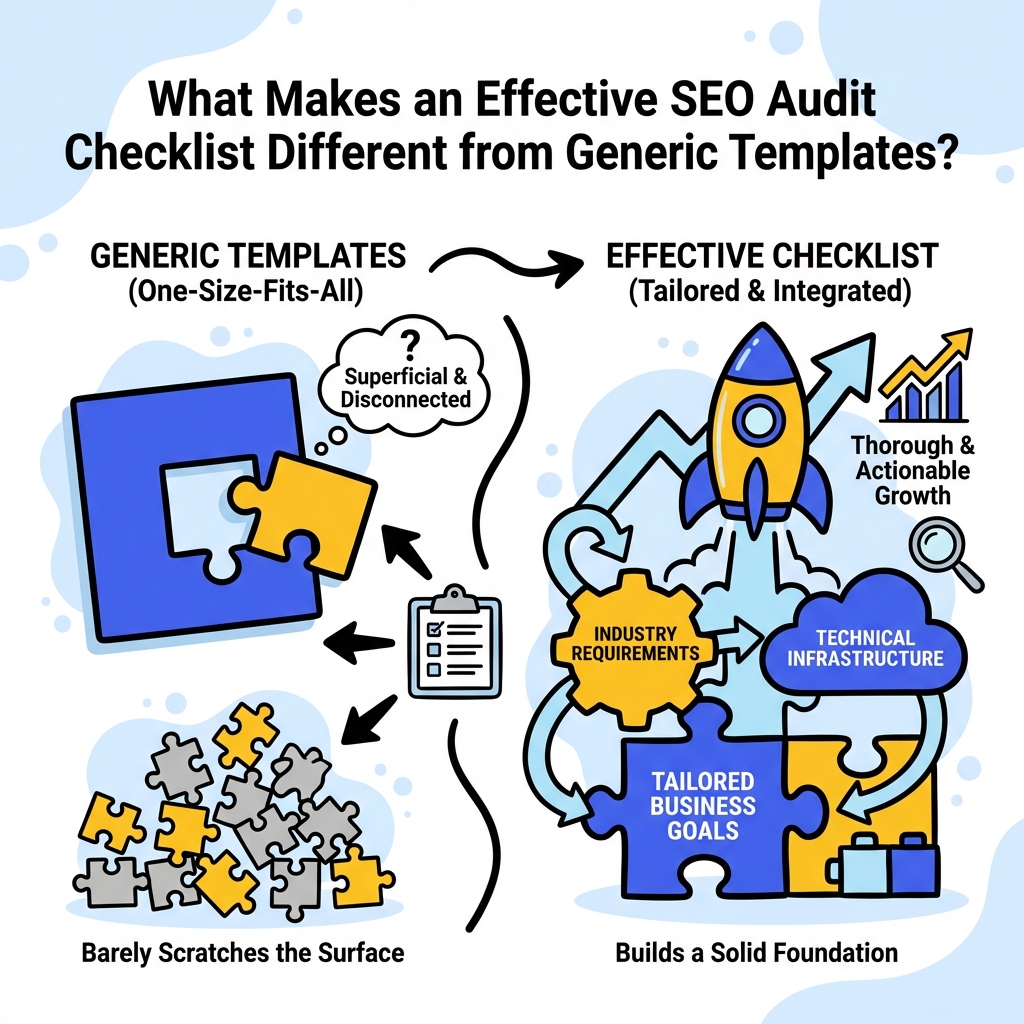
Most SEO audit checklists floating around the internet are one-size-fits-all templates that barely scratch the surface of what a thorough audit should accomplish. An effective SEO audit checklist is tailored to your specific business goals, industry requirements, and technical infrastructure.
The key difference lies in prioritization and depth. While generic checklists might tell you to "check your meta descriptions," a results-driven checklist will guide you through analyzing meta description performance data, identifying optimization opportunities based on click-through rates, and prioritizing updates based on traffic potential.
Your checklist should also evolve with search engine algorithm updates and emerging SEO best practices. What worked in previous years may not deliver the same results in 2026, especially with the increasing importance of Core Web Vitals, AI-generated content considerations, and user experience signals.
How to Structure Your SEO Audit Checklist for Maximum Efficiency?
The foundation of any successful SEO audit lies in its organization. Structure your checklist into five core categories that build upon each other logically.
Start with technical SEO fundamentals, as these issues can prevent search engines from properly crawling and indexing your site. Move into on-page optimization elements, then content quality assessment, followed by off-page factors, and finally performance measurement and tracking setup.
Within each category, arrange items by priority level. Mark critical issues that could immediately impact your search visibility with high priority flags, while longer-term optimization opportunities can be categorized as medium or low priority. This approach helps you tackle the most impactful improvements first when resources are limited.
Technical SEO Audit Components
Your technical SEO section should begin with crawlability and indexation checks. Verify that your robots.txt file isn't blocking important pages, ensure your XML sitemap is properly formatted and submitted to search engines, and identify any crawl errors through Google Search Console.
Next, dive into site architecture analysis. Check for broken internal links, evaluate URL structure consistency, and assess your site's navigation hierarchy. Poor site architecture can dilute link equity and confuse both users and search engines about your content priorities.
Don't overlook Core Web Vitals and page speed metrics. These factors directly impact user experience and search rankings. Include specific benchmarks in your checklist, such as achieving a Largest Contentful Paint under 2.5 seconds and maintaining a Cumulative Layout Shift score below 0.1.
What Content Elements Should Your SEO Audit Checklist Include?
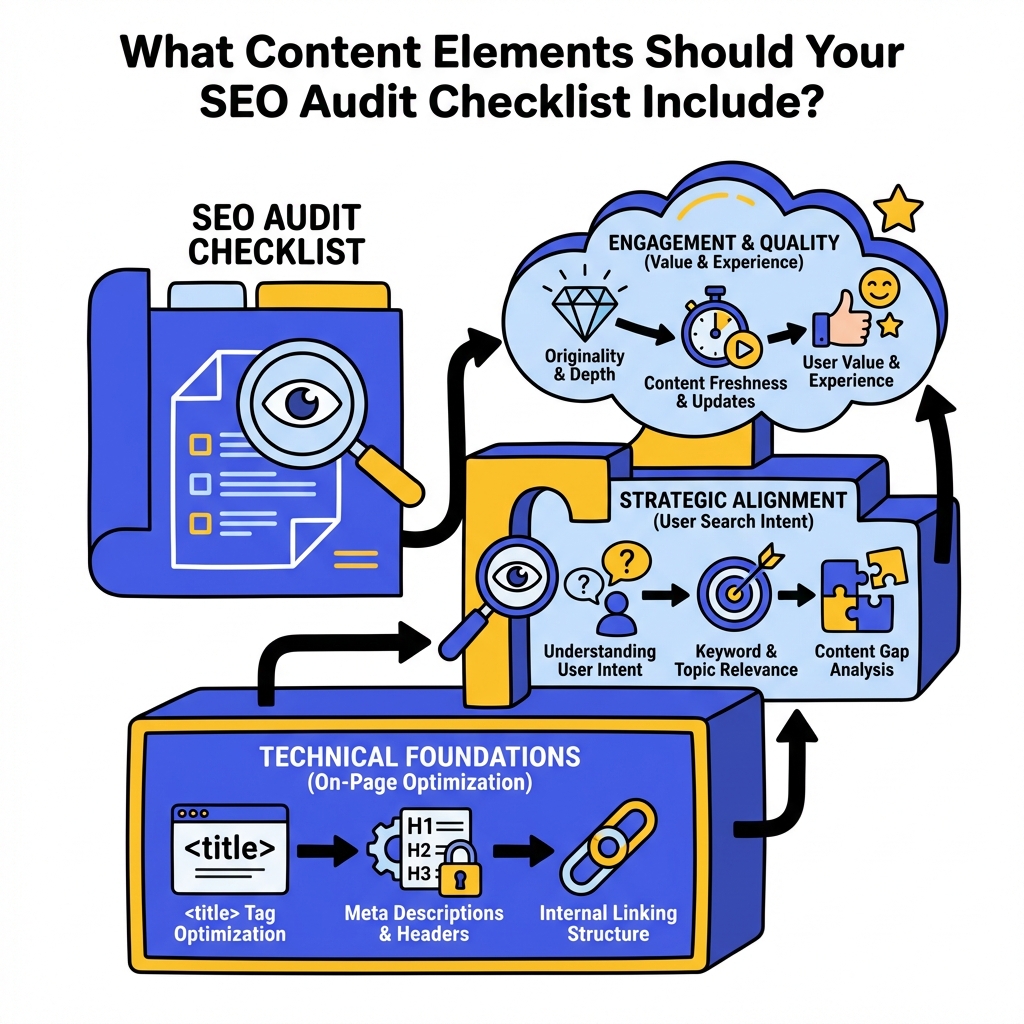
Content analysis forms the heart of any comprehensive SEO audit. Your checklist should evaluate both the technical aspects of content optimization and the strategic alignment with user search intent.
Begin with on-page optimization fundamentals. Check title tag optimization, ensuring each page has unique, descriptive titles within the 50-60 character limit. Evaluate meta descriptions for compelling copy that encourages clicks while staying within the 150-160 character range. Assess header tag hierarchy to ensure proper H1, H2, and H3 structure that both users and search engines can easily follow.
Content quality assessment requires a deeper analytical approach. Examine content depth and comprehensiveness compared to top-ranking competitors. Identify thin content pages that need expansion or consolidation. Look for keyword cannibalization issues where multiple pages compete for the same search terms, diluting your ranking potential.
| Content Audit Category | Key Metrics to Track | Priority Level |
|---|---|---|
| Title Tag Optimization | Unique titles, character count, keyword inclusion | High |
| Content Depth | Word count vs. competitors, topic coverage | High |
| Internal Linking | Links per page, anchor text diversity | Medium |
| Image Optimization | Alt text, file sizes, format efficiency | Medium |
| Schema Markup | Implementation rate, error frequency | Low |
How to Incorporate Competitive Analysis into Your SEO Audit Checklist?
Competitive analysis transforms your SEO audit from an internal assessment into a strategic advantage-finding mission. Your checklist should include systematic competitor evaluation across multiple dimensions.
Start by identifying your true SEO competitors, which may differ from your direct business competitors. These are the websites consistently ranking for your target keywords, regardless of whether they offer identical products or services. Analyze their content strategies, technical implementation, and backlink profiles to identify gaps in your own approach.
Include competitor keyword analysis in your audit process. Tools like SEMrush or Ahrefs can reveal which keywords drive the most traffic to competitor sites, helping you identify missed opportunities in your own keyword strategy. This analysis often uncovers long-tail keyword variations and related topics you hadn't considered.
The integration of SEO automation tools can streamline this competitive analysis process, allowing you to track competitor changes and identify new opportunities without manual monitoring.
What Tools and Resources Should Support Your SEO Audit Checklist?

The effectiveness of your SEO audit checklist depends heavily on the tools and data sources you use to complete each task. Free tools like Google Search Console, Google Analytics, and Google PageSpeed Insights provide essential baseline data for most audit components.
However, comprehensive audits often require premium tools for deeper analysis. Consider investing in platforms like Screaming Frog for technical crawling, Ahrefs or SEMrush for keyword and backlink analysis, and GTmetrix for detailed performance monitoring. Each tool serves specific audit functions and provides data that manual analysis simply cannot match.
Don't overlook the importance of establishing baseline metrics before implementing changes. Your checklist should include steps for documenting current performance levels, so you can measure the impact of your optimization efforts over time. This data becomes crucial when working with a marketing agency or reporting results to stakeholders.
Local SEO Audit Considerations
If your business serves local markets, your SEO audit checklist must include location-specific optimization factors. Verify your Google Business Profile completeness and accuracy, ensuring your name, address, and phone number (NAP) consistency across all online directories and citations.
Evaluate your local keyword optimization strategy. Are you targeting location-specific search terms that your potential customers actually use? Analyze local search result features like map packs and local knowledge panels to understand how your business appears in these prominent positions.
How Often Should You Update and Execute Your SEO Audit Checklist?
The frequency of your SEO audits should align with your website's complexity, update frequency, and competitive landscape. Most businesses benefit from quarterly comprehensive audits supplemented by monthly technical health checks.
High-traffic websites or those in rapidly evolving industries may require more frequent auditing. E-commerce sites with constantly changing inventory, news websites with daily content updates, or businesses in highly competitive markets should consider monthly full audits to stay ahead of issues and opportunities.
Your checklist itself should evolve based on audit findings and industry changes. Track which checklist items consistently reveal problems versus those that rarely uncover issues. Adjust your focus areas based on what drives the most significant improvements for your specific situation.
The rise of automated SEO solutions has made it possible to monitor many audit components continuously rather than periodically. Consider which elements of your checklist could benefit from ongoing automated monitoring versus manual quarterly review.
What Actions Should Follow Your SEO Audit Checklist Completion?
Completing your SEO audit checklist is only the beginning. The real value comes from prioritizing and implementing the improvements you've identified. Create an action plan that addresses critical issues first, followed by high-impact optimizations that align with your business goals.
Establish clear timelines and assign responsibility for each audit finding. Technical issues might require developer resources, while content improvements could be handled by your marketing team. Some optimizations can be implemented immediately, while others might require budget approval or extended development cycles.
Track the impact of your audit-driven improvements through regular performance monitoring. Set up automated reporting for key metrics like organic traffic, keyword rankings, and conversion rates. This data validates the effectiveness of your audit process and helps refine your checklist for future iterations.
Conclusion
Creating and implementing a comprehensive SEO audit checklist is essential for maintaining and improving your search engine visibility in 2026's competitive digital landscape. By systematically evaluating technical performance, content quality, competitive positioning, and user experience factors, you'll uncover opportunities that drive measurable results.
Remember that the most effective SEO audit checklist is one tailored to your specific business needs and regularly updated based on performance data and industry evolution. Start with the framework outlined in this guide, then refine and expand based on your unique findings and goals.
Ready to transform your SEO performance with a systematic audit approach? Fast SEO Fix specializes in comprehensive SEO audits and automated optimization solutions that deliver consistent results. Contact us today to learn how our data-driven approach can accelerate your search engine success.

Stefan Winter
Founder & SEO Expert
Founder of Fast SEO Fix and SEO automation expert. Stefan built Fast SEO Fix to solve the tedious problem of manual SEO work. He specializes in SEO optimized content generation, keyword research, and automated SEO strategies.
