What Makes a Keyword "Profitable" in Today's Market?
Posted by
 Stefan Winter
How to Find Profitable Keywords That Actually Drive Revenue in 2026
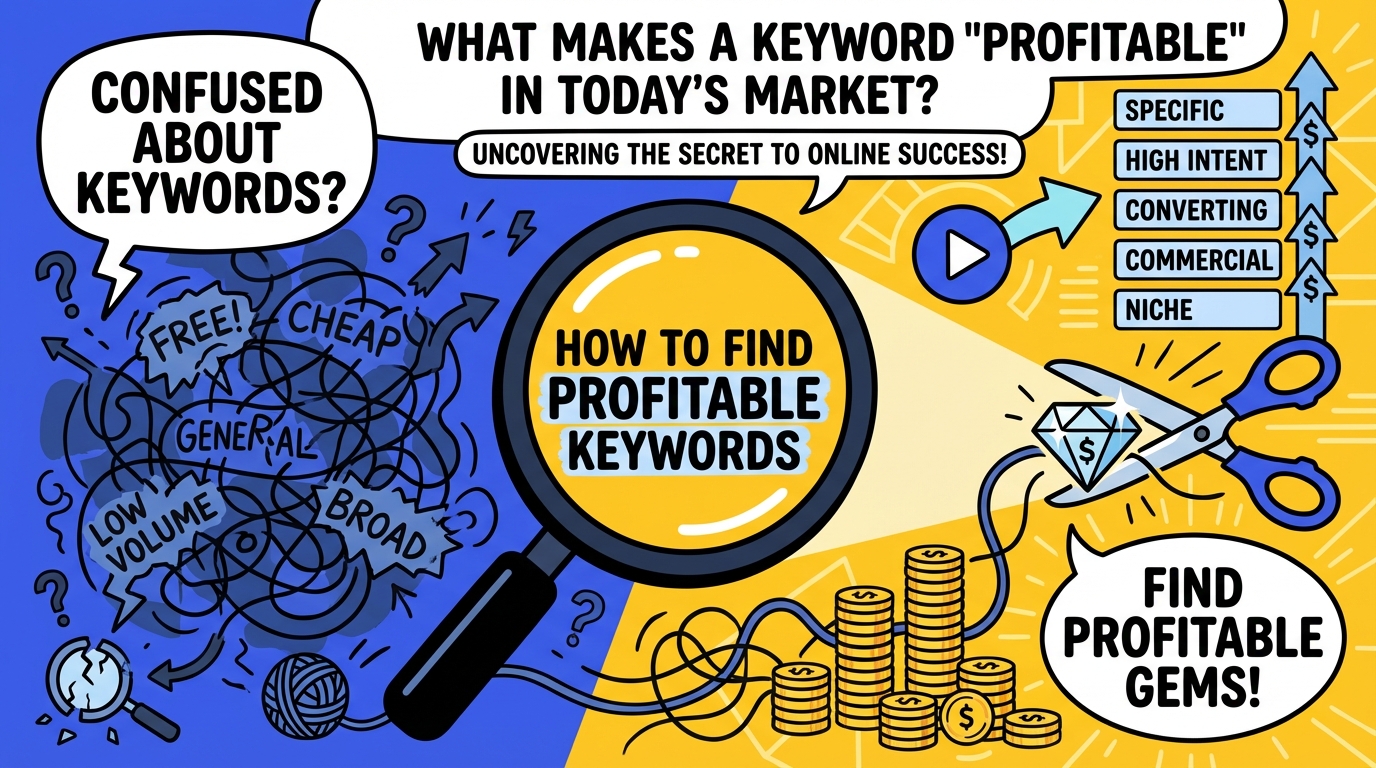
Finding keywords is one thing, but discovering the ones that actually convert visitors into paying customers? That's where the real money is made. In this comprehensive guide, you'll learn the exact process successful marketers use to identify high-converting keywords that drive measurable revenue growth for their businesses.
What Makes a Keyword "Profitable" in Today's Market?
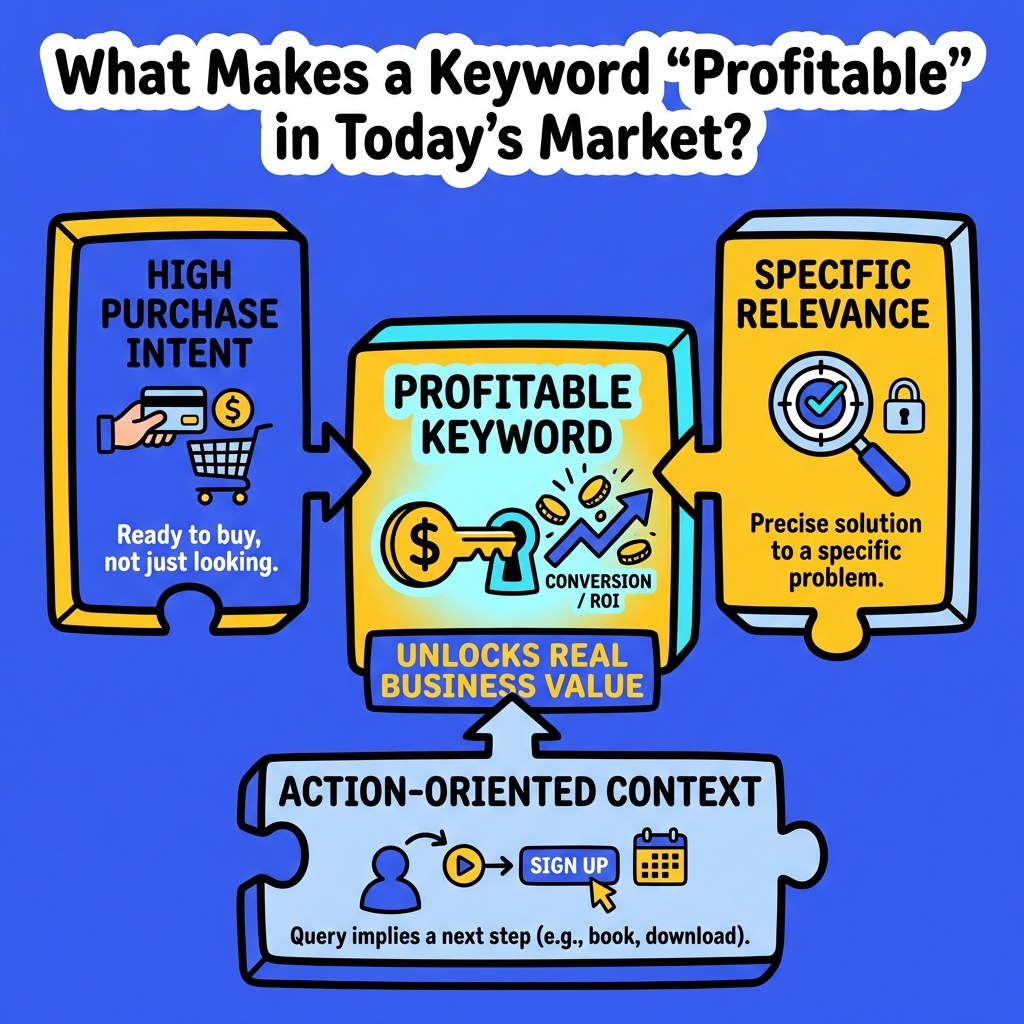
Profitable keywords go beyond high search volume and low competition. They represent search queries from users who are ready to take action, whether that's making a purchase, signing up for a service, or requesting a consultation.
The most profitable keywords typically share three key characteristics: commercial intent, reasonable competition levels, and alignment with your business model. Commercial intent means the searcher is actively looking to solve a problem or make a purchase, not just browsing for information. When someone searches "best project management software for small teams," they're much closer to buying than someone searching "what is project management."
Understanding search intent becomes crucial when evaluating keyword profitability. Transactional keywords (containing words like "buy," "price," "review," or "vs") often convert better than informational queries, even with lower search volumes. A keyword with 500 monthly searches and high commercial intent can generate more revenue than one with 5,000 searches but zero buying intent.
How to Identify High-Converting Keyword Opportunities
Start by analyzing your existing top-performing content and identifying which keywords are already driving conversions. Use Google Analytics to examine which organic search terms lead to the highest conversion rates, not just the most traffic. This data reveals patterns about what your profitable audience actually searches for.
Next, examine your competitors' paid advertising campaigns. When companies consistently bid on specific keywords in Google Ads, it's a strong signal those terms generate revenue. Tools like SEMrush or Ahrefs can show you which keywords your competitors are spending money on, providing valuable insights into profitable opportunities you might have missed.
Customer language analysis provides another goldmine of profitable keywords. Review customer support tickets, sales call transcripts, and product reviews to identify the exact phrases your target audience uses when describing their problems and desired solutions. These authentic terms often convert better than industry jargon or generic keywords.
Mining Your Customer Data for Hidden Gems
Your existing customers hold the key to finding more profitable keywords. Survey recent customers about what they searched for before finding your business. Many companies discover their most profitable keywords come from specific problem-focused queries their customers used during the research phase.
Sales team insights prove invaluable for keyword research. Your sales representatives hear the exact language prospects use when describing their challenges and desired outcomes. These conversations reveal long-tail keywords that may have lower search volumes but incredibly high conversion potential.
What Tools Actually Help Find Money-Making Keywords?
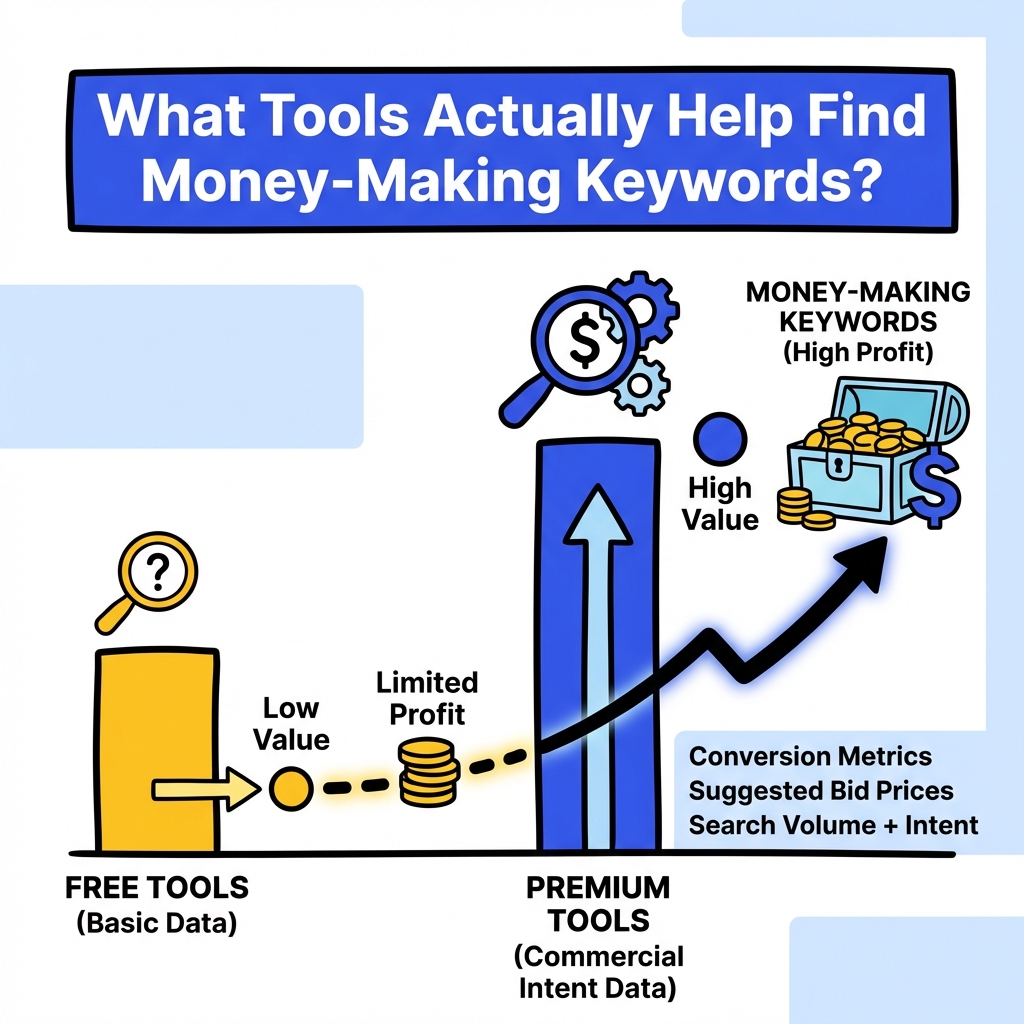
While free tools provide a starting point, profitable keyword research requires access to commercial intent data and conversion metrics that premium tools offer. Google Keyword Planner shows commercial value indicators through suggested bid prices, helping you identify keywords that businesses actively spend money to target.
SEMrush and Ahrefs excel at revealing competitor keyword strategies, showing which terms drive traffic to their most valuable pages. Look for keywords that consistently appear across multiple competitors' highest-converting landing pages. When several businesses in your industry target the same terms, it usually indicates proven profitability.
AI tools for SEO are revolutionizing keyword research by analyzing vast amounts of search data to identify patterns humans might miss. These tools can predict keyword profitability based on semantic relationships and user behavior patterns.| Tool Category | Best For | Key Benefit |
|---|---|---|
| Google Keyword Planner | Commercial intent signals | Shows advertiser competition levels |
| SEMrush/Ahrefs | Competitor analysis | Reveals proven profitable keywords |
| Answer The Public | Question-based queries | Finds problem-focused search terms |
| Google Search Console | Performance analysis | Shows actual conversion data |
How to Evaluate Keyword Profitability Before Investing Time
Before creating content around any keyword, evaluate its revenue potential using a systematic approach. Calculate the potential monthly revenue by multiplying estimated traffic by your average conversion rate and customer lifetime value. This simple formula helps prioritize which keywords deserve your attention first.
Analyze the search results page (SERP) features for your target keywords. If Google shows shopping ads, product listings, or local pack results, it indicates strong commercial intent. Keywords that trigger these SERP features typically convert better because Google recognizes the commercial nature of these queries.
Competition analysis goes beyond just looking at domain authority scores. Examine whether the top-ranking pages are optimized for conversions, not just rankings. If you see poorly designed landing pages or weak calls-to-action in the top results, it suggests an opportunity to capture more conversions even if you rank lower initially.
Understanding Search Volume vs. Revenue Potential
High search volume doesn't automatically translate to high profitability. A keyword with 10,000 monthly searches but 0.1% conversion rate generates fewer leads than one with 1,000 searches and 2% conversion rate. Focus on conversion potential rather than vanity metrics.
Seasonal trends affect keyword profitability significantly. Use Google Trends to identify when your target keywords peak throughout the year. Planning content around these seasonal patterns maximizes your return on investment by capturing traffic when commercial intent is highest.
What's the Step-by-Step Process for Profitable Keyword Research?
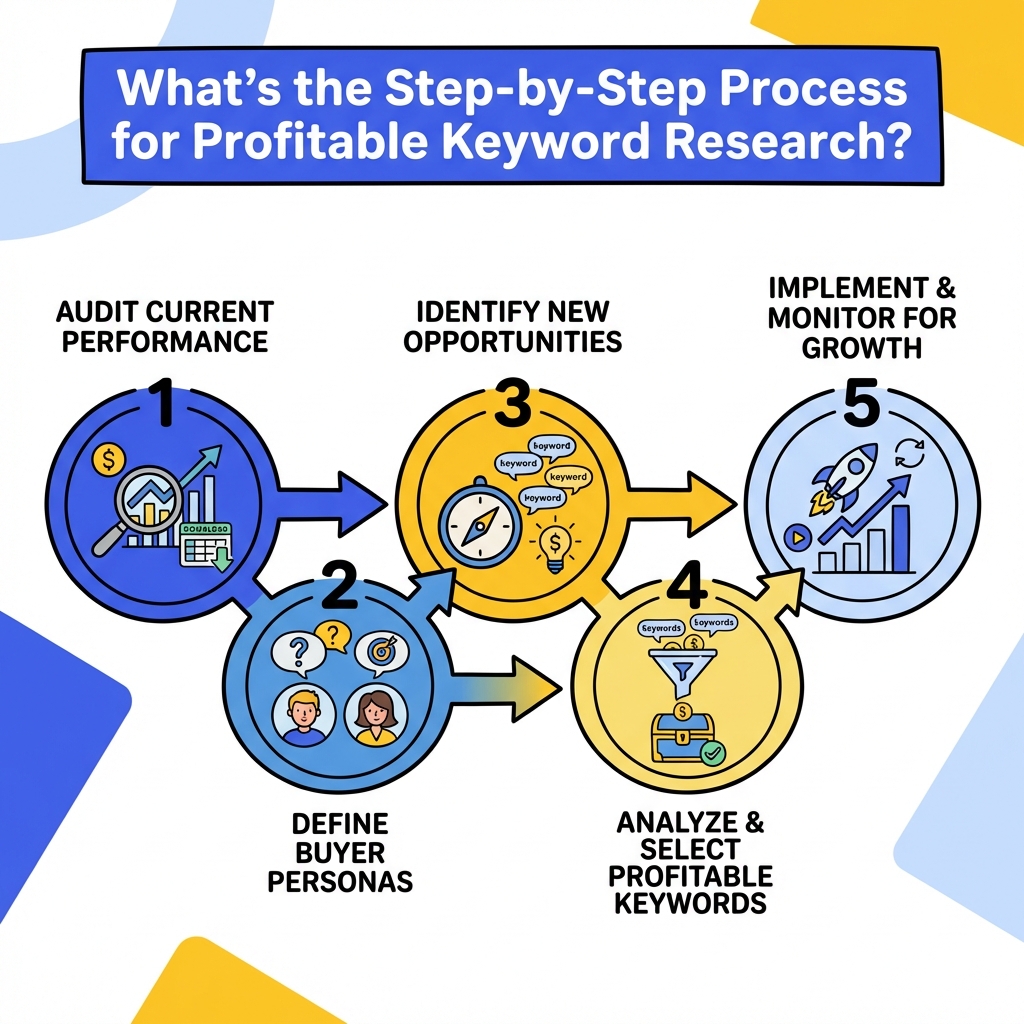
Begin with a comprehensive audit of your current keyword performance. Export data from Google Search Console showing which keywords drive the most conversions, not just clicks. This baseline helps you understand what's already working before expanding into new opportunities.
Create detailed buyer personas for each segment of your target audience, then brainstorm the specific problems each persona faces at different stages of their buyer's journey. Map keywords to each stage, focusing heavily on consideration and decision-stage terms where commercial intent peaks.
Conduct thorough competitor analysis by identifying 5-10 direct competitors and analyzing their top-performing organic and paid keywords. Look for gaps where competitors rank well but you don't, especially for terms with clear commercial intent. Keyword gap analysis can reveal these hidden opportunities systematically.
Build comprehensive keyword lists by combining multiple research methods: competitor analysis, customer surveys, sales team input, and tool-based research. Organize these keywords by commercial intent level, search volume, and estimated difficulty to create a prioritized action plan.
How to Measure and Track Keyword Profitability Over Time?
Set up proper tracking before launching any keyword-focused content campaigns. Google Analytics 4 with enhanced ecommerce tracking provides detailed insights into which keywords drive actual revenue, not just traffic. Configure conversion goals that align with your business objectives.
Monitor keyword performance monthly, focusing on trends in conversion rates rather than just ranking positions. A keyword that drops from position 3 to 5 but maintains conversion rates is more valuable than one that ranks #1 but converts poorly.
Create custom dashboards that show keyword performance alongside business metrics like customer acquisition cost and lifetime value. According to Google's documentation on measurement, tracking the complete customer journey from keyword to conversion provides the clearest picture of profitability.
Regular performance reviews help identify which keywords deserve more investment and which should be deprioritized. Successful automated SEO strategies often include systematic keyword performance monitoring that triggers content optimization based on profitability metrics.
What Common Mistakes Kill Keyword Profitability?
The biggest mistake is targeting keywords without understanding the complete customer journey. A keyword might drive traffic to your blog, but if those visitors never convert because there's no clear path to your products or services, that traffic has zero value. Always ensure your content connects readers to your revenue-generating pages.
Ignoring search intent leads to wasted effort and poor conversion rates. Targeting informational keywords with sales-focused content creates a mismatch that Google penalizes and users abandon. Match your content type to the searcher's intent for maximum profitability.
Focusing solely on short-tail keywords overlooks the goldmine of long-tail opportunities. While "marketing software" might seem attractive, "marketing automation software for B2B SaaS companies" often converts better because it targets a more specific, ready-to-buy audience.
Many businesses also make the mistake of not considering their content creation process when selecting keywords. Choosing keywords that require expertise or resources you don't have leads to poor-quality content that won't rank or convert effectively.
Conclusion
Finding profitable keywords requires a strategic approach that goes far beyond search volume and competition metrics. By focusing on commercial intent, analyzing competitor strategies, leveraging customer insights, and implementing proper tracking, you can identify keywords that actually drive revenue growth for your business.
The key is treating keyword research as an ongoing business intelligence activity rather than a one-time task. Markets evolve, customer language changes, and new opportunities emerge constantly. Businesses that consistently monitor and optimize their keyword strategies based on actual profitability data will always outperform those chasing vanity metrics.
Ready to transform your keyword research from a guessing game into a revenue-generating system? Start by auditing your current keyword performance and identifying which terms actually drive conversions. Then systematically expand into new profitable opportunities using the proven methods outlined in this guide.

Stefan Winter
Founder & SEO Expert
Founder of Fast SEO Fix and SEO automation expert. Stefan built Fast SEO Fix to solve the tedious problem of manual SEO work. He specializes in SEO optimized content generation, keyword research, and automated SEO strategies.
