What Makes a Blog Post Actually Convert?
Posted by
 Stefan Winter
How to Create High-Converting Blog Posts That Actually Drive Results in 2026
Creating blog posts that convert visitors into customers requires more than just good writing. In today's competitive digital landscape, successful blog posts must balance search engine optimization, user experience, and strategic conversion elements. Whether you're a business owner looking to generate leads or a content creator aiming to build an engaged audience, this comprehensive guide will walk you through the exact steps to create blog posts that deliver measurable results.
What Makes a Blog Post Actually Convert?
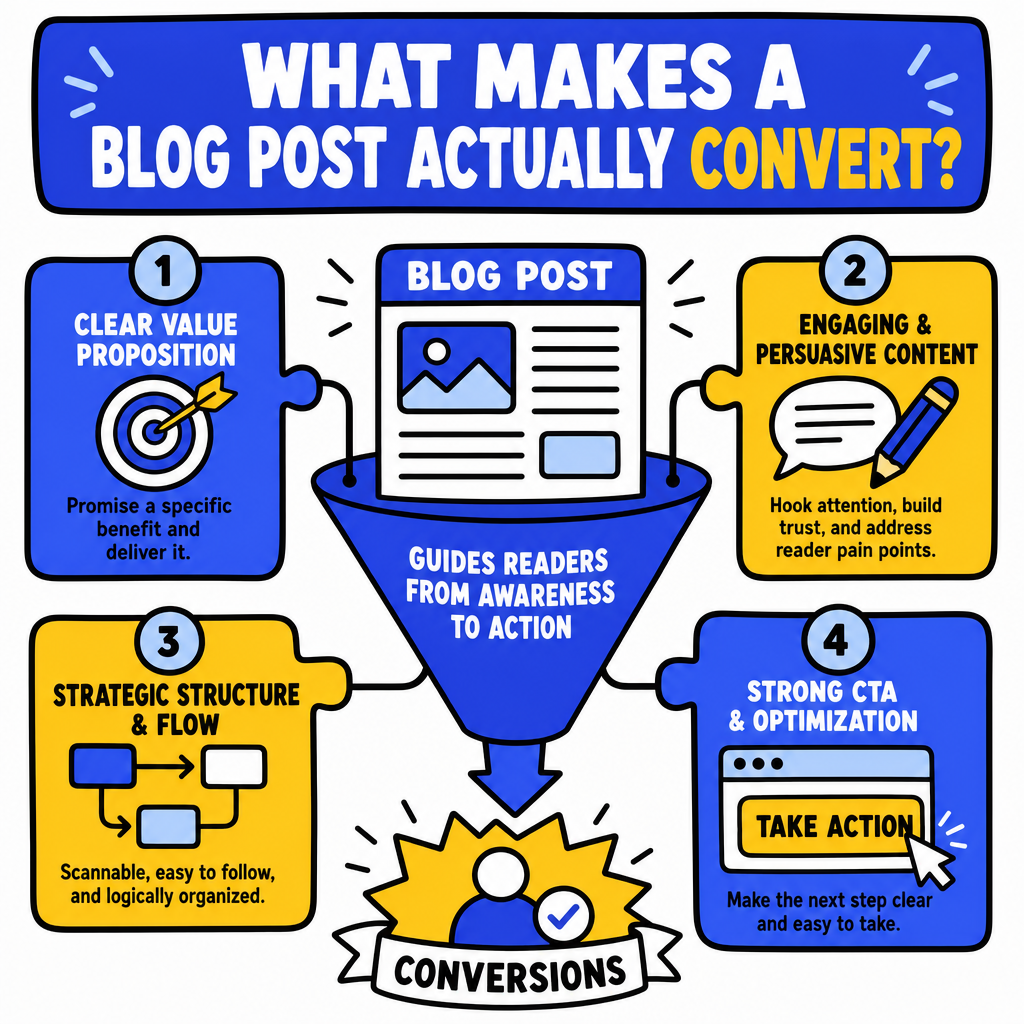
Converting blog posts share several key characteristics that separate them from content that simply attracts views. These posts strategically guide readers through a journey from awareness to action, using proven psychological triggers and technical optimization.
The foundation of any converting blog post lies in understanding your audience's specific pain points and search intent. When visitors land on your content, they're looking for solutions to immediate problems or answers to pressing questions. High-converting blog posts address these needs directly while subtly introducing your products or services as natural solutions.
Successful blog posts also incorporate trust signals throughout the content. This includes citing authoritative sources, sharing real examples, and demonstrating expertise through detailed explanations. According to Content Marketing Institute's research, blog posts that establish credibility early see conversion rates up to 35% higher than generic content.
How Do You Research Topics That Convert?
The research phase determines whether your blog post will resonate with your target audience or fall flat. Start by analyzing your existing customer data to identify common questions, objections, and decision-making factors that influence purchases.
Use keyword research tools to discover what your audience actually searches for, but go beyond basic search volume metrics. Look for keywords with commercial intent, indicated by terms like "best," "review," "how to choose," or "vs." These search queries suggest users are closer to making decisions rather than just browsing for information.
Social media platforms and online communities provide goldmines of conversion-focused topic ideas. Monitor discussions in relevant Facebook groups, Reddit communities, and industry forums to identify recurring problems your audience faces. Pay special attention to questions that receive multiple responses or generate heated debates, as these indicate strong emotional investment in the topic.
What Questions Should You Ask During Research?
Before writing any blog post, answer these critical questions to ensure conversion potential:
- What specific problem does this topic solve for my ideal customer?
- At what stage of the buying journey would someone search for this information?
- What objections or concerns might prevent someone from taking action?
- How can I naturally introduce my solution without being pushy?
How to Structure Your Blog Post for Maximum Conversions?
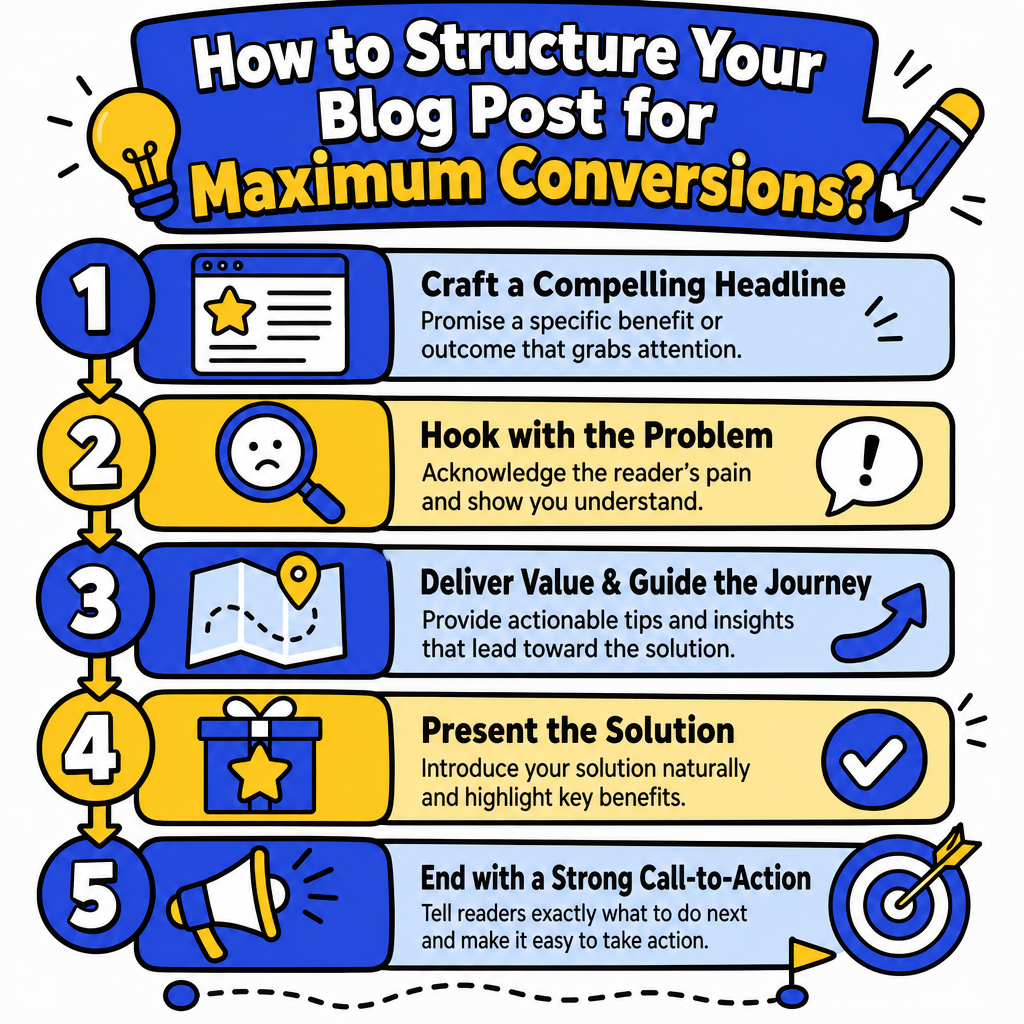
The structure of converting blog posts follows a proven formula that guides readers from problem awareness to solution consideration. Start with a compelling headline that promises a specific benefit or outcome. Your introduction should immediately acknowledge the reader's problem and preview the solution you'll provide.
Use the "Problem-Agitation-Solution" framework within your content structure. First, clearly define the problem your audience faces. Then, agitate that problem by explaining the consequences of not addressing it. Finally, present your solution as the logical next step.
| Blog Post Section | Conversion Purpose | Key Elements |
|---|---|---|
| Headline | Attract qualified traffic | Specific benefit, urgency, curiosity |
| Introduction | Hook and qualify readers | Problem acknowledgment, solution preview |
| Body Content | Build trust and authority | Evidence, examples, step-by-step guidance |
| Call-to-Action | Drive desired action | Clear next step, value proposition |
| Conclusion | Reinforce key message | Summary, urgency, final CTA |
What Content Elements Drive the Highest Conversions?
Certain content elements consistently outperform others when it comes to driving conversions from blog posts. Case studies and real-world examples provide social proof while demonstrating practical applications of your advice. Include specific metrics and outcomes whenever possible to add credibility.
Interactive elements like checklists, templates, or calculators give readers immediate value while capturing contact information. These lead magnets work particularly well when they directly relate to your blog post topic and provide actionable tools readers can implement immediately.
Strategic internal linking helps keep readers engaged with your content ecosystem while building topical authority. For example, when discussing content optimization strategies, you might reference our comprehensive guide on what exactly is a content strategy for SEO to provide additional context without losing the reader's attention.
How Should You Incorporate Calls-to-Action?
Effective calls-to-action in blog posts feel natural and provide genuine value rather than pushy sales pitches. Place your primary CTA after you've delivered substantial value but before readers lose interest. This typically occurs around the 60-70% mark of your content.
Use action-oriented language that clearly communicates the next step and expected outcome. Instead of generic phrases like "learn more," try specific CTAs like "Download the complete checklist" or "Get your free content audit." The more specific your CTA, the higher your conversion rates will be.
How to Optimize Blog Posts for Search and Conversions Simultaneously?
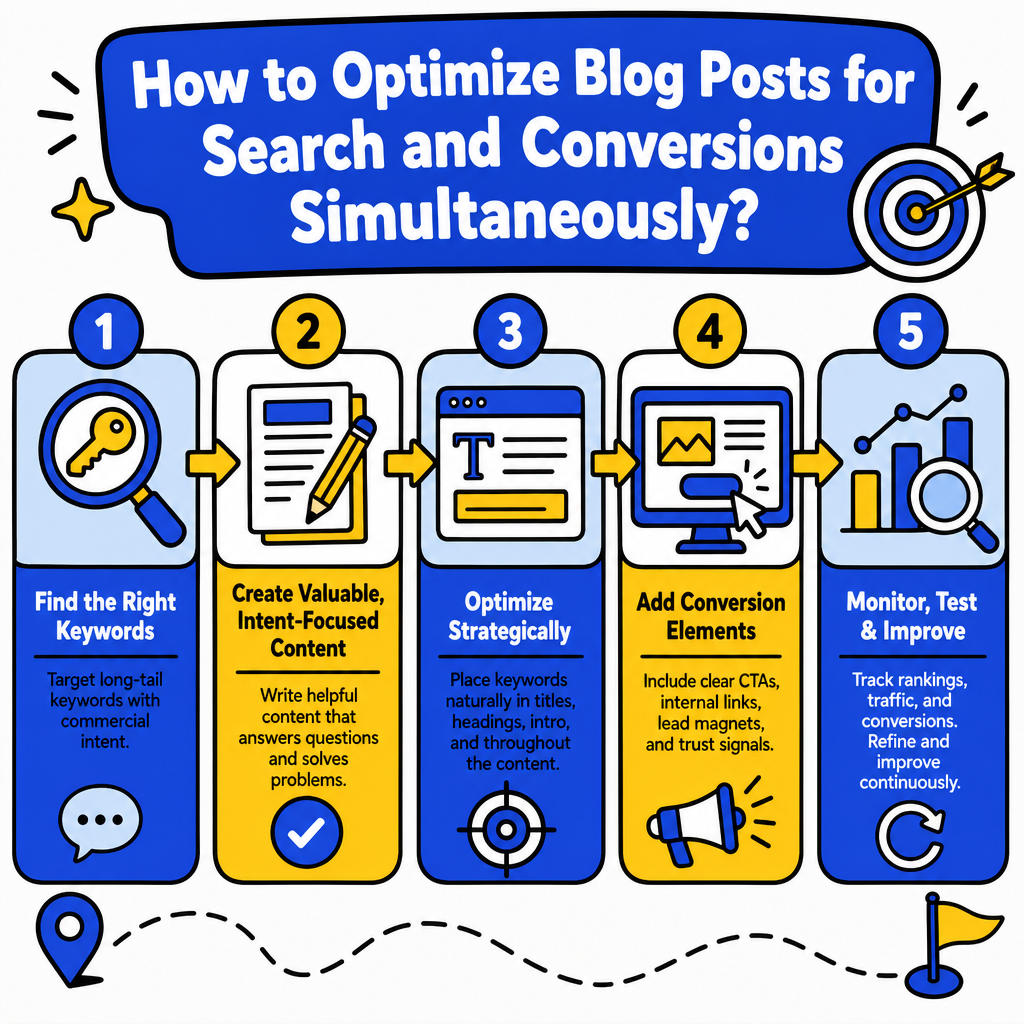
Balancing SEO optimization with conversion goals requires strategic keyword placement that feels natural to readers. Focus on long-tail keywords that indicate commercial intent rather than just high search volume terms. These keywords typically convert better because they capture users with specific needs.
Technical optimization plays a crucial role in both search rankings and user experience. Ensure your blog posts load quickly, display properly on mobile devices, and include relevant internal links to related content. For businesses looking to maximize their content impact, understanding why small business SEO is different from enterprise SEO can help tailor your optimization approach.
Meta descriptions serve as your blog post's sales pitch in search results. Write compelling meta descriptions that include your target keyword while clearly communicating the value readers will receive. Think of your meta description as a mini-advertisement that must convince searchers to click through to your content.
What Role Does Content Quality Play in Conversions?
High-quality content builds the trust necessary for conversions by demonstrating expertise and providing genuine value. Invest time in thorough research, fact-checking, and citing authoritative sources. According to Google's E-A-T guidelines, expertise, authoritativeness, and trustworthiness directly impact both search rankings and user confidence.
Avoid thin content that merely restates information available elsewhere. Instead, provide unique insights, original research, or fresh perspectives on common topics. This differentiation helps your blog posts stand out in crowded markets while giving readers compelling reasons to engage with your brand.
How Do You Measure and Improve Blog Post Conversions?
Measuring blog post performance requires tracking metrics beyond basic page views and time on page. Set up conversion tracking for specific goals like email signups, download completions, or contact form submissions. Use Google Analytics 4 to create custom events that track micro-conversions throughout the reader journey.
Heat mapping tools reveal how readers interact with your blog posts, showing where they click, scroll, and abandon the page. This data helps identify optimization opportunities like repositioning CTAs, simplifying navigation, or improving content flow.
A/B testing different elements of your blog posts provides concrete data on what drives conversions. Test headlines, CTA placement, content length, and visual elements systematically. Even small improvements in conversion rates compound over time, significantly impacting your overall marketing results.
Regular content audits help identify which blog posts drive the most conversions and why. Our guide on what exactly is a content audit and why should you care explains how to systematically evaluate and improve your existing content performance.
What Common Mistakes Kill Blog Post Conversions?
Several common mistakes can sabotage even well-researched blog posts. Writing for search engines instead of humans creates content that ranks well but fails to engage readers emotionally. Focus on solving real problems with clear, actionable advice rather than keyword stuffing.
Weak or missing calls-to-action leave readers without clear next steps after consuming your content. Every blog post should guide readers toward a specific action that moves them closer to becoming customers. This might be subscribing to your email list, downloading a resource, or scheduling a consultation.
Ignoring mobile optimization kills conversions since most blog post readers use mobile devices. Ensure your content displays properly on smaller screens, loads quickly, and includes easily clickable CTA buttons sized for touch interaction.
Conclusion
Creating high-converting blog posts requires strategic planning, quality execution, and continuous optimization. By focusing on your audience's specific needs, structuring content for both search engines and human readers, and including compelling calls-to-action, you can transform your blog from a traffic generator into a powerful conversion tool.
Remember that successful blog posts solve real problems while naturally introducing your solutions. Start implementing these strategies with your next blog post and track the results carefully. The data will guide your optimization efforts and help you refine your approach over time.
Ready to create blog posts that actually drive business results? Start by conducting thorough audience research for your next post, then apply the structural and optimization techniques outlined in this guide. Your conversion rates will thank you.

Stefan Winter
Founder & SEO Expert
Founder of Fast SEO Fix and SEO automation expert. Stefan built Fast SEO Fix to solve the tedious problem of manual SEO work. He specializes in SEO optimized content generation, keyword research, and automated SEO strategies.
