What Exactly Is a Content Audit and Why Should You Care?
Posted by
 Stefan Winter
TL;DR
A content audit is a comprehensive analysis of your website's content against performance metrics and business goals, helping you identify what's working and what needs improvement. By systematically evaluating traffic, engagement, conversions, and SEO performance, you can transform underperforming pages into traffic drivers and discover untapped content opportunities that competitors may be exploiting.
How to Conduct a Content Audit That Actually Improves Your Website Performance
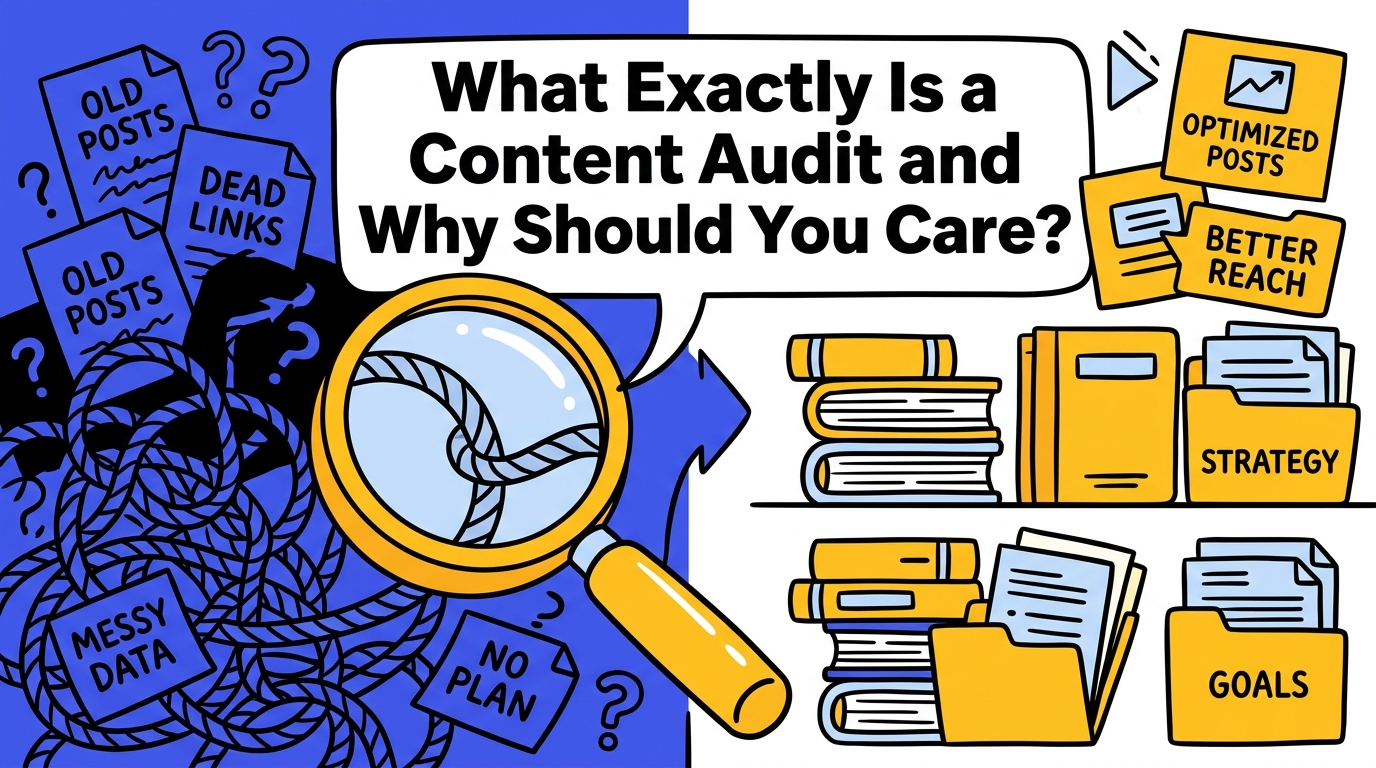
Your website contains dozens, maybe hundreds of pieces of content. But here's the uncomfortable truth: most of it probably isn't working as hard as it should be. A strategic content audit reveals which pieces drive traffic, conversions, and engagement, and which ones are just taking up digital space. By systematically evaluating your existing content, you can transform underperforming pages into traffic magnets and identify gaps that competitors are exploiting.
What Exactly Is a Content Audit and Why Should You Care?
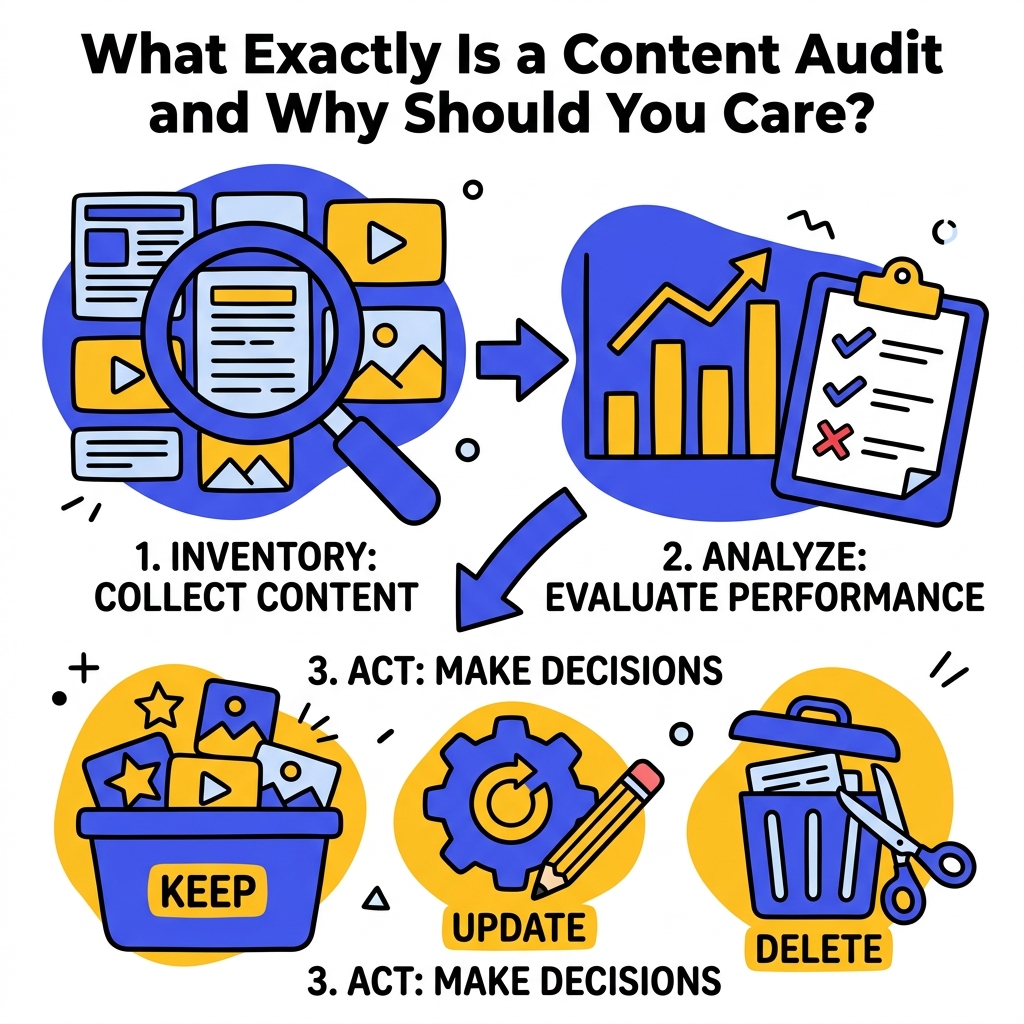
A content audit is a comprehensive analysis of all content on your website, evaluating each piece against specific performance metrics and business goals. Think of it as a health checkup for your digital content strategy. You're not just counting pages or checking for typos. Instead, you're examining traffic patterns, user engagement, conversion rates, and SEO performance to understand what's working and what needs attention.
The benefits extend far beyond simple organization. Companies that conduct regular content audits typically see 30% improvements in organic traffic within six months, according to research from the Content Marketing Institute. More importantly, you'll discover content gaps that represent untapped opportunities to capture search traffic and serve your audience better.
Modern search algorithms favor websites with comprehensive, well-organized content that addresses user intent effectively. When you understand how each piece of content contributes to your overall strategy, you can make data-driven decisions about what to keep, update, or remove.
How Do You Prepare for Your Content Audit?
Before diving into spreadsheets and analytics, establish clear objectives for your audit. Are you trying to improve organic search rankings, increase conversion rates, or streamline your content management process? Your goals will determine which metrics matter most and how you'll categorize your findings.
Set up your tracking systems properly. Ensure Google Analytics is capturing the data you need, including goal conversions, page engagement metrics, and traffic sources. If you haven't already, connect Google Search Console to understand which keywords drive traffic to each page. These tools provide the foundation for meaningful analysis.
Create a systematic approach for data collection. Most content audits benefit from a comprehensive spreadsheet that tracks URL, page title, word count, publication date, traffic metrics, and performance scores. This becomes your master document for making strategic decisions about each piece of content.
What Content Should You Include in Your Audit?
Focus on content that directly impacts your business objectives. Start with your highest-traffic pages, conversion-focused content, and pieces targeting your most important keywords. Don't waste time auditing every single blog post from 2018 if they generate minimal traffic and don't support current business goals.
Include different content types in your analysis. Blog posts, landing pages, product descriptions, and resource pages all serve different purposes and should be evaluated against appropriate benchmarks. A product page that converts visitors into customers might have lower engagement metrics than a comprehensive guide, but both can be highly successful within their contexts.
Pay special attention to cornerstone content that represents your expertise and supports your SEO strategy. These foundational pieces often require the most detailed analysis because they anchor your topical authority and influence how search engines understand your website's focus areas.
How Do You Analyze Content Performance Effectively?
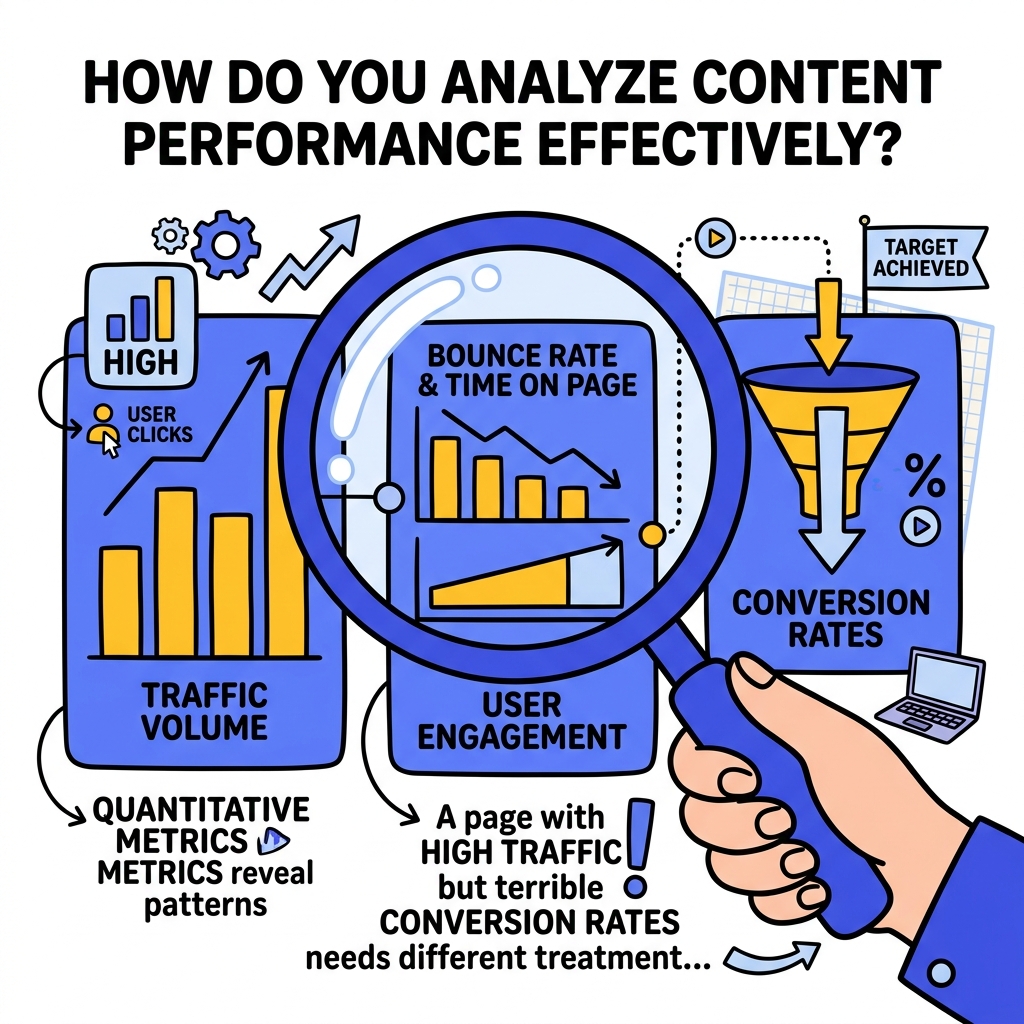
Start with quantitative metrics that reveal clear patterns. Traffic volume, bounce rate, time on page, and conversion rates tell the story of how users interact with your content. However, don't rely on single metrics. A page with high traffic but terrible conversion rates needs different treatment than a low-traffic page that converts exceptionally well.
Examine search performance data from Google Search Console. Look for pages that appear in search results but have low click-through rates. These often represent opportunities to improve titles and meta descriptions. Similarly, identify pages ranking on page two for important keywords, as these frequently need content updates or better optimization to break into top positions.
| Metric Category | Key Indicators | What It Reveals |
|---|---|---|
| Traffic Performance | Page views, unique visitors, traffic trends | Content discovery and appeal |
| Engagement Quality | Time on page, bounce rate, scroll depth | Content relevance and value |
| Search Visibility | Rankings, impressions, click-through rates | SEO effectiveness |
| Business Impact | Conversions, lead generation, revenue attribution | ROI and strategic value |
What Should You Do with Underperforming Content?
Not every piece of content deserves the same treatment. High-potential pages that rank on page two for valuable keywords often need content updates, better internal linking, or improved user experience elements. These represent your quickest wins because they already have some search engine recognition.
Consider consolidating thin or duplicate content that covers similar topics. Multiple short blog posts about related subjects often perform better when combined into comprehensive resources. This approach can improve your topical authority while reducing the number of pages competing against each other in search results.
Remove or redirect content that serves no strategic purpose. Pages with zero traffic, no conversion potential, and no SEO value can actually hurt your website's overall performance. Search engines prefer websites with focused, high-quality content over those with extensive collections of mediocre pages.
When you're working on content planning and strategy, use audit findings to inform future content creation. Gaps in your current content often represent opportunities to capture search traffic and serve audience needs more effectively.
How Can You Identify Content Gaps and Opportunities?
Compare your content coverage against competitor analysis and keyword research. Tools like Ahrefs or SEMrush can reveal topics your competitors rank for that you haven't addressed. These gaps often represent immediate opportunities to capture search traffic and establish authority in your industry.
Look for keywords where you rank in positions 11-20. These represent content that search engines recognize as relevant but not quite authoritative enough for page one. Often, expanding these pieces with additional sections, updated information, or better optimization can push them into higher-visibility positions.
Analyze your audience's questions and pain points that your current content doesn't address. Social media comments, customer service inquiries, and sales team feedback often reveal topics your audience cares about but your website doesn't cover comprehensively.
Understanding how to identify your true SEO competitors helps reveal content strategies that work in your industry and topics you might have overlooked.
What Tools Make Content Audits More Efficient?
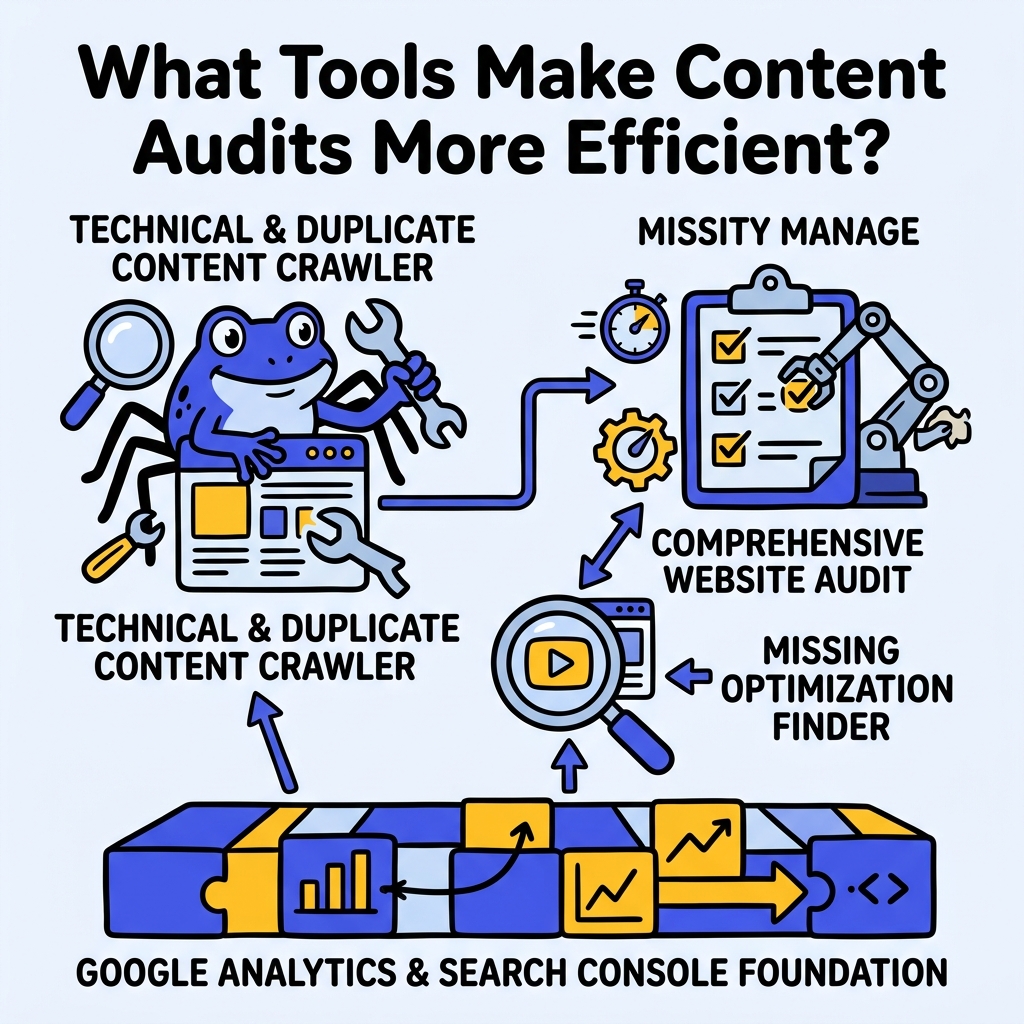
Google Analytics and Search Console provide the foundation for most content audits, but specialized tools can streamline the process significantly. Screaming Frog SEO Spider can crawl your entire website and identify technical issues, duplicate content, and missing optimization elements in minutes rather than hours.
Content audit tools like ContentKing or Conductor can automate much of the data collection and analysis process. These platforms connect multiple data sources and provide actionable recommendations based on your specific goals and industry benchmarks.
For smaller websites, a combination of Google Sheets and manual analysis often provides sufficient insight without additional tool costs. The key is consistency in your approach and metrics rather than the sophistication of your tools.
How Often Should You Conduct Content Audits?
Most websites benefit from comprehensive content audits every six to twelve months, with quarterly reviews of high-priority pages. However, the frequency depends on how quickly you publish new content and how rapidly your industry changes. E-commerce sites with frequently updated product catalogs might need monthly audits of key category pages.
Implement ongoing monitoring for your most important content. Set up alerts for significant traffic changes, ranking drops, or conversion rate fluctuations. This allows you to address problems quickly rather than waiting for your next scheduled audit.
Consider the relationship between content audits and your overall SEO strategy. When asking the right questions for SEO success, include content performance analysis as a regular component of your optimization efforts.
Conclusion
A well-executed content audit transforms your website from a collection of random pages into a strategic asset that drives business results. By systematically evaluating performance, identifying opportunities, and taking decisive action on underperforming content, you create a foundation for sustainable organic growth.
The process requires time and attention to detail, but the results justify the investment. Start with your highest-impact pages and work systematically through your content inventory. Remember that content audits aren't one-time projects but ongoing processes that keep your website competitive and valuable to your audience.
Ready to transform your website's performance through strategic content analysis? Begin your content audit today by downloading your Google Analytics data and creating a simple spreadsheet to track your findings. Your future traffic growth depends on the actions you take right now.
Frequently Asked Questions
A content audit is a comprehensive analysis of all content on your website, evaluating each piece against specific performance metrics and business goals. It examines traffic patterns, user engagement, conversion rates, and SEO performance to understand what's working and what needs attention.
Content audits help you identify underperforming pages, discover content gaps, and make data-driven decisions about your strategy. Companies conducting regular audits typically see 30% improvements in organic traffic within six months and can better align content with user intent and business objectives.
Key metrics include traffic volume, bounce rate, time on page, conversion rates, search rankings, impressions, click-through rates, and user engagement indicators. You should also analyze data from Google Analytics and Google Search Console to understand both user behavior and search performance.
Focus on content that directly impacts your business objectives, including high-traffic pages, conversion-focused content, and pieces targeting important keywords. Include different content types like blog posts, landing pages, and product descriptions, with special attention to cornerstone content that anchors your topical authority.
Treatment depends on the content's potential. High-potential pages ranking on page two for valuable keywords often benefit from content updates and better optimization. Consider consolidating thin or duplicate content into comprehensive resources, and remove content that generates minimal traffic and doesn't support business goals.

Stefan Winter
Founder & SEO Expert
Founder of Fast SEO Fix and SEO automation expert. Stefan built Fast SEO Fix to solve the tedious problem of manual SEO work. He specializes in SEO optimized content generation, keyword research, and automated SEO strategies.
