How Do You Identify Your True SEO Competitors?
Posted by
 Stefan Winter
TL;DR
Identifying true SEO competitors requires searching your primary keywords and analyzing the top-ranking websites, then conducting comprehensive analysis of their keyword strategies, content approaches, technical foundations, and backlink profiles. By understanding what makes competitors successful in search results, you can uncover keyword gaps, content opportunities, and technical advantages that drive measurable improvements to your own search visibility.
How to Master Competitor SEO Analysis in 2026: Your Complete Strategic Guide

Understanding your competitors' SEO strategies isn't just smart business - it's essential for survival in today's digital landscape. Competitor SEO analysis reveals the tactics driving your rivals' search rankings, uncovers untapped keyword opportunities, and exposes gaps in their strategies you can exploit. This comprehensive guide will walk you through the exact process of conducting competitor SEO analysis that delivers actionable insights and measurable results.
How Do You Identify Your True SEO Competitors?

Before diving into analysis, you need to identify who you're actually competing against in search results. Your business competitors aren't always your SEO competitors, and this distinction matters more than you might think.
Start by searching for your primary keywords and noting which websites consistently appear in the top 10 results. These are your true SEO competitors. Use tools like SEMrush, Ahrefs, or Moz to discover which sites compete for your target keywords. Look beyond obvious competitors - you might find niche blogs, resource sites, or unexpected players dominating your keyword space.
Create a list of 5-8 primary competitors and 3-5 secondary ones. Primary competitors should be direct business rivals with similar offerings, while secondary competitors might include content sites, forums, or industry publications ranking for your keywords. This balanced approach ensures you capture the complete competitive landscape affecting your search visibility.
What Keywords Are Your Competitors Actually Ranking For?
Keyword gap analysis forms the backbone of effective competitor SEO. This process reveals which keywords your competitors rank for that you don't, highlighting immediate opportunities for content creation and optimization.
Using competitor analysis tools, export your top competitors' ranking keywords and compare them against your own. Focus on keywords where competitors rank in positions 1-10 but you don't appear at all. Pay special attention to long-tail keywords with decent search volume - these often represent quick wins with less competition.
Look for patterns in competitor keyword strategies. Are they targeting specific product categories you've overlooked? Do they dominate certain question-based queries? Are there seasonal keywords they capitalize on? This intelligence helps shape your SEO content strategy and reveals content gaps in your current approach.
How to Prioritize Competitor Keywords for Maximum Impact
Not all competitor keywords deserve equal attention. Create a scoring system based on search volume, keyword difficulty, business relevance, and competitor ranking position. Keywords with high search volume, moderate difficulty, and strong business alignment should top your priority list.
Consider the search intent behind each keyword. Informational keywords might require blog posts or guides, while commercial keywords need product or service pages. This understanding helps you plan the right content type for each opportunity you discover.
How Strong Is Your Competitors' Content Strategy?

Content analysis reveals how competitors attract and engage their audience through search. Examine their top-performing pages, content formats, publishing frequency, and topic coverage to understand their content strategy.
Identify competitors' most successful content by analyzing pages with the highest organic traffic and social shares. Look at their content depth, formatting, use of visuals, and internal linking patterns. Notice how they structure their articles, what topics they cover comprehensively, and which content gaps exist in their coverage.
Content planning becomes more strategic when informed by competitor analysis. Document their content themes, publication schedules, and seasonal content patterns. This intelligence helps you identify underserved topics and develop content that fills market gaps.| Content Analysis Factor | What to Examine | Competitive Advantage Opportunity |
|---|---|---|
| Content Depth | Word count, topic coverage, detail level | Create more comprehensive resources |
| Content Freshness | Publication dates, update frequency | Maintain more current information |
| Content Format | Text, video, infographics, tools | Diversify with underutilized formats |
| User Engagement | Comments, shares, time on page | Improve content interactivity |
| Internal Linking | Link structure, anchor text usage | Develop stronger site architecture |
What Does Their Technical SEO Foundation Look Like?
Technical SEO analysis uncovers the infrastructure supporting your competitors' search performance. Examine their site speed, mobile optimization, URL structure, schema markup, and overall technical health to identify areas where you can gain advantages.
Use tools like Google PageSpeed Insights, GTmetrix, or Screaming Frog to analyze competitor sites. Check their Core Web Vitals scores, mobile responsiveness, and crawlability. Look for technical issues they haven't addressed - slow loading times, broken links, or missing schema markup represent opportunities for you to outperform them.
Pay attention to their URL structure and site architecture. How do they organize content? What internal linking strategies do they employ? How do they handle duplicate content or pagination? These insights inform your own technical SEO improvements and help you build a more search-friendly site structure.
How Are Competitors Building Their Backlink Profiles?
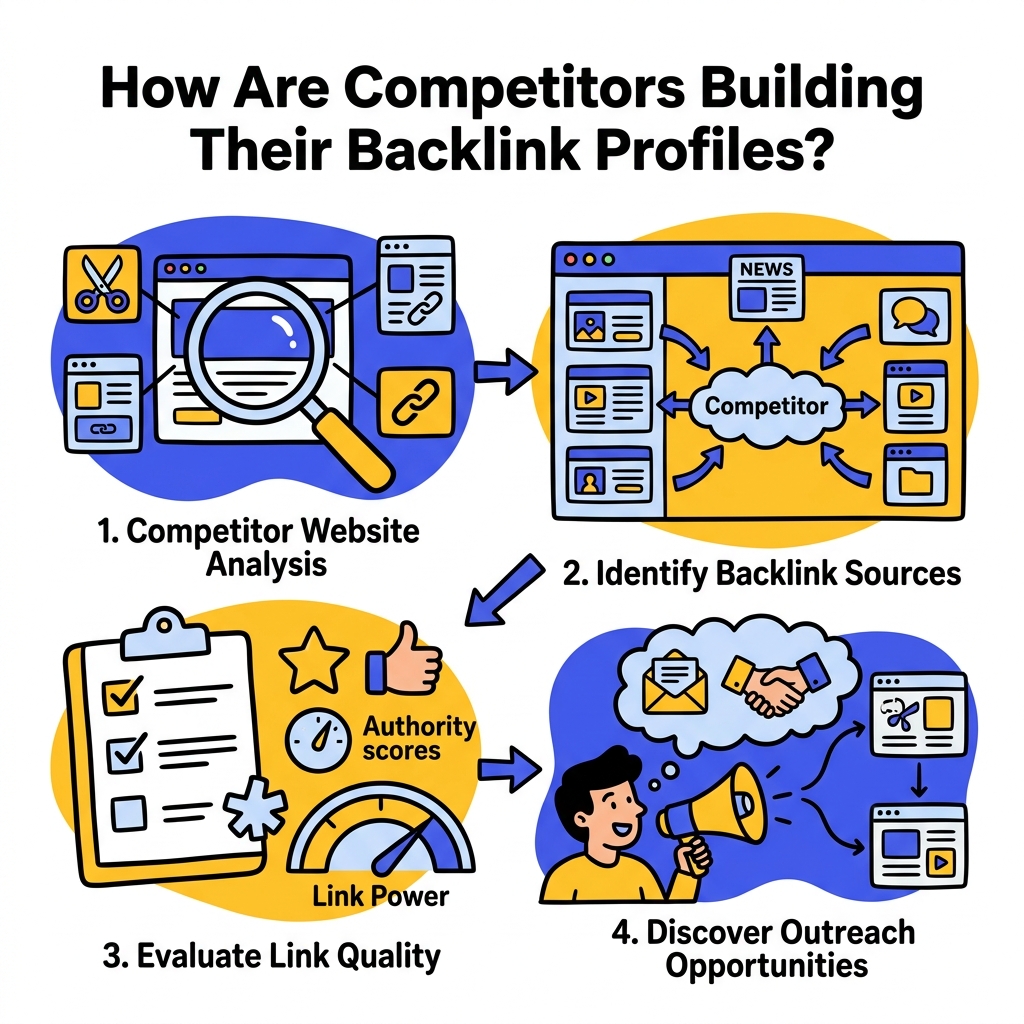
Backlink analysis reveals your competitors' link-building strategies and uncovers potential link opportunities for your own site. Understanding where competitors earn their backlinks helps you develop more effective outreach and content strategies.
Analyze the types of sites linking to your competitors. Are they earning links from industry publications, resource pages, guest posting, or partnerships? Look at their most valuable backlinks and consider how you might earn similar links. Pay attention to broken links pointing to competitor content - these represent immediate link-building opportunities.
According to Moz's research on link building, earning high-quality backlinks remains one of the strongest ranking factors. Study your competitors' linkable assets - what content naturally attracts links? Tools, research studies, comprehensive guides, and industry resources typically perform well for link acquisition.
How Can You Monitor Competitor Changes Over Time?
Competitor SEO isn't a one-time analysis - it requires ongoing monitoring to stay ahead of strategic shifts and new opportunities. Set up systems to track competitor keyword rankings, content publication, and backlink acquisition on a regular basis.
Create monthly competitor reports tracking key metrics like keyword rankings, organic traffic estimates, new content publication, and significant backlink gains. This ongoing intelligence helps you respond quickly to competitor moves and identify emerging trends in your industry.
Use Google Alerts to monitor when competitors publish new content or earn media coverage. Set up alerts for their brand names, key personnel, and important industry terms. This real-time monitoring ensures you stay informed about competitor activities that might impact your SEO strategy.
What Tools Make Competitor SEO Analysis More Efficient?
The right tools transform competitor analysis from a time-consuming manual process into an efficient, data-driven strategy. SEMrush and Ahrefs offer comprehensive competitor analysis features, while specialized tools like SpyFu focus specifically on competitor intelligence.
For small business SEO, free tools like Google's Keyword Planner, Ubersuggest's free tier, and manual analysis can provide valuable insights without significant investment. The key is consistency in your analysis rather than the sophistication of your tools.
How Do You Turn Competitor Insights Into Actionable Strategy?
Analysis without action delivers no results. Transform your competitor research into a concrete SEO strategy by prioritizing opportunities, creating content plans, and setting measurable goals based on your findings.
Develop a competitor-informed content calendar targeting keyword gaps you've identified. Create content that improves upon competitor efforts by being more comprehensive, current, or user-friendly. Use competitor backlink analysis to guide your outreach efforts and partnership development.
Set specific, measurable goals based on competitor benchmarks. If your main competitor ranks for 500 more keywords than you do, create a plan to close that gap over the next 12 months. Track your progress against competitor performance to measure the effectiveness of your strategy adjustments.
Conclusion
Mastering competitor SEO analysis gives you a significant advantage in the search rankings battle. By systematically analyzing competitor keywords, content strategies, technical implementation, and backlink profiles, you uncover opportunities that would otherwise remain hidden. The key to success lies in consistent analysis, strategic implementation, and ongoing monitoring of competitive changes.
Remember that competitor analysis should inform your strategy, not dictate it entirely. Use these insights to enhance your unique value proposition and create content that serves your audience better than existing options. Start with the keyword gap analysis outlined above, then gradually expand your competitive intelligence capabilities as your SEO program matures.
Ready to dominate your competitors in search results? Begin your competitor SEO analysis today and transform those insights into ranking improvements that drive real business growth.
Frequently Asked Questions
Search your primary keywords and note which websites consistently appear in the top 10 results. Use tools like SEMrush, Ahrefs, or Moz to identify sites competing for your target keywords. Create a list of 5-8 primary competitors (direct business rivals) and 3-5 secondary competitors (content sites, forums, or publications ranking for your keywords).
Keyword gap analysis compares your competitors' ranking keywords against your own to identify keywords they rank for that you don't. This reveals immediate content opportunities, especially long-tail keywords with decent search volume that represent quick wins with less competition.
Create a scoring system based on search volume, keyword difficulty, business relevance, and competitor ranking position. Prioritize keywords with high search volume, moderate difficulty, and strong alignment with your business. Also consider search intent—informational keywords need blog posts while commercial keywords need product pages.
Examine their top-performing pages, content depth, formatting, use of visuals, publishing frequency, internal linking patterns, and topic coverage. Identify content gaps they haven't addressed and notice which content formats (text, video, infographics, tools) they use most effectively.
Technical SEO analysis reveals infrastructure supporting your competitors' rankings, including site speed, mobile optimization, Core Web Vitals, schema markup, and URL structure. Identifying technical issues they haven't fixed—like slow loading times or missing schema—represents opportunities for you to outperform them in search results.

Stefan Winter
Founder & SEO Expert
Founder of Fast SEO Fix and SEO automation expert. Stefan built Fast SEO Fix to solve the tedious problem of manual SEO work. He specializes in SEO optimized content generation, keyword research, and automated SEO strategies.
