What Exactly Is a Content Strategy for SEO?
Posted by
 Stefan Winter
TL;DR
A content strategy for SEO is a roadmap for creating, publishing, and optimizing content that ranks in search engines while delivering real value to your audience. Success requires comprehensive keyword research, competitive analysis, strategic content mapping across the customer journey, and continuous technical optimization to balance algorithmic requirements with genuine user needs.
How to Build a Winning Content Strategy for SEO That Actually Drives Traffic
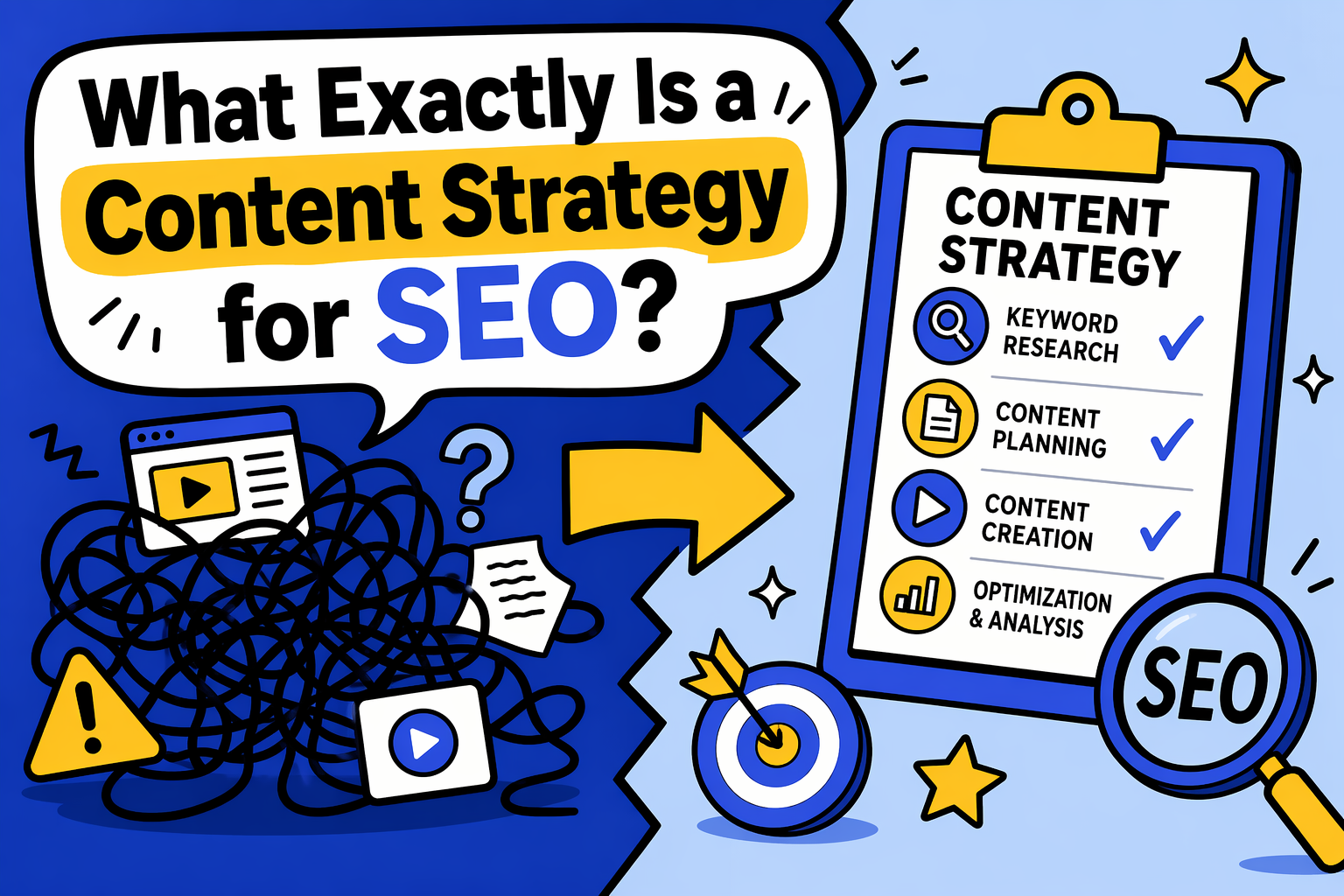
Creating content without a strategic SEO foundation is like building a house without blueprints. You might end up with something that looks decent, but it probably won't stand the test of time or serve its intended purpose effectively. A well-crafted content strategy for SEO bridges the gap between what your audience searches for and what your business offers, turning organic traffic into meaningful engagement and conversions.
In this comprehensive guide, you'll discover how to develop a content strategy that not only ranks well in search engines but also delivers real value to your audience. We'll walk through each essential component, from initial research to ongoing optimization, giving you the tools to create content that performs in 2026 and beyond.
What Exactly Is a Content Strategy for SEO?
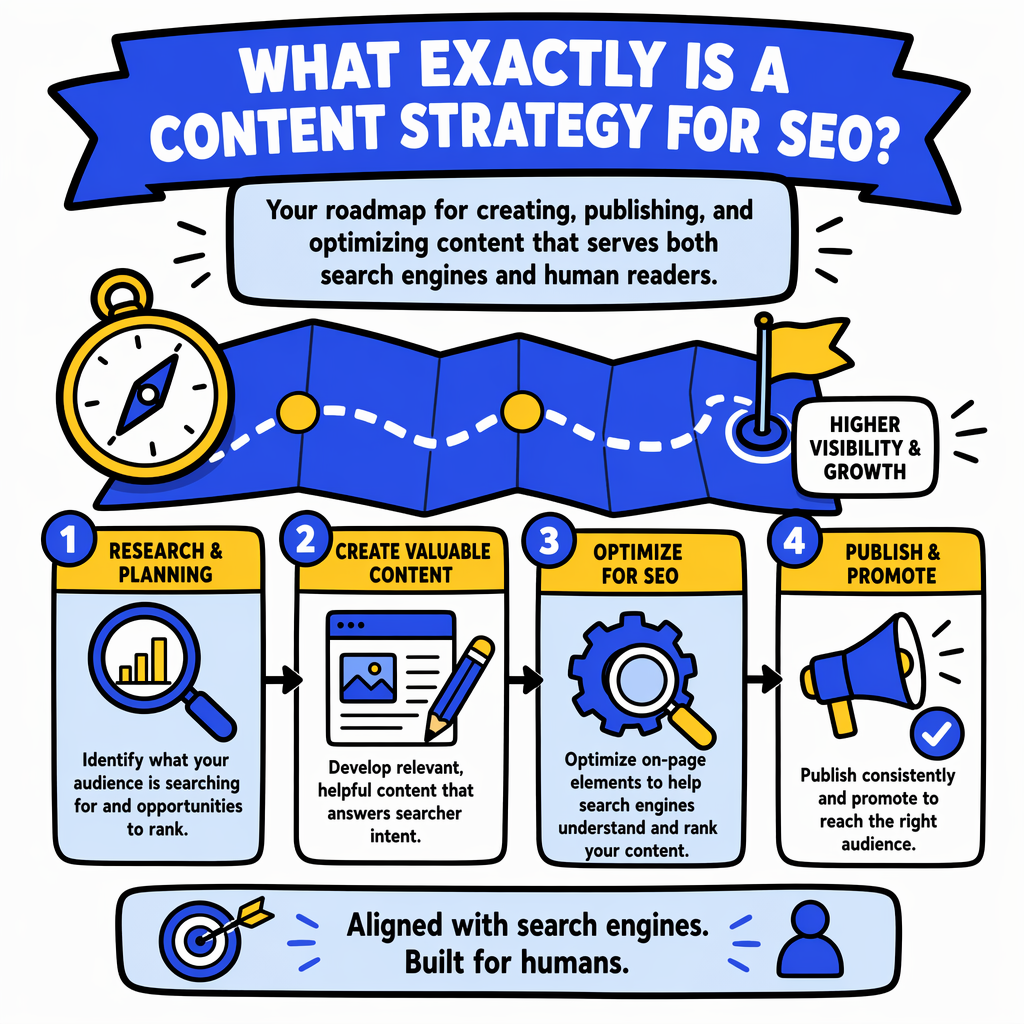
A content strategy for SEO is your roadmap for creating, publishing, and optimizing content that serves both search engines and human readers. Unlike traditional content marketing, which focuses primarily on engagement and brand awareness, an SEO-focused content strategy prioritizes discoverability through organic search while maintaining quality and relevance.
This approach involves understanding search intent, mapping content to the customer journey, and creating a sustainable system for producing content that ranks well and converts visitors into customers. The strategy encompasses everything from keyword research and content planning to technical optimization and performance measurement.
The most successful content strategies for SEO in 2026 recognize that search engines have become increasingly sophisticated at understanding context, user intent, and content quality. This means your strategy must balance optimization techniques with genuine value creation, ensuring your content satisfies both algorithmic requirements and human needs.
How Do You Research and Identify Content Opportunities?
Start with Comprehensive Keyword Research
Begin your content strategy by identifying what your target audience actually searches for. Use tools like Google Keyword Planner, SEMrush, or Ahrefs to discover primary keywords, long-tail variations, and related terms in your industry. Focus on keywords that align with your business goals and have realistic competition levels for your domain authority.
Look beyond search volume numbers and examine the intent behind each keyword. Are users looking for information, trying to make a purchase, or comparing options? This understanding will shape how you approach each piece of content and what type of value you need to provide.
Analyze Your Competition's Content Gaps
Study what your competitors are doing well and, more importantly, what they're missing. Understanding how to identify your true SEO competitors gives you insight into who you're really competing against in search results. Look for topics they haven't covered thoroughly, questions they haven't answered, or angles they haven't explored.
Create a content gap analysis by comparing your existing content with what ranks well in your industry. This reveals opportunities where you can provide better, more comprehensive coverage of important topics.
What Types of Content Should Your SEO Strategy Include?
Map Content Types to Search Intent
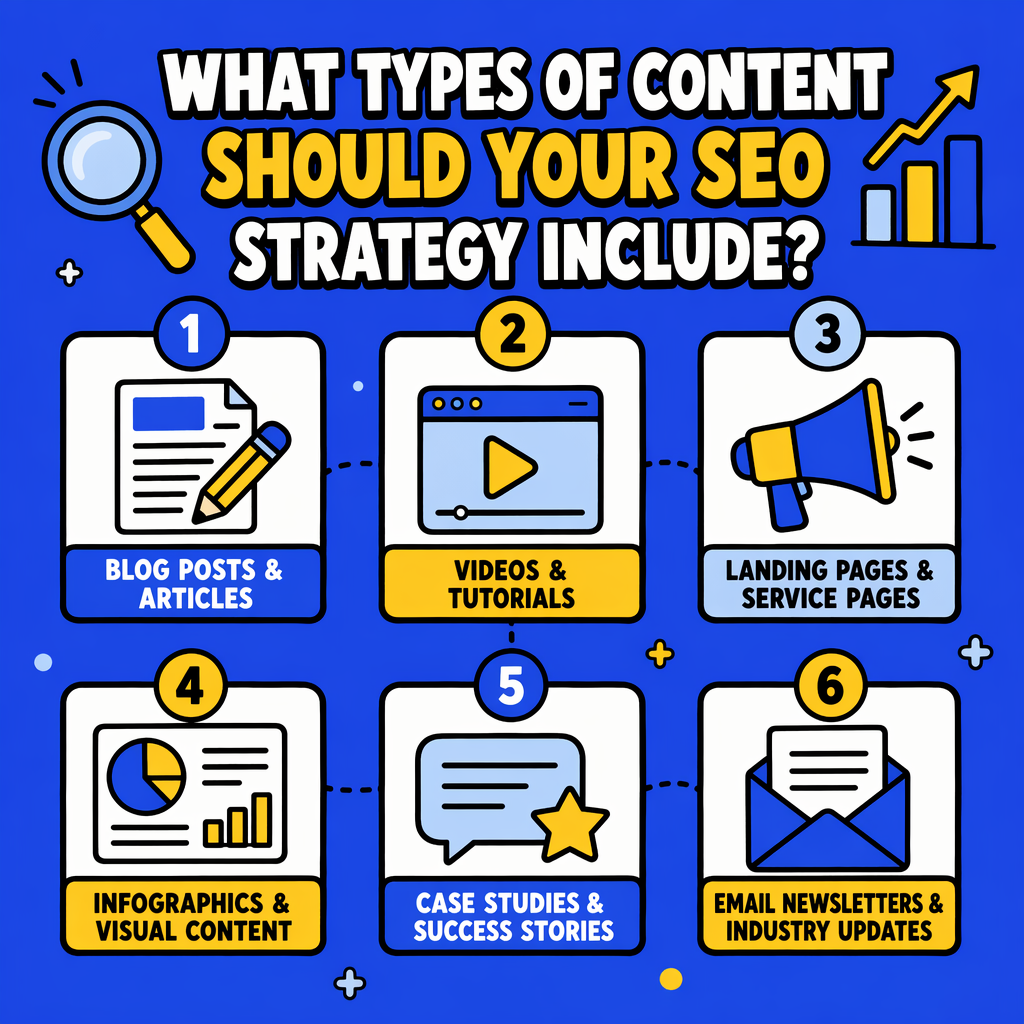
Different search queries require different content approaches. Informational queries work well with blog posts, guides, and educational resources. Commercial investigation searches benefit from comparison articles, reviews, and case studies. Transactional queries need product pages, landing pages, and conversion-focused content.
Your content strategy for SEO should include a mix of content types that address various stages of the customer journey:
- Top-of-funnel content: Educational blog posts, how-to guides, industry insights
- Middle-of-funnel content: Comparison articles, case studies, detailed product information
- Bottom-of-funnel content: Product pages, service descriptions, testimonials
Create Content Clusters Around Core Topics
Organize your content into topic clusters that demonstrate expertise and authority in specific areas. Each cluster should have a pillar page covering a broad topic comprehensively, supported by cluster pages that dive deeper into specific subtopics. This structure helps search engines understand your content relationships and can improve your rankings for related keywords.
| Content Type | Primary Purpose | SEO Benefit | Best Use Cases |
|---|---|---|---|
| Pillar Pages | Comprehensive topic coverage | High authority building | Core business topics |
| Cluster Content | Detailed subtopic exploration | Long-tail keyword targeting | Supporting specific queries |
| FAQ Pages | Direct question answering | Featured snippet opportunities | Common customer questions |
| Case Studies | Proof and credibility | Local and industry authority | Conversion-focused content |
How Do You Optimize Content for Maximum SEO Impact?
Focus on Technical SEO Fundamentals
Every piece of content in your strategy needs proper technical optimization. This includes optimized title tags, meta descriptions, header structure, and internal linking. Ensure your content loads quickly, works well on mobile devices, and follows SEO best practices for URL structure and image optimization.
Pay attention to on-page elements that search engines use to understand your content context. Use descriptive headings, include relevant keywords naturally throughout your text, and structure your content logically with clear sections and subsections.
Implement Strategic Internal Linking
Connect your content pieces through thoughtful internal linking that helps both users and search engines navigate your site. Link to related articles, supporting resources, and conversion pages where appropriate. For example, when discussing content creation processes, you might reference what content planning involves and why it matters to provide additional context.
Internal linking also helps distribute page authority throughout your site and keeps visitors engaged with your content longer, which can positively impact your search rankings.
How Do You Measure and Improve Your Content Strategy Performance?
Track the Right SEO Metrics
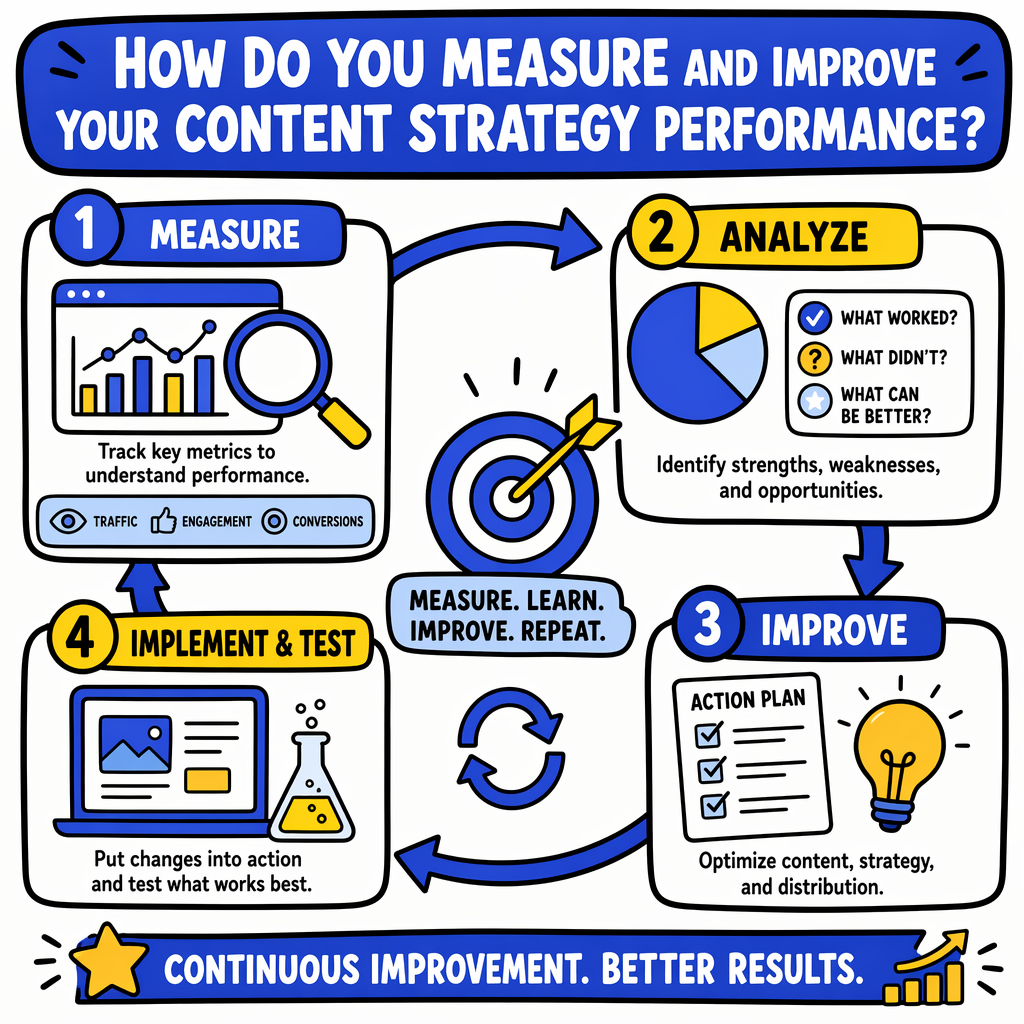
Monitor metrics that directly relate to your content strategy goals. Track organic traffic growth, keyword rankings, click-through rates from search results, and conversion rates from organic traffic. Use tools like Google Analytics, Google Search Console, and third-party SEO platforms to gather comprehensive performance data.
According to Google's Search Central documentation, focusing on user experience metrics alongside traditional SEO metrics provides a more complete picture of content performance. Monitor metrics like bounce rate, time on page, and pages per session to understand how well your content satisfies user intent.
Continuously Refine Based on Performance Data
Your content strategy for SEO should evolve based on what the data tells you. Identify your highest-performing content and analyze what makes it successful. Look for patterns in topics, formats, or optimization techniques that consistently drive results.
Update and refresh existing content regularly to maintain its relevance and search performance. Search engines favor fresh, up-to-date content, and users appreciate current information. Consider the different approaches needed for small business SEO versus enterprise SEO when scaling your content strategy.
What Common Mistakes Should You Avoid?
Don't Sacrifice Quality for Quantity
One of the biggest mistakes in content strategy for SEO is prioritizing volume over value. Publishing large amounts of thin, low-quality content can actually hurt your search rankings and user experience. Focus on creating fewer pieces of high-quality, comprehensive content that truly serves your audience's needs.
Search engines have become increasingly sophisticated at identifying and rewarding genuinely helpful content. According to research from Search Engine Land, quality signals now play a more significant role in rankings than ever before.
Avoid Keyword Stuffing and Over-Optimization
While keywords remain important, over-optimizing your content can backfire. Write naturally for your audience first, then optimize for search engines. Use keywords and related terms naturally throughout your content, but prioritize readability and value over keyword density.
Modern SEO success comes from understanding and satisfying search intent rather than manipulating keyword frequencies. Create content that comprehensively addresses the topics and questions your audience cares about.
Conclusion
Building an effective content strategy for SEO requires balancing technical optimization with genuine value creation. By focusing on thorough research, strategic content planning, proper optimization, and continuous improvement based on performance data, you can create a content system that drives sustainable organic growth.
Remember that successful SEO content strategy is a long-term investment. The content you create today should continue delivering value and traffic months or even years into the future. Start implementing these strategies systematically, measure your results consistently, and refine your approach based on what works best for your specific audience and business goals.
Ready to transform your content strategy? Begin with a comprehensive audit of your existing content, identify your biggest opportunities, and start creating content that serves both your audience and your business objectives. The investment in strategic, SEO-focused content creation will pay dividends in increased visibility, traffic, and conversions.
Frequently Asked Questions
A traditional content strategy focuses primarily on engagement and brand awareness, while an SEO content strategy prioritizes discoverability through organic search while maintaining quality and relevance. SEO strategies specifically balance optimization techniques with value creation to satisfy both search algorithms and human readers.
Start with comprehensive keyword research using tools like Google Keyword Planner, SEMrush, or Ahrefs, focusing on search intent rather than just volume. Then analyze your competitors' content gaps to find topics they haven't covered thoroughly or angles they've missed.
Your strategy should include a mix of content types mapped to different stages of the customer journey: top-of-funnel educational content (guides, blog posts), middle-of-funnel comparison content (case studies, reviews), and bottom-of-funnel conversion content (product pages, testimonials). Organizing content into topic clusters with pillar pages and supporting cluster pages also improves SEO performance.
Essential technical elements include optimized title tags, meta descriptions, header structure, page speed, mobile responsiveness, URL structure, and image optimization. You should also implement strategic internal linking to help both users and search engines navigate your site effectively.
Your content strategy should be reviewed and updated regularly as search algorithms evolve, user behavior changes, and your business goals shift. Monitor performance metrics, analyze competitor activity, and adjust your approach at least quarterly to maintain relevance and rankings.

Stefan Winter
Founder & SEO Expert
Founder of Fast SEO Fix and SEO automation expert. Stefan built Fast SEO Fix to solve the tedious problem of manual SEO work. He specializes in SEO optimized content generation, keyword research, and automated SEO strategies.
