What Is SEO Content Generation, and Why Does It Matter?
Posted by
 Stefan Winter
How to Build an SEO Content Generation Process That Actually Ranks
If you have ever stared at a blank page wondering what to write, how to structure it, and whether search engines will even notice it, you are not alone. SEO content generation is one of the most misunderstood disciplines in digital marketing. It is not just about writing words and sprinkling in keywords. It is a repeatable, strategic process that connects what your audience is searching for with content that genuinely answers their questions. This guide walks you through exactly how to build that process from the ground up, so every piece of content you produce has a real shot at ranking.
What Is SEO Content Generation, and Why Does It Matter?
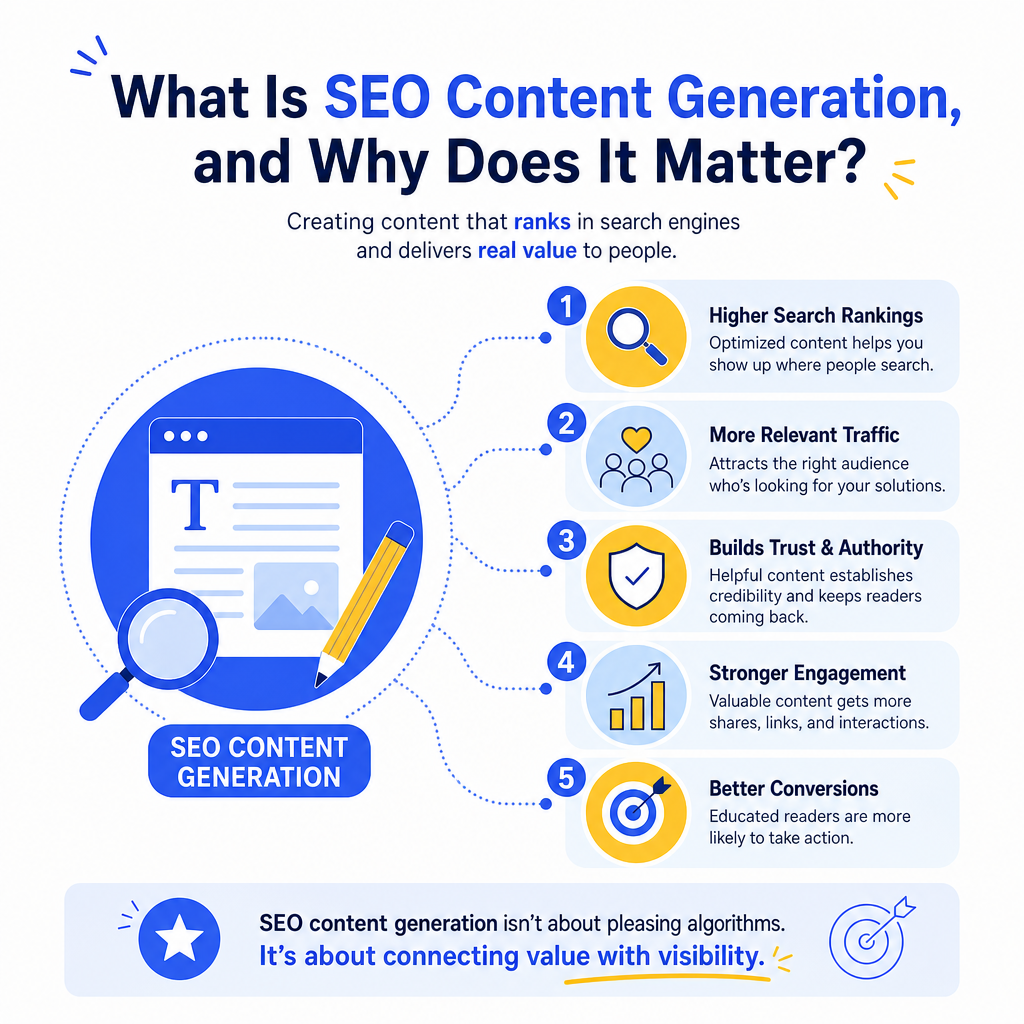
SEO content generation is the practice of creating written content that is specifically designed to perform well in search engine results pages (SERPs) while delivering genuine value to readers. The goal is not to trick algorithms. It is to produce content that search engines can understand and that people actually want to read.
In 2026, the stakes are higher than ever. Search engines have grown significantly more sophisticated at evaluating content quality, intent alignment, and topical authority. Simply publishing content is no longer enough. You need a structured approach that accounts for keyword research, user intent, content depth, and technical formatting, all working together.
For website visitors who are just beginning to explore this topic, understanding what makes content "SEO content" in the first place is a smart starting point before diving into the generation process itself.
Step 1: Start With Keyword Research Rooted in Intent
Before you write a single word, you need to know what your audience is actually searching for. Keyword research is the foundation of effective SEO content generation, but the real skill lies in understanding the intent behind each query.
There are four primary types of search intent:
- Informational: The user wants to learn something (example: "how does SEO work")
- Navigational: The user is looking for a specific website or brand
- Commercial: The user is comparing options before making a decision
- Transactional: The user is ready to take action or make a purchase
Once you have a target keyword, look at what is already ranking for that term. Study the top results. Notice the format they use, the questions they answer, and the depth they go into. This research phase shapes every decision that follows.
Step 2: Map Your Content to a Clear Structure
How Should You Outline an SEO Article?
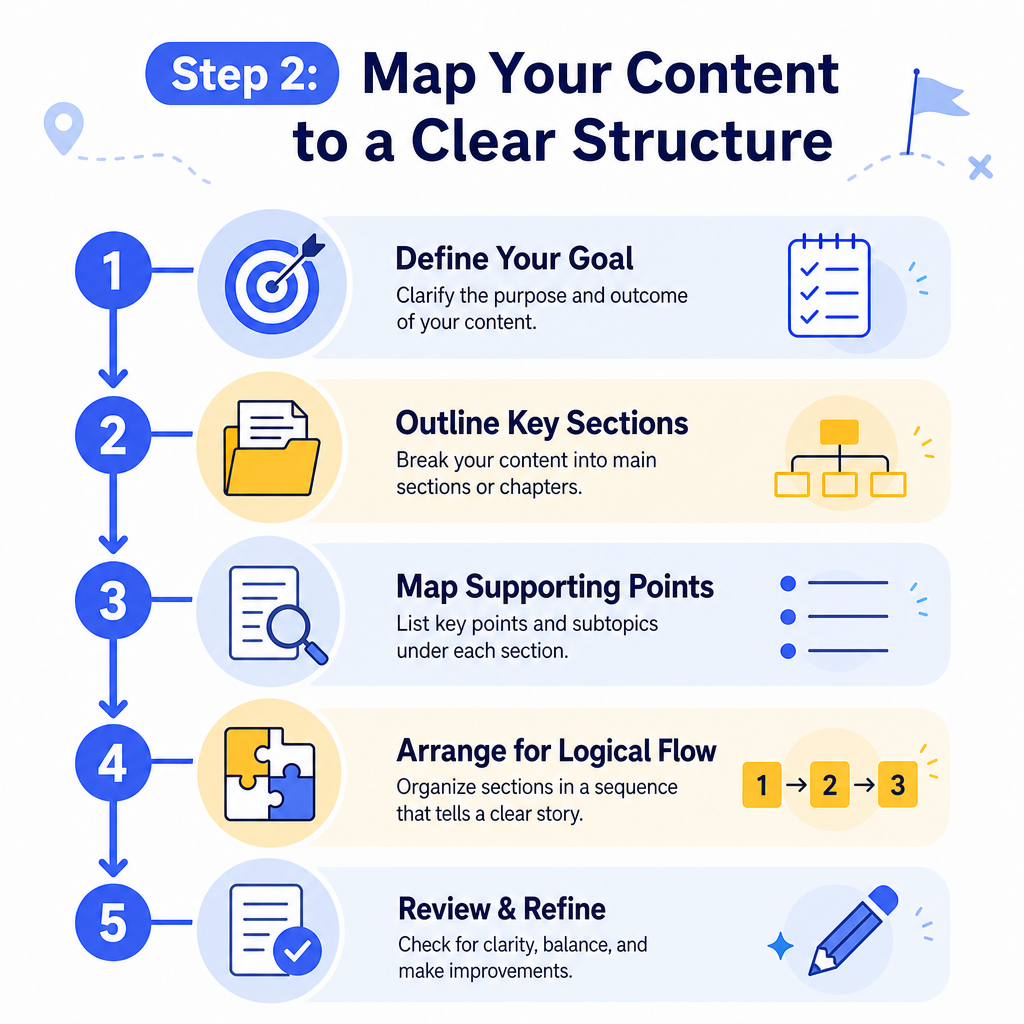
A well-built outline is the skeleton of great SEO content. Before writing, map out your H2 and H3 headings based on the subtopics your target keyword naturally branches into. This does three things: it keeps your writing focused, it signals topical depth to search engines, and it makes your content easier to navigate for readers.
Here is a simple outlining framework you can follow:
1. Introduction: Hook the reader and state what they will learn 2. Core sections (H2s): Cover each major subtopic in logical order 3. Supporting subsections (H3s): Break down complex points within each section 4. Conclusion: Summarize key takeaways and include a call to action
A solid outline also helps you identify gaps in your knowledge before you start writing, which saves significant time during the drafting phase.
What Role Does Content Length Play?
Content length should be determined by the topic, not by an arbitrary word count target. Some queries are best answered in 600 words. Others require 2,500 words to cover the topic with the depth that earns a top ranking. According to research from Backlinko's analysis of Google's ranking factors, longer content tends to rank higher on average, but quality and comprehensiveness matter far more than raw word count.
The practical takeaway: write enough to fully answer the question your target keyword implies. If you find yourself padding content to hit a number, cut it back.
Step 3: Write Content That Balances Search Engines and Real Readers
This is where many content creators go wrong. They optimize so aggressively for keywords that the content becomes robotic and hard to read. Or they write beautifully for humans but forget to include the signals search engines need to understand the page.
The balance is achievable, and it comes down to a few core principles:
- Use your primary keyword naturally in the title, first paragraph, at least one H2, and throughout the body text without forcing it
- Include semantically related terms that support the main topic (these help search engines understand context)
- Write for clarity first because readable content keeps users on the page longer, which is a positive engagement signal
- Use short paragraphs and formatting to make the content scannable on both desktop and mobile
Step 4: Optimize Every Element of the Page
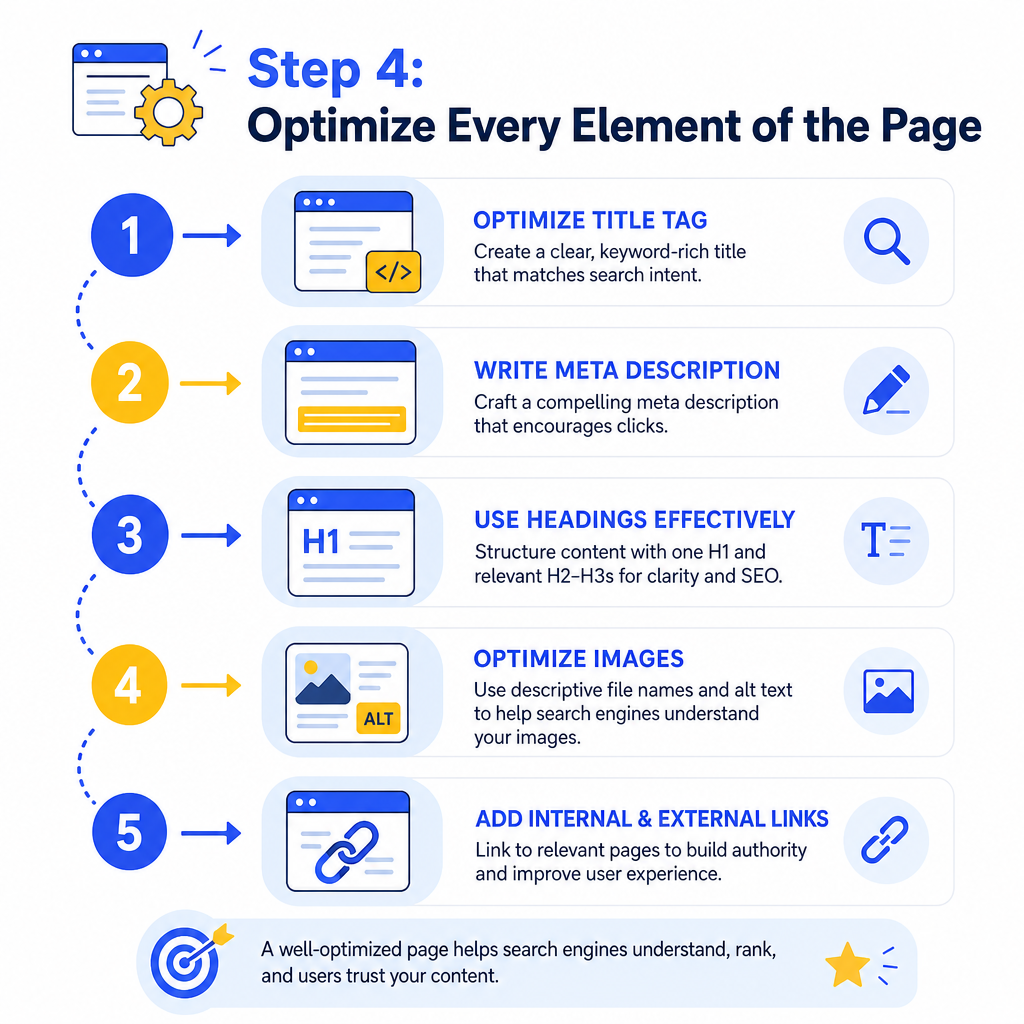
Writing great body content is only part of the job. SEO content generation also involves optimizing the technical elements that search engines use to index and rank your page.
Here is a quick reference table for on-page SEO elements every piece of content should include:
| On-Page Element | Best Practice for 2026 |
|---|---|
| Title Tag | Include primary keyword near the beginning, keep under 60 characters |
| Meta Description | 150-160 characters, include keyword, write a compelling summary |
| URL Slug | Short, keyword-rich, use hyphens between words |
| H1 Heading | Match or closely reflect the title tag |
| Image Alt Text | Describe the image accurately, include keyword where relevant |
| Internal Links | Link to 2-4 related posts using descriptive anchor text |
| Schema Markup | Use Article or HowTo schema where appropriate |
For a deeper look at tools that can help automate and streamline this optimization process, the guide on what a content optimization tool is and how it works covers the landscape clearly.
Step 5: Build Internal Links Strategically
Internal linking is one of the most underused tactics in SEO content generation. When you link from a new piece of content to existing pages on your site, you distribute authority across your domain and help search engines understand the relationship between your content pieces.
Effective internal linking follows a few rules:
- Link to pages that are genuinely relevant to the current topic
- Use anchor text that describes the destination page accurately
- Avoid linking to the same page multiple times within one post
- Prioritize linking to pages you want to rank higher
Step 6: Publish, Measure, and Improve
SEO content generation is not a one-and-done activity. After publishing, track how your content performs using Google Search Console, which shows you impressions, clicks, and average ranking positions for each page.
Set a review schedule. Return to each piece of content every three to six months and ask:
- Has the keyword intent shifted?
- Are there new subtopics that should be added?
- Has a competitor published something more comprehensive?
- Are there outdated statistics or examples that need refreshing?
Conclusion
Building a reliable SEO content generation process takes upfront effort, but the payoff compounds over time. When you combine thorough keyword research, intent-matched structure, natural writing, and consistent on-page optimization, you create content that earns rankings and holds them.
The most important shift is treating content generation as a system rather than a series of one-off tasks. Every step covered in this guide feeds into the next, creating a workflow that gets more efficient as you repeat it.
Start with one piece of content. Apply each step deliberately. Measure the results. Then refine your process and scale from there. That is how sustainable SEO growth actually happens.

Stefan Winter
Founder & SEO Expert
Founder of Fast SEO Fix and SEO automation expert. Stefan built Fast SEO Fix to solve the tedious problem of manual SEO work. He specializes in SEO optimized content generation, keyword research, and automated SEO strategies.
