What Is a Content Optimization Tool, and How Does It Work?
Posted by
 Stefan Winter
How to Choose and Use a Content Optimization Tool to Boost Your Rankings

If you have ever published a blog post that seemed well-written but never ranked, you are not alone. The gap between good writing and search-visible content is often filled by one thing: optimization. A content optimization tool bridges that gap by giving you data-driven guidance on how to improve your content before and after publishing. In this guide, you will learn exactly how to evaluate, choose, and use a content optimization tool to get measurable results for your website.
---
What Is a Content Optimization Tool, and How Does It Work?
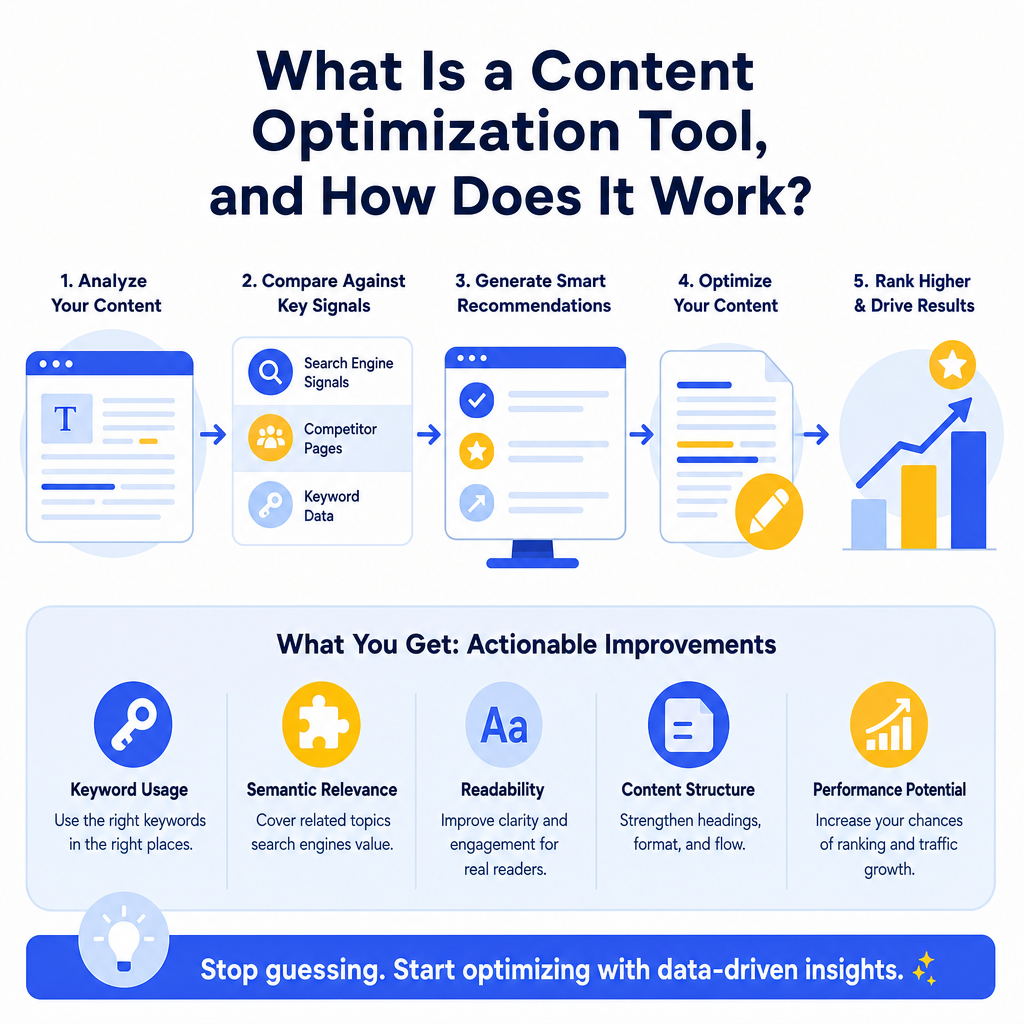
A content optimization tool is software that analyzes your written content against search engine signals, competitor pages, and keyword data to recommend specific improvements. Rather than relying on guesswork, you get actionable feedback on things like keyword usage, readability, semantic relevance, heading structure, and content depth.
Most tools work by crawling top-ranking pages for your target keyword and identifying patterns. They then compare your content to those patterns and score your article based on how well it matches what search engines appear to reward. Some tools focus purely on on-page SEO, while others combine keyword research, competitor analysis, and content scoring in a single dashboard.
If you are still building your foundation, it helps to first understand what content optimization actually involves before diving into specific tools. Once you have that context, choosing the right tool becomes much more straightforward.
---
Why Does Using a Content Optimization Tool Matter in 2026?
Search engines have grown significantly more sophisticated. Google's systems now evaluate topical authority, semantic depth, and user engagement signals alongside traditional ranking factors. Writing a keyword-rich article is no longer enough. You need content that thoroughly covers a topic, answers related questions, and matches the intent behind a search query.
A content optimization tool helps you meet these higher standards consistently. Without one, you are essentially editing in the dark, unsure whether your content is comprehensive enough or missing critical subtopics that competitors are covering. With one, you get a clear picture of exactly what your content needs to compete.
According to research published by Backlinko, content that covers a topic in depth tends to rank significantly higher than thin content targeting the same keyword. A content optimization tool gives you the structure to achieve that depth without wasting hours on manual research.
---
Step 1: Identify What You Actually Need From a Tool
Before you start comparing platforms, get clear on your specific requirements. Different tools serve different use cases, and choosing the wrong one wastes both time and money.
Ask yourself these questions:- Are you optimizing new content before publishing, or improving existing pages?
- Do you need keyword research built in, or do you already have a separate process for that?
- How many team members need access?
- Is your primary concern on-page SEO, readability, or both?
- What is your monthly budget?
---
Step 2: Compare the Core Features That Matter Most

Not all content optimization tools are built the same. Some are lightweight browser extensions. Others are full platforms with editorial workflows, competitor tracking, and team collaboration features. Here is a breakdown of the core features worth evaluating:
| Feature | Why It Matters | Look For |
|---|---|---|
| Content scoring | Gives you a measurable optimization target | Clear score with specific recommendations |
| Keyword suggestions | Helps you cover related terms naturally | NLP-based or semantic keyword lists |
| Competitor analysis | Shows what top-ranking pages include | Side-by-side content comparisons |
| Readability feedback | Improves user experience and dwell time | Grade level, sentence length, paragraph structure |
| Real-time editing | Speeds up your workflow | In-editor optimization as you write |
| Integration options | Fits into your existing workflow | WordPress plugins, Google Docs add-ons |
| Reporting and tracking | Measures results over time | Rank tracking tied to optimized content |
---
Step 3: Test the Tool With a Real Piece of Content
Should You Always Use a Free Trial?
Yes, absolutely. Most reputable content optimization tools offer free trials or limited free plans. Use this period strategically by running an actual piece of your content through the tool rather than a generic test article. This gives you a realistic sense of how useful the recommendations are for your specific niche and audience.
During your trial, pay attention to:
- Whether the keyword suggestions feel natural or forced
- How actionable the specific recommendations are
- Whether the competitor data reflects pages you actually recognize as strong
- How easy the interface is to use without a tutorial
---
Step 4: Build a Repeatable Optimization Workflow
Once you have chosen your tool, the real value comes from using it consistently. A one-time optimization pass is helpful, but a repeatable workflow is what drives compounding SEO results over time.
Here is a practical workflow to follow for every piece of content:1. Start with keyword intent. Before writing, confirm what type of content ranks for your target keyword (informational, transactional, navigational). Your tool should help with this. 2. Draft your content first. Write naturally without obsessing over optimization. Get your ideas down clearly. 3. Run your draft through the tool. Enter your target keyword and review the initial score and recommendations. 4. Address high-priority gaps. Focus first on missing subtopics and semantic keywords, then move to structural issues like heading hierarchy. 5. Check readability. Ensure your content is accessible to your target audience. Overly complex writing reduces engagement. 6. Review competitor insights. Look at what top-ranking pages cover that your draft does not. Add depth where needed. 7. Finalize and publish. Do not chase a perfect score. Aim for a strong score that still reads naturally for humans. 8. Track and revisit. Monitor rankings after publishing and return to update the content if it plateaus.
This workflow transforms the tool from a one-off checker into a core part of your content production process. Consistency here is what separates sites that see gradual rank improvements from those that publish and hope.
If you are producing content at scale, pairing this workflow with blogger automation strategies can help you maintain quality without sacrificing output speed.
---
Step 5: Avoid the Most Common Mistakes When Using These Tools
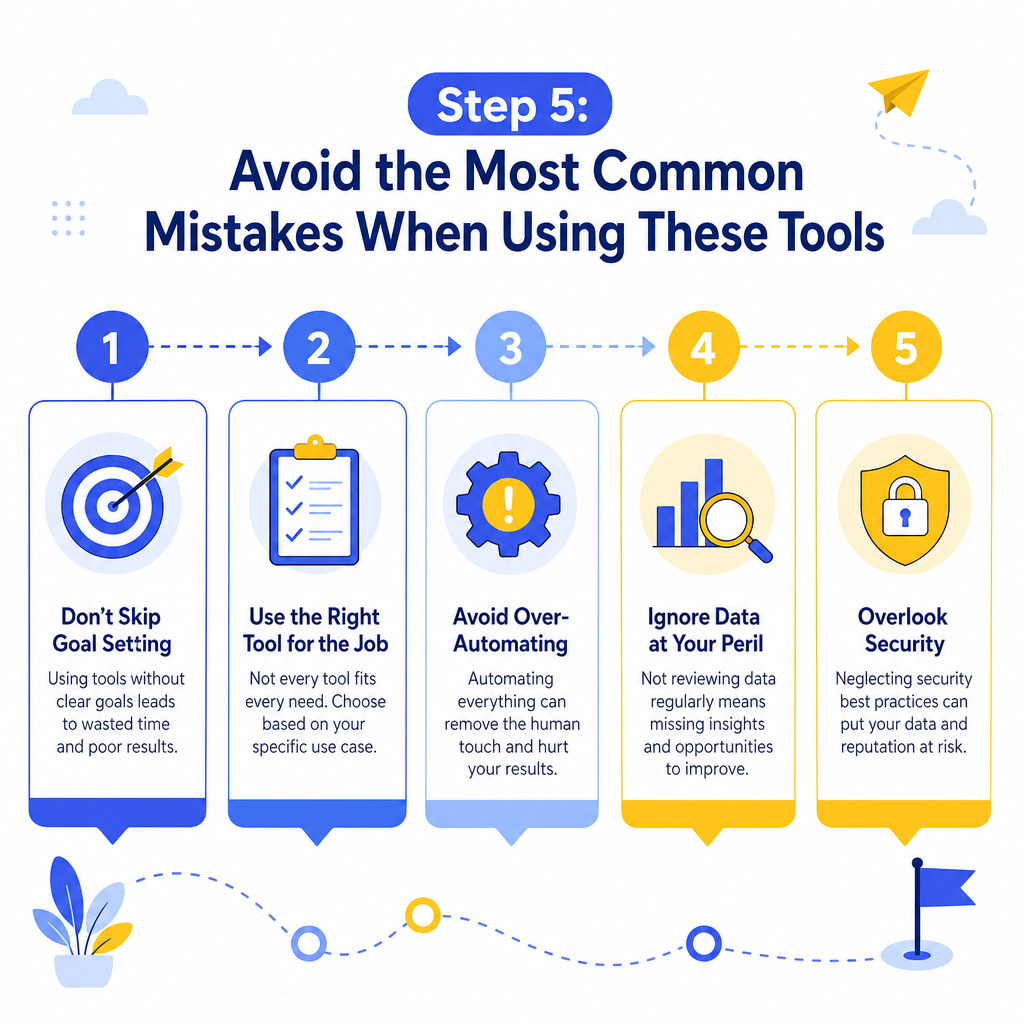
What Mistakes Do People Make With Content Optimization Tools?
Even experienced content teams fall into predictable traps when using these tools. Knowing what to avoid saves you from undoing your own progress.
Common mistakes to watch out for:- Chasing the score instead of the reader. A high optimization score means nothing if the content reads awkwardly. Always prioritize natural language.
- Ignoring existing content. Most websites have underperforming pages that could rank with targeted updates. Do not focus only on new content. A content audit tool can help you identify which existing pages deserve attention first.
- Over-optimizing. Adding every suggested keyword regardless of context creates unnatural content and can trigger spam signals.
- Skipping the readability review. SEO and readability are not opposites. According to Nielsen Norman Group research on web reading behavior, users scan content quickly, so clear structure and accessible language directly affect engagement.
- Using the tool once and forgetting it. Content optimization is an ongoing process, not a one-time task. Search landscapes shift, competitors update their pages, and your content needs to keep pace.
Step 6: Measure the Impact of Your Optimization Efforts
A content optimization tool is only valuable if it produces results you can measure. Set up a simple tracking system so you can connect your optimization work to actual ranking changes.
Track these metrics for every piece of content you optimize:
- Keyword rankings before and after optimization
- Organic traffic changes over 30, 60, and 90 days
- Average position in Google Search Console
- Click-through rate changes
- Time on page and bounce rate
---
Conclusion
A content optimization tool is one of the most practical investments you can make in your SEO strategy. It removes the guesswork from content creation, gives you a clear benchmark to work toward, and helps you produce content that actually competes in search results. The key is not just picking a tool but building a repeatable process around it.
Start by identifying your specific needs, test tools with real content during free trials, and commit to a consistent workflow that covers drafting, optimizing, and tracking. Over time, that consistency compounds into stronger rankings, more organic traffic, and content that genuinely serves your audience.
Ready to take the next step? Explore how the right combination of tools and strategy can transform your content performance at Fast SEO Fix.
---

Stefan Winter
Founder & SEO Expert
Founder of Fast SEO Fix and SEO automation expert. Stefan built Fast SEO Fix to solve the tedious problem of manual SEO work. He specializes in SEO optimized content generation, keyword research, and automated SEO strategies.
