What Is Creative Marketing, and Why Does It Matter in 2026?
Posted by
 Stefan Winter
How to Build a Creative Marketing Strategy That Actually Drives Results
Creative marketing is one of the most powerful levers a business can pull, yet most brands treat it as an afterthought. They focus on keywords, backlinks, and technical audits while letting their actual messaging blend into the noise. The result? Content that ranks but never converts, and campaigns that get impressions but never inspire action.
This guide is for anyone who wants to change that. Whether you are a solo founder, a content manager, or a marketing director looking to sharpen your team's approach, these steps will help you build a creative marketing strategy that is both search-friendly and genuinely memorable. By the end, you will know exactly how to combine creative thinking with strategic execution to attract the right audience and keep them engaged.
What Is Creative Marketing, and Why Does It Matter in 2026?
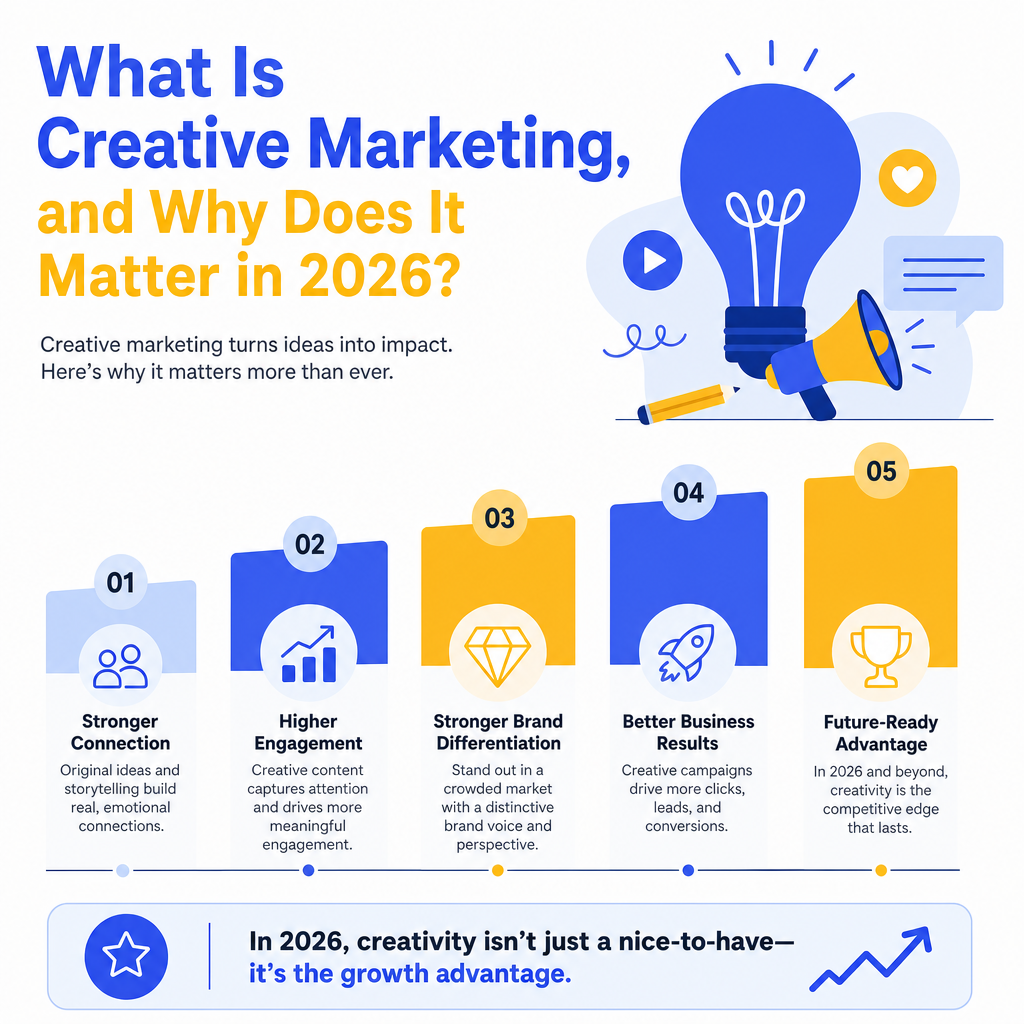
Creative marketing is the practice of using original ideas, compelling storytelling, and distinctive brand expression to communicate value to an audience. It goes beyond writing a blog post or running a paid ad. It is about finding angles that surprise, perspectives that resonate, and formats that hold attention in a world where the average person encounters thousands of marketing messages every day.
In 2026, creative marketing matters more than ever for one simple reason: AI-generated content has flooded the internet. Generic articles, templated social posts, and cookie-cutter email sequences are everywhere. Audiences have developed a sharp instinct for what feels authentic versus what feels manufactured. Brands that invest in genuine creative thinking stand out immediately. Those that do not get scrolled past.
Creative marketing also has a measurable impact on SEO performance. Search engines increasingly reward content that earns engagement, earns backlinks naturally, and keeps readers on the page. According to HubSpot's annual State of Marketing report, marketers who prioritize creative content consistently see higher organic traffic growth compared to those focused purely on technical optimization.
Step 1: Define Your Creative Marketing Foundation
Before you write a single word or design a single asset, you need a clear foundation. This means answering three essential questions.
What is your brand's unique point of view? Every great creative marketing campaign starts with a perspective that only your brand can own. It might be rooted in your founder's story, your company's mission, or a contrarian take on your industry. Without this, your content will always feel generic, no matter how polished it looks. Who are you actually trying to reach? Knowing your audience goes deeper than demographics. You need to understand what your audience reads, what frustrates them, what they aspire to, and what kind of content they trust. Build detailed audience personas that capture psychographic details, not just age and job title. What do you want people to feel? Creative marketing is emotional before it is logical. Decide whether you want your audience to feel inspired, reassured, challenged, entertained, or informed. That emotional goal should shape every piece of content you create.Step 2: Choose the Right Creative Formats for Your Goals
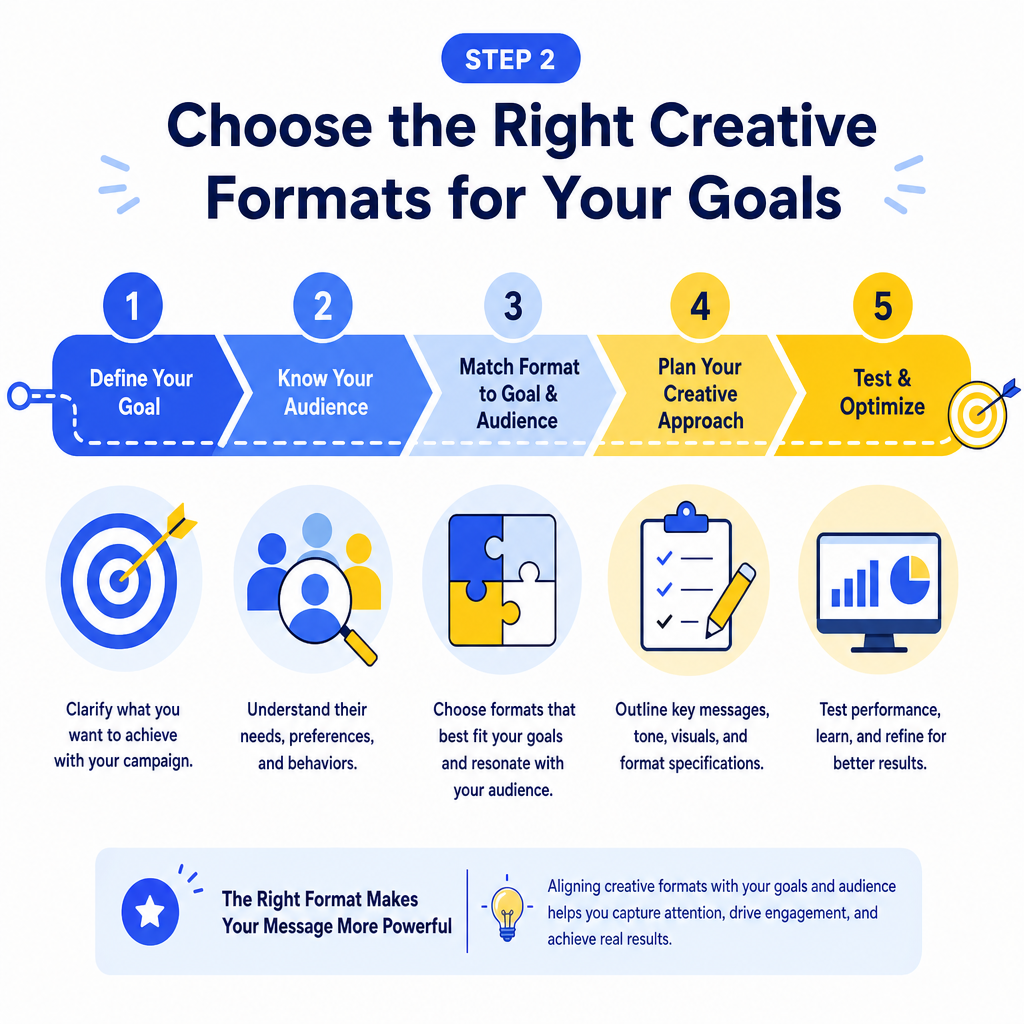
What Creative Formats Work Best for Different Objectives?
Not all creative formats serve the same purpose. Choosing the right format for the right goal is one of the most important decisions in your creative marketing process.
| Creative Format | Best For | SEO Impact |
|---|---|---|
| Long-form blog posts | Authority building, organic search | High |
| Short-form video | Brand awareness, social reach | Medium |
| Interactive tools or quizzes | Engagement, lead generation | High (backlink magnet) |
| Infographics | Visual storytelling, shareability | Medium to High |
| Podcast episodes | Thought leadership, loyal audience | Medium |
| Email newsletters | Retention, direct relationship | Low (but high conversion) |
| Case studies | Trust, bottom-of-funnel conversion | High |
For content that lives on your website and needs to rank in search, understanding how content length affects SEO performance will help you decide how deep to go on any given topic.
Step 3: Develop a Creative Brief Before Every Campaign
One of the most overlooked tools in creative marketing is the creative brief. A brief is a short document that aligns everyone working on a campaign before production begins. It prevents wasted effort, misaligned messaging, and last-minute pivots.
A strong creative brief should include the following elements:
- Campaign objective: What specific outcome are you driving toward (traffic, signups, sales, awareness)?
- Target audience: Who is this for, and what do they care about most?
- Key message: If the audience remembers only one thing, what should it be?
- Tone and voice: How should this content feel? Formal, conversational, bold, empathetic?
- Creative constraints: What brand guidelines, legal restrictions, or platform requirements apply?
- Success metrics: How will you measure whether this campaign worked?
Step 4: Use Search Intent to Fuel Creative Ideas
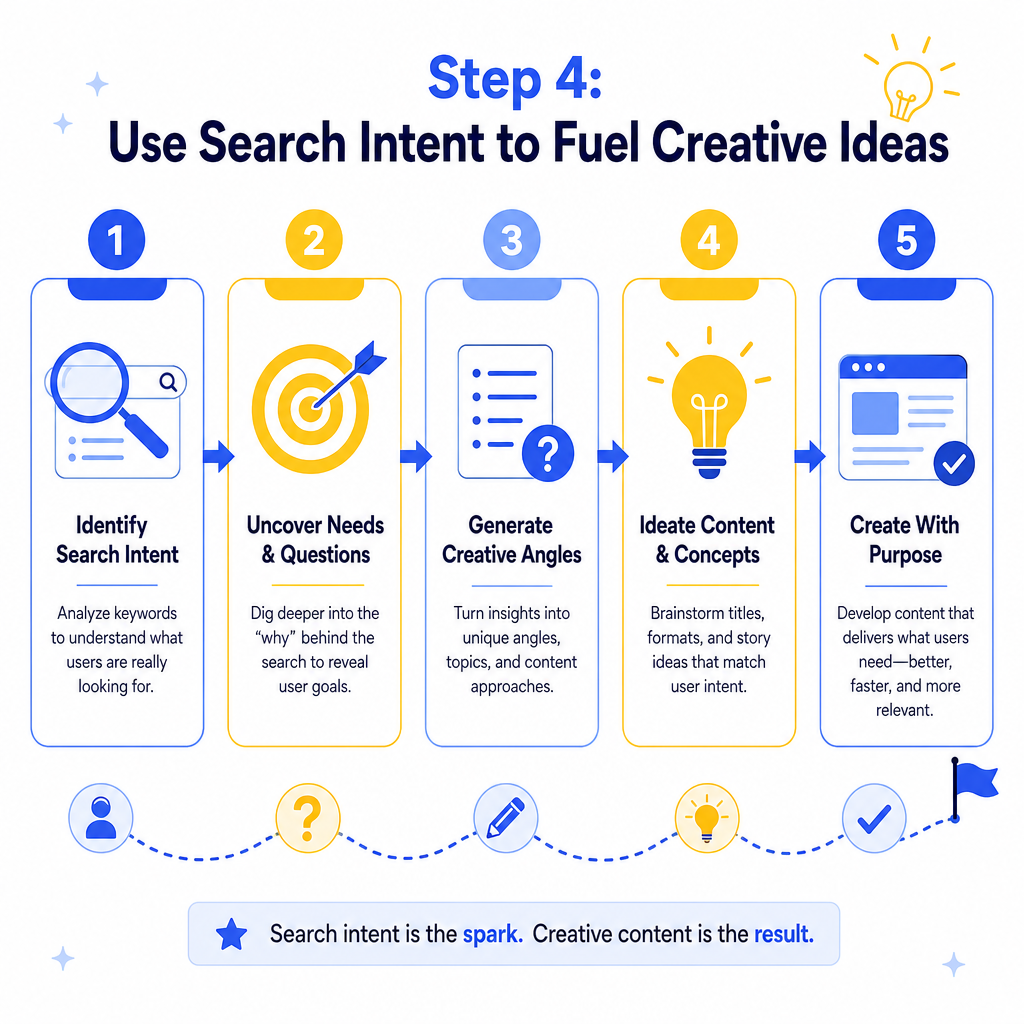
How Do You Find Creative Marketing Ideas That Also Rank?
This is where creative marketing and SEO become genuinely powerful together. Most marketers treat keyword research as a purely technical exercise, but it is actually one of the richest sources of creative inspiration available.
When you look at what people are searching for, you are seeing their real questions, real frustrations, and real aspirations in plain language. That is creative gold. Instead of brainstorming campaign ideas in a vacuum, start with search data and let it guide your creative direction.
Here is a practical process for doing this well:
1. Start with your core topic. Identify the primary subject your brand has authority to speak on. 2. Research related queries. Use tools like Google Search Console or keyword research platforms to find the questions people are actually asking. 3. Look for emotional language. Queries that include words like "why," "how," "best," "worst," or "help" signal emotional intent. These are the best starting points for creative content. 4. Find the gap. Look at what is already ranking and ask what angle is missing. Can you tell a story no one else has told? Can you make the information more visual, more specific, or more useful? 5. Build your concept around the gap. The creative idea should fill that gap in a way that is true to your brand voice.
This approach ensures your creative marketing is not just interesting, it is findable. Pairing strong creative instincts with solid content optimization strategies is what separates brands that grow organically from those that stay invisible.
Step 5: Distribute Your Creative Content Strategically
Creating great content is only half the battle. Distribution is where most creative marketing efforts fall flat. A brilliant campaign that no one sees is just a beautiful tree falling in an empty forest.
Your distribution strategy should match your creative format and your audience's behavior. Here is a framework to think about it:
- Owned channels (your website, email list, podcast): These are your highest-value distribution assets because you control them completely. Prioritize these first.
- Earned channels (press coverage, organic shares, backlinks): These are driven by the quality and originality of your creative work. Genuinely useful or surprising content earns these naturally.
- Paid channels (social ads, sponsored content, paid search): These amplify what is already working. Never pay to promote content that has not already proven it resonates organically.
Step 6: Measure Creative Performance and Iterate
How Do You Know If Your Creative Marketing Is Working?
Measurement in creative marketing requires a slightly different mindset than pure performance marketing. You are not just tracking clicks and conversions. You are tracking signals of resonance, including time on page, scroll depth, social shares, comment quality, and return visitor rate.
According to Nielsen's research on creative effectiveness, creative quality accounts for nearly half of a campaign's sales impact, making it the single largest driver of marketing ROI. That means investing in measurement frameworks that capture creative performance is not optional. It is essential.
Track these metrics for every creative campaign:
- Engagement rate: Are people interacting with the content or bouncing immediately?
- Content completion rate: For video and long-form content, how far do people get before leaving?
- Organic backlinks earned: Is your content attracting links naturally? This is one of the strongest signals that your creative work is genuinely valuable.
- Branded search volume: Is your creative marketing making people curious enough to search for your brand directly?
- Conversion rate by content piece: Which creative assets are actually moving people toward a decision?
Conclusion
Creative marketing is not a luxury reserved for big brands with massive budgets. It is a discipline that any business can practice with the right framework. By defining your brand's point of view, choosing formats strategically, grounding your ideas in search intent, distributing deliberately, and measuring what matters, you can build a creative marketing engine that grows your audience and your business at the same time.
The brands winning in 2026 are not the ones with the most content. They are the ones with the most memorable, useful, and distinctly human content. Start with one campaign, apply these steps, and build from there. Your creative marketing strategy does not need to be perfect from day one. It just needs to start.
Ready to make your content work harder? Explore the resources at Fast SEO Fix to sharpen every layer of your content strategy, from ideation to optimization to distribution.

Stefan Winter
Founder & SEO Expert
Founder of Fast SEO Fix and SEO automation expert. Stefan built Fast SEO Fix to solve the tedious problem of manual SEO work. He specializes in SEO optimized content generation, keyword research, and automated SEO strategies.
