What Is Content Promotion, and Why Does It Matter?
Posted by
 Stefan Winter
TL;DR
Content promotion is the deliberate distribution of your published content across multiple channels to increase reach, visibility, and impact—and it's just as important as creating the content itself. This guide provides a practical four-step approach: plan promotion before publishing, distribute strategically across social channels, leverage email marketing to owned audiences, and build backlinks through outreach and collaboration.
How to Promote Your Content and Actually Get It Seen
You spent hours crafting the perfect blog post. The research is solid, the writing is sharp, and the SEO fundamentals are in place. Then you hit publish and wait. And wait. And nothing happens. Sound familiar? The hard truth is that publishing content is only half the battle. Content promotion is the other half, and for most websites, it is the half that gets ignored.
This guide walks you through a practical, step-by-step approach to promoting your content so it reaches real audiences, earns backlinks, drives traffic, and builds the kind of visibility that compounds over time. Whether you are running a blog, a business website, or a content-driven brand, these strategies apply directly to your situation.
What Is Content Promotion, and Why Does It Matter?
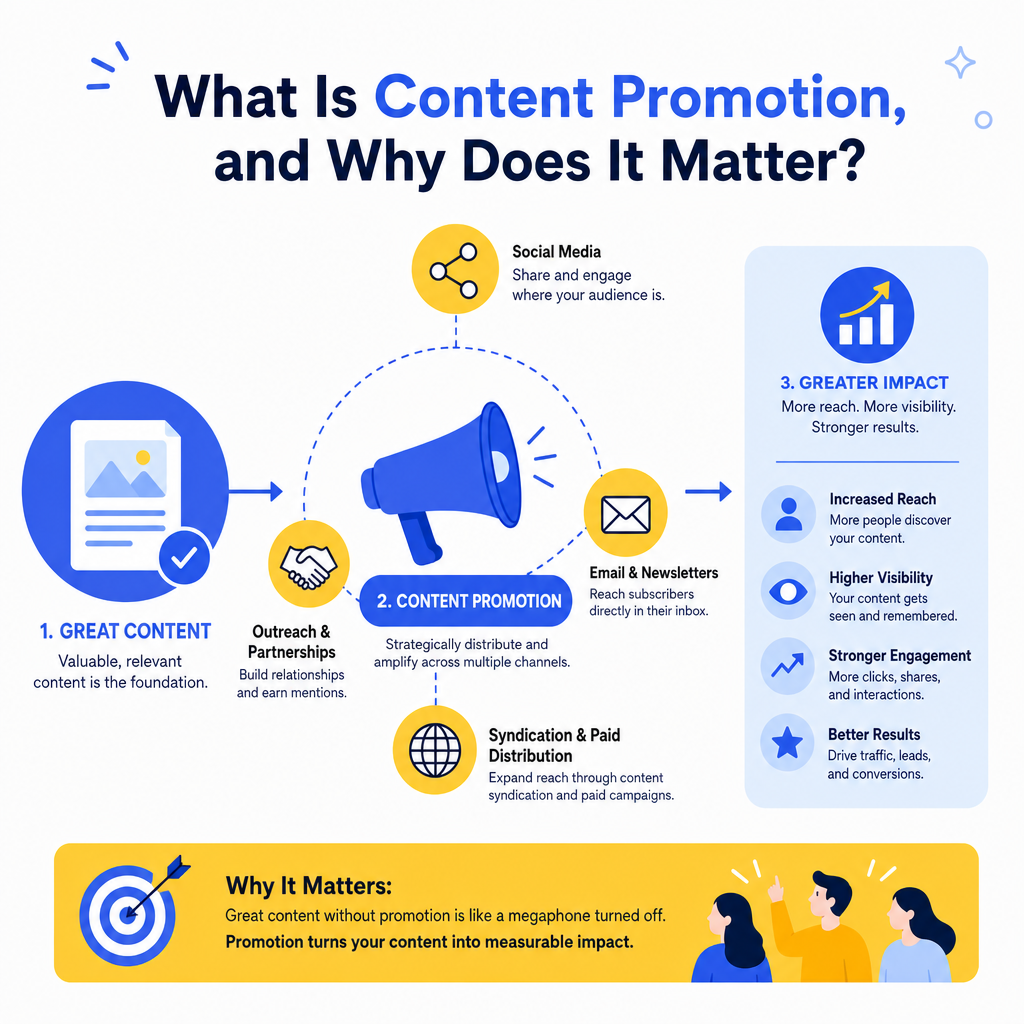
Content promotion is the deliberate process of distributing and amplifying your published content across multiple channels to increase its reach, visibility, and impact. It includes everything from sharing on social media to outreach campaigns, email newsletters, content syndication, and paid distribution.
Here is why it matters: according to HubSpot's content marketing research, the average blog post receives the majority of its traffic within the first few days of publication, then flatlines. Without an active promotion strategy, even well-optimized content struggles to gain traction in a crowded digital landscape.
Think of content promotion as the engine behind your content strategy. Great content is the fuel, but promotion is what moves the vehicle forward. Without it, you are sitting still while competitors with similar content but stronger distribution strategies pull ahead in search rankings, social engagement, and brand recognition.
Step 1: Build Your Promotion Plan Before You Publish
Most content creators make the mistake of thinking about promotion after they hit publish. The most effective approach flips this sequence entirely.
Before you finalize a piece of content, map out how you plan to promote it. Ask yourself which channels are most relevant for this specific topic, who the target audience is, and which influencers or publications in your niche might find this content genuinely useful.
A pre-publication promotion plan should include:
- A list of social media platforms where you will share the content
- An email segment that would benefit from this specific topic
- Three to five relevant websites or creators you could reach out to for link building
- Any communities, forums, or groups where this content adds value
- A timeline for each promotional activity
Step 2: Distribute Across the Right Social Channels
Not all social platforms are created equal, and spreading yourself thin across every network rarely produces results. Instead, focus your social media promotion efforts on platforms where your target audience is most active and where your content format performs best.
For written content like blog posts and guides, LinkedIn and X (formerly Twitter) tend to drive strong referral traffic, especially in professional and technical niches. For visual content, Instagram and Pinterest offer broader organic reach. For video-based content, YouTube and TikTok provide distribution engines that can work independently of your website.
When sharing content on social media, avoid the copy-paste approach. Adapt your message for each platform. On LinkedIn, frame the content around a professional insight or challenge. On X, pull a compelling stat or quote from the article. In communities like Reddit or niche Facebook groups, lead with context and value rather than a direct link drop.
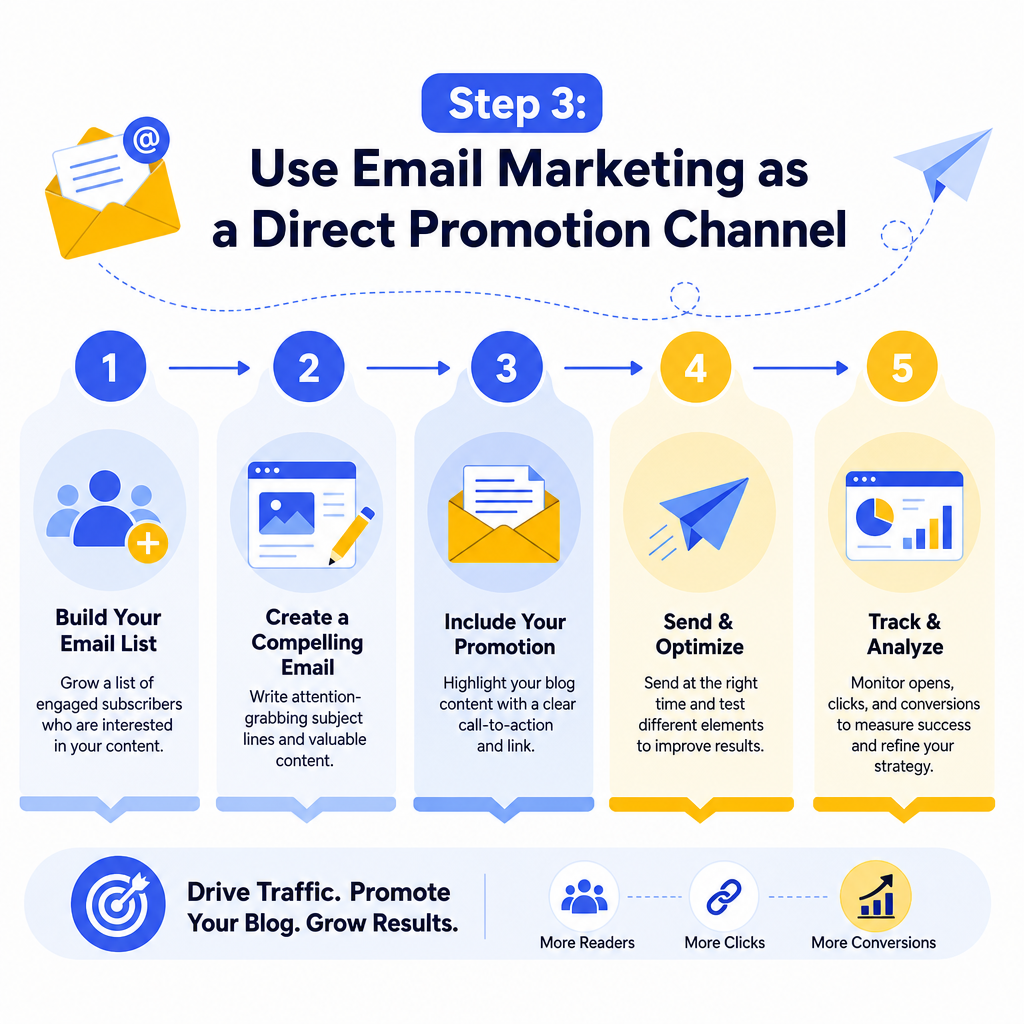
Step 3: Use Email Marketing as a Direct Promotion Channel
Why Is Email Still One of the Best Promotion Tools?
Email marketing consistently delivers one of the highest returns on investment in digital marketing, and for content promotion specifically, it gives you a direct line to people who have already expressed interest in what you create.
Your email list is a promotional asset you own outright. Unlike social media platforms, where algorithm changes can cut your organic reach overnight, your email list remains accessible and reliable. According to Mailchimp's email marketing benchmarks, average open rates across industries hover between 20 and 40 percent, meaning a significant portion of your subscribers will actually see your content when you send it.
To make email promotion effective, segment your list based on interests and behavior. A subscriber who engaged with your last three posts about SEO strategy is a warm audience for your newest content on content promotion. Personalized subject lines and preview text that speak directly to what the reader cares about will consistently outperform generic broadcast emails.
Step 4: Reach Out for Backlinks and Collaborative Promotion
Link building through content promotion is one of the most powerful ways to improve your search rankings while also expanding your audience. This step requires more effort than social sharing or email, but the returns are significant and lasting.
Start by identifying websites, blogs, and publications that cover topics related to your content. Tools like Ahrefs or Moz can help you find sites that have linked to similar content in the past, making them natural candidates for outreach. When you reach out, be specific about why your content adds value to their audience and how it complements or improves on what they already link to.
Another effective tactic is to find existing articles that mention your topic but do not link to a resource like yours. Reach out to the author or editor and suggest your content as an addition. Keep your outreach short, relevant, and focused on their audience rather than your goals.
For a broader look at how search visibility connects to your promotion efforts, the Fast SEO Fix guide on search engine marketing provides useful context on how organic and paid channels work together.
Step 5: Repurpose Content for Extended Reach
One of the most underused content promotion strategies is repurposing. A single well-researched blog post contains enough material to fuel multiple pieces of content across different formats and platforms.
Here is how repurposing works as a promotion strategy:
- Turn key sections of a blog post into a LinkedIn article or carousel
- Pull statistics and insights into an infographic for Pinterest or Instagram
- Record a short video or podcast episode summarizing the main points
- Create a Twitter or LinkedIn thread breaking down the steps
- Submit the core ideas as a guest post to an industry publication with a link back to the original
Content Promotion Channel Comparison
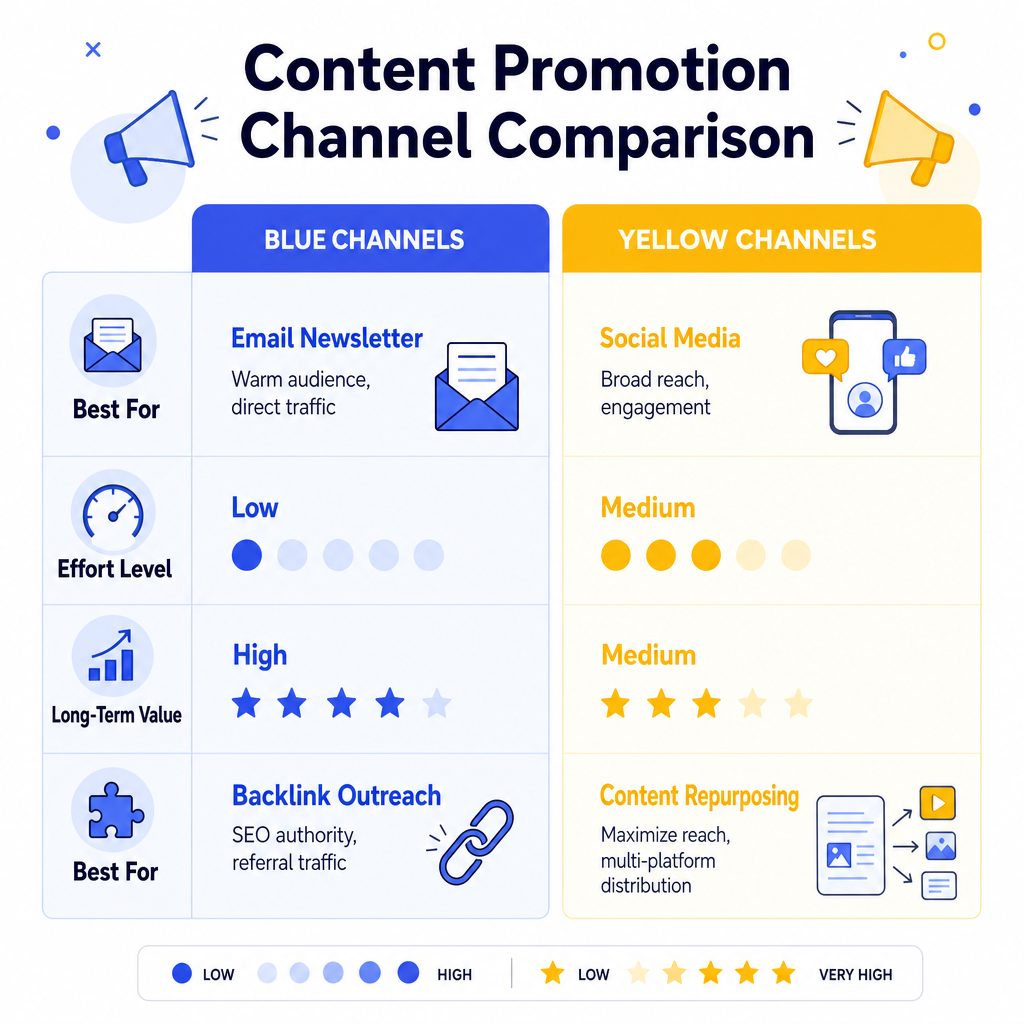
| Channel | Best For | Effort Level | Long-Term Value |
|---|---|---|---|
| Email Newsletter | Warm audience, direct traffic | Low | High |
| Social Media | Broad reach, engagement | Medium | Medium |
| Backlink Outreach | SEO authority, referral traffic | High | Very High |
| Content Repurposing | Extended reach, new audiences | Medium | High |
| Content Syndication | Visibility on third-party platforms | Low | Medium |
| Paid Promotion | Fast traffic, targeted reach | Medium | Low |
Step 6: Syndicate Strategically
Content syndication means republishing your content (in full or in part) on third-party platforms to reach audiences that may never visit your website directly. Platforms like Medium, LinkedIn Articles, and industry-specific publications accept syndicated content regularly.
The key to syndication without hurting your SEO is to ensure the syndicated version includes a canonical tag pointing back to your original URL. This tells search engines which version is the primary source and protects your rankings. Always publish on your own site first, then wait at least a few days before syndicating elsewhere.
Syndication works especially well for evergreen content, guides, and opinion pieces that have a broad appeal beyond your immediate audience.
Step 7: Track, Measure, and Adjust Your Promotion Efforts
Content promotion without measurement is guesswork. Use tools like Google Analytics 4 to track which channels are driving the most traffic to each piece of content. Look at referral sources, session duration, and conversion events to understand not just who is visiting, but what they are doing once they arrive.
Set up UTM parameters for each promotional channel so you can see exactly which email campaign, social post, or outreach effort drove results. Over time, this data will show you which promotion channels deliver the highest return for your specific audience and content type.
According to Content Marketing Institute's annual research, brands that document their content strategy and measure performance consistently outperform those that do not. Measurement is not optional if you want to improve.
Understanding how your content performs across channels also connects directly to how you structure that content for search. The Fast SEO Fix breakdown of blog post structure for SEO explains how well-organized content earns better engagement metrics, which in turn supports your promotion outcomes.
Conclusion
Content promotion is not a one-time action you take after hitting publish. It is a system you build, refine, and repeat with every piece of content you create. The steps outlined in this guide cover the core channels and tactics that drive real results: pre-publication planning, social distribution, email marketing, backlink outreach, repurposing, syndication, and performance tracking.
Start by choosing two or three of these strategies and applying them consistently to your next five pieces of content. Measure what works, double down on your strongest channels, and gradually expand your promotion system from there.
The content you create deserves to be seen. With a solid promotion strategy in place, it will be.
Frequently Asked Questions
Content promotion is the deliberate process of distributing and amplifying your published content across multiple channels including social media, email, outreach campaigns, and paid distribution to increase its reach, visibility, and impact.
Publishing content is only half the battle; promotion is the other half. Without active promotion, even well-optimized content struggles to gain traction. Most blog posts receive the majority of their traffic within the first few days, then plateau without strategic promotion.
You should map out your promotion plan before you publish, not after. This means identifying which channels to use, which audience segments to target, which influencers to reach out to, and creating a timeline for promotional activities while the content is still in development.
LinkedIn and X (formerly Twitter) tend to drive strong referral traffic for written content, especially in professional and technical niches, while Instagram and Pinterest work better for visual content. Focus on platforms where your target audience is most active rather than spreading thin across all networks.
Email marketing delivers high ROI and gives you direct access to people who have already expressed interest in your content. Unlike social media, your email list is owned outright and not subject to algorithm changes, with typical open rates between 20-40 percent.

Stefan Winter
Founder & SEO Expert
Founder of Fast SEO Fix and SEO automation expert. Stefan built Fast SEO Fix to solve the tedious problem of manual SEO work. He specializes in SEO optimized content generation, keyword research, and automated SEO strategies.
