What Is Content Syndication and Why Does It Matter?
Posted by
 Stefan Winter
TL;DR
Content syndication is a strategic approach to republishing your content on third-party platforms to expand reach by 300-500% and amplify your brand message to new audiences. Success requires setting clear SMART goals, choosing evergreen and data-driven content, selecting the right syndication platforms aligned with your target audience, and measuring performance through relevant metrics.
How to Build a Winning Content Syndication Strategy That Amplifies Your Reach

Content syndication has become a cornerstone of modern digital marketing, yet many businesses struggle to harness its full potential. If you're creating quality content but finding it difficult to reach new audiences or maximize your content's impact, you're not alone. The solution lies in developing a strategic approach to content syndication that goes beyond simply republishing your articles on different platforms.
In this comprehensive guide, you'll discover how to build a content syndication strategy that not only expands your reach but also drives meaningful traffic, generates qualified leads, and establishes your brand as an industry authority. We'll walk you through the essential steps, from identifying the right syndication partners to measuring success and optimizing your approach for 2026 and beyond.
What Is Content Syndication and Why Does It Matter?
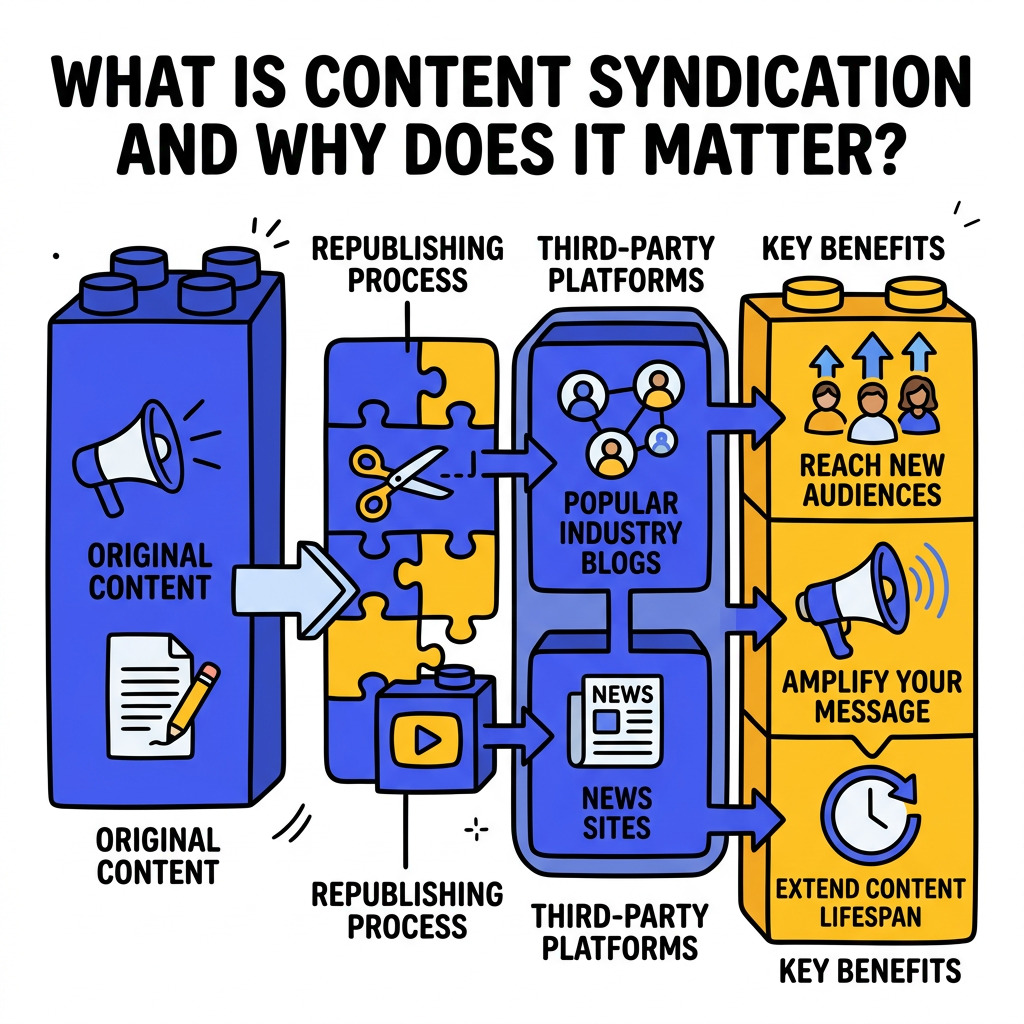
Content syndication involves republishing your original content on third-party platforms to reach new audiences and amplify your message. Unlike content marketing that focuses on your owned channels, syndication leverages established platforms with existing audiences to extend your content's lifespan and impact.
The power of content syndication lies in its ability to multiply your content's value without proportionally increasing your creation costs. When executed strategically, syndication can increase your content's reach by 300-500% while positioning your brand in front of highly targeted audiences who may never have discovered your content otherwise.
Modern content syndication has evolved far beyond simple article republishing. Today's successful strategies encompass various content formats, from blog posts and whitepapers to infographics and video content, distributed across carefully selected platforms that align with your target audience's preferences and behaviors.
How to Identify Your Content Syndication Goals
Before diving into platform selection and content distribution, you must clearly define what you want to achieve through syndication. Your goals will shape every aspect of your strategy, from the types of content you syndicate to the metrics you track for success.
Start by examining your broader marketing objectives. Are you looking to increase brand awareness in new markets? Generate more qualified leads for your sales team? Establish thought leadership in your industry? Each goal requires a different syndication approach and success metrics.
Consider both short-term and long-term objectives. Short-term goals might include increasing website traffic by 40% within six months or generating 200 new email subscribers quarterly. Long-term goals could focus on establishing market presence in specific industries or geographic regions over the next two years.
Setting SMART Syndication Objectives
Your content syndication goals should follow the SMART framework: Specific, Measurable, Achievable, Relevant, and Time-bound. Instead of vague objectives like "increase visibility," aim for specific targets such as "increase qualified B2B leads by 25% within four months through syndication on industry-specific platforms."
Document your goals and share them with your team to ensure alignment. This clarity will guide your platform selection, content prioritization, and resource allocation throughout your syndication journey.
What Types of Content Work Best for Syndication?
Not all content performs equally well in syndication. Understanding which content types resonate most with syndicated audiences will help you prioritize your efforts and maximize results. Creating high-quality SEO content forms the foundation of any successful syndication strategy.
Evergreen content typically performs exceptionally well in syndication because it remains relevant and valuable over time. How-to guides, industry best practices, and comprehensive tutorials continue attracting audiences months or even years after publication. This longevity makes evergreen content ideal for ongoing syndication efforts.
Data-driven content, including original research, industry surveys, and trend analyses, also performs strongly in syndication. These pieces often attract media attention and social shares, amplifying your reach beyond the initial syndication platform. Original research positions your brand as a thought leader while providing valuable insights that other publications want to share with their audiences.
| Content Type | Syndication Effectiveness | Best Platforms | Expected Engagement |
|---|---|---|---|
| How-to Guides | High | Industry blogs, LinkedIn | 60-80% above average |
| Original Research | Very High | Trade publications, Medium | 100-150% above average |
| Case Studies | High | Industry forums, B2B platforms | 70-90% above average |
| Opinion Pieces | Medium | LinkedIn, Medium | 40-60% above average |
| News/Updates | Low | Social media only | 20-30% below average |
How to Choose the Right Syndication Platforms
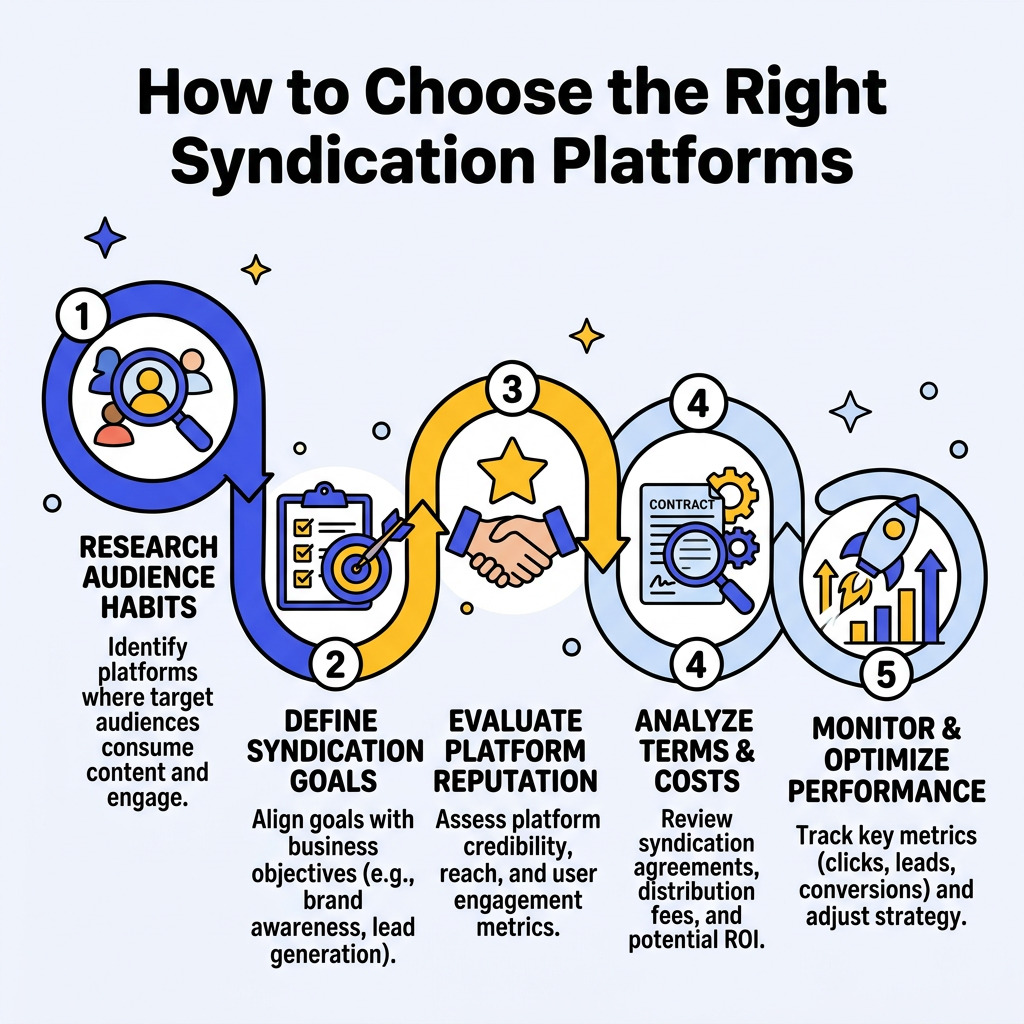
Platform selection can make or break your content syndication strategy. The key lies in identifying platforms where your target audience actively consumes content and engages with brands like yours. Quality trumps quantity when it comes to syndication partnerships.
Start by researching where your competitors successfully syndicate their content. Tools like SEO automation platforms can help you analyze competitor content performance across various platforms. Look for patterns in their syndication choices and engagement levels to identify promising opportunities.
Evaluate potential platforms based on audience alignment, content quality standards, and syndication terms. High-authority platforms with strict editorial guidelines often provide better results than low-quality sites that accept any content. According to Content Marketing Institute's research, businesses that focus on fewer, high-quality syndication partners see 40% better lead quality compared to those using a spray-and-pray approach.
Evaluating Platform Authority and Audience Quality
Before committing to any syndication platform, assess its domain authority, audience engagement levels, and content quality standards. Platforms with domain authority scores above 50 and active, engaged audiences will provide more value than numerous low-quality placements.
Review the platform's existing content to ensure it aligns with your brand standards and target audience expectations. A platform that publishes high-quality, relevant content will likely treat your syndicated content with the same care and attract the right audience.
How to Optimize Your Content for Syndication Success
Successful content syndication requires more than copying and pasting your original content onto different platforms. Each syndication opportunity demands thoughtful optimization to maximize performance and align with platform-specific audience expectations.
Begin by customizing your content's introduction and conclusion for each platform while maintaining the core message and value proposition. Different audiences may need different context or motivation to engage with your content. A technical audience might appreciate detailed implementation steps, while a C-suite audience might prefer strategic insights and business impact.
Consider the optimal content length for each platform. LinkedIn articles perform best between 1,200-1,500 words, while Medium favors longer-form content around 2,000 words. Industry publications may prefer concise, actionable pieces under 1,000 words. Adapting your content length while preserving key insights improves engagement and platform algorithm performance.
Maintaining SEO Value Through Syndication
Proper syndication practices protect and enhance your SEO efforts rather than competing with them. Always include canonical tags pointing back to your original content when possible, and ensure syndicated versions include appropriate attribution and backlinks to your site.
Work with content brief generators to create platform-specific optimization guidelines. This ensures consistent quality while adapting content for different syndication opportunities.
How to Build Relationships with Syndication Partners
Sustainable content syndication success depends on building genuine relationships with platform editors, content managers, and fellow contributors. These relationships often determine whether your content gets featured prominently or buried among countless other submissions.
Start by engaging authentically with potential syndication partners before pitching your content. Comment thoughtfully on their existing content, share their articles with your network, and participate in platform-specific discussions. This organic engagement demonstrates your commitment to the community beyond self-promotion.
When reaching out to new syndication partners, lead with value rather than requests. Offer exclusive content, unique insights, or collaborative opportunities that benefit their audience. According to HubSpot's partnership research, content creators who lead with value-first approaches see 60% higher acceptance rates for syndication proposals.
Creating Win-Win Syndication Proposals
Craft syndication proposals that clearly articulate the value you bring to the platform and its audience. Highlight your expertise, content quality, and potential for audience engagement. Include examples of your best-performing content and metrics demonstrating your ability to create engaging material.
Propose ongoing relationships rather than one-off syndication opportunities. Platforms prefer working with reliable contributors who consistently deliver quality content. Suggest content series, regular contribution schedules, or collaborative content creation that builds long-term value for both parties.
How to Measure and Optimize Your Syndication Performance
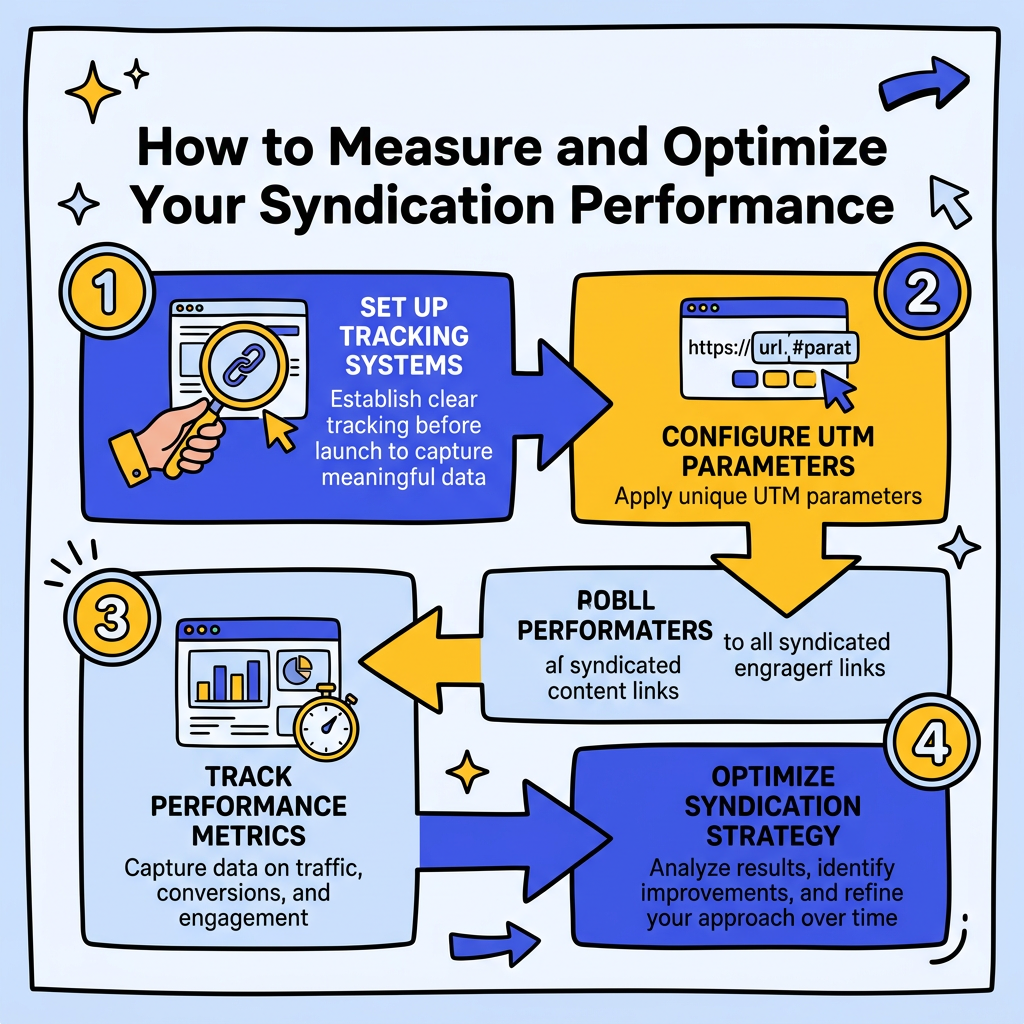
Effective measurement separates successful content syndication strategies from random content distribution. Establish clear tracking systems before launching your syndication efforts to capture meaningful data and optimize performance over time.
Set up UTM parameters for all syndicated content links to track traffic sources, engagement levels, and conversion rates. This granular tracking reveals which platforms drive the highest-quality traffic and which content types resonate most with syndicated audiences. Google Analytics 4 provides robust tracking capabilities for multi-platform content performance analysis.
Monitor both quantitative and qualitative metrics to gain comprehensive insights into your syndication success. Quantitative metrics include website traffic, lead generation, social shares, and engagement rates. Qualitative indicators encompass brand mention sentiment, industry recognition, and relationship quality with syndication partners.
Key Performance Indicators for Content Syndication
Track metrics that align with your original syndication goals. If lead generation was your primary objective, focus on conversion rates, lead quality scores, and cost per acquisition from syndicated traffic. For brand awareness goals, monitor reach, impressions, brand mention volume, and share of voice in your industry.
Review performance data monthly to identify trends and optimization opportunities. Look for patterns in high-performing content, successful platforms, and optimal publishing timing. Use these insights to refine your content creation and syndication strategies continuously.
What Common Syndication Mistakes Should You Avoid?
Learning from common syndication mistakes can save you time, resources, and potential reputation damage. Many businesses rush into syndication without proper strategy, leading to diluted results and missed opportunities.
One critical mistake involves syndicating content too quickly after original publication. Search engines need time to index and establish your original content's authority before syndicated versions appear. Wait at least two weeks after publishing on your owned channels before syndicating to external platforms.
Another frequent error is neglecting to customize content for different platforms and audiences. Generic syndication often results in poor engagement and missed opportunities to connect with new audiences effectively. Each platform has unique characteristics, audience expectations, and content preferences that should influence your syndication approach.
Avoiding SEO Penalties and Duplicate Content Issues
Improper syndication can trigger duplicate content penalties that harm your search rankings. Always use canonical tags, proper attribution, and strategic timing to maintain SEO value. When platforms don't support canonical tags, ensure syndicated content includes clear attribution and links back to your original content.
Never syndicate content to low-quality or spammy platforms, regardless of their reach promises. These associations can damage your brand reputation and potentially harm your search rankings through negative link associations.
Conclusion
Building a winning content syndication strategy requires careful planning, strategic execution, and continuous optimization. By following the steps outlined in this guide, you'll create a syndication approach that amplifies your content's reach while driving meaningful business results.
Remember that successful syndication is about building relationships, providing value, and consistently delivering quality content that resonates with new audiences. Start with clear goals, choose platforms strategically, and measure your results to refine your approach over time.
Ready to amplify your content's impact through strategic syndication? Begin by auditing your existing content to identify your best syndication candidates, then research potential platforms that align with your target audience. The investment in building a solid content syndication strategy will pay dividends in expanded reach, increased leads, and enhanced brand authority.
Frequently Asked Questions
Content syndication involves republishing your original content on third-party platforms to reach new audiences and extend your content's lifespan. Unlike content marketing focused on owned channels, syndication leverages established platforms with existing audiences to multiply your content's value without proportionally increasing creation costs.
Evergreen content like how-to guides and tutorials, along with data-driven content such as original research and industry surveys, perform exceptionally well in syndication. These content types remain relevant over time and attract media attention and social shares, amplifying reach beyond the initial syndication platform.
Your syndication goals should follow the SMART framework—Specific, Measurable, Achievable, Relevant, and Time-bound. Define whether you're seeking brand awareness, lead generation, or thought leadership, and set concrete targets like 'increase qualified B2B leads by 25% within four months' rather than vague objectives.
Select platforms based on audience alignment, content quality standards, and where your target audience actively consumes content. Research competitor syndication strategies using SEO tools, look for engagement patterns, and prioritize quality over quantity when evaluating potential partnerships.
When executed strategically, content syndication can increase your content's reach by 300-500%, drive meaningful traffic to your website, generate qualified leads, and establish your brand as an industry authority. Results vary based on platform selection, content quality, and goal alignment.

Stefan Winter
Founder & SEO Expert
Founder of Fast SEO Fix and SEO automation expert. Stefan built Fast SEO Fix to solve the tedious problem of manual SEO work. He specializes in SEO optimized content generation, keyword research, and automated SEO strategies.
