What Is a Content Marketing Strategy and Why Does It Matter?
Posted by
 Stefan Winter
How to Build a Winning Content Marketing Strategy in 2026
Building a successful content marketing strategy can feel overwhelming, especially when you're competing for attention in today's crowded digital landscape. With over 4 billion pieces of content published daily, your business needs a strategic approach that cuts through the noise and delivers real results. This comprehensive guide will walk you through creating a content marketing strategy that drives traffic, engages your audience, and converts visitors into loyal customers.
What Is a Content Marketing Strategy and Why Does It Matter?
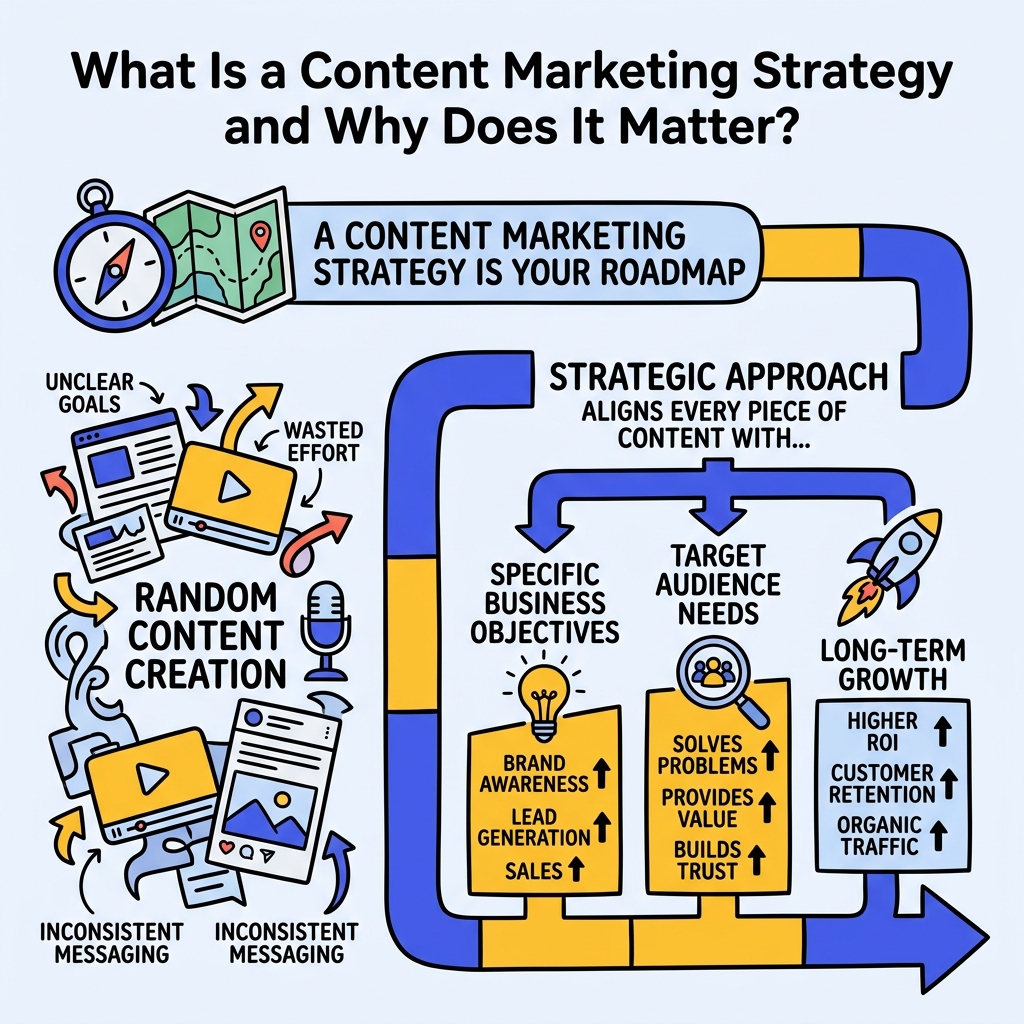
A content marketing strategy is your roadmap for creating, distributing, and managing content that attracts and retains your target audience. Unlike random content creation, a strategic approach aligns every piece of content with specific business objectives and audience needs.
The numbers speak for themselves: companies with documented content strategies are 67% more likely to generate leads than those without one. Your strategy serves as the foundation that transforms scattered content efforts into a cohesive system that builds brand authority and drives measurable growth.
When you develop a proper strategy, you eliminate guesswork and ensure every blog post, video, or social media update serves a clear purpose in your customer acquisition funnel.
How to Define Your Content Marketing Goals and Objectives
Before creating any content, you must establish clear, measurable goals that align with your overall business objectives. Vague aspirations like "increase brand awareness" won't provide the direction you need for success.
Start by identifying specific outcomes you want to achieve. These might include increasing organic traffic by 50% within six months, generating 200 qualified leads per month, or improving customer retention rates by 25%. Each goal should follow the SMART framework: Specific, Measurable, Achievable, Relevant, and Time-bound.
Your content goals should map directly to different stages of the customer journey. Top-of-funnel content focuses on awareness and education, middle-funnel content addresses specific problems and solutions, while bottom-funnel content drives conversions and customer loyalty. This alignment ensures your content strategy supports every phase of your sales process.
Who Is Your Target Audience and How to Research Them Effectively
Understanding your audience goes beyond basic demographics. You need deep insights into their pain points, content preferences, online behavior, and decision-making processes. This knowledge shapes every aspect of your content creation and distribution strategy.
Create detailed buyer personas by combining quantitative data from analytics tools with qualitative insights from customer surveys and interviews. Examine your website analytics to identify which content resonates most with different audience segments. Look at social media engagement patterns, email open rates, and conversion data to understand content preferences.
Research your competitors' content strategies to identify gaps and opportunities. Tools like SEMrush and Ahrefs reveal which topics drive the most engagement in your industry. Pay attention to comment sections, social media discussions, and customer support inquiries to uncover common questions and concerns your content should address.
Understanding Audience Content Consumption Patterns
Different audience segments consume content differently. Some prefer detailed written guides, while others engage more with video content or interactive tools. Analyze your existing content performance to identify these preferences and tailor your strategy accordingly.
Consider the context in which your audience consumes content. Are they researching during work hours on desktop computers, or browsing on mobile devices during commutes? This information influences content format, length, and distribution timing for maximum impact.
What Content Types Should You Include in Your Strategy
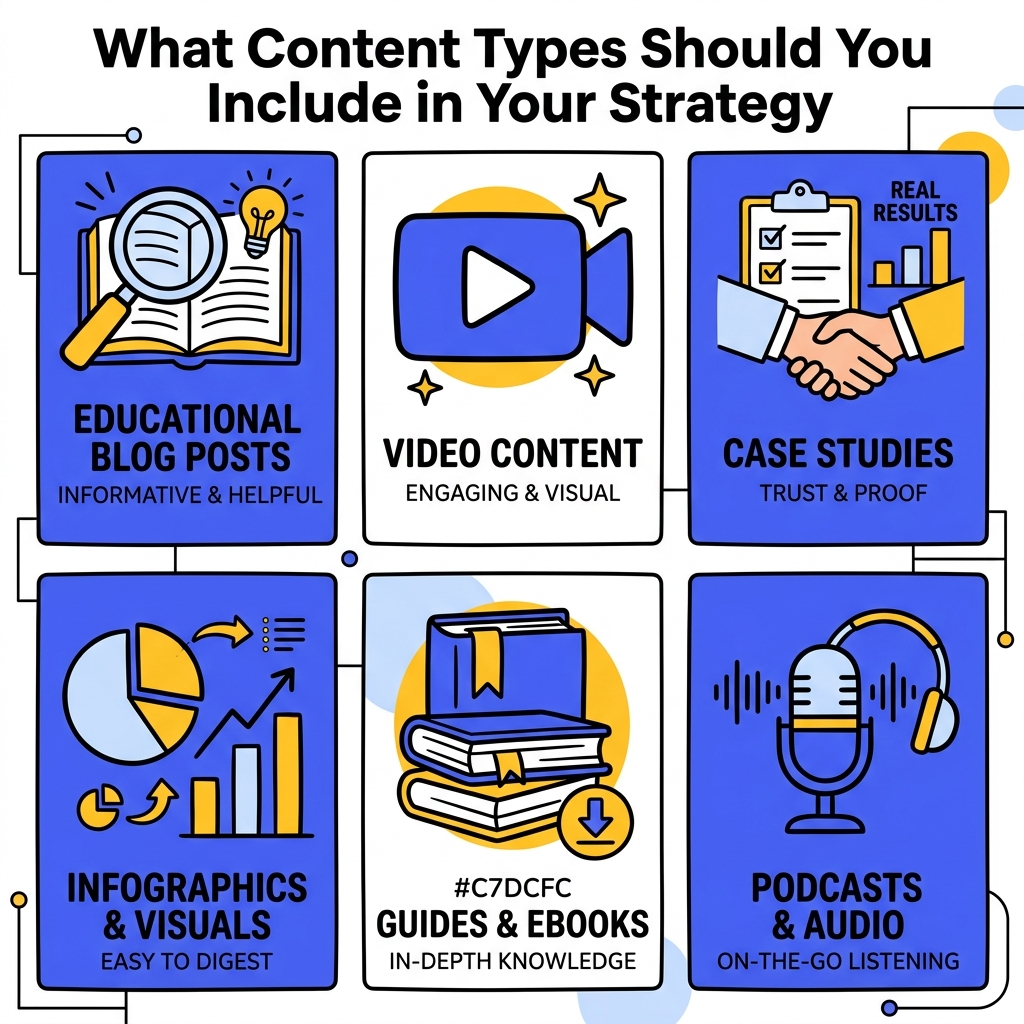
Your content mix should reflect your audience preferences while supporting different stages of the customer journey. Diversifying content types keeps your audience engaged and accommodates different learning styles and consumption preferences.
Educational blog posts remain the foundation of most content strategies because they drive organic search traffic and establish thought leadership. However, complement written content with videos, infographics, podcasts, case studies, and interactive tools to create a rich content ecosystem.
| Content Type | Best For | Primary Goal | Typical ROI Timeline |
|---|---|---|---|
| Blog Posts | SEO, thought leadership | Traffic, awareness | 3-6 months |
| Videos | Engagement, explanation | Brand building | 1-3 months |
| Case Studies | Social proof | Conversions | Immediate |
| Infographics | Social sharing | Awareness | 1-2 months |
| Email Content | Nurturing | Retention | Ongoing |
Understanding what makes content writing different from regular writing helps ensure each piece serves strategic purposes rather than just filling space on your website.
How to Conduct Keyword Research for Your Content Strategy
Effective keyword research forms the backbone of content that attracts organic search traffic. However, modern keyword research goes beyond search volume and competition metrics to understand user intent and content gaps.
Start with seed keywords related to your business, then expand using tools like Google Keyword Planner, SEMrush, or Ahrefs. Focus on long-tail keywords that indicate specific user intent rather than broad, highly competitive terms. These longer phrases often convert better because they capture users closer to making decisions.
Analyze the search results for your target keywords to understand what type of content Google considers most relevant. If the first page shows mostly how-to guides, create comprehensive tutorials. If product comparisons dominate, develop detailed comparison content that helps users make informed decisions.
Mapping Keywords to Content Types and User Intent
Different keywords serve different purposes in your content strategy. Informational keywords like "how to create content" work well for educational blog posts, while commercial keywords like "best content tools" suit comparison articles and product reviews.
Create a keyword mapping document that connects specific keywords to content types, target audience segments, and business objectives. This systematic approach ensures comprehensive topic coverage while avoiding keyword cannibalization across your content.
Where and How to Distribute Your Content Effectively
Creating great content is only half the battle. Strategic distribution ensures your content reaches the right audience at the right time through their preferred channels. Your distribution strategy should align with where your audience spends time online.
Owned media channels like your website, email list, and social media accounts provide complete control over your message and audience experience. These channels should anchor your distribution strategy because they build direct relationships with your audience without depending on third-party algorithms.
Earned media opportunities include guest posting, podcast appearances, and media coverage that expand your reach through established audiences. Partner with industry publications, participate in expert roundups, and contribute to relevant online communities where your target audience seeks information.
Paid distribution through social media advertising, Google Ads, and sponsored content can amplify high-performing content to reach broader audiences. Use paid promotion strategically to boost content that has already proven successful organically.
How to Create an Editorial Calendar That Drives Results
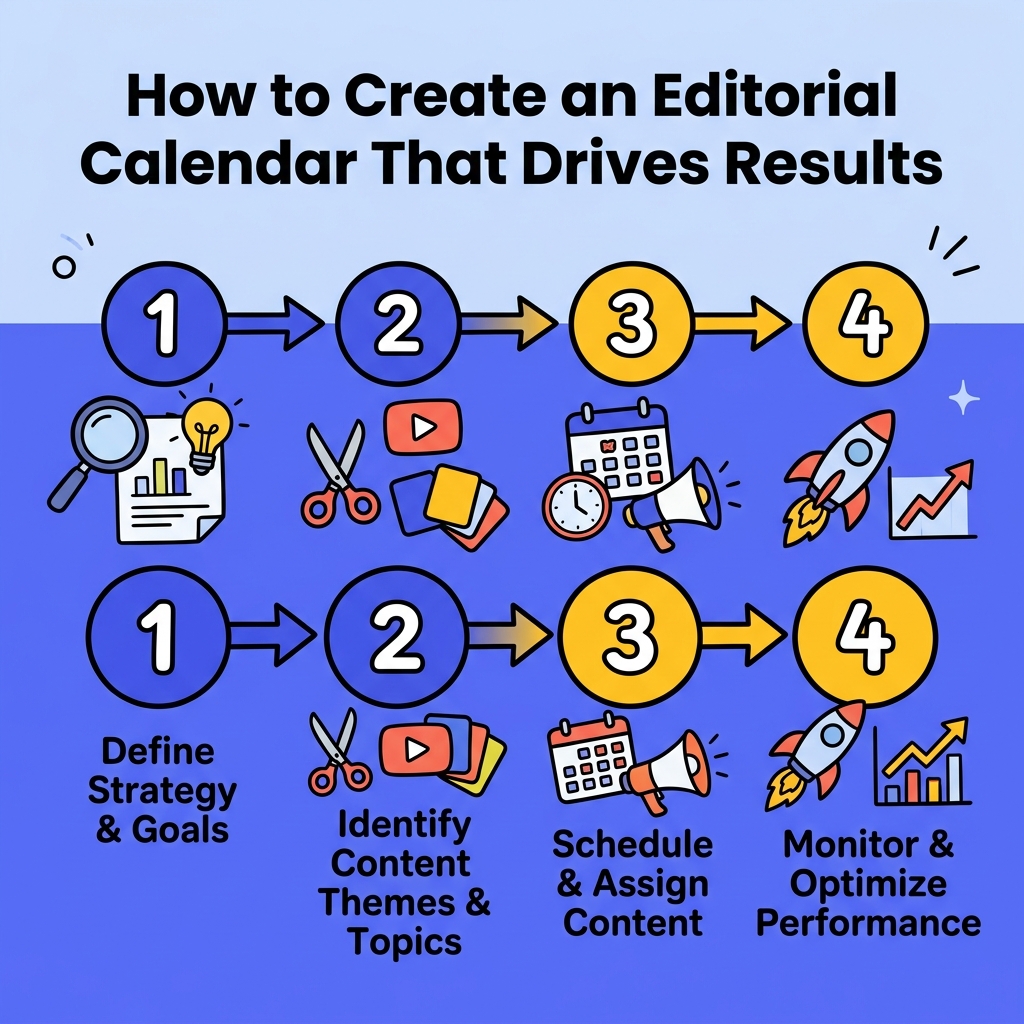
An editorial calendar transforms your content strategy from concept into actionable execution. It ensures consistent publishing, balances different content types, and aligns content creation with business priorities and seasonal opportunities.
Plan content themes around your business cycles, industry events, and seasonal trends. If you're a tax software company, increase educational content before tax season. B2B companies might focus on budget-related content near fiscal year-ends when decision-makers evaluate new solutions.
Your calendar should specify publication dates, content types, target keywords, distribution channels, and responsible team members. Include content promotion activities like social media posts, email campaigns, and outreach efforts to maximize each piece's impact.
Using content creation tools can streamline your editorial workflow and ensure consistent quality across all published content.
What Metrics Should You Track to Measure Success
Measuring content marketing success requires tracking metrics that directly connect to your business objectives. Vanity metrics like page views provide some insight, but focus on metrics that indicate real business impact.
Traffic quality matters more than quantity. Monitor organic search rankings, time on page, bounce rate, and pages per session to gauge content effectiveness. High-quality content keeps visitors engaged and encourages them to explore additional pages on your site.
Lead generation metrics include email signups, content downloads, demo requests, and contact form submissions. Track which content pieces generate the most qualified leads and analyze common characteristics to inform future content creation.
Advanced Analytics for Content Performance
Set up goal tracking in Google Analytics to measure content's contribution to conversions and revenue. Use UTM parameters to track traffic from different distribution channels and identify the most effective promotion strategies.
Monitor social engagement metrics like shares, comments, and mentions to understand which content resonates most with your audience. High engagement often correlates with increased brand awareness and organic reach through social algorithms.
According to Content Marketing Institute research, organizations that measure content ROI are significantly more likely to report success with their content marketing efforts.
How to Optimize and Improve Your Strategy Over Time
Content marketing success requires continuous optimization based on performance data and changing audience needs. Regular strategy reviews help identify what's working, what needs improvement, and where new opportunities exist.
Conduct quarterly content audits to evaluate performance against your established goals. Identify top-performing content and analyze why it succeeded. Look for patterns in topics, formats, distribution channels, and promotion strategies that you can replicate.
Update and refresh evergreen content to maintain search rankings and provide current information to your audience. Add new sections, update statistics, and improve internal linking to boost the performance of existing content assets.
Test different content formats, headlines, and distribution strategies to optimize performance continuously. A/B test email subject lines, social media posts, and landing page copy to improve engagement and conversion rates.
Consider implementing AI SEO tools to identify optimization opportunities and streamline your content improvement processes.
Conclusion
Building an effective content marketing strategy requires careful planning, consistent execution, and ongoing optimization. By defining clear goals, understanding your audience deeply, creating valuable content, and measuring results systematically, you'll develop a strategy that drives real business growth.
Remember that content marketing is a long-term investment that builds momentum over time. Stay committed to your strategy while remaining flexible enough to adapt based on performance data and changing market conditions. Start implementing these steps today, and you'll be well on your way to content marketing success in 2026 and beyond.
Ready to transform your content marketing efforts? Begin by auditing your current content performance and identifying the biggest gaps in your strategy. Then, implement one section of this guide at a time to build a comprehensive approach that delivers measurable results for your business.

Stefan Winter
Founder & SEO Expert
Founder of Fast SEO Fix and SEO automation expert. Stefan built Fast SEO Fix to solve the tedious problem of manual SEO work. He specializes in SEO optimized content generation, keyword research, and automated SEO strategies.
