What Exactly Is Digital Marketing Strategy and Why Do You Need One?
Posted by
 Stefan Winter
How to Build a Complete Digital Marketing Strategy That Actually Drives Results
Digital marketing can feel overwhelming with its countless channels, tools, and tactics. But here's the truth: successful businesses don't just throw content at the wall and hope something sticks. They follow a systematic approach to build cohesive digital marketing strategies that generate measurable results. In this comprehensive guide, you'll learn how to create a digital marketing strategy from the ground up, including the essential components, step-by-step implementation process, and proven tactics that drive real business growth.
What Exactly Is Digital Marketing Strategy and Why Do You Need One?
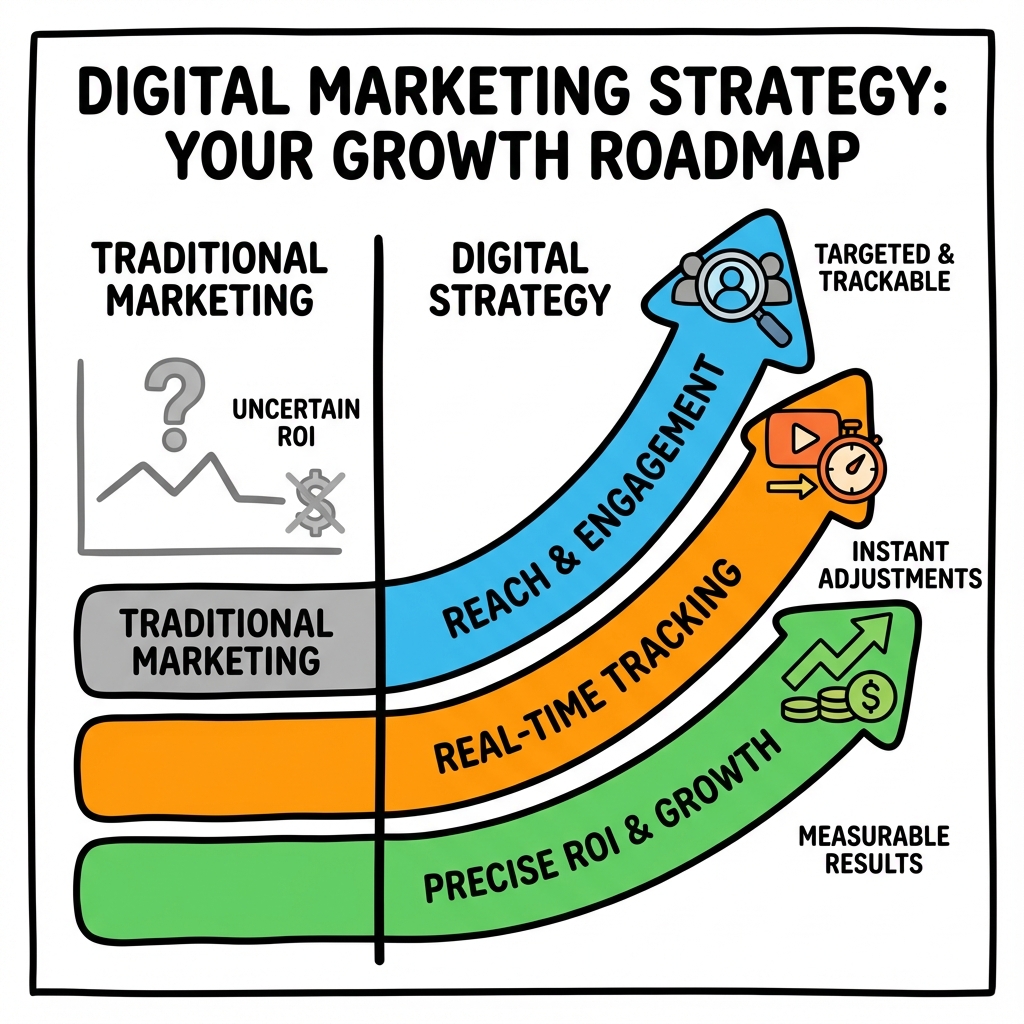
Digital marketing strategy is your comprehensive roadmap for reaching and engaging your target audience across all online channels. Unlike traditional marketing, digital marketing allows you to track every interaction, measure precise ROI, and adjust campaigns in real-time based on performance data.
A well-crafted digital marketing strategy connects all your online efforts into a unified system. Instead of running isolated campaigns across different platforms, you create an integrated approach where your content marketing efforts work together with your SEO, social media, email marketing, and paid advertising to amplify your overall impact.
According to HubSpot's State of Marketing Report, companies with documented marketing strategies are 538% more likely to report success than those without a clear plan. This statistic highlights why random digital marketing tactics rarely produce sustainable results.
How to Define Your Digital Marketing Foundation
Before diving into specific tactics, you need to establish the foundation that will guide every digital marketing decision. This foundation consists of three critical elements that determine whether your strategy succeeds or fails.
Step 1: Identify Your Target Audience with Precision
Start by creating detailed buyer personas that go beyond basic demographics. Research your ideal customers' online behavior, preferred content formats, social media usage patterns, and the specific problems they're trying to solve. Use tools like Google Analytics, social media insights, and customer surveys to gather this data.
Your buyer personas should include information about where your audience spends time online, what type of content they engage with most, and their typical customer journey from awareness to purchase. This research becomes the foundation for choosing the right digital marketing channels and crafting messages that resonate.
Step 2: Set SMART Digital Marketing Goals
Transform vague objectives like "increase brand awareness" into specific, measurable goals. Examples of strong digital marketing goals include increasing organic website traffic by 40% within six months, generating 200 qualified leads per month through content marketing, or achieving a 25% increase in email subscribers within the next quarter.
Each goal should directly connect to your business objectives and include specific metrics you'll track. This clarity helps you choose the right digital marketing tactics and allocate resources effectively.
How to Choose the Right Digital Marketing Channels
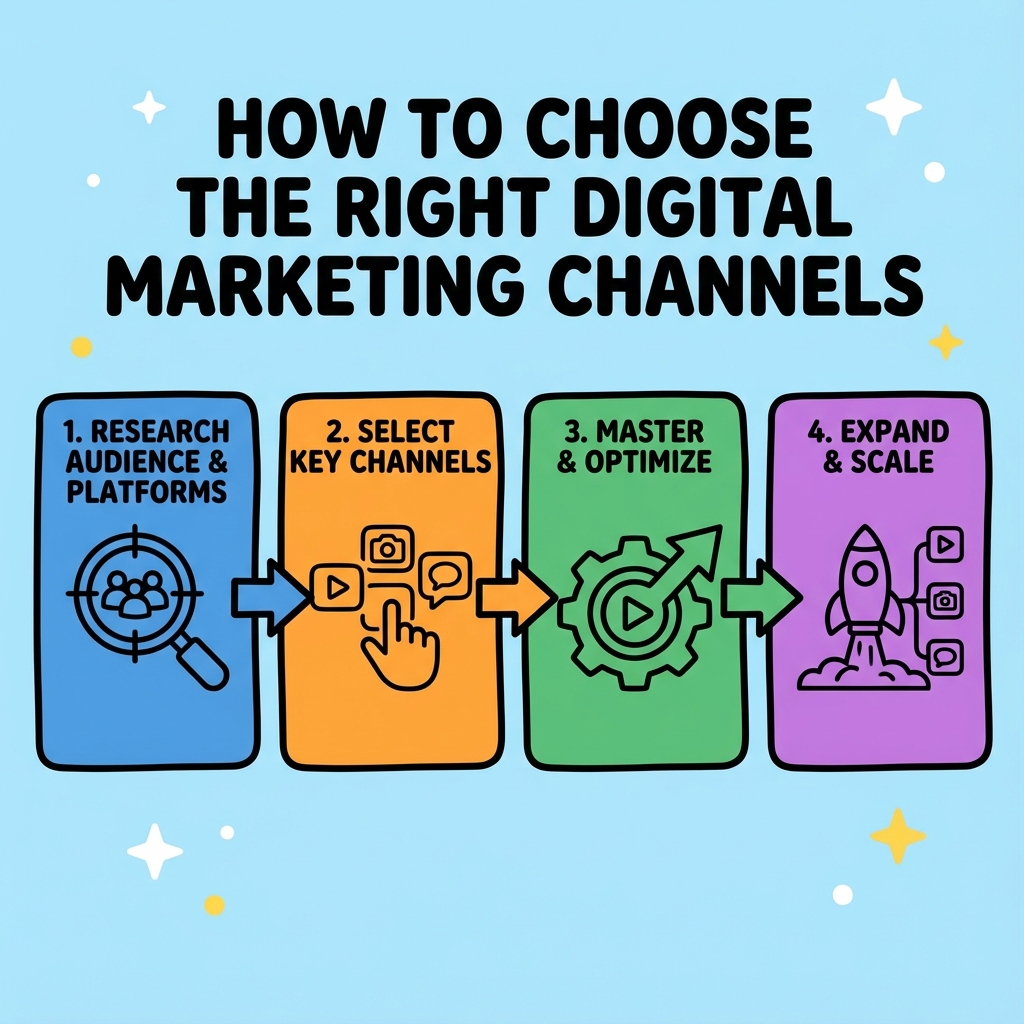
Not every digital marketing channel will be right for your business. The key is selecting channels where your target audience is most active and engaged, then focusing your efforts on mastering those platforms before expanding to others.
| Channel | Best For | Key Metrics | Time to Results |
|---|---|---|---|
| SEO & Content | Long-term organic growth | Organic traffic, rankings | 3-6 months |
| Social Media | Brand awareness, engagement | Followers, engagement rate | 1-3 months |
| Email Marketing | Nurturing leads, retention | Open rate, click rate, conversions | 2-4 weeks |
| Paid Advertising | Quick results, targeted reach | CPC, conversion rate, ROAS | 1-2 weeks |
| Video Marketing | Engagement, brand storytelling | Views, watch time, shares | 2-8 weeks |
How to Evaluate Channel Effectiveness
Start with 2-3 channels that align best with your audience and goals. For B2B companies, this might include SEO-focused content marketing, LinkedIn advertising, and email nurturing campaigns. E-commerce businesses might focus on Google Ads, Instagram marketing, and retargeting campaigns.
Research where your competitors are most active and successful, but don't simply copy their approach. Instead, look for gaps or opportunities where you can differentiate your digital marketing efforts.
How to Create Content That Fuels Your Digital Marketing Engine
Content serves as the fuel that powers most digital marketing channels. Without high-quality, relevant content, your SEO efforts stagnate, social media engagement drops, and email campaigns fail to convert. Here's how to build a content system that supports all your digital marketing goals.
Step 3: Develop Your Content Marketing Framework
Begin with thorough keyword research to understand what topics your audience is searching for online. Use tools like Google Keyword Planner to identify high-value keywords that align with your business objectives.
Create a content calendar that balances different content types: educational blog posts, how-to guides, case studies, infographics, and video content. Each piece should serve a specific purpose in your customer journey, from attracting new visitors to nurturing leads and supporting existing customers.
Step 4: Optimize Content for Maximum Digital Marketing Impact
Every piece of content should be optimized for multiple digital marketing channels. A single blog post can be repurposed into social media posts, email newsletter content, video scripts, and infographic data. This approach maximizes your content investment while maintaining consistent messaging across all channels.
Focus on creating comprehensive, valuable content that addresses real problems your audience faces. According to Content Marketing Institute research, the most successful content marketers prioritize their audience's informational needs over promotional messages.
How to Implement and Optimize Your Digital Marketing Campaigns
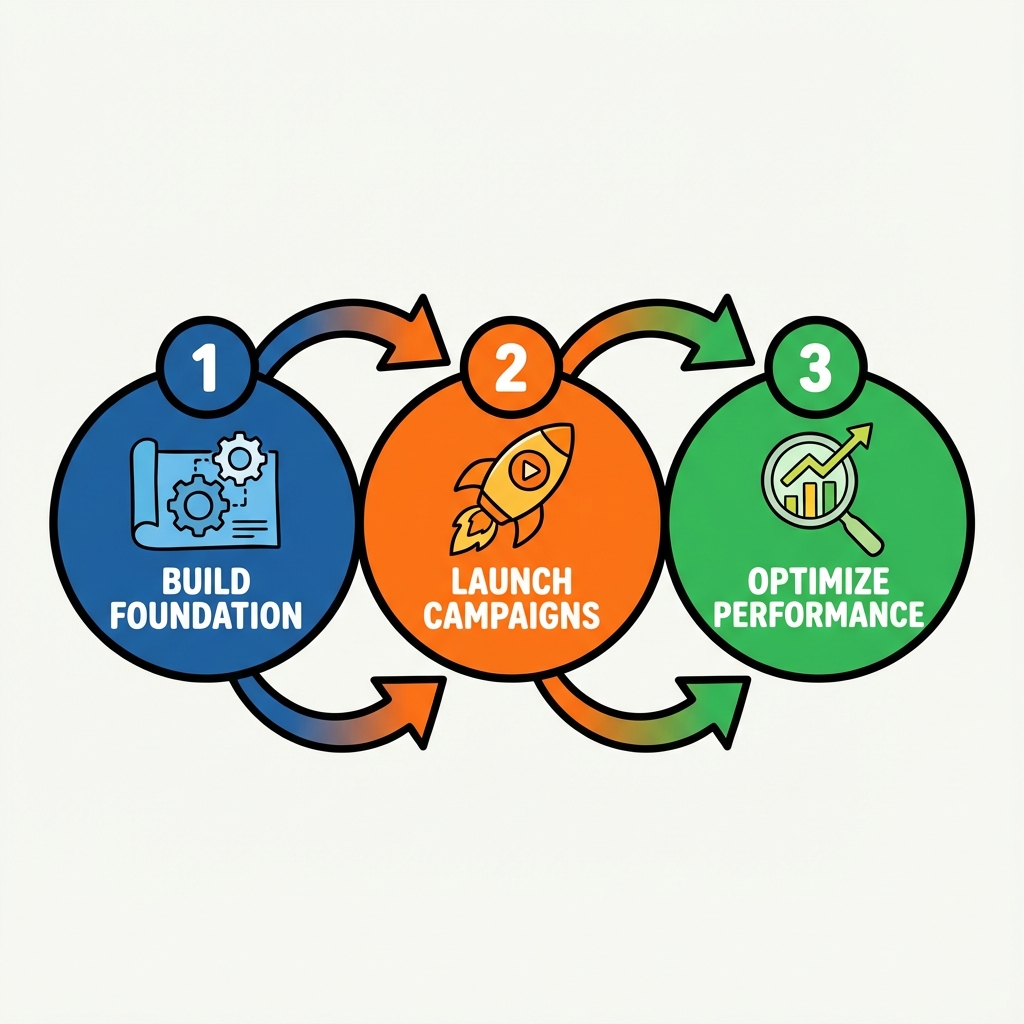
Implementation is where most digital marketing strategies succeed or fail. The key is starting with a solid foundation, launching systematically, and continuously optimizing based on real performance data.
Step 5: Launch Your Integrated Digital Marketing Campaigns
Start by implementing your chosen channels one at a time, ensuring each is properly set up with tracking and analytics before moving to the next. Set up Google Search Console to monitor your SEO performance, configure conversion tracking for paid campaigns, and establish clear attribution models to understand how different channels work together.
Create standard operating procedures for each digital marketing activity, from content creation and social media posting to email campaign setup and performance analysis. This systematization ensures consistency and makes it easier to scale your efforts.
Step 6: Monitor, Analyze, and Optimize Performance
Digital marketing success comes from continuous improvement based on data insights. Establish weekly and monthly reporting cycles that track your key performance indicators across all channels. Look for patterns in what content performs best, which traffic sources convert highest, and where you're losing potential customers in the funnel.
Use A/B testing for email subject lines, ad copy, landing pages, and call-to-action buttons. Small improvements in conversion rates compound over time to create significant business impact. The Google Analytics Intelligence tools can help identify trends and opportunities you might otherwise miss.
What Are the Most Common Digital Marketing Mistakes to Avoid?
Learning from common pitfalls can save you months of wasted effort and budget. Here are the critical mistakes that derail digital marketing strategies and how to avoid them.
Focusing on vanity metrics instead of business outcomes leads many digital marketing efforts astray. While social media followers and website traffic feel good to report, they don't matter unless they contribute to your actual business goals. Always connect your digital marketing metrics to revenue, lead generation, or other meaningful business outcomes.
Another major mistake is trying to be everywhere at once. Spreading your digital marketing efforts too thin across multiple channels often results in mediocre performance across all of them. It's better to excel on fewer channels than to maintain a weak presence everywhere.
How to Scale Your Digital Marketing Strategy
Once you've established a foundation and proven what works, scaling becomes your next priority. This involves systematizing successful processes, expanding to new channels, and potentially increasing your investment in high-performing areas.
When and How to Expand Your Digital Marketing Efforts
Look for scaling opportunities when you've achieved consistent results in your initial channels for at least three months. Signs you're ready to scale include steady organic traffic growth, predictable conversion rates from paid campaigns, and a content system that regularly produces engaging material.
Consider automated blog systems and other tools that can help you maintain quality while increasing output. However, never sacrifice quality for quantity. Your audience can quickly detect when you're prioritizing volume over value.
Conclusion
Building a successful digital marketing strategy requires careful planning, systematic implementation, and continuous optimization. By following this step-by-step approach, you'll create an integrated system that drives real business results rather than just impressive-looking metrics.
Remember that digital marketing success doesn't happen overnight. Focus on building a solid foundation, choose your channels strategically, create valuable content consistently, and always base decisions on performance data rather than assumptions. The businesses that succeed in digital marketing are those that treat it as a long-term investment in building relationships with their ideal customers.
Ready to implement these digital marketing strategies for your business? Start with defining your target audience and setting specific goals, then systematically build out your chosen channels. With patience and consistent execution, you'll create a digital marketing system that generates sustainable growth for years to come.

Stefan Winter
Founder & SEO Expert
Founder of Fast SEO Fix and SEO automation expert. Stefan built Fast SEO Fix to solve the tedious problem of manual SEO work. He specializes in SEO optimized content generation, keyword research, and automated SEO strategies.
