What Are Local SEO Services, and Why Do They Matter?
Posted by
 Stefan Winter
How to Use Local SEO Services to Dominate Your Neighborhood Search Results
If you run a local business and your phone is not ringing the way it should be, the problem might not be your product or your pricing. It might be your visibility. Millions of consumers search for nearby businesses every single day, and the ones that show up at the top of those results are capturing customers before your business even enters the picture. Local SEO services exist to fix exactly that problem. This guide walks you through how to use local SEO services effectively, what to look for when choosing a provider, and how to measure whether your investment is actually working.
What Are Local SEO Services, and Why Do They Matter?
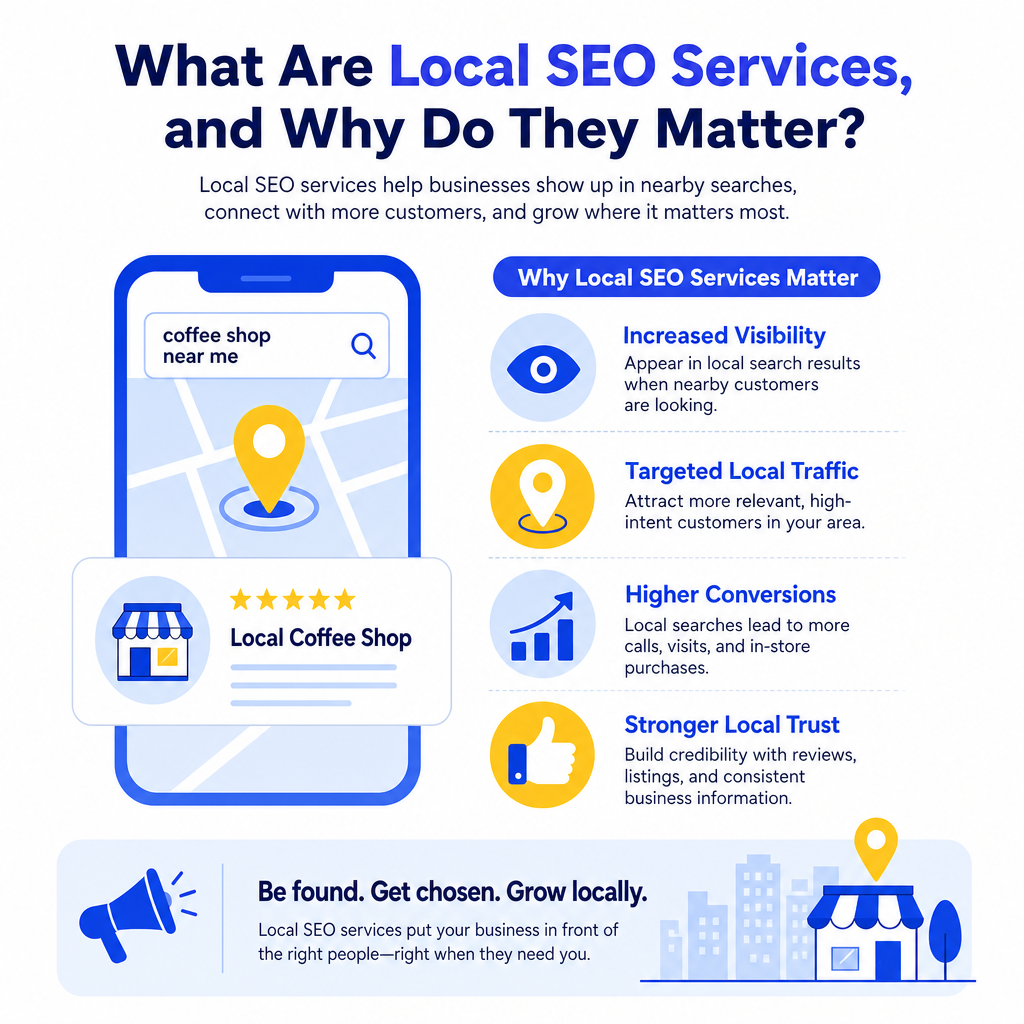
Local SEO services are specialized search engine optimization strategies designed to improve a business's visibility in location-based search results. When someone types "best plumber near me" or "coffee shop in downtown Austin," Google and other search engines serve results based on proximity, relevance, and authority. Local SEO services help your business rank well across all three of those factors.
Unlike general SEO, which targets broad audiences across the country or the world, local SEO is laser-focused on attracting customers within a specific geographic area. For small and medium-sized businesses, this is often the highest-value form of digital marketing available. According to Google's research on local search behavior, nearly 76 percent of people who search for something nearby visit a related business within a day.
The stakes are high, and so is the opportunity. Businesses that invest in professional local SEO services consistently outperform competitors who rely on word-of-mouth alone. The key is knowing how to use those services strategically, not just buying a package and hoping for results.
Step 1: Audit Your Current Local Search Presence
Before any meaningful improvement can happen, you need a clear picture of where you stand. A good local SEO audit covers several key areas:
- Google Business Profile (GBP) completeness: Is every field filled out accurately, including hours, categories, photos, and service descriptions?
- NAP consistency: Your Name, Address, and Phone number must match exactly across every directory, website, and social platform where your business appears.
- Local citation health: Citations are mentions of your business across the web. Inconsistent or duplicate citations hurt your rankings.
- On-page local signals: Does your website mention your city, neighborhood, and service area in headings, meta tags, and body content?
- Review volume and quality: How many reviews do you have, and what is your average rating compared to competitors?
Step 2: Optimize Your Google Business Profile
Your Google Business Profile is the single most important local SEO asset you control. It is what powers your appearance in the Google Map Pack, which is the block of three local business listings that appears above organic search results for most location-based queries.
Here is how to get the most out of your GBP optimization:
- Choose the most accurate primary category for your business. This has a significant impact on which searches trigger your listing.
- Add secondary categories where relevant, but do not overload them with categories that do not genuinely apply.
- Write a compelling business description that naturally includes your primary services and location.
- Upload high-quality photos regularly. Businesses with photos receive significantly more direction requests and website clicks.
- Use the Posts feature to share updates, promotions, and events. This signals to Google that your profile is active and relevant.
- Enable messaging so potential customers can reach you directly from the search results.
Step 3: Build and Clean Up Local Citations
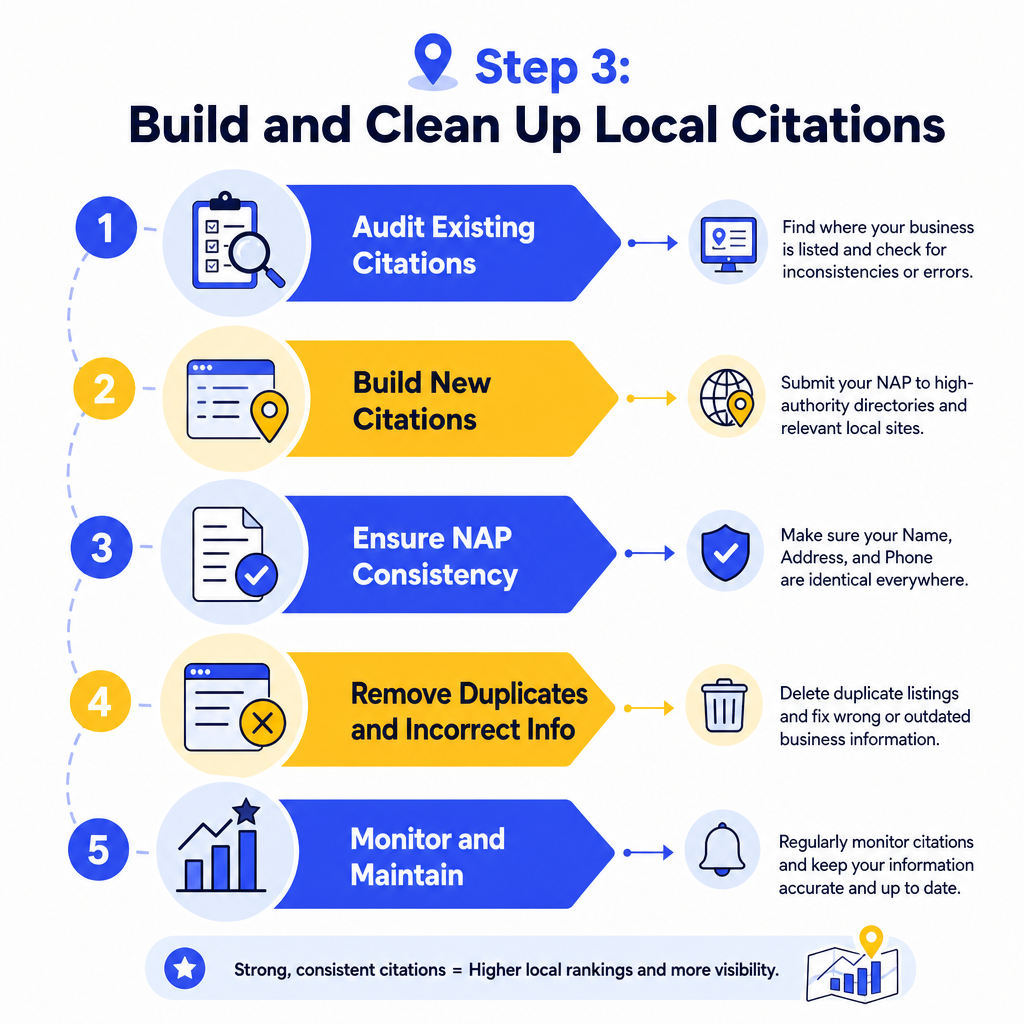
Citations are one of the foundational ranking factors for local search. A citation is any online mention of your business that includes your NAP information. The most important citation sources include:
| Citation Source | Authority Level | Impact on Local Rankings |
|---|---|---|
| Google Business Profile | Very High | Direct ranking factor |
| Yelp | High | Strong for consumer searches |
| Bing Places | High | Covers Bing and Yahoo search |
| Apple Maps | Medium-High | Critical for iOS users |
| Facebook Business | Medium-High | Social trust signal |
| Industry-specific directories | Medium | Niche relevance boost |
| Local Chamber of Commerce | Medium | Geographic authority |
Step 4: Create Locally Relevant Content
Content is where many local businesses fall short. A website that only lists services without any geographic context sends weak local signals to search engines. Locally relevant content tells Google exactly where you operate and what you offer in that area.
Effective local content strategies include:
- Location landing pages: If you serve multiple cities or neighborhoods, create a dedicated page for each one. Each page should be unique and genuinely useful, not just a copy-paste with the city name swapped out.
- Local blog posts: Write about topics that matter to your community. A landscaping company in Phoenix might publish a guide to drought-resistant plants for Arizona homeowners. This kind of content attracts local searchers and builds topical authority.
- FAQ content: Answer the questions your local customers actually ask. This supports featured snippet visibility and voice search.
Step 5: Earn and Manage Customer Reviews
Reviews are a critical local ranking factor, and they are also one of the most powerful conversion tools available to local businesses. According to BrightLocal's Local Consumer Review Survey, the majority of consumers read reviews before choosing a local business, and they trust online reviews nearly as much as personal recommendations.
Here is how to build a strong review profile:
- Ask satisfied customers for reviews shortly after completing a service or sale. Timing matters.
- Make it easy by sending a direct link to your Google review page via text or email.
- Respond to every review, both positive and negative. Thoughtful responses demonstrate professionalism and show potential customers that you care.
- Never purchase fake reviews. This violates Google's policies and can result in your listing being suspended.
Step 6: Build Local Backlinks
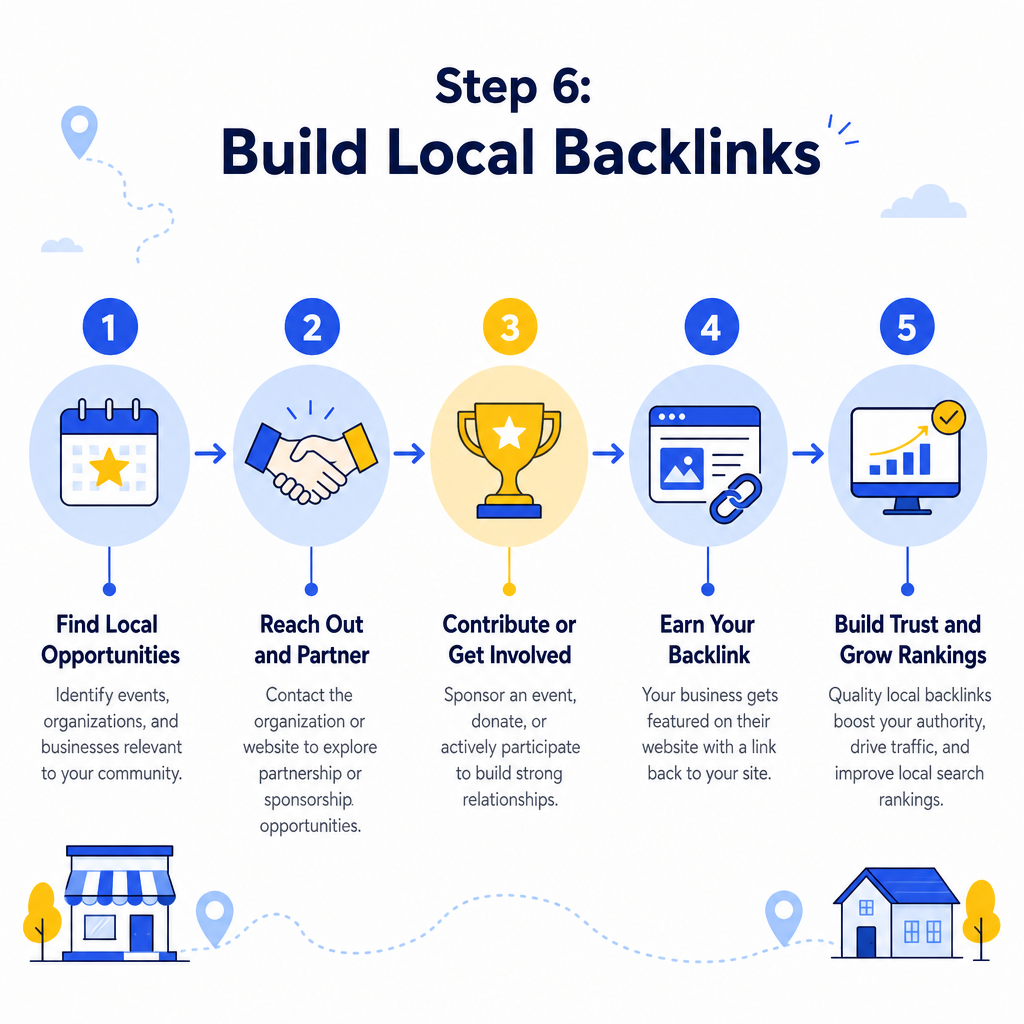
Backlinks from locally relevant and authoritative websites send strong trust signals to search engines. For local businesses, the most valuable backlinks often come from sources that national SEO campaigns would never target.
Consider these local link-building opportunities:
- Sponsor a local event or charity and earn a link from their website.
- Partner with complementary local businesses for cross-promotional content.
- Get featured in local news outlets or community blogs.
- Join your local Chamber of Commerce and earn a listing on their member directory.
- Contribute expert commentary to local journalists covering your industry.
What Should You Look for in a Local SEO Service Provider?
Choosing the right local SEO partner is just as important as the strategy itself. Here are the qualities that separate reliable providers from those that overpromise and underdeliver:
- Transparent reporting: You should receive regular reports showing ranking changes, traffic data, and citation growth.
- No guaranteed rankings: Any provider that guarantees a number one ranking is making a promise they cannot keep. Google's algorithm is not something any agency fully controls.
- Proven local experience: Ask for case studies or references from other local businesses in your industry or region.
- Clear deliverables: Know exactly what you are paying for each month, whether that includes GBP management, citation building, content creation, or review outreach.
- White-hat practices only: Shortcuts like spammy links or keyword stuffing create short-term gains and long-term penalties.
How Long Does Local SEO Take to Show Results?
This is one of the most common questions business owners ask. The honest answer is that it depends on your starting point, your competition, and how aggressively you invest in the strategy.
Most businesses begin to see measurable movement in local rankings within three to six months. Highly competitive markets or businesses starting from scratch may take longer. The important thing to understand is that local SEO is not a one-time fix. It is an ongoing process that builds momentum over time. According to Moz's research on local search ranking factors, the businesses that maintain consistent effort across GBP optimization, citations, content, and reviews are the ones that hold top positions long-term.
Conclusion
Local SEO services are one of the most direct paths to growing a neighborhood business in 2026. By auditing your current presence, optimizing your Google Business Profile, building clean citations, creating locally relevant content, earning genuine reviews, and developing local backlinks, you create a compounding advantage that competitors without a strategy simply cannot match.
The businesses winning in local search are not doing anything mysterious. They are executing the fundamentals consistently and working with providers who understand the local landscape. Whether you are just getting started or looking to sharpen an existing strategy, the steps outlined in this guide give you a clear roadmap to follow.
Ready to take your local visibility seriously? Start with a thorough audit of where your business stands today, and build your strategy from there. Every step forward puts you closer to the top of the results where your customers are already looking.

Stefan Winter
Founder & SEO Expert
Founder of Fast SEO Fix and SEO automation expert. Stefan built Fast SEO Fix to solve the tedious problem of manual SEO work. He specializes in SEO optimized content generation, keyword research, and automated SEO strategies.
