The Complete Guide to How to Optimize Content for Maximum Impact
Posted by
 Stefan Winter
TL;DR
Content optimization is the process of improving your content across multiple dimensions—including SEO, user experience, readability, and conversion potential—to ensure it reaches and engages your target audience. Success requires a strategic combination of keyword research, on-page optimization, quality formatting, and comprehensive topic coverage rather than relying on shortcuts or keyword stuffing.
The Complete Guide to How to Optimize Content for Maximum Impact
If you have ever published a piece of content and watched it disappear into the void of search results, you already understand the frustration. Creating content is only half the battle. The other half is making sure that content actually reaches the people it was written for. Learning how to optimize content is one of the most valuable skills any marketer, business owner, or writer can develop in 2026. This guide walks you through every major element of content optimization, from keyword strategy to technical formatting, so you can turn well-written material into high-performing digital assets.
What Does It Mean to Optimize Content?
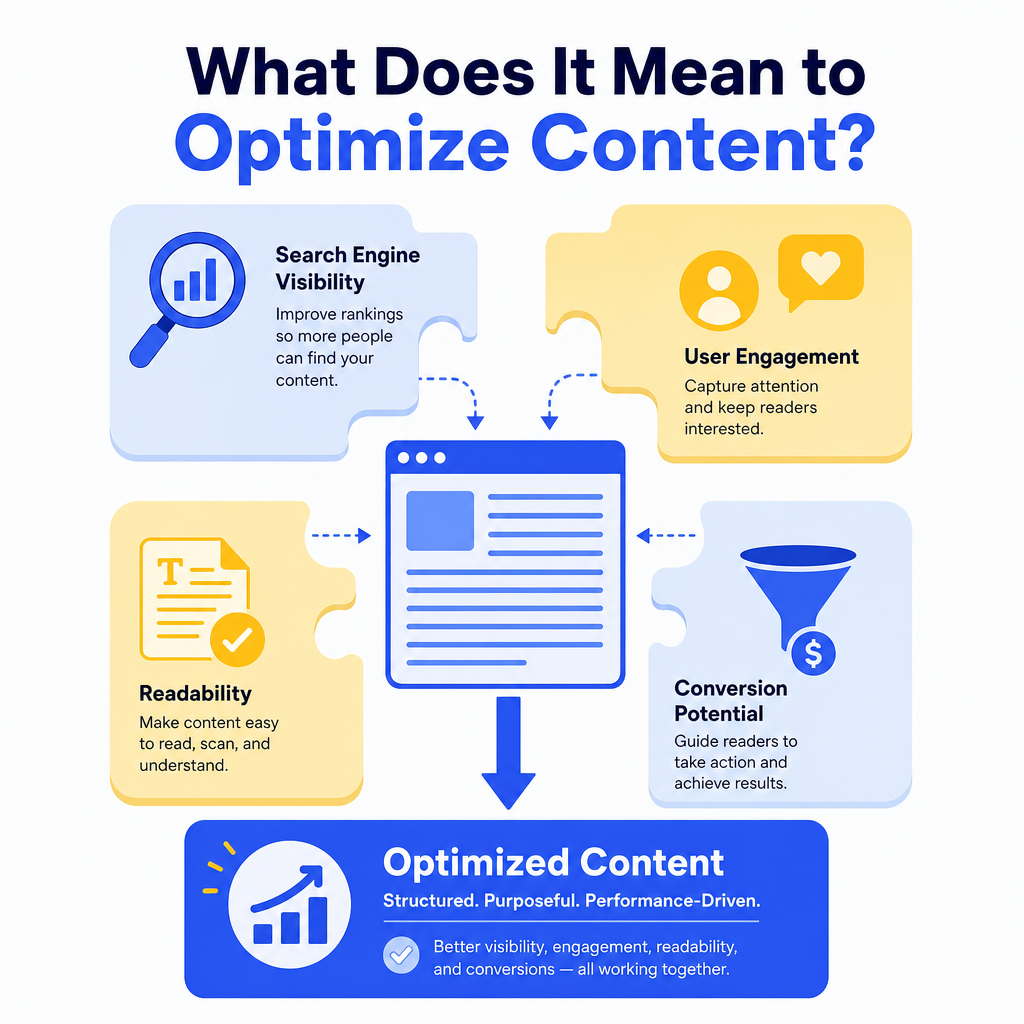
Content optimization is the process of improving a piece of content so it performs better across multiple dimensions. This includes search engine visibility, user engagement, readability, and conversion potential. Optimized content is not just stuffed with keywords. It is structured, purposeful, and built around what your audience actually needs.
When most people think about how to optimize content, they immediately think about SEO. While search engine optimization is a major component, true content optimization also considers the user experience, the clarity of the message, the formatting of the page, and the strategic placement of calls-to-action. All of these elements work together to determine whether a piece of content succeeds or fails.
In 2026, search engines are more sophisticated than ever. Algorithms now evaluate content based on expertise, trustworthiness, and genuine helpfulness. That means optimization strategies that rely on tricks or shortcuts are far less effective than those built on quality and relevance.
How Do You Start With Keyword Research?
Keyword research is the foundation of any content optimization effort. Before you write a single word, you need to understand what your target audience is actually searching for. This means going beyond broad, generic terms and digging into specific phrases, questions, and long-tail keywords that reflect real search intent.
Start by identifying the primary keyword for your content piece. From there, look for related terms, synonyms, and question-based variations. Tools like Google Search Console, Ahrefs, and Semrush can help you discover which keywords have strong search volume and manageable competition. Pay close attention to search intent. A keyword like "how to optimize content" signals that the user wants practical guidance, not a product page.
Once you have your keyword list, map each keyword to a specific section of your content. This approach ensures your article covers a topic comprehensively without forcing keywords into places where they feel unnatural. Keyword placement should feel organic, not mechanical.
On-Page Optimization: The Core Elements
On-page optimization refers to the changes you make directly within your content to improve its search performance. This is where most of the hands-on work happens, and it covers a range of elements that collectively determine how search engines interpret and rank your page.
What Should Your Title Tag and Meta Description Include?
Your title tag is the first thing both search engines and users see. It should include your primary keyword, ideally near the beginning, and stay within 50 to 60 characters so it displays properly in search results. Your meta description should expand on the title, include a secondary keyword naturally, and give users a compelling reason to click through. Keep it between 150 and 160 characters.
The heading structure within your content also matters significantly. Use one H1 tag for your main title, H2 tags for major sections, and H3 tags for subsections. This hierarchy helps search engines understand the structure of your content and makes it easier for readers to scan and navigate.
How Should You Format Content for Readability?
Formatting plays a bigger role in content optimization than many writers realize. A wall of text, no matter how well-written, tends to drive readers away. Break your content into short paragraphs, use bullet points for lists, and include subheadings every few hundred words. Here are some formatting best practices to keep in mind:
- Keep paragraphs to three or four sentences at most
- Use bullet points and numbered lists to present steps or features clearly
- Include images, charts, or tables to support key points visually
- Bold important terms or phrases to guide the reader's eye
- Add internal links to related content on your site to improve navigation
Content Quality and Depth: Why Thoroughness Wins
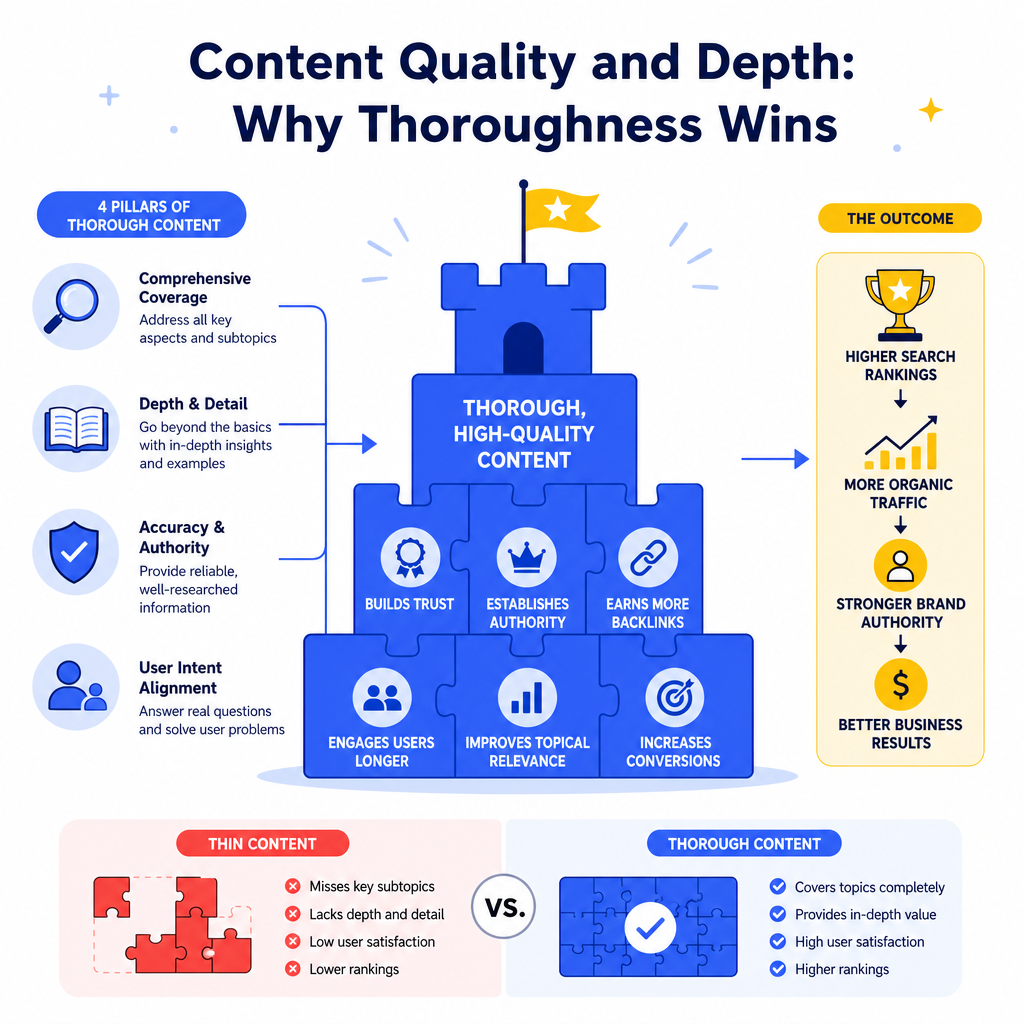
Search engines in 2026 reward content that thoroughly addresses a topic. Thin content, meaning pages with little substance or depth, consistently underperform compared to comprehensive resources. When you learn how to optimize content effectively, you quickly realize that quality and depth are not optional extras. They are central to the entire strategy.
Aim to cover your topic from multiple angles. Answer the most common questions your audience has. Anticipate follow-up questions and address those as well. If your competitors have published content on the same topic, review what they have written and identify gaps you can fill. Adding unique insights, original data, or expert perspectives gives your content a clear advantage.
It also helps to update your content regularly. A post that was accurate in 2024 may contain outdated information by now. Search engines favor fresh, current content, so revisiting and refreshing older posts is an important part of any long-term optimization strategy.
Content Optimization Comparison: Key Elements at a Glance
The table below summarizes the most important content optimization elements, what each one affects, and how to approach each one effectively.
| Optimization Element | Primary Impact | Best Practice |
|---|---|---|
| Keyword Research | Search visibility | Focus on intent-driven, long-tail keywords |
| Title Tag | Click-through rate | Include primary keyword within 60 characters |
| Meta Description | Click-through rate | Write a compelling summary under 160 characters |
| Heading Structure | Crawlability and readability | Use H1, H2, H3 hierarchy consistently |
| Content Depth | Rankings and engagement | Cover topics thoroughly with original insights |
| Internal Linking | Site authority and navigation | Link to 3 to 5 related pages per post |
| Page Speed | User experience and rankings | Compress images, minimize scripts |
| Mobile Formatting | Accessibility and bounce rate | Use short paragraphs and responsive design |
How Does Internal and External Linking Support Optimization?
Linking strategy is an often underestimated part of content optimization. Internal links connect your content to other relevant pages on your own site, helping users discover more of your material and helping search engines map the structure of your website. When you add internal links thoughtfully, you distribute authority across your site and improve the chances that multiple pages rank well.
External links, meaning links to reputable sources outside your site, also contribute to optimization. They signal to search engines that your content is well-researched and connected to credible information. Link to authoritative sources like government websites, academic publications, or well-established industry resources when you cite statistics or make factual claims.
A good linking strategy is balanced. Avoid linking out excessively, as this can dilute the focus of your page. Aim for two to four external links per post and three to five internal links, adjusting based on the length and complexity of your content.
Technical Factors That Affect Content Performance
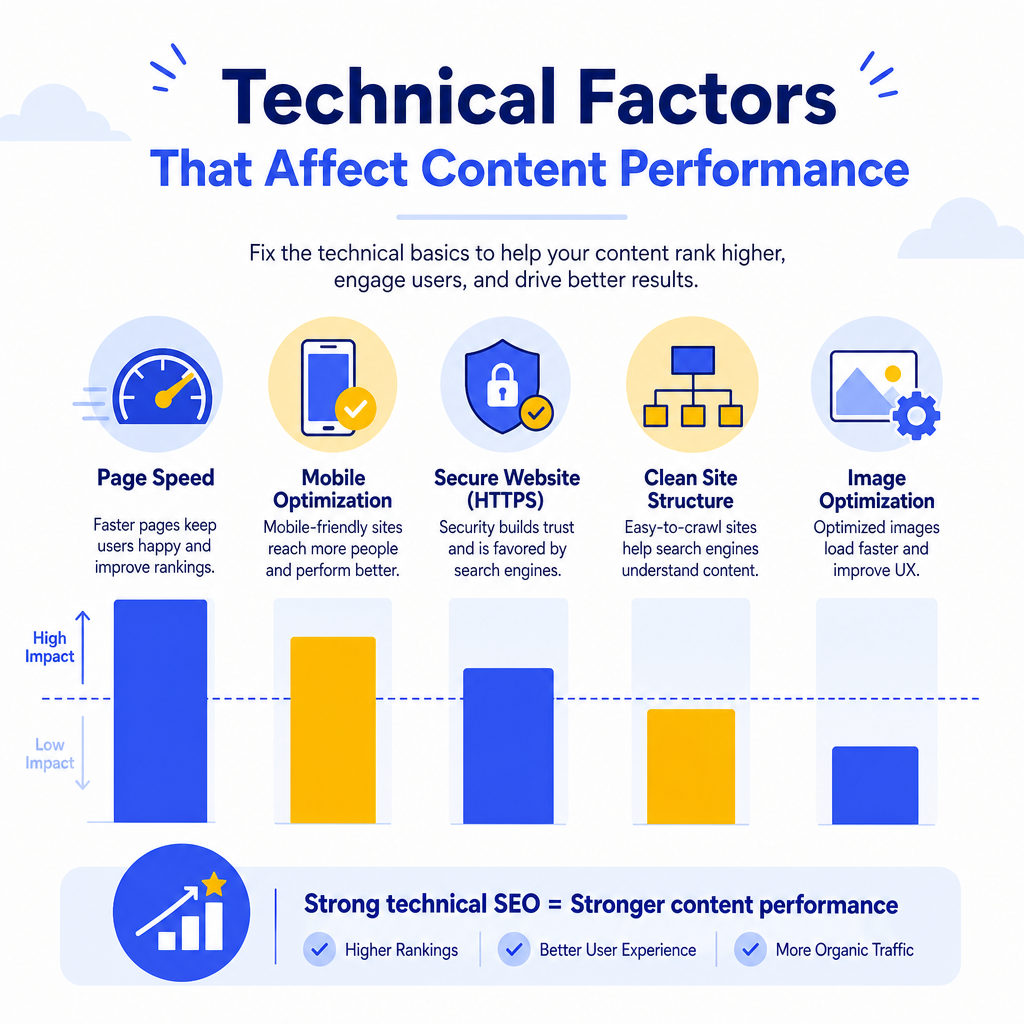
Even the best-written, most thoroughly researched content can underperform if technical issues are holding it back. Page speed is one of the most critical technical factors. Slow-loading pages frustrate users and are penalized by search engines. Compress your images, use a content delivery network, and minimize unnecessary scripts to keep load times fast.
Mobile optimization is equally important. The majority of web traffic now comes from mobile devices, and search engines use mobile-first indexing to determine rankings. Make sure your content displays correctly on smaller screens, with readable font sizes, properly spaced links, and layouts that do not require horizontal scrolling.
Schema markup is another technical tool worth implementing. It helps search engines understand the context of your content and can result in rich snippets appearing in search results, which significantly boosts visibility and click-through rates.
How Do You Measure Whether Your Content Optimization Is Working?
Optimization is not a one-time task. It is an ongoing process that requires regular measurement and adjustment. The key metrics to track include organic traffic, average position in search results, click-through rate, time on page, and bounce rate. Google Search Console and Google Analytics provide most of this data for free.
Set a baseline when you first publish or update a piece of content, then revisit the metrics every four to six weeks. Look for trends rather than focusing too heavily on individual data points. If organic traffic is climbing and time on page is increasing, your optimization efforts are working. If bounce rate is high, consider whether your content is truly delivering on the promise of your title and meta description.
Conclusion
Knowing how to optimize content is one of the most powerful capabilities you can build as a digital marketer or content creator. It bridges the gap between great writing and measurable results. By combining thorough keyword research, strong on-page elements, high-quality and well-formatted content, smart linking strategies, and ongoing technical maintenance, you create content that search engines trust and readers genuinely value.
The good news is that content optimization is learnable, repeatable, and scalable. Start by auditing your existing content using the framework outlined in this guide. Identify the pieces with the most potential, apply the optimization techniques covered here, and track the results over the following weeks. Small, consistent improvements compound over time into significant gains in visibility and engagement. Take action today, and let your content work as hard as you do.
Frequently Asked Questions
Content optimization is a broader process that improves content across multiple dimensions including search visibility, user engagement, readability, and conversions. SEO is one component of content optimization focused specifically on search engine ranking, but true optimization also considers user experience, message clarity, page formatting, and calls-to-action.
Keywords should be placed naturally throughout your content, starting with your primary keyword in the title tag near the beginning and in the H1 heading. Map related keywords to specific sections and subsections, but avoid forcing keywords into unnatural positions. The goal is organic integration that feels native to the content.
Your title tag should be 50 to 60 characters to display properly in search results and include your primary keyword near the beginning. Your meta description should be 150 to 160 characters, include a secondary keyword naturally, and provide a compelling reason for users to click through.
Search engines in 2026 reward comprehensive content that thoroughly addresses a topic from multiple angles and answers common questions. Thin content with little substance consistently underperforms, while in-depth resources with unique insights and original data gain a clear ranking advantage.
You should regularly revisit and refresh older content to ensure it remains current and accurate. Search engines favor fresh, up-to-date content, so updating posts with new information, data, and insights is an important part of any long-term content optimization strategy.

Stefan Winter
Founder & SEO Expert
Founder of Fast SEO Fix and SEO automation expert. Stefan built Fast SEO Fix to solve the tedious problem of manual SEO work. He specializes in SEO optimized content generation, keyword research, and automated SEO strategies.
