What Are AI Tools for SEO Content Automation?
Posted by
 Stefan Winter
How to Use AI Tools for SEO Content Automation (A Practical Guide)

If you've been spending hours every week researching keywords, drafting blog posts, and optimizing content for search engines, you already know how exhausting that cycle can be. The good news is that AI tools for SEO content automation have matured significantly, and in 2026, they're genuinely capable of handling a large portion of that workload without sacrificing quality. This guide walks you through exactly how to choose, set up, and use these tools to build a smarter, faster content workflow that actually ranks.
What Are AI Tools for SEO Content Automation?
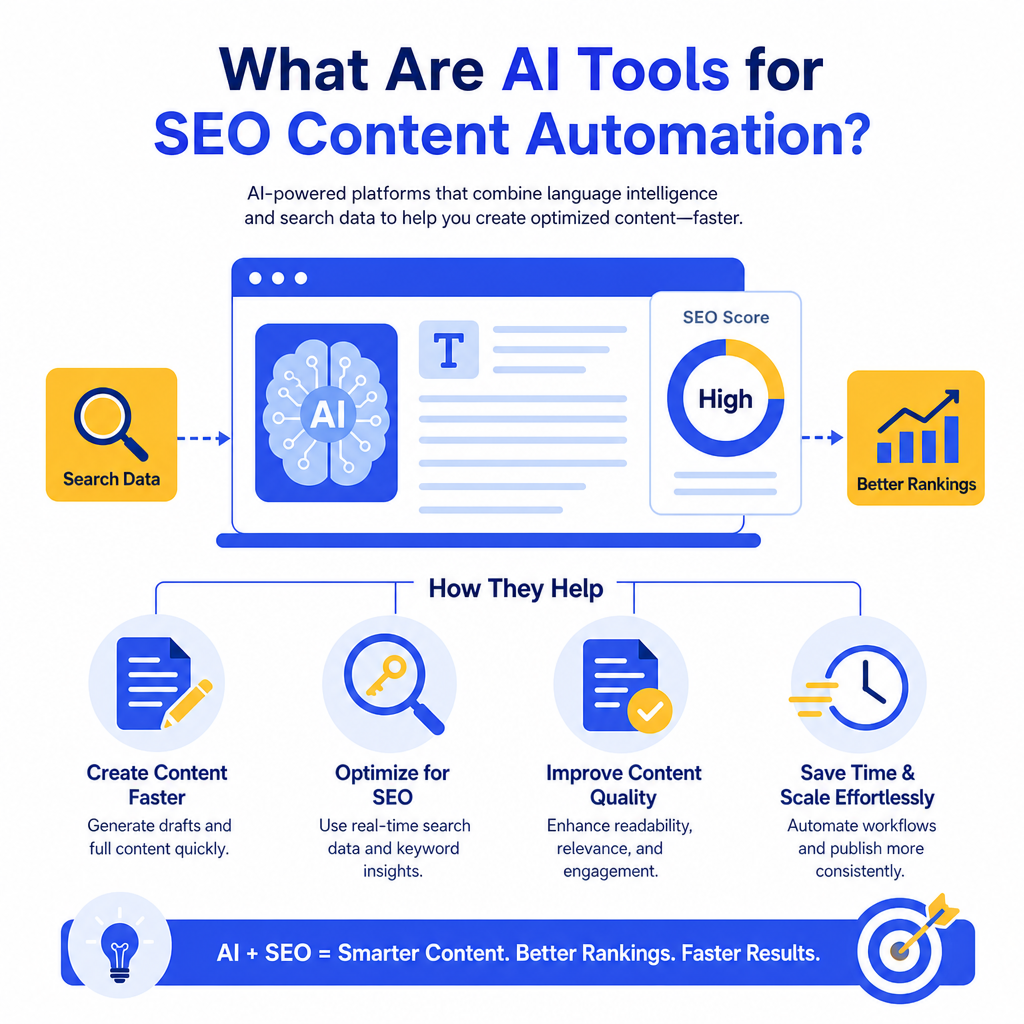
Before diving into the steps, it helps to understand what this category of tools actually does. AI-powered SEO content automation tools combine natural language processing, machine learning, and search data to help you produce optimized content faster. They're not just grammar checkers or basic keyword stuffers. The best platforms in 2026 can assist with keyword clustering, content briefs, first-draft generation, internal linking suggestions, meta tag creation, and even content performance forecasting.
These tools sit at the intersection of content strategy and technical SEO. They pull data from search engine results pages, analyze top-ranking competitors, and generate structured recommendations that guide your writing process. As noted in Google's Search Central documentation, content that demonstrates expertise, authoritativeness, and trustworthiness still wins in search. AI tools help you build that foundation more efficiently, not replace the human judgment behind it.
If you're new to the broader concept, our post on what it means to automate SEO content creation provides helpful context before you start evaluating specific platforms.
Step 1: Define Your Content Goals Before Choosing a Tool
The biggest mistake content teams make is selecting an AI tool based on features alone. Start by mapping out what you actually need to automate.
Ask yourself these questions:
- Are you producing high volumes of product descriptions, or long-form editorial content?
- Do you need the tool to handle keyword research, or just content generation?
- Is your team comfortable with AI-assisted drafts, or do you need near-publish-ready output?
- How important is integration with your CMS or publishing platform?
Step 2: Evaluate the Right AI Tools for Your Workflow
The market for AI SEO tools is crowded, but a few categories stand out based on their function. Here's a practical comparison to help you assess your options:
| Tool Category | Primary Function | Best For | Example Capabilities |
|---|---|---|---|
| AI Content Generators | Draft creation from briefs or prompts | High-volume content teams | Long-form drafts, tone adjustment, outline generation |
| SEO Brief Builders | Keyword research and content structure | Strategists and editors | SERP analysis, NLP keyword suggestions, competitor gaps |
| On-Page Optimization Tools | Scoring and improving existing content | Writers and editors | Readability scores, keyword density, internal link audits |
| Full-Stack SEO Platforms | End-to-end content and SEO management | Agencies and scaling businesses | Keyword tracking, content planning, automated reporting |
Step 3: Set Up Your Keyword and Topic Framework
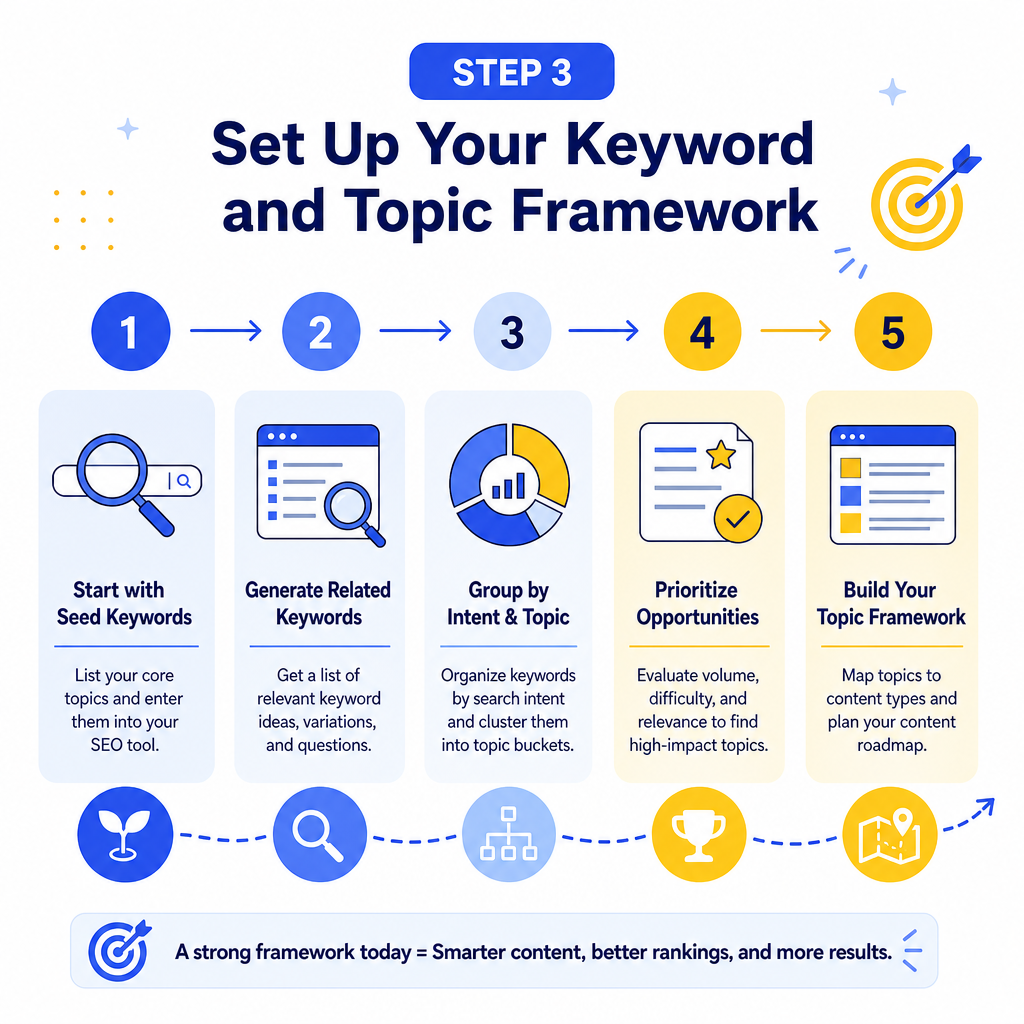
AI tools are only as good as the inputs you give them. Before generating a single piece of content, build a keyword and topic framework that the tools can work from.
Here's how to do it:
1. Start with seed keywords. Enter your core topics into your SEO tool of choice and generate a list of related terms, questions, and long-tail variations. 2. Cluster by intent. Group keywords by search intent (informational, navigational, transactional) so your AI tool generates content that matches what users actually want. 3. Prioritize by opportunity. Sort clusters by search volume, keyword difficulty, and relevance to your business goals. Focus your automation efforts on the highest-value clusters first. 4. Create a content calendar. Feed your prioritized clusters into a publishing schedule so your AI tool generates briefs and drafts in a logical sequence.
This framework gives your AI tools structured inputs, which directly improves the quality of the output. Garbage in, garbage out still applies, even with sophisticated AI.
Step 4: Generate and Refine AI-Assisted Content Briefs
Why Content Briefs Matter
A content brief is the blueprint your AI tool uses to generate a draft. A strong brief includes the target keyword, secondary keywords, intended audience, recommended word count, suggested headings, competitor references, and any specific points to cover or avoid.
Most AI SEO platforms now generate these briefs automatically by analyzing the top-ranking pages for your target keyword. This saves considerable research time. However, you should always review and customize the brief before passing it to the content generation stage.
How to Customize AI-Generated Briefs
- Add your brand's unique perspective or proprietary data points
- Remove suggestions that don't align with your content strategy
- Specify the tone and voice guidelines your team follows
- Include internal linking opportunities from your existing content
Step 5: Run the AI Draft and Apply Human Editing
Once your brief is ready, use your AI tool to generate a first draft. Most platforms produce a complete draft in under two minutes. The draft will typically include a title, introduction, headings, body paragraphs, and a conclusion based on the brief's parameters.
Your editing process should cover the following:
- Accuracy check. AI tools can generate plausible-sounding but incorrect information. Verify all statistics, claims, and references manually.
- Brand voice alignment. Adjust phrasing to match your tone guidelines. AI drafts often read slightly generic without this step.
- Originality pass. Add examples, case studies, or insights that only your team can provide. This is what separates good content from great content.
- SEO review. Confirm that the primary keyword appears naturally in the title, first paragraph, at least one H2, and the meta description.
Step 6: Automate Publishing and Performance Tracking
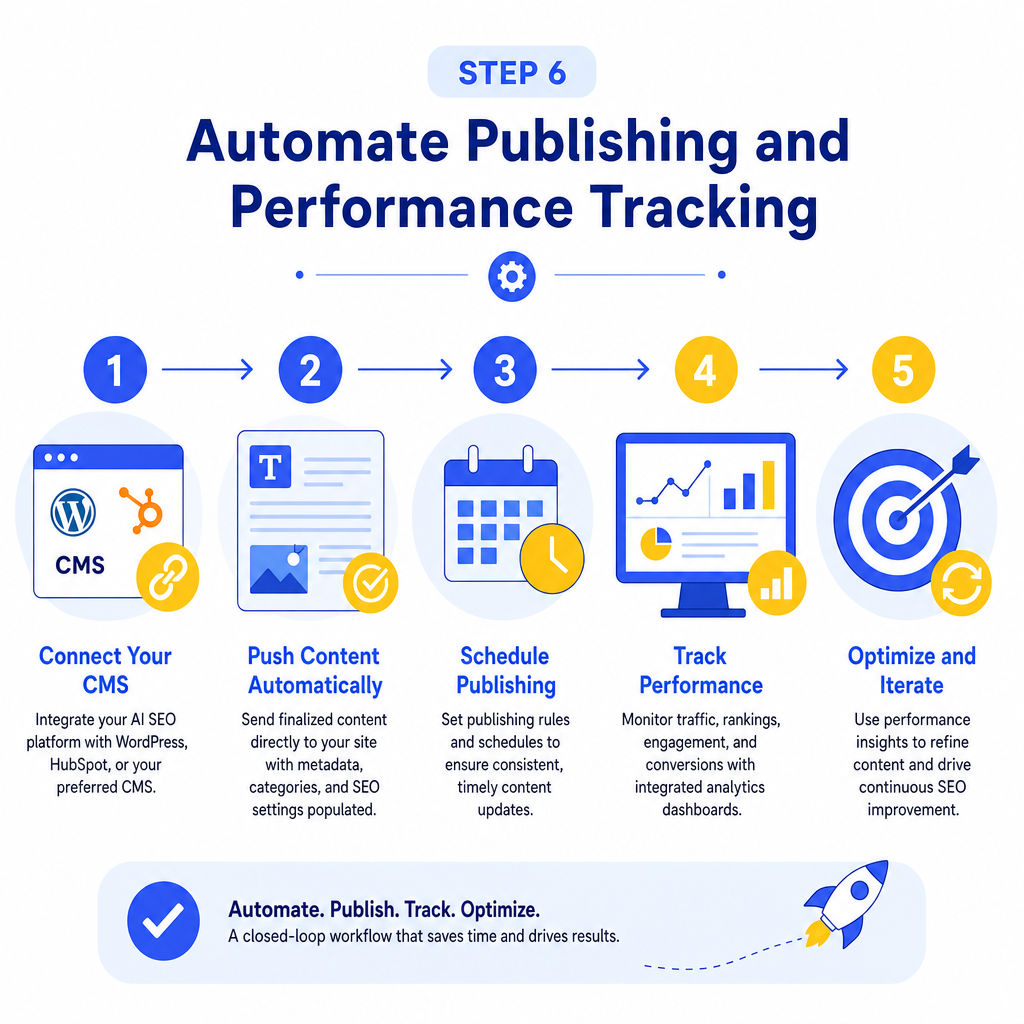
The final step is connecting your content workflow to your publishing and analytics systems. Many AI SEO platforms integrate directly with WordPress, HubSpot, or other CMS platforms, allowing you to push finalized content directly to your site with metadata already populated.
Set up automated performance tracking from day one. Monitor these metrics for every piece of AI-assisted content:
- Organic impressions and clicks (via Google Search Console)
- Average ranking position for the target keyword
- Time on page and bounce rate
- Conversions or goal completions tied to the page
Common Questions About AI SEO Content Automation
Does AI-Generated Content Rank on Google?
Yes, AI-assisted content can rank well when it is accurate, well-structured, and genuinely useful to readers. Google's guidelines focus on content quality and user experience, not the method of production. The editing and human oversight steps in this guide are what make the difference between content that ranks and content that gets ignored.
How Much Time Can AI Tools Actually Save?
Based on typical workflows, teams using AI tools for SEO content automation report reducing content production time by 40 to 60 percent per piece. The biggest time savings come from keyword research, brief creation, and first-draft generation. Editing and quality assurance still require meaningful human time.
Is AI Content Automation Right for Every Business?
It works best for businesses that publish content consistently and have a clear keyword strategy. If you publish one post per month, the setup investment may not justify the return. If you're producing four or more pieces per week, automation becomes a genuine competitive advantage.
Conclusion
AI tools for SEO content automation are no longer experimental. In 2026, they represent a practical, proven approach to scaling content production without scaling your team proportionally. The key is following a structured process: define your goals, choose the right tools, build a solid keyword framework, customize your briefs, edit every draft with human oversight, and track performance consistently.
Start with one tool, one content type, and one keyword cluster. Get comfortable with the workflow before expanding. The teams that win with AI-assisted SEO are not the ones who automate everything at once. They are the ones who automate strategically and keep quality at the center of every decision.
Ready to build a faster, smarter content workflow? Explore the resources on Fast SEO Fix to keep improving your approach.

Stefan Winter
Founder & SEO Expert
Founder of Fast SEO Fix and SEO automation expert. Stefan built Fast SEO Fix to solve the tedious problem of manual SEO work. He specializes in SEO optimized content generation, keyword research, and automated SEO strategies.
