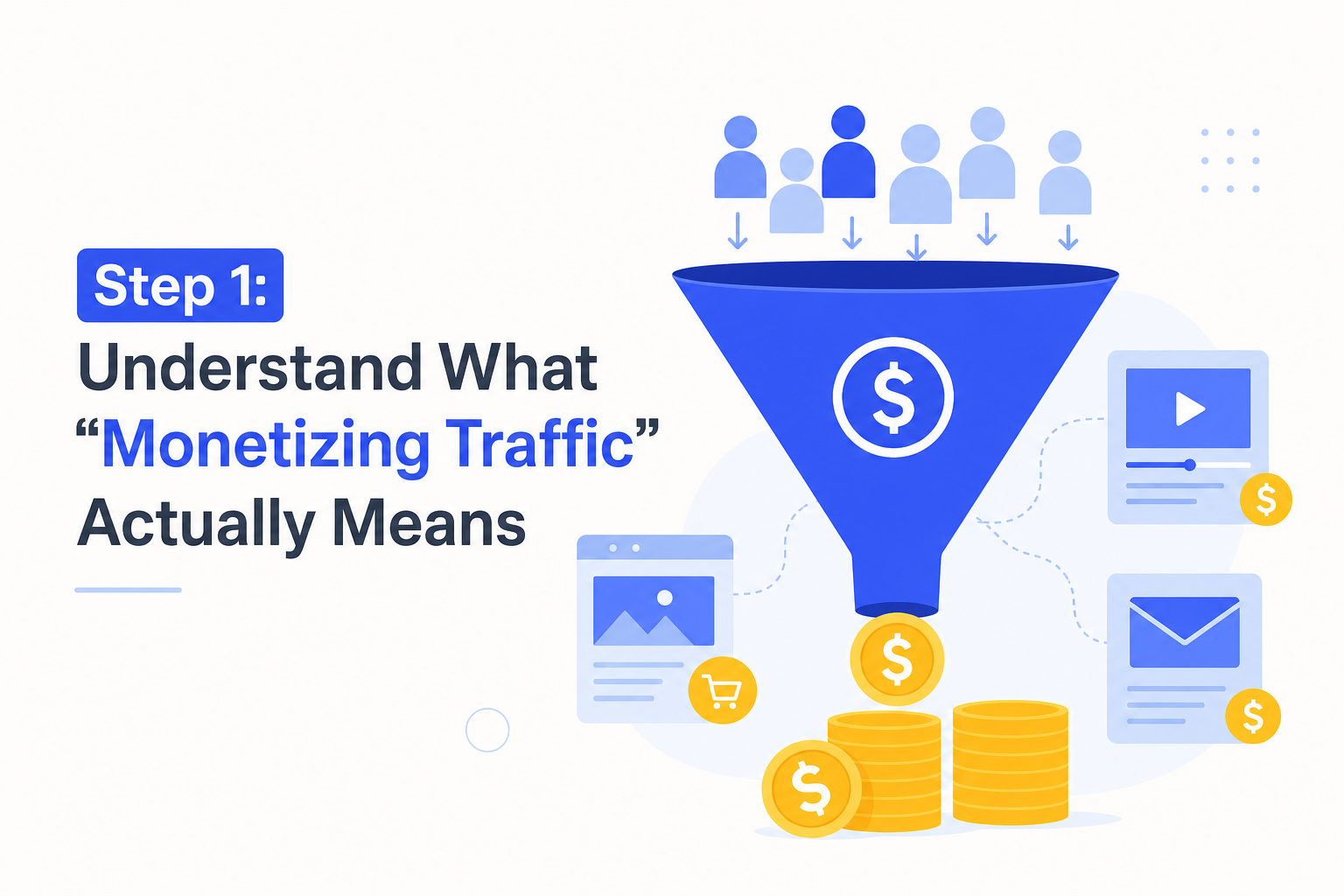
Step 1: Understand What "Monetizing Traffic" Actually Means
Posted by
 Stefan Winter
How to Turn Your Website Traffic Into Real Revenue: A Step-by-Step Guide
You have visitors coming to your site. People are reading your content, browsing your pages, and spending time on your platform. But if that traffic is not generating income, you are sitting on untapped potential. Monetizing traffic is the process of converting your existing audience into a reliable revenue stream, and it is one of the most practical skills any website owner can develop. This guide walks you through exactly how to do it, from choosing the right monetization model to optimizing your setup for maximum return.
Step 1: Understand What "Monetizing Traffic" Actually Means
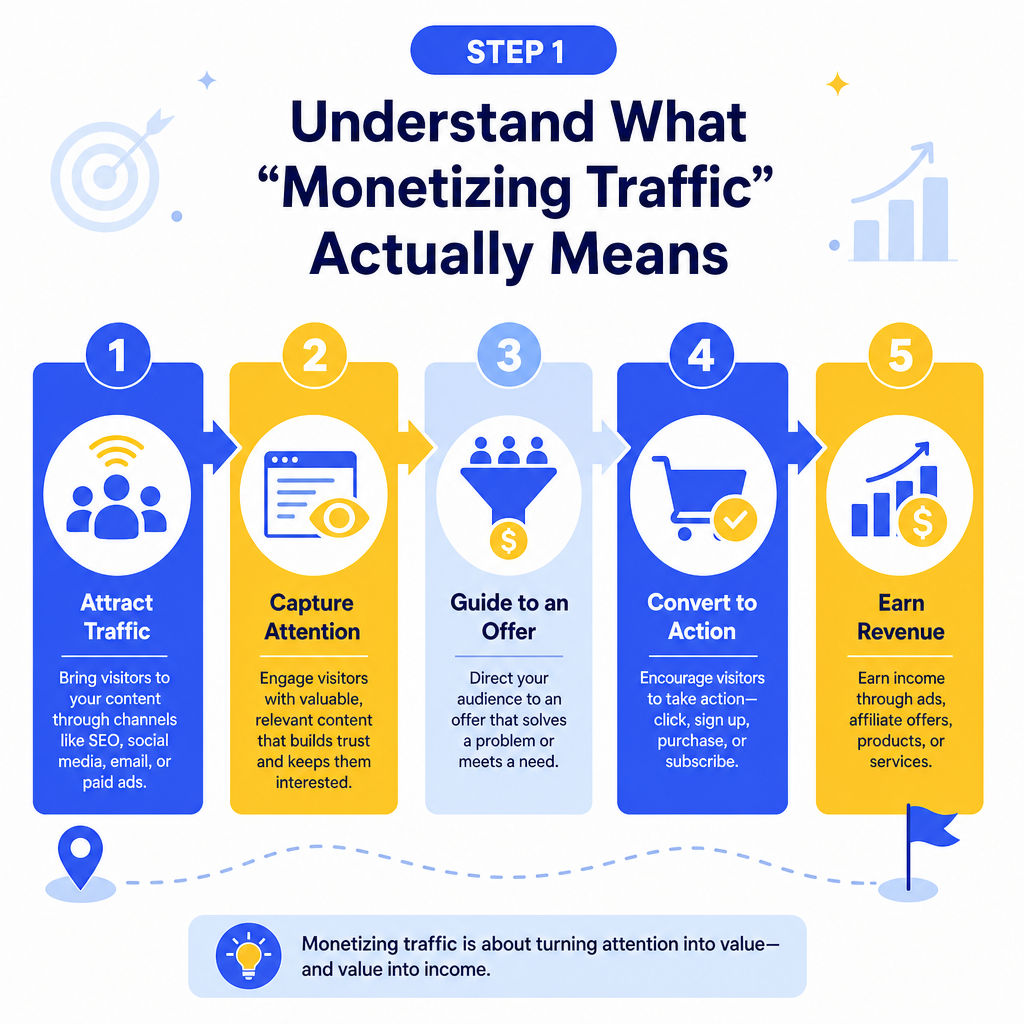
Before diving into tactics, it helps to get clear on what monetizing traffic involves at a fundamental level.
What is monetizing traffic?
Monetizing traffic means turning the people who visit your website into a source of income. That income can come from many directions: advertising revenue, affiliate commissions, product sales, subscriptions, or sponsored content. The core idea is simple. Your audience represents attention, and attention has value. The goal is to capture a portion of that value without compromising the user experience that brought visitors to your site in the first place.
It is worth noting that not all traffic monetizes equally. A visitor who lands on your page from a highly specific search query (for example, "best accounting software for freelancers") is far more valuable than a casual browser who stumbled onto a general article. This is why your content strategy and your monetization strategy are deeply connected. If you have not already defined a clear content marketing plan, that is a strong place to begin.
Step 2: Audit Your Traffic Before You Monetize It
Jumping straight into monetization without understanding your audience is a common mistake. The first practical step is to analyze what you are working with.
What should you look at in a traffic audit?
- Traffic volume: How many monthly visitors do you have? Some monetization models (like display advertising) require significant volume to generate meaningful income.
- Traffic sources: Are visitors coming from organic search, social media, email, or direct? Organic search traffic tends to convert better for affiliate and product-based models.
- Audience intent: Are visitors in research mode, comparison mode, or ready to buy? Intent shapes which monetization method fits best.
- Top-performing pages: Which pages attract the most visits and hold attention longest? These are your prime monetization real estate.
- Bounce rate and session duration: High bounce rates can indicate a mismatch between what visitors expect and what they find. Fixing this improves both user experience and monetization potential.
Step 3: Choose the Right Monetization Model for Your Audience

There is no single best way to monetize traffic. The right model depends on your niche, your audience size, and the type of content you produce. Here is a comparison of the most common approaches:
| Monetization Model | Best For | Minimum Traffic Needed | Revenue Potential |
|---|---|---|---|
| Display Advertising | High-volume content sites | 10,000+ monthly visits | Low to Medium |
| Affiliate Marketing | Niche review and tutorial content | Any volume | Medium to High |
| Digital Products | Expertise-driven sites | Any volume | High |
| Sponsored Content | Established authority sites | 5,000+ monthly visits | Medium to High |
| Membership or Subscriptions | Community or premium content | Loyal audience | High |
| Lead Generation | B2B or service-based content | Any volume | Very High |
Step 4: Align Your Content With Monetization Goals
This is where many site owners go wrong. They create content without thinking about how it connects to revenue, then wonder why their monetization efforts fall flat.
How do you create content that supports monetization?
Start by mapping your content to buyer intent. Content that ranks for informational keywords builds awareness, but it rarely converts directly. Content that targets commercial or transactional keywords (like "best," "review," "vs," or "buy") is where most monetization happens.
If you are using affiliate marketing, write in-depth comparison articles, product reviews, and "best of" roundups. If you are selling a digital product or service, publish content that addresses the specific problems your product solves. If you rely on display ads, focus on producing high volumes of content that attracts broad, recurring audiences.
Understanding what makes content truly SEO content is essential here. SEO content is not just content that ranks. It is content designed to meet a specific user need at a specific moment, and that alignment is what makes monetization possible.
Step 5: Optimize Your Pages for Conversion
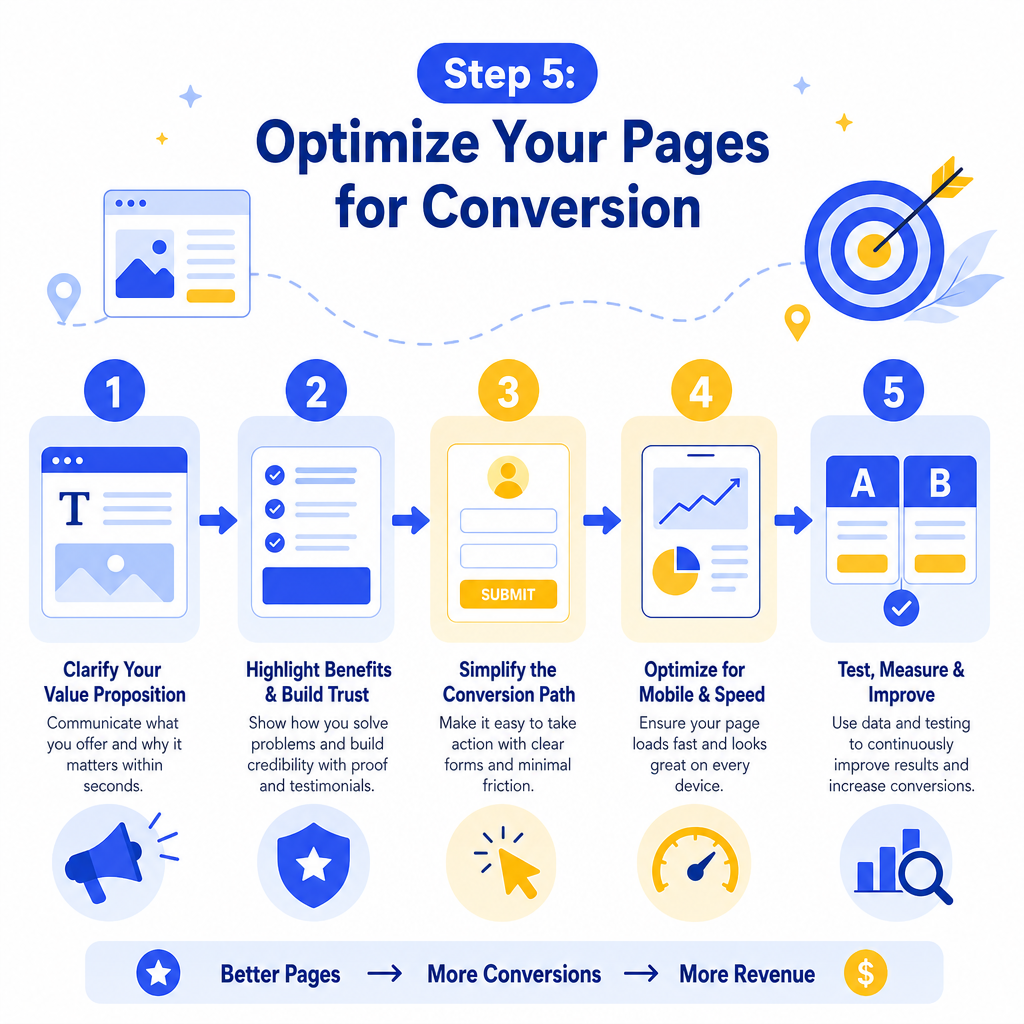
Getting traffic to a page is only half the equation. The page itself needs to be set up to convert that traffic into revenue.
Key on-page optimization tactics for monetizing traffic:
- Place affiliate links or calls-to-action above the fold so visitors see them without scrolling.
- Use comparison tables to make product recommendations easy to scan and act on.
- Write clear, benefit-focused calls-to-action rather than vague prompts. "Start your free trial" outperforms "Learn more" in most contexts.
- Test your page load speed. Slow pages lose visitors before they have a chance to engage with any monetization element. Google's PageSpeed Insights is a free tool that identifies exactly what is slowing your site down.
- Remove unnecessary distractions from your highest-value pages. Every element on the page should either support the user experience or drive toward a conversion goal.
- Use trust signals such as testimonials, review counts, or author credentials. Trust directly influences whether a visitor takes action.
Step 6: Scale What Works Using Automation and Systems
Once you have identified which pages and monetization methods are generating income, the next step is to scale them systematically.
This is where content automation becomes a genuine asset. Rather than producing every piece of content manually, you can use tools and workflows to increase your output while maintaining quality. More content targeting the right keywords means more traffic, and more traffic means more monetization opportunities. If you are new to this concept, the guide on what content automation is and why it matters is worth reading before you build out your scaling strategy.
Beyond content, consider automating your email sequences, affiliate link management, and analytics reporting. The goal is to spend your time on high-leverage decisions rather than repetitive tasks. According to research from the Content Marketing Institute, marketers who document their strategy and use systematic processes consistently outperform those who operate without a defined system.
Step 7: Track, Test, and Refine Your Approach
Monetizing traffic is not a set-it-and-forget-it process. The sites that generate consistent revenue are the ones that treat monetization as an ongoing experiment.
What metrics should you track?
- Revenue per thousand visitors (RPM): This tells you how efficiently your traffic is converting into income regardless of which model you use.
- Click-through rate (CTR) on affiliate links or ads: Low CTR usually means your placement or copy needs work.
- Conversion rate on product or service pages: Even small improvements here can have a significant impact on total revenue.
- Average session value: How much revenue does a single session generate on average? Track this over time to measure whether your optimizations are working.
Conclusion
Monetizing traffic is not about slapping ads on a page and hoping for the best. It is a deliberate process that starts with understanding your audience, choosing the right model for your content type, aligning your writing with buyer intent, and continuously refining your approach based on real data.
The good news is that every step in this process is learnable and repeatable. Start with a traffic audit, pick one monetization model to test, and optimize from there. As your systems mature, layering in additional revenue streams becomes much more manageable.
If you are building a content-driven site and want to make sure your foundation is solid before you monetize, focus on your SEO strategy first. Traffic that comes from search is the most sustainable and the most valuable to monetize over time.

Stefan Winter
Founder & SEO Expert
Founder of Fast SEO Fix and SEO automation expert. Stefan built Fast SEO Fix to solve the tedious problem of manual SEO work. He specializes in SEO optimized content generation, keyword research, and automated SEO strategies.
