Step 1: Define Your Goals Before You Write a Single Word
Posted by
 Stefan Winter
How to Build a Content Marketing Strategy That Actually Drives Traffic

Content marketing sounds straightforward until you realize most businesses are doing it wrong. They publish blog posts without a plan, share content without a purpose, and wonder why their traffic never grows. If you have been putting in the effort but not seeing the results, this guide is for you. These content marketing tips will walk you through a practical, step-by-step approach to creating content that attracts visitors, builds trust, and earns rankings.
Step 1: Define Your Goals Before You Write a Single Word
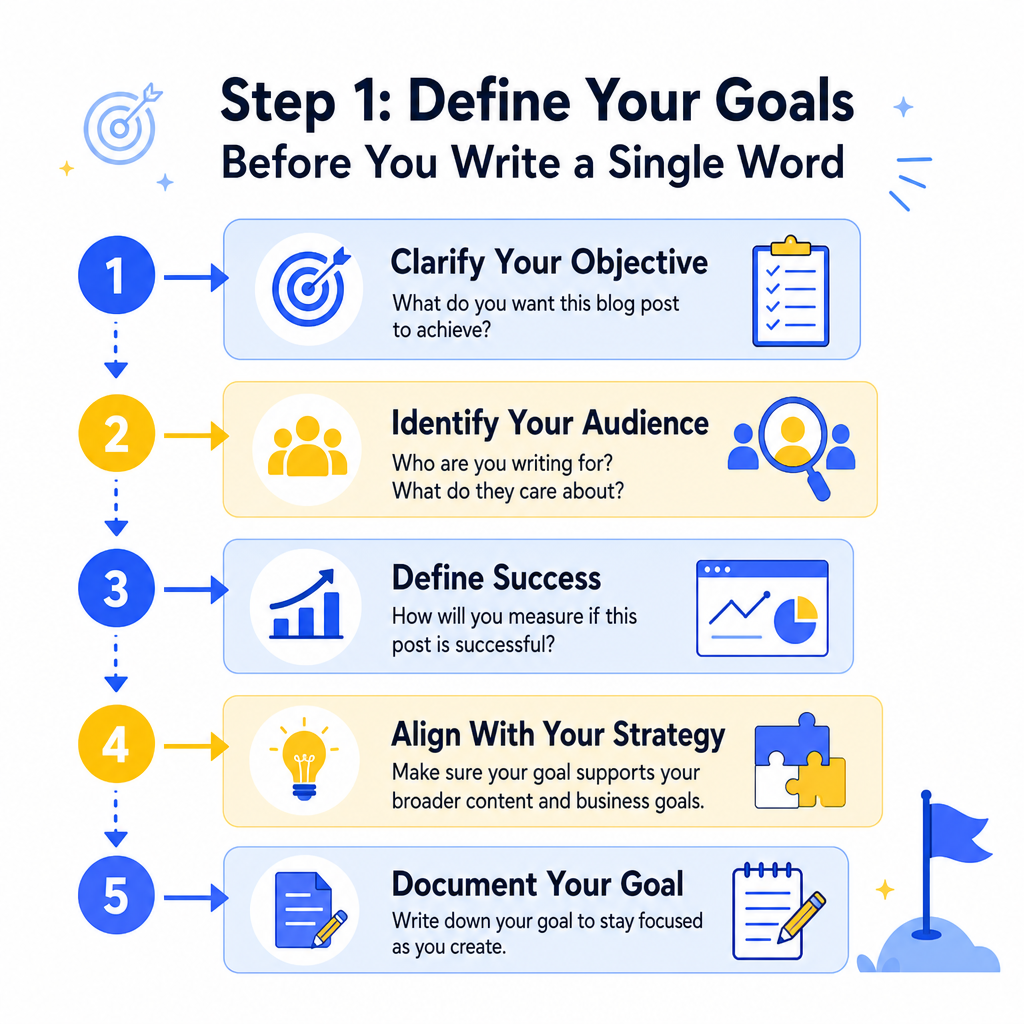
The biggest mistake content marketers make is jumping straight into writing without knowing what they want to achieve. Before you open a blank document, get clear on your objectives.
Ask yourself these questions:
- Are you trying to drive organic search traffic?
- Do you want to build brand awareness or establish authority?
- Are you focused on generating leads or nurturing existing customers?
- What does success look like in three months, six months, or a year?
Step 2: Know Exactly Who You Are Writing For
Content that tries to speak to everyone ends up connecting with no one. Your second step is building a clear picture of your target audience. This means going beyond basic demographics and understanding what your readers actually need.
Think about the problems they are trying to solve, the questions they type into search engines, and the type of language they use. Browse forums like Reddit, check comment sections in your niche, and look at customer reviews of products similar to yours. This research gives you raw, unfiltered insight into what your audience cares about.
Once you understand your audience, every piece of content you create should feel like it was written specifically for them. When readers feel understood, they stay longer, share more, and come back again.
Step 3: Build a Keyword-Driven Content Plan
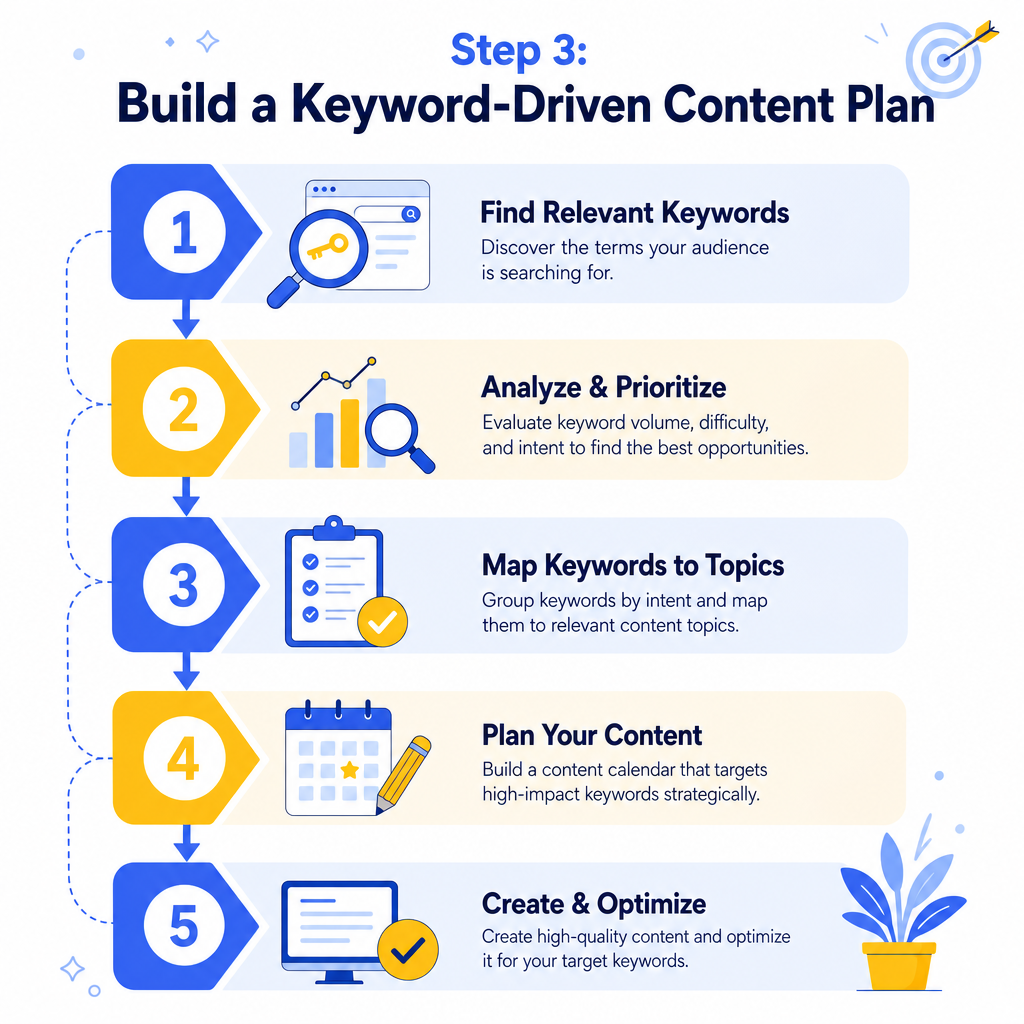
Great content starts with great keyword research. You need to identify the terms your audience is searching for and then build content around those terms strategically. This is where many content marketers fall short. They write about topics they find interesting rather than topics their audience is actively searching for.
Start by identifying a mix of high-volume keywords and long-tail keywords. Long-tail keywords (phrases of three words or more) tend to have lower competition and higher conversion intent. For example, "content marketing tips for small businesses" is more targeted than simply "content marketing."
Use tools to find keyword gaps your competitors are missing. Our guide on keyword gap analysis and uncovering hidden SEO opportunities explains exactly how to find those untapped opportunities that can give your content a competitive edge.
Group your keywords into topic clusters. One pillar page covers a broad topic, and several supporting posts cover related subtopics. This structure signals to search engines that your site has deep expertise in a particular area.
Step 4: Create Content That Matches Search Intent
What Is Search Intent and Why Does It Matter?
Search intent is the reason behind a search query. Someone searching "what is content marketing" wants an explanation. Someone searching "content marketing agency near me" wants to hire someone. If your content does not match what the searcher actually wants, it will not rank, no matter how well-written it is.
There are four main types of search intent:
| Intent Type | What the User Wants | Content Format to Use |
|---|---|---|
| Informational | Learn something new | Blog posts, guides, FAQs |
| Navigational | Find a specific website | Landing pages, brand content |
| Commercial | Research before buying | Comparisons, reviews, case studies |
| Transactional | Make a purchase or take action | Product pages, service pages |
How Do You Optimize Content After It Is Written?
Writing the content is only half the job. Optimization is what turns a good post into a ranking post. This includes placing your primary keyword in the title, the first paragraph, at least one H2 heading, and naturally throughout the body. It also means writing a compelling meta description, using descriptive image alt text, and structuring your content with clear headings.
For a deeper look at how optimization tools can streamline this process, check out our breakdown of how content optimization tools work and what they do. These tools can identify gaps in your content and suggest improvements that manual editing might miss.
Step 5: Publish Consistently and Build a Content Calendar
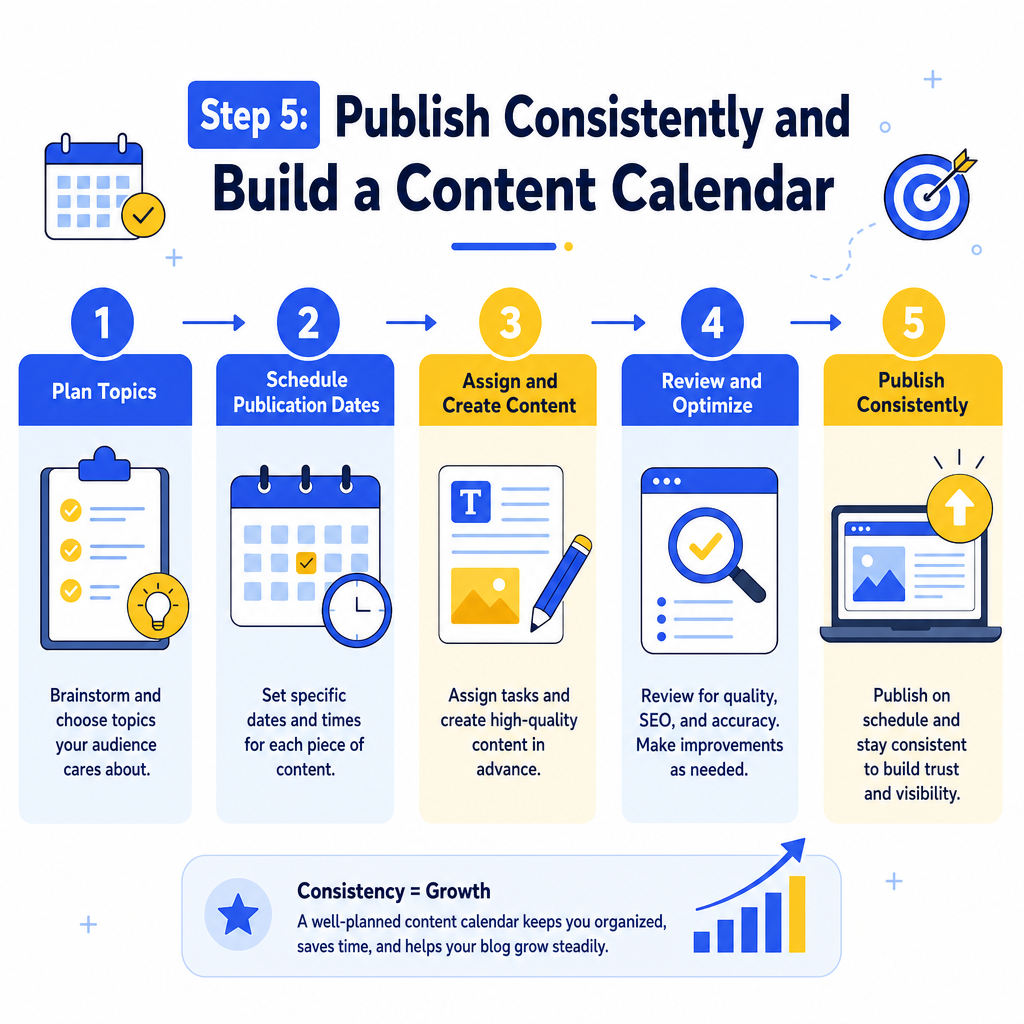
Consistency is one of the most underrated content marketing tips. Search engines reward sites that publish regularly, and audiences come to expect it. A content calendar keeps you organized and ensures you never run dry on ideas.
Your calendar should include:
- Publication dates for each piece of content
- The primary keyword and target audience for each post
- The content format (blog post, video, infographic, case study)
- The assigned writer or creator
- Status updates (draft, in review, published)
Step 6: Promote Your Content Across Multiple Channels
Publishing content and waiting for traffic is not a strategy. You need to actively promote what you create. Distribution is where many content marketers leave results on the table.
Here are proven promotion tactics:
- Share content on social media platforms where your audience is active
- Send new posts to your email list with a compelling subject line
- Repurpose blog posts into short videos, infographics, or social media carousels
- Reach out to other sites in your niche for backlink opportunities
- Submit your content to relevant online communities, newsletters, and aggregators
Step 7: Measure Performance and Refine Your Approach
How Do You Know If Your Content Marketing Is Working?
The only way to improve is to track results. Set up Google Analytics 4 and Google Search Console to monitor how your content performs. Key metrics to watch include:
- Organic sessions (how many people find your content through search)
- Average time on page (are readers actually engaging with the content?)
- Bounce rate (are visitors leaving immediately or exploring further?)
- Keyword rankings (are your target keywords moving up in search results?)
- Conversions (are readers taking the actions you want them to take?)
According to HubSpot's State of Marketing Report, companies that blog consistently generate significantly more inbound leads than those that do not. The data supports what experienced content marketers already know: quality and consistency compound over time.
When Should You Update Existing Content?
Content decay is real. A post that ranked well in 2025 may start slipping in 2026 as fresher content enters the search results. Regularly auditing your existing content is one of the highest-ROI activities in content marketing. Update statistics, refresh examples, add new sections, and improve internal linking to give older posts a second life.
For a structured approach to evaluating your existing content, our guide on what content optimization means and why it matters walks through the process in detail.
Conclusion
Content marketing is not a shortcut, but it is one of the most sustainable ways to grow organic traffic and build lasting authority online. By following these content marketing tips, including setting clear goals, researching your audience, building a keyword-driven plan, matching search intent, publishing consistently, promoting strategically, and measuring results, you give your content the best possible chance of succeeding.
The businesses that win at content marketing in 2026 are the ones treating it as a long-term investment, not a one-time experiment. Start with one step, build momentum, and refine as you go. If you are ready to take your content strategy further, explore the resources here at Fast SEO Fix for practical, search-driven guidance that cuts through the noise.

Stefan Winter
Founder & SEO Expert
Founder of Fast SEO Fix and SEO automation expert. Stefan built Fast SEO Fix to solve the tedious problem of manual SEO work. He specializes in SEO optimized content generation, keyword research, and automated SEO strategies.
