The Complete Guide to Keyword Gap Analysis: Uncovering Hidden SEO Opportunities in 2026
Posted by
 Stefan Winter
TL;DR
Keyword gap analysis identifies search terms your competitors rank for but you don't, revealing untapped SEO opportunities to capture organic traffic. By systematically comparing your keyword portfolio against competitors and prioritizing low-competition, high-intent keywords, you can create targeted content that fills these gaps and dominates your market in 2026.
The Complete Guide to Keyword Gap Analysis: Uncovering Hidden SEO Opportunities in 2026
Discovering untapped keyword opportunities can transform your SEO strategy from good to exceptional. Keyword gap analysis reveals the exact search terms your competitors rank for while you remain invisible. This comprehensive guide will walk you through everything you need to know about identifying, analyzing, and capitalizing on keyword gaps to dominate your market in 2026.
What is Keyword Gap Analysis?
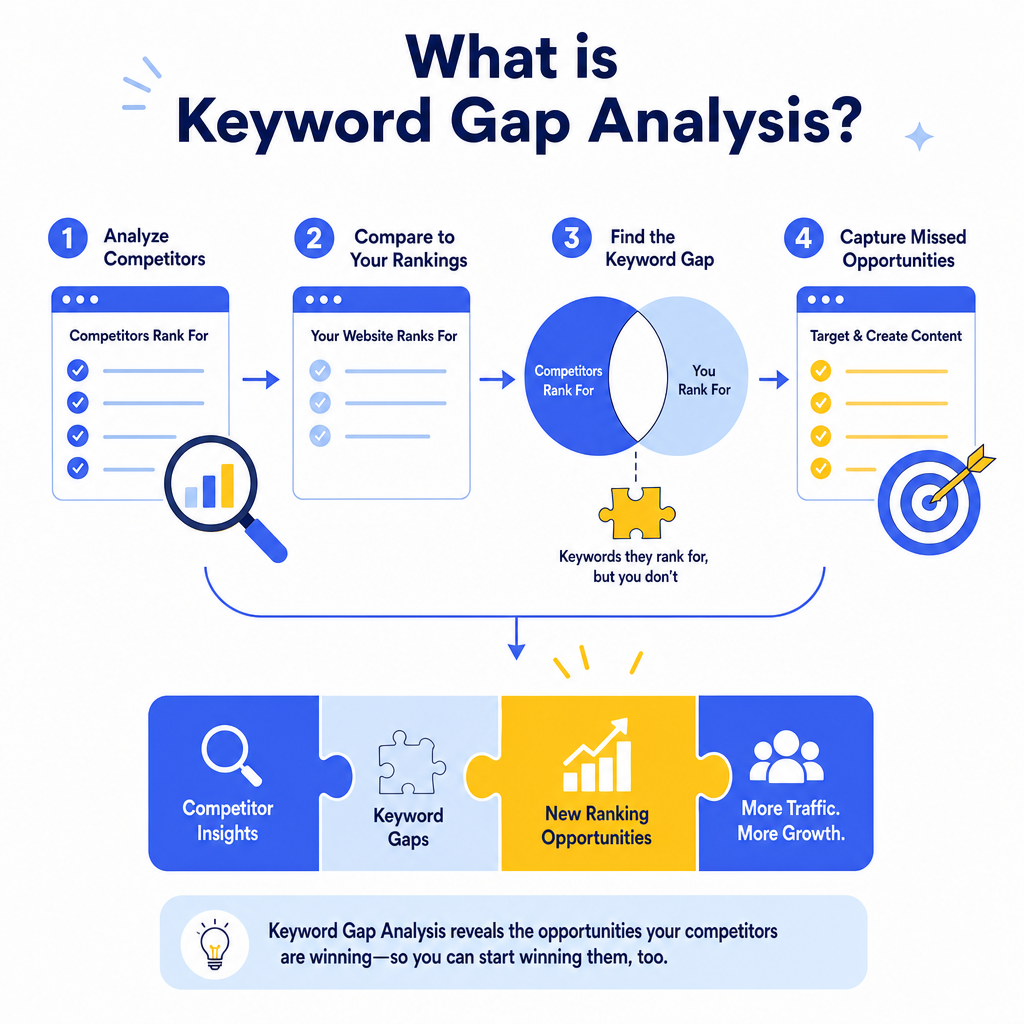
Keyword gap analysis is the strategic process of identifying search terms that your competitors rank for, but your website does not. Think of it as competitive intelligence for SEO. This methodology reveals missed opportunities where your competitors are capturing traffic that could rightfully belong to you.
The process involves comparing your keyword portfolio against multiple competitors to uncover gaps in your content strategy. These gaps represent potential goldmines of organic traffic waiting to be claimed. By understanding where you're missing out, you can create targeted content that fills these voids and captures valuable search traffic.
Modern keyword gap analysis goes beyond simple competitor comparison. It involves understanding search intent, analyzing ranking difficulty, and prioritizing opportunities based on your business goals and resources.
Why Does Keyword Gap Analysis Matter for Your SEO Strategy?
The digital landscape of 2026 is more competitive than ever, making keyword gap analysis essential for staying ahead. Without systematic gap analysis, you're essentially flying blind in your content strategy, missing obvious opportunities that competitors are already exploiting.
Keyword gaps often reveal low-hanging fruit that can deliver quick wins. These might be long-tail keywords with moderate search volume but low competition, or industry-specific terms that your competitors haven't fully optimized for. By identifying these opportunities early, you can establish authority before the competition catches up.
Furthermore, gap analysis helps you understand your competitive landscape better. It reveals which competitors are your real threats in organic search and which topics they're prioritizing. This intelligence allows you to make informed decisions about where to focus your content creation efforts for maximum impact.
How to Conduct Effective Keyword Gap Analysis
Step 1: Identify Your True SEO Competitors
Start by identifying competitors who are actually competing for the same keywords, not just the same market. Your business competitors might not be your SEO competitors. Use tools like SEMrush, Ahrefs, or Moz to discover which websites rank for your primary keywords.
Create a list of 5-10 direct SEO competitors. Focus on websites that consistently appear in the same search results as your target keywords. These are the sites you'll analyze to uncover gaps in your keyword strategy.
Step 2: Gather Comprehensive Keyword Data
Export keyword rankings for both your website and your identified competitors. Most SEO tools offer keyword gap analysis features that automate much of this process. However, don't rely solely on automated reports. Manual analysis often reveals nuances that tools might miss.
Pay attention to keyword variations, search volume trends, and ranking positions. Look for patterns in the types of keywords your competitors rank for that you don't. These patterns often reveal content themes or topics you haven't adequately covered.
Step 3: Analyze and Prioritize Opportunities
Not all keyword gaps are worth pursuing. Evaluate each opportunity based on search volume, ranking difficulty, relevance to your business, and potential for conversion. Create a scoring system that weights these factors according to your specific goals.
| Priority Level | Search Volume | Difficulty Score | Business Relevance | Action Timeline |
|---|---|---|---|---|
| High | 1000+ | Low (0-30) | Direct match | 1-2 months |
| Medium | 500-1000 | Medium (31-60) | Related | 3-6 months |
| Low | 100-500 | High (61-100) | Tangential | 6+ months |
What Types of Keyword Gaps Should You Target First?
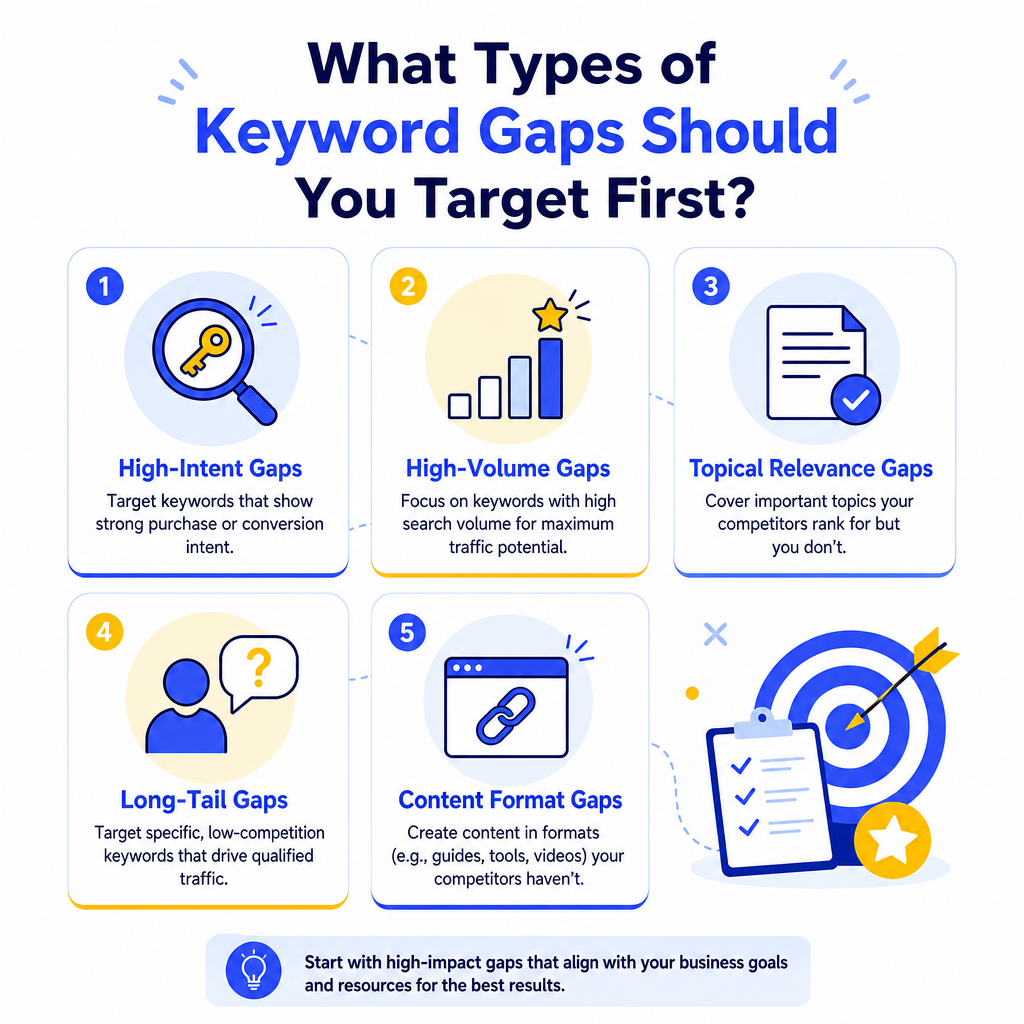
Low-Competition, High-Intent Keywords
These represent the best immediate opportunities. Look for keywords with decent search volume but relatively few competing pages. Often, these are specific product terms, local variations, or emerging industry terminology that competitors haven't discovered yet.
Long-tail variations of your primary keywords often fall into this category. While individual search volumes might be lower, collectively they can drive significant traffic with higher conversion rates due to their specific nature.
Content Gap Keywords
Identify topics where competitors have comprehensive content but you have none. These gaps often represent entire content categories you've overlooked. For example, if competitors rank for multiple "how-to" keywords in your industry while you focus only on product pages, that's a significant content gap.
Content gaps frequently occur around supporting topics that complement your main offerings. These might include educational content, comparison guides, or troubleshooting resources that your audience actively searches for.
How to Turn Keyword Gaps into Content Opportunities
Develop Targeted Content Strategies
Once you've identified keyword gaps, create content specifically designed to capture those search terms. Don't just stuff keywords into existing pages. Instead, develop comprehensive content that genuinely addresses the search intent behind each keyword.
Consider the content format that performs best for each keyword. Some gaps might be best filled with blog posts, while others might require product pages, landing pages, or interactive tools. Match your content format to user expectations and search intent.
Optimize for Search Intent and User Experience
Understanding why people search for specific terms is crucial for successful gap-filling content. Analyze the current top-ranking pages for your target keywords to understand what type of content Google considers most relevant.
Create content that not only targets the keyword but provides genuine value to searchers. This approach ensures that even if you capture the ranking, you'll maintain it through positive user engagement signals.
What Tools Are Best for Keyword Gap Analysis in 2026?
Professional SEO Platforms
SEMrush, Ahrefs, and Moz remain the gold standard for keyword gap analysis. These platforms offer sophisticated comparison features that can analyze multiple competitors simultaneously. Their databases are comprehensive and regularly updated, providing reliable data for decision-making.
Each tool has unique strengths. SEMrush excels at competitive intelligence, Ahrefs provides excellent backlink context for keyword opportunities, and Moz offers user-friendly interfaces perfect for beginners.
Emerging AI-Powered Solutions
The 2026 SEO landscape includes new AI-powered tools that can predict keyword trends and identify gaps before they become obvious to competitors. These tools analyze search patterns, social media trends, and industry developments to suggest proactive keyword opportunities.
While traditional tools show you current gaps, AI-powered solutions help you anticipate future gaps, giving you a significant competitive advantage in rapidly evolving industries.
How Often Should You Perform Keyword Gap Analysis?
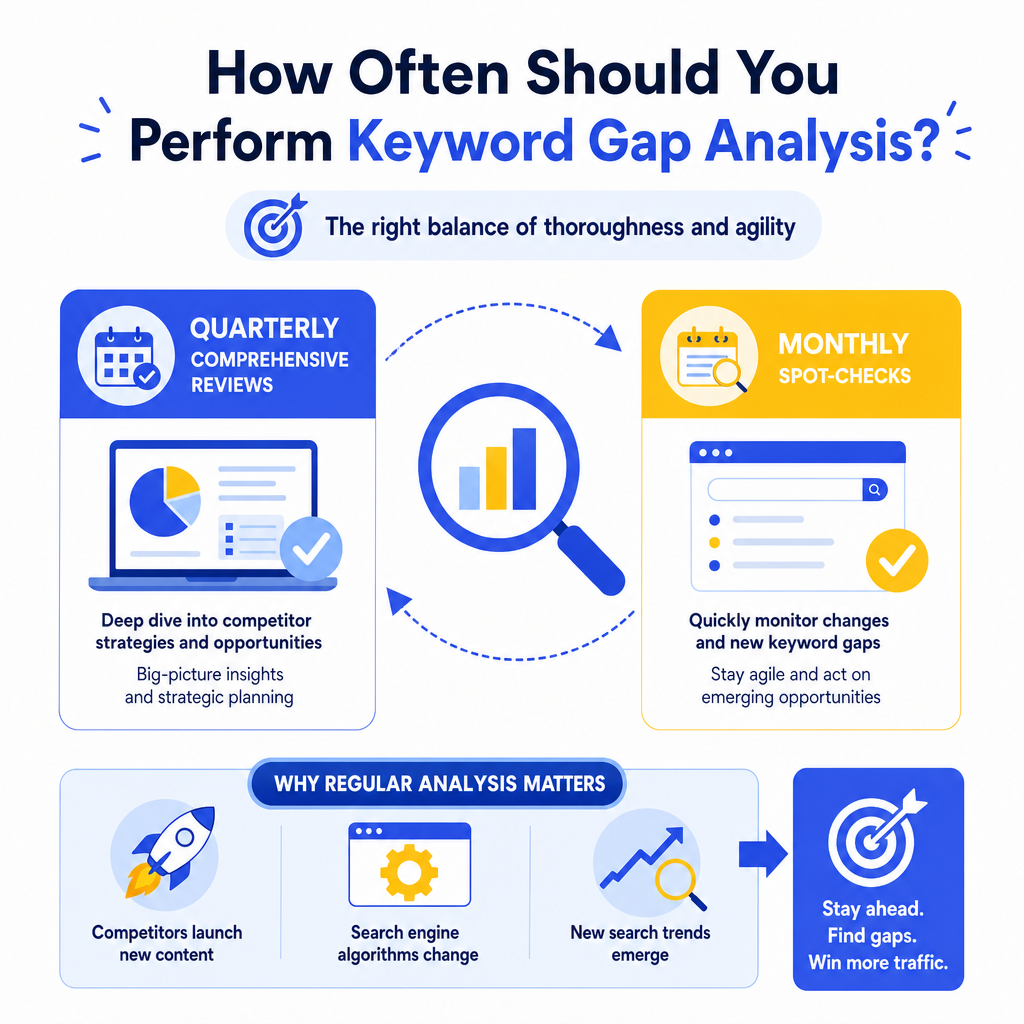
Regular gap analysis is essential because the competitive landscape constantly evolves. Competitors launch new content, algorithms change, and new search trends emerge. Quarterly comprehensive reviews combined with monthly spot-checks typically provide the right balance of thoroughness and agility.
Set up monitoring systems to alert you when competitors begin ranking for new keywords. This proactive approach allows you to respond quickly to emerging opportunities before they become highly competitive.
Major industry events, product launches, or algorithm updates should trigger additional gap analyses. These moments often create temporary opportunities that quick-acting competitors can capitalize on.
What Common Mistakes Should You Avoid?
Focusing Only on High-Volume Keywords
Many marketers make the mistake of only pursuing keywords with impressive search volumes. However, the most valuable gaps are often found in mid-tail and long-tail keywords that collectively drive substantial traffic with less competition.
Remember that search volume isn't everything. A keyword with 500 monthly searches but high commercial intent might be more valuable than a 5,000-volume keyword with purely informational intent.
Ignoring Search Intent Alignment
Targeting keywords that don't align with your business model or user journey is a common pitfall. Just because a competitor ranks for a keyword doesn't mean it's right for your strategy. Ensure every keyword gap you pursue serves a clear purpose in your customer acquisition or retention strategy.
Conclusion
Keyword gap analysis represents one of the most direct paths to SEO growth in 2026. By systematically identifying and targeting the keywords your competitors rank for but you don't, you can capture valuable organic traffic while building topical authority in your industry. The key lies in thorough analysis, strategic prioritization, and consistent execution.
Start your keyword gap analysis today by identifying your top SEO competitors and comparing their keyword portfolios to yours. Focus on opportunities that align with your business goals and resources, then create high-quality content that genuinely serves searcher intent. With persistence and the right approach, keyword gap analysis will become your secret weapon for sustainable SEO growth.
Frequently Asked Questions
Keyword gap analysis is the process of identifying search terms that your competitors rank for but your website does not. It reveals missed opportunities where competitors are capturing traffic you could potentially claim by creating targeted content around those keywords.
Use SEO tools like SEMrush, Ahrefs, or Moz to discover which websites rank for your primary keywords. Focus on creating a list of 5-10 direct SEO competitors—sites that consistently appear in the same search results as your target keywords, not just your business competitors.
Prioritize low-competition, high-intent keywords with decent search volume, as well as long-tail variations of your primary keywords. Content gap keywords—entire topic areas where competitors have comprehensive content but you don't—also represent excellent opportunities for quick wins.
SEO platforms like SEMrush, Ahrefs, and Moz offer built-in keyword gap analysis features that automate much of the comparison process. However, manual analysis of the data often reveals nuances that automated tools might miss.
Create comprehensive content specifically designed to address the search intent behind each keyword gap. Match your content format (blog posts, landing pages, guides, etc.) to user expectations and ensure the content genuinely solves the problem users are searching for.

Stefan Winter
Founder & SEO Expert
Founder of Fast SEO Fix and SEO automation expert. Stefan built Fast SEO Fix to solve the tedious problem of manual SEO work. He specializes in SEO optimized content generation, keyword research, and automated SEO strategies.
