Why Having the Right SEO Tools Matters
Posted by
 Stefan Winter
The Best SEO Tools in 2026: How to Choose and Use Them Effectively
If you've ever searched "what are the best SEO tools," you already know the problem: there are hundreds of options, each claiming to be the one solution that will skyrocket your rankings. The truth is, no single tool does everything well, and choosing the wrong stack can waste both time and money. This guide breaks down the top SEO tools available in 2026, explains what each one actually does, and walks you through how to build a practical toolkit that fits your goals, whether you're running a solo blog or managing an enterprise website.
Why Having the Right SEO Tools Matters
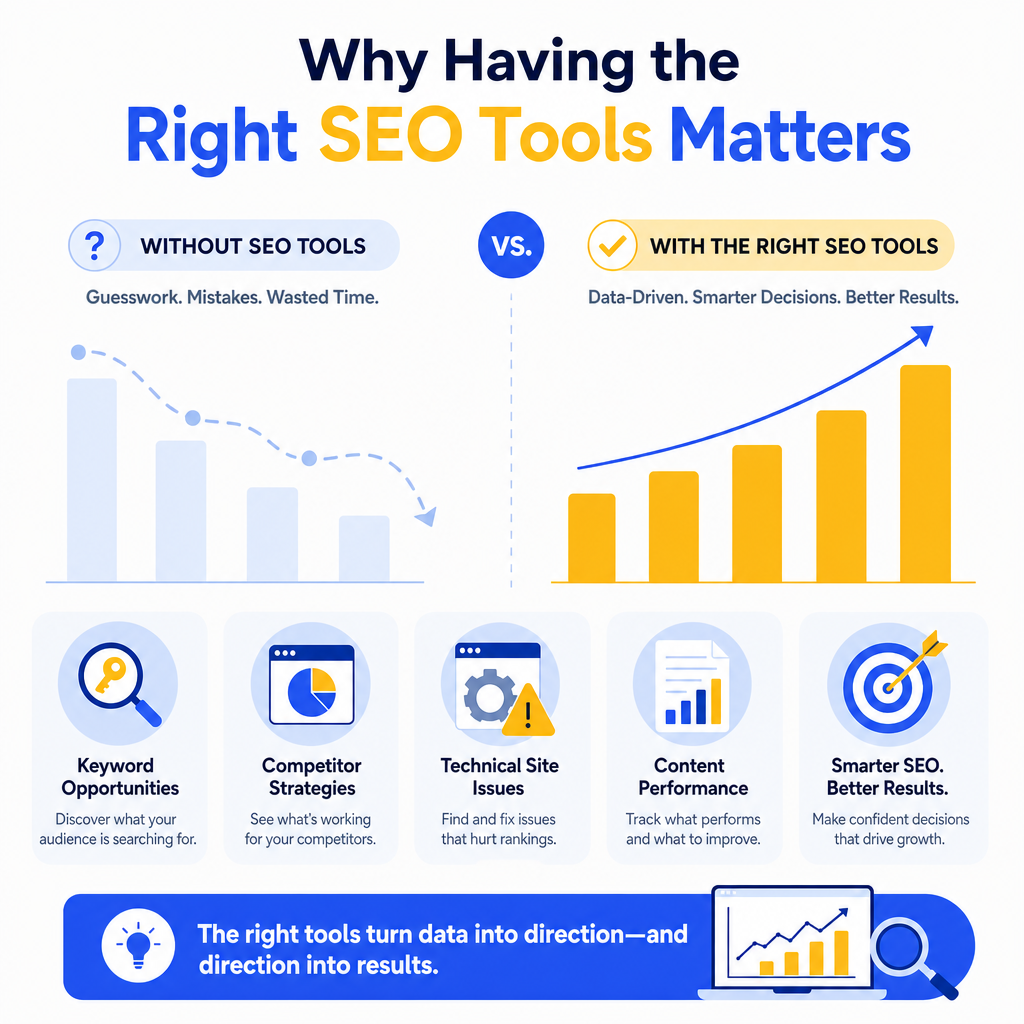
SEO without tools is like building a house without measuring tape. You might get somewhere eventually, but you'll make costly mistakes along the way. The right tools give you real data on keyword opportunities, competitor strategies, technical site issues, and content performance. They remove the guesswork and let you focus your energy on actions that produce results.
According to Ahrefs' SEO industry research, 90.63% of pages get zero organic traffic from Google, largely because they lack proper keyword targeting, backlinks, or technical optimization. Tools help you avoid becoming part of that statistic. They surface opportunities you would never find manually and flag problems before they tank your rankings.
The challenge, of course, is knowing which tools to trust and how to use them together. That's exactly what this guide addresses.
How to Identify What You Actually Need Before Buying Any Tool
Before you spend a dollar, you need to understand your specific SEO needs. Not every website requires the same toolkit. A local restaurant needs different capabilities than an e-commerce store or a content-heavy media site.
Ask yourself these questions before evaluating any tool:
- Are you focused on growing organic traffic through content, or fixing technical issues?
- Do you need to track local rankings or national/international ones?
- Are you managing one website or multiple client sites?
- What is your monthly budget for SEO software?
- Do you need team collaboration features or are you working solo?
The Top SEO Tool Categories (and the Best in Each)
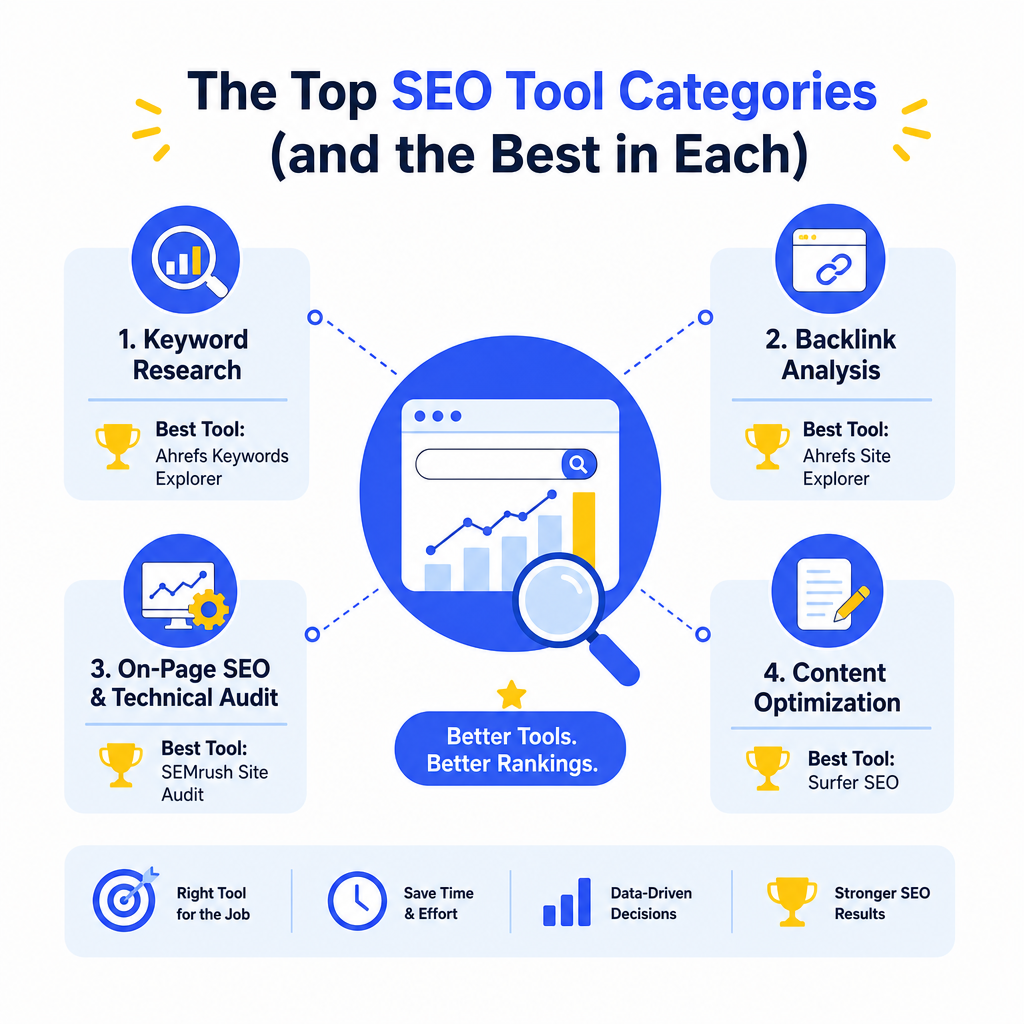
Rather than listing every tool alphabetically, it makes more sense to organize them by function. Here is a breakdown of the major categories and the leading tools in each.
Keyword Research Tools
Keyword research is the foundation of any SEO strategy. These tools help you find terms your audience is searching for, estimate how competitive those terms are, and identify gaps your competitors haven't filled yet.
Top picks:- Google Keyword Planner (free): Best for advertisers and beginners. Provides search volume ranges and competition data directly from Google.
- Ahrefs Keywords Explorer: One of the most comprehensive paid options. Shows keyword difficulty, click-through rate data, and parent topic suggestions.
- Semrush: Excellent for identifying competitor keywords and finding long-tail opportunities.
- Ubersuggest: A budget-friendly alternative with solid keyword and content ideas.
Technical SEO Tools
Technical SEO covers everything that happens behind the scenes: site speed, crawlability, structured data, and indexation. These issues can silently kill your rankings even when your content is excellent.
Top picks:- Google Search Console (free): The single most important technical tool. Shows how Google sees your site, flags indexing errors, and reports on Core Web Vitals.
- Screaming Frog SEO Spider: Crawls your website the way a search engine would, uncovering broken links, duplicate content, and missing meta tags.
- PageSpeed Insights (free): Directly measures your Core Web Vitals performance and offers specific improvement suggestions.
Content Optimization Tools
Once you have your keywords, you need tools that help you create content that actually ranks. These platforms analyze top-ranking pages and tell you what your content needs to compete. If you want a deeper look at this category, our guide on what an SEO content optimization tool is and why you need one covers the topic thoroughly.
Top picks:- Surfer SEO: Grades your content in real time against top-ranking competitors and recommends word count, headings, and keyword usage.
- Clearscope: Preferred by enterprise teams for its clean interface and reliable content grading.
- Frase: Combines research, AI writing assistance, and optimization in one workflow.
Backlink Analysis Tools
Backlinks remain one of Google's strongest ranking signals. These tools help you understand your link profile, find new link-building opportunities, and monitor competitor backlinks.
Top picks:- Ahrefs Site Explorer: The industry standard for backlink analysis, with the largest backlink index available.
- Moz Link Explorer: A solid alternative with its own Domain Authority metric.
- Majestic: Focuses exclusively on backlink data with unique metrics like Trust Flow and Citation Flow.
Rank Tracking Tools
You need to know whether your efforts are actually moving the needle. Rank trackers monitor your keyword positions over time and alert you to significant changes.
Top picks:- AccuRanker: Known for its speed and accuracy, especially for large sites.
- Semrush Position Tracking: Solid integration with the rest of the Semrush ecosystem.
- SERPWatcher by Mangools: An affordable option that's easy to use for smaller sites.
SEO Tool Comparison: Quick Reference Table
| Tool | Best For | Free Plan | Starting Price (2026) |
|---|---|---|---|
| Google Search Console | Technical SEO, indexing | Yes (fully free) | Free |
| Ahrefs | Keyword research, backlinks | Limited | ~$129/month |
| Semrush | All-in-one SEO suite | Limited | ~$139/month |
| Screaming Frog | Site audits, crawling | Yes (500 URLs) | ~$259/year |
| Surfer SEO | Content optimization | No | ~$89/month |
| Ubersuggest | Budget keyword research | Yes | ~$29/month |
| Moz Pro | Authority metrics, tracking | Limited | ~$99/month |
| AccuRanker | Rank tracking | No | ~$116/month |
How to Build Your SEO Toolkit Step by Step
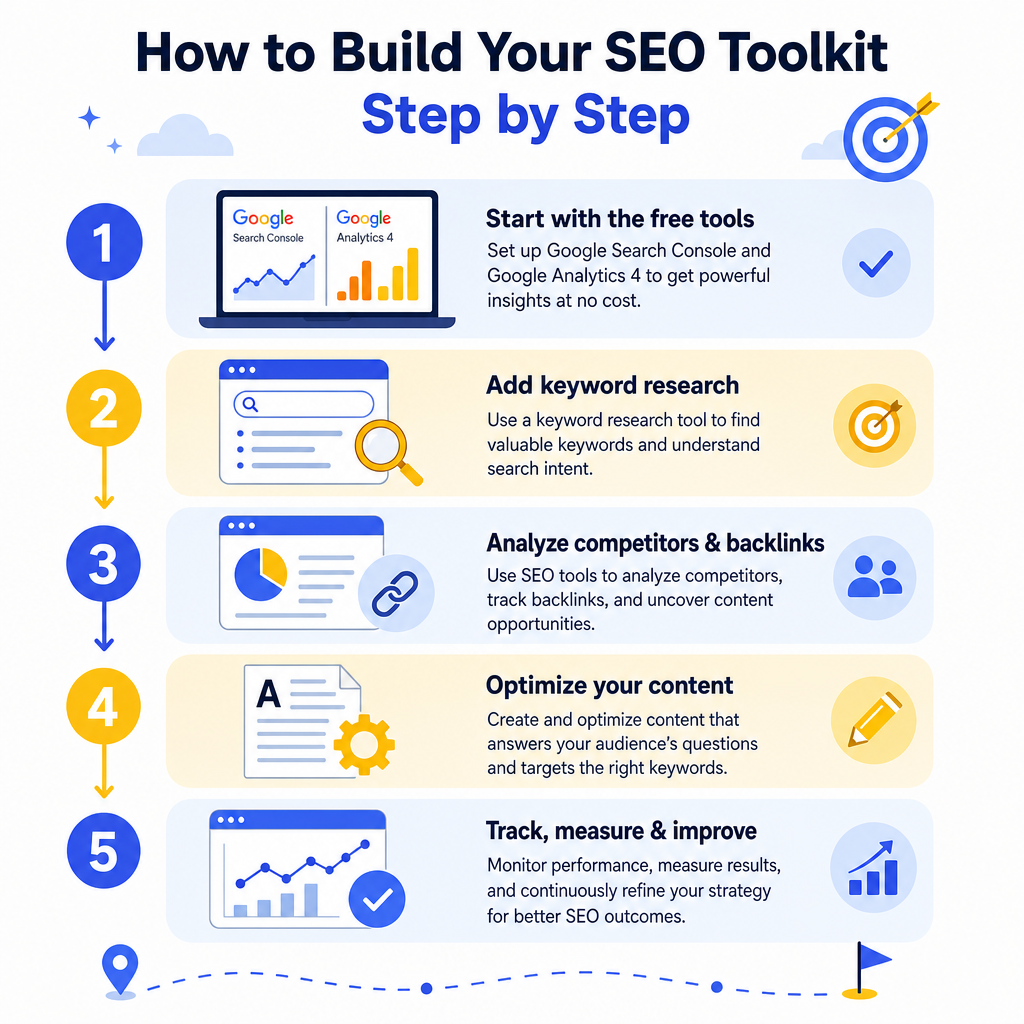
Now that you understand the categories, here is a practical process for building a toolkit that actually works together.
Step 1: Start with the free tools. Before spending anything, set up Google Search Console and Google Analytics 4 for your site. These two free platforms give you more actionable data than most paid tools. Get comfortable with them first. Step 2: Add a keyword research tool. If your budget is tight, start with Ubersuggest or the free tier of Semrush. If you're serious about content-driven growth, invest in Ahrefs or the full Semrush suite. Step 3: Run a technical audit. Use Screaming Frog's free version (up to 500 URLs) to crawl your site and identify quick wins. Pair this with PageSpeed Insights to address Core Web Vitals issues. Step 4: Optimize your content. Tools like Surfer SEO or Frase are particularly valuable here. Pair them with a solid SEO content planner to make sure your editorial calendar is aligned with keyword opportunities. Step 5: Monitor your results. Set up rank tracking for your target keywords. Review Google Search Console weekly to catch any indexing issues early. Adjust your strategy based on what the data tells you.What Are the Best Free SEO Tools?
This is one of the most common follow-up questions, and the answer is better than most people expect. You can accomplish a significant amount with free tools alone.
The best free SEO tools in 2026 include:
- Google Search Console: Indexing, performance, Core Web Vitals
- Google Analytics 4: Traffic analysis and user behavior
- Google Keyword Planner: Keyword ideas and search volume
- PageSpeed Insights: Page performance and technical recommendations
- Screaming Frog (free tier): Site crawling for up to 500 URLs
- Bing Webmaster Tools: Often overlooked, but provides valuable data for Bing traffic
Common Mistakes to Avoid When Using SEO Tools
Even with the best tools available, it's easy to misuse them. Here are the most common pitfalls:
- Chasing vanity metrics: High search volume doesn't mean high conversion potential. Focus on intent-matched keywords.
- Ignoring technical issues: Many site owners focus only on content while crawl errors and slow page speeds quietly drag rankings down.
- Switching tools too often: Give each tool at least 60 to 90 days before evaluating its impact. SEO results take time.
- Over-relying on automation: Tools assist your strategy but don't replace critical thinking. Always interpret data in context.
- Skipping competitor analysis: Most keyword and backlink tools show you exactly what's working for competitors. Use that intelligence.
Conclusion
Finding the best SEO tools isn't about picking the most expensive platform or the one with the most features. It's about matching the right tools to your specific goals, budget, and workflow. Start with free tools like Google Search Console, layer in a solid keyword research platform, add content optimization capabilities, and build from there as your needs grow.
The SEO landscape in 2026 rewards those who combine smart tooling with consistent execution. No software will do the work for you, but the right stack will make every hour you invest significantly more effective. Take the time to audit your current toolkit, identify the gaps, and make intentional choices about what you add next.
Ready to sharpen your SEO strategy? Explore the resources at Fast SEO Fix to find guides, tool reviews, and actionable frameworks designed to help you rank faster and smarter.

Stefan Winter
Founder & SEO Expert
Founder of Fast SEO Fix and SEO automation expert. Stefan built Fast SEO Fix to solve the tedious problem of manual SEO work. He specializes in SEO optimized content generation, keyword research, and automated SEO strategies.
