Why Does Publishing Time Matter for SEO Rankings?
Posted by
 Stefan Winter
How to Find the Perfect Time to Post Blog Content for Maximum SEO Impact
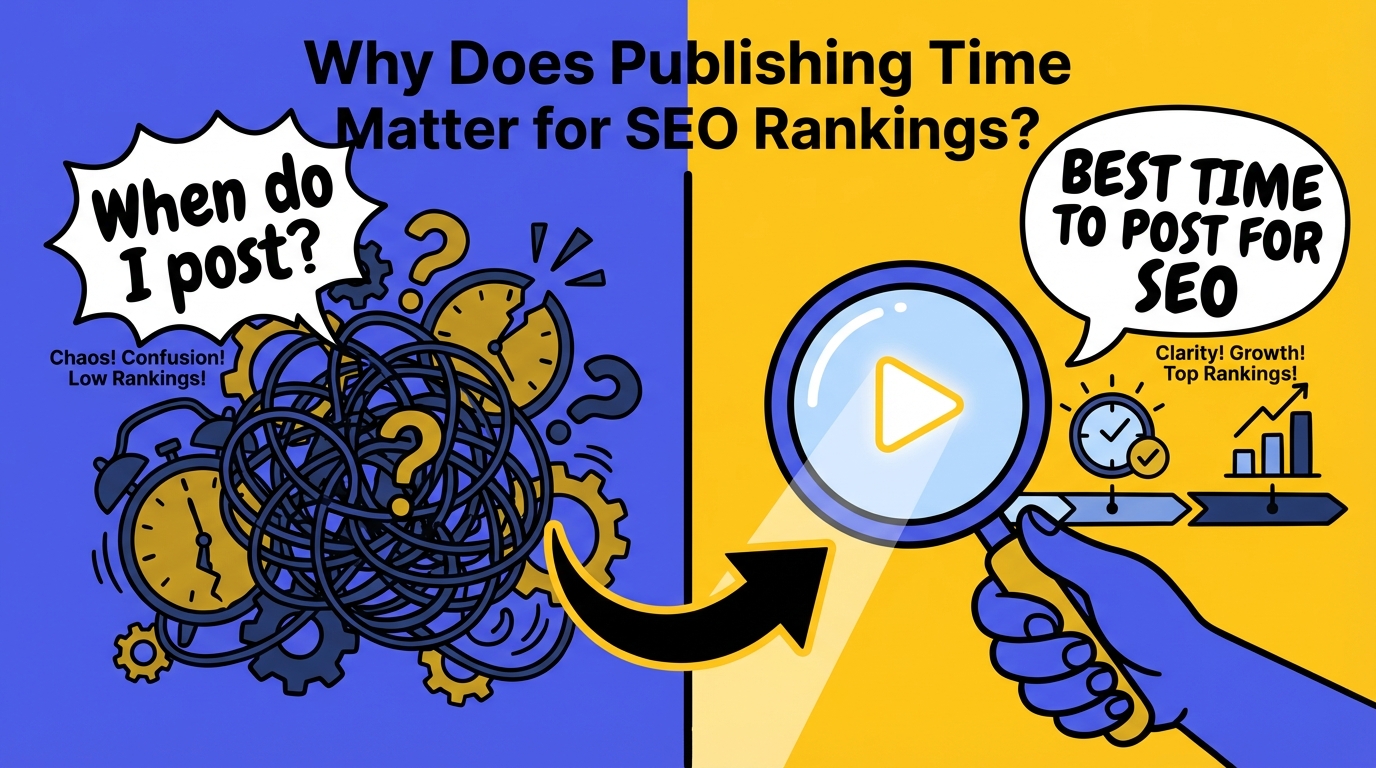
Timing can make or break your content marketing efforts. While creating high-quality blog posts is essential, publishing them at the right moment can dramatically boost your search engine visibility, organic traffic, and reader engagement. Many website owners spend countless hours crafting perfect content, only to publish it when their audience is least likely to discover it. In this comprehensive guide, you'll learn exactly when to publish your blog posts for optimal SEO performance and how to create a posting schedule that search engines and readers love.
Why Does Publishing Time Matter for SEO Rankings?
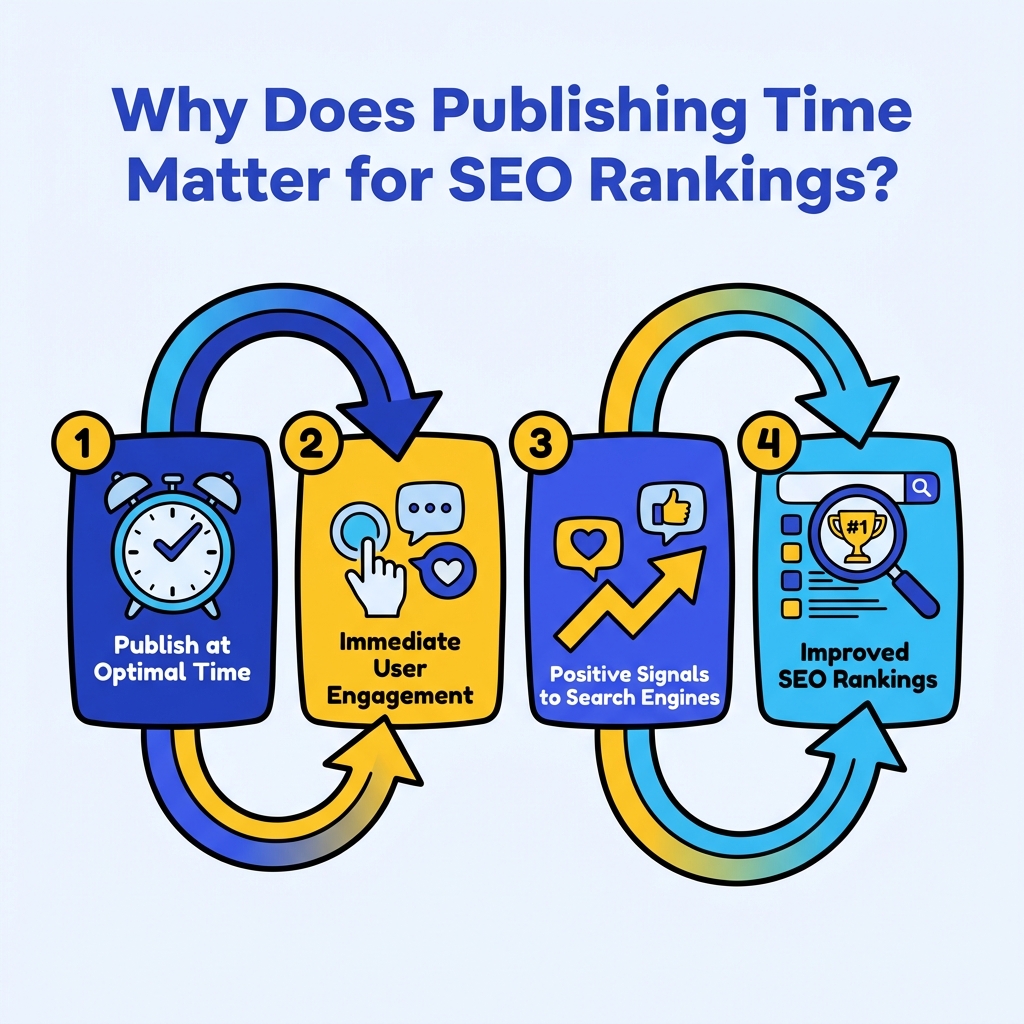
Search engines don't just evaluate your content quality. They also consider user engagement signals like click-through rates, time on page, and social shares within the first few hours of publication. When you publish at optimal times, you're more likely to receive immediate engagement, which sends positive signals to search algorithms.
Fresh content gets a temporary ranking boost, but this advantage quickly fades if your post doesn't generate early traction. Publishing when your target audience is most active online increases the chances of immediate engagement, helping your content maintain its initial SEO momentum. Additionally, search engine crawlers tend to visit websites more frequently during peak activity periods, meaning your content gets indexed faster when published at strategic times.
The relationship between timing and SEO extends beyond immediate rankings. Consistent posting schedules help search engines understand your content publication patterns, leading to more predictable crawling and indexing. This consistency builds trust with both search algorithms and your audience, creating long-term SEO benefits.
What Days of the Week Drive the Highest Organic Traffic?
Research consistently shows that Tuesday through Thursday generates the highest organic search traffic for most industries. Tuesday typically performs best because people have settled into their work week routine and are actively seeking information online. Monday often underperforms because people are catching up from the weekend, while Friday sees declining engagement as attention shifts toward weekend plans.
However, these general patterns vary significantly by industry and audience type. B2B companies often see peak engagement Tuesday through Thursday during business hours, while lifestyle and entertainment blogs might perform better on weekends when people have more leisure time to read and share content.
For maximum SEO impact, analyze your Google Analytics data to identify when your specific audience is most active. Look at both traffic volume and engagement metrics like average session duration and pages per session. The goal isn't just to attract visitors, but to engage them deeply enough to send strong positive signals to search engines.
| Day of Week | B2B Performance | B2C Performance | Content Type Recommendation |
|---|---|---|---|
| Monday | Moderate | Low | Industry news, weekly roundups |
| Tuesday | High | Moderate | In-depth guides, case studies |
| Wednesday | High | High | How-to content, tutorials |
| Thursday | High | Moderate | Research-based articles |
| Friday | Low | Moderate | Light content, entertainment |
| Weekend | Very Low | High | Lifestyle, personal interest |
How Do Time Zones Impact Your SEO Strategy?
Understanding your audience's geographic distribution is crucial for timing optimization. If your primary audience spans multiple time zones, you need to identify where the majority of your high-value visitors are located. Google Analytics provides detailed geographic data that helps you pinpoint your most important time zones.
For websites with global audiences, publishing during Eastern Time business hours (9 AM to 11 AM EST) often works well because it captures both East Coast morning activity and West Coast early morning engagement. This timing also aligns reasonably well with European afternoon browsing patterns.
Consider creating a posting schedule that rotates optimal times for different geographic regions. This approach ensures all segments of your audience occasionally experience your content during their peak engagement hours, maximizing your overall SEO potential across different markets.
Should You Optimize for Local or Global Audiences?
Local businesses should prioritize their specific time zone and regional browsing patterns. Publishing between 8 AM and 10 AM in your local time zone typically generates strong engagement for location-based businesses. Local SEO benefits significantly from content that resonates with nearby audiences during their active online periods.
Global websites benefit from a more complex approach. Monitor which countries generate your highest-value organic traffic and adjust your publishing schedule accordingly. Automated SEO strategies can help manage multiple posting schedules efficiently across different markets.
What Time of Day Maximizes Search Engine Visibility?
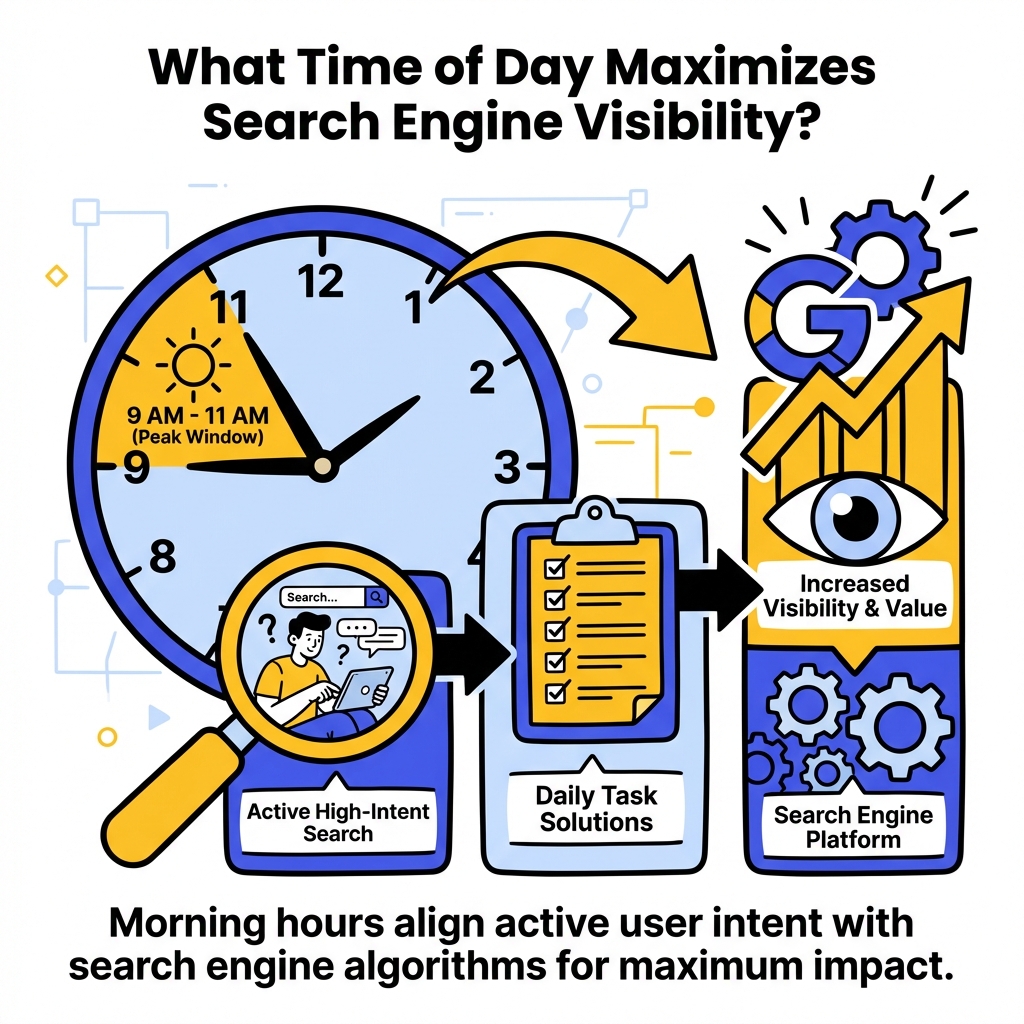
Morning hours between 9 AM and 11 AM consistently deliver the strongest SEO performance across most industries. During this window, people are actively searching for information to help with their daily tasks, creating high-intent traffic that search engines value highly. This timing also allows your content to accumulate engagement throughout the day, building momentum for sustained rankings.
Late morning publishing gives your content maximum exposure during peak search hours while allowing time for social media amplification during lunch breaks. Avoid publishing too early (before 8 AM) or too late (after 6 PM) unless your analytics clearly show different patterns for your specific audience.
The key is consistency paired with strategic timing. Search engines favor websites that maintain regular publishing schedules, so choose optimal times you can sustain long-term rather than constantly changing your approach based on minor performance variations.
How Does Content Type Affect Optimal Publishing Times?
Different content formats perform better at specific times based on user intent and consumption patterns. Breaking news and trending topic content should be published immediately, regardless of optimal timing, to capture search volume while topics are hot. Time-sensitive content always prioritizes speed over perfect timing.
Evergreen educational content performs best during traditional business hours when people are actively seeking solutions to work-related problems. How-to guides, tutorials, and in-depth analyses generate strongest engagement Tuesday through Thursday mornings. Content creation strategies should account for these timing preferences during the planning phase.
Entertainment and lifestyle content often performs better during evening hours and weekends when people have leisure time for casual browsing. However, publishing this content during weekday mornings can still be effective because it gives the content time to build momentum before peak consumption periods.
Does Industry Vertical Change Optimal Timing?
Technology and business content typically performs best during standard business hours when professionals are actively researching solutions. Healthcare and wellness content often sees strong performance in early morning (6 AM to 8 AM) and evening (7 PM to 9 PM) when people focus on personal health topics.
Financial content performs exceptionally well on Sunday evenings and Monday mornings when people plan their upcoming week and review their financial situations. Retail and e-commerce content should align with shopping patterns, typically performing best during lunch hours and early evening when people browse for purchases.
How Can You Test and Optimize Your Publishing Schedule?
Start by establishing a baseline through consistent posting at the same time for at least four weeks. This creates reliable data for comparison when you begin testing different time slots. Track multiple metrics including organic traffic, average session duration, bounce rate, and social shares to get a complete picture of performance.
Implement A/B testing by alternating publishing times for similar content types. For example, publish how-to guides at 9 AM one week and 2 PM the next week, comparing performance across identical content categories. This method isolates timing as the primary variable affecting results.
Use Google Search Console to monitor how quickly your content gets indexed and starts ranking after publication. Content published at optimal times typically gets indexed faster and achieves initial rankings more quickly than content published during low-activity periods.
What Metrics Should You Track for Timing Optimization?
Focus on engagement metrics that directly impact SEO performance rather than just traffic volume. Time on page, pages per session, and return visitor rates provide better insights into whether your timing strategy is attracting genuinely interested readers who send positive signals to search engines.
Monitor your content's performance in the first 24 hours after publication, as this period is crucial for SEO momentum. Track social shares, comments, and backlinks acquired during this initial window. SEO audit processes should include timing analysis as a regular component of performance evaluation.
How Do Seasonal Patterns Affect Blog Posting Strategy?
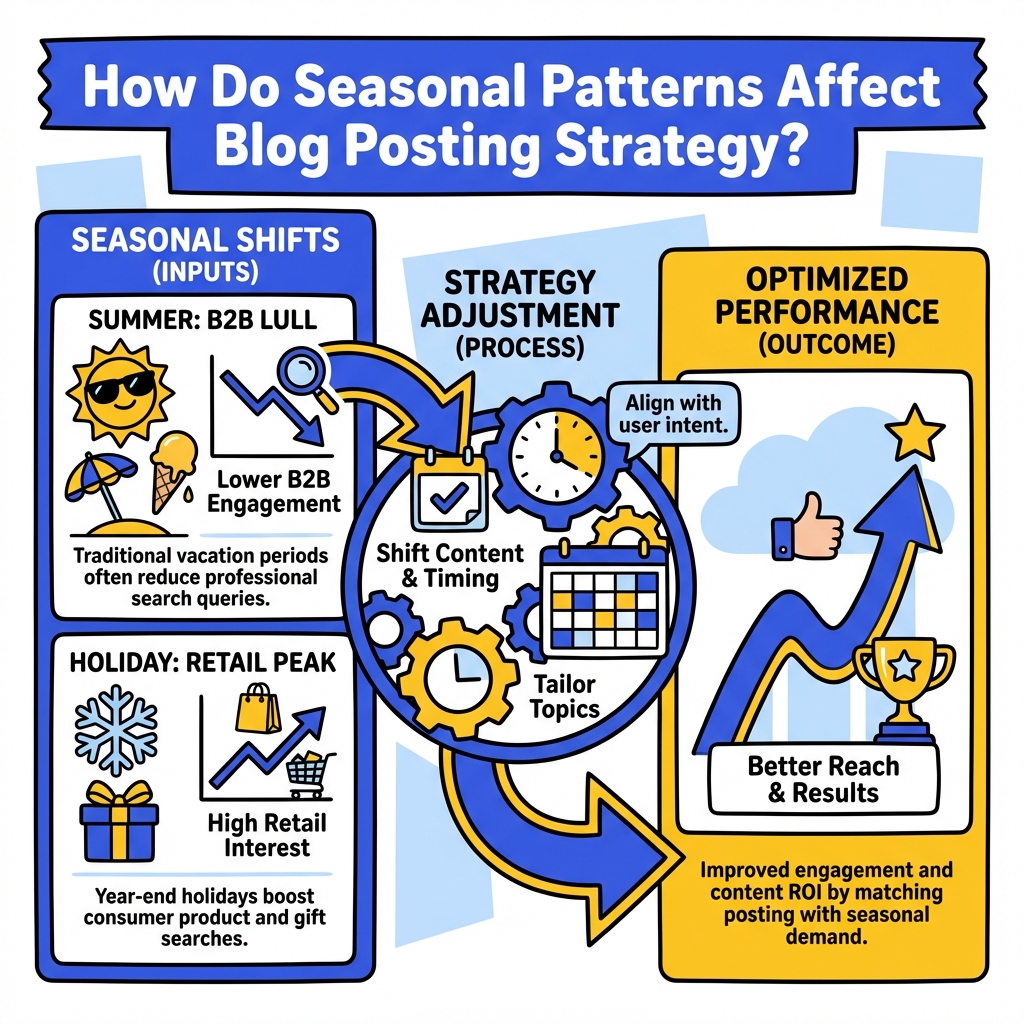
Search behavior changes significantly throughout the year, affecting optimal posting times and content performance. Summer months often see decreased B2B engagement during traditional vacation periods, while retail content performs exceptionally well during holiday seasons. Understanding these patterns helps you adjust your publishing schedule for maximum year-round SEO impact.
Back-to-school periods (late August through September) generate increased search volume for educational content, making this an ideal time to publish in-depth guides and tutorials. Holiday seasons create opportunities for gift guides, year-end summaries, and planning content that can drive significant organic traffic.
Plan your content calendar around these seasonal patterns, but maintain consistent publishing frequency throughout the year. Search engines reward websites that continue producing fresh content even during traditionally slower periods, often resulting in stronger rankings when search volume increases again.
Should You Coordinate Blog Posts with Social Media Timing?
Social media amplification significantly impacts SEO performance, especially in the first few hours after publication. Coordinating your blog publishing schedule with peak social media activity times can dramatically increase initial engagement and social signals that boost search rankings.
However, optimal social media times don't always align perfectly with optimal search times. The solution is publishing your blog post at the ideal time for search, then promoting it on social media during platform-specific peak hours. This approach maximizes both direct organic discovery and social amplification benefits.
Content automation strategies can help manage this complex timing coordination, ensuring your content gets promoted across multiple channels at optimal times without requiring manual intervention for every post.Conclusion
Finding the perfect time to post blog content for SEO success requires understanding your specific audience, testing different approaches, and maintaining consistency over time. While general best practices suggest Tuesday through Thursday mornings between 9 AM and 11 AM deliver optimal results, your unique audience patterns should ultimately guide your publishing schedule.
Remember that timing is just one factor in SEO success. High-quality, valuable content will eventually find its audience regardless of publishing time, but strategic timing can significantly accelerate your results and maximize your content's potential impact. Start by implementing these timing strategies consistently, then refine your approach based on your specific performance data.
Ready to optimize your content publishing strategy for better SEO results? Fast SEO Fix can help you develop a comprehensive content timing strategy that aligns with your audience patterns and business goals. Contact us today to learn how our automated SEO solutions can streamline your content publishing process while maximizing your search engine visibility.

Stefan Winter
Founder & SEO Expert
Founder of Fast SEO Fix and SEO automation expert. Stefan built Fast SEO Fix to solve the tedious problem of manual SEO work. He specializes in SEO optimized content generation, keyword research, and automated SEO strategies.
